Wassermann Birgit, Müller Henry, Berg Gabriele
Institute of Environmental Biotechnology, Graz University of Technology, Graz, Austria.
Front Microbiol. 2019 Jul 24;10:1629. doi: 10.3389/fmicb.2019.01629. eCollection 2019.
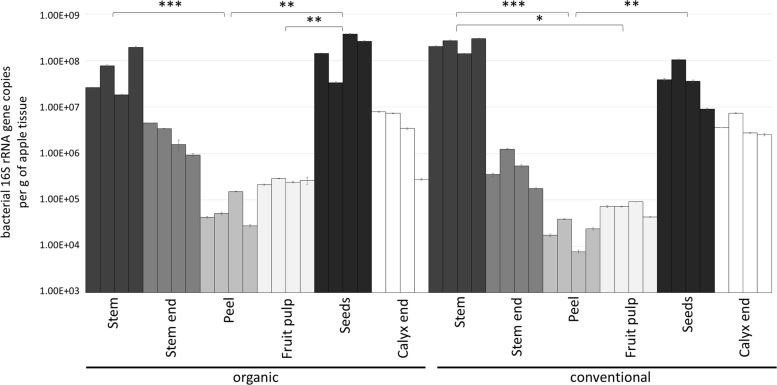
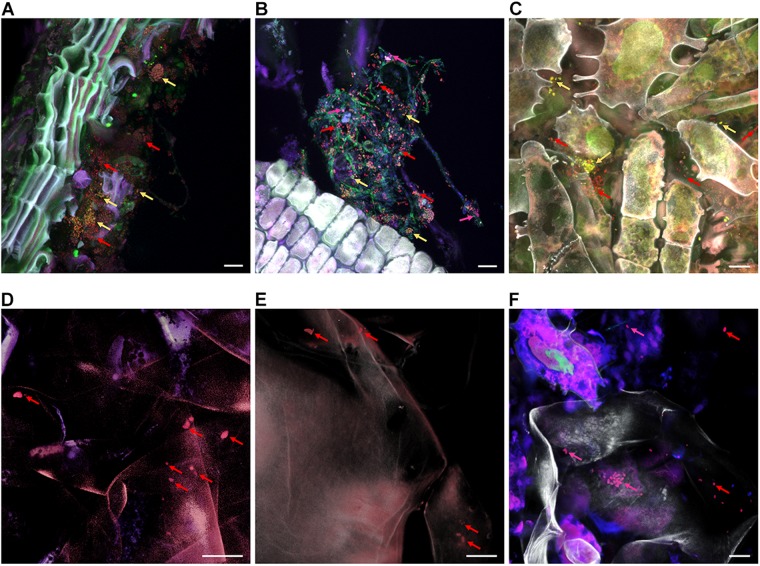
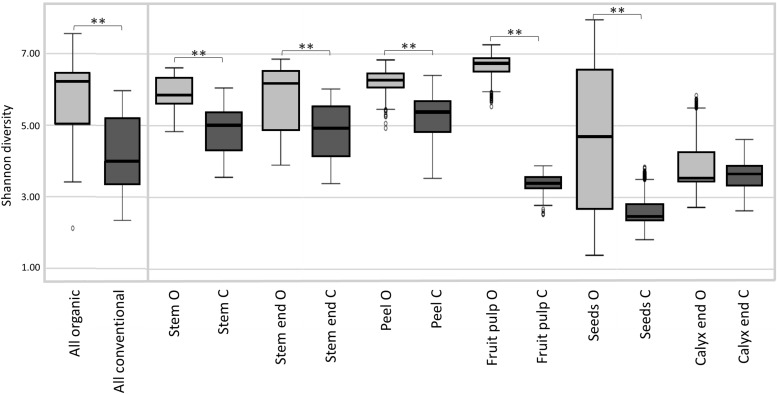
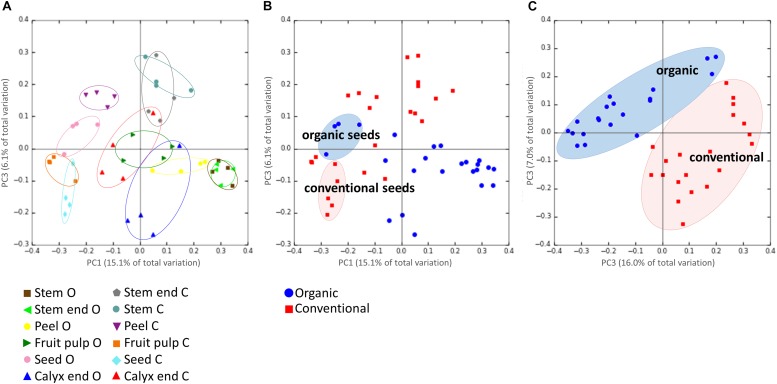
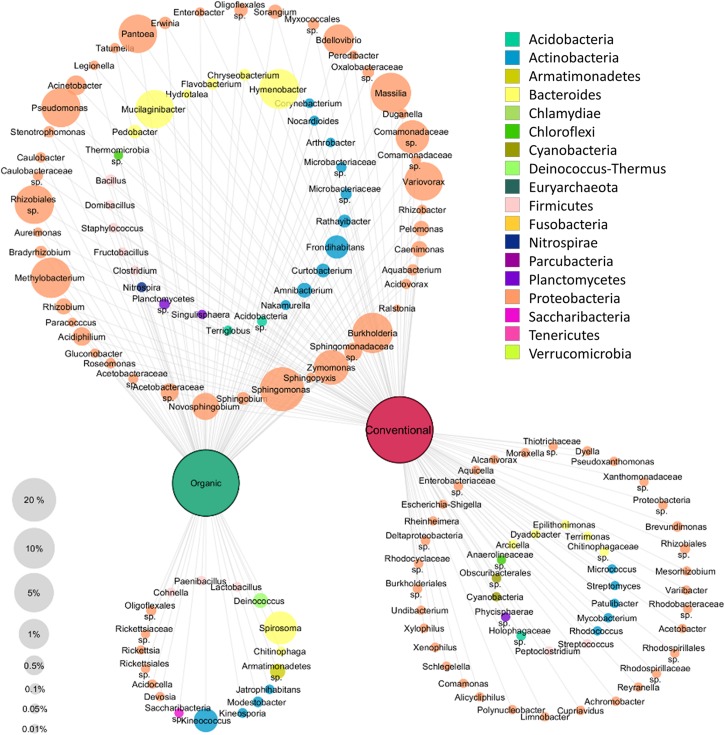
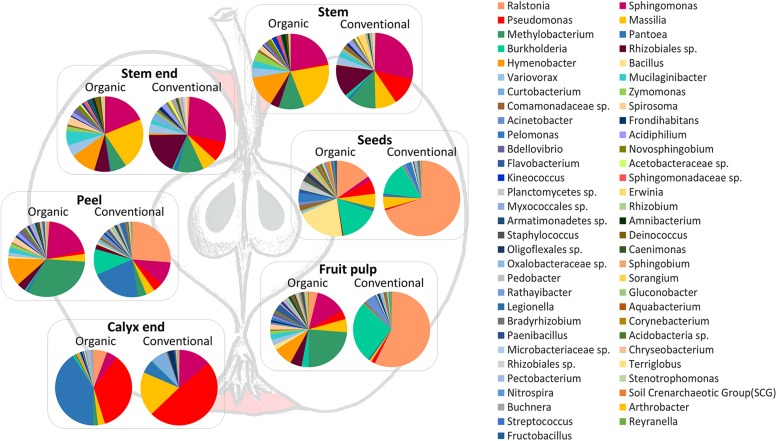
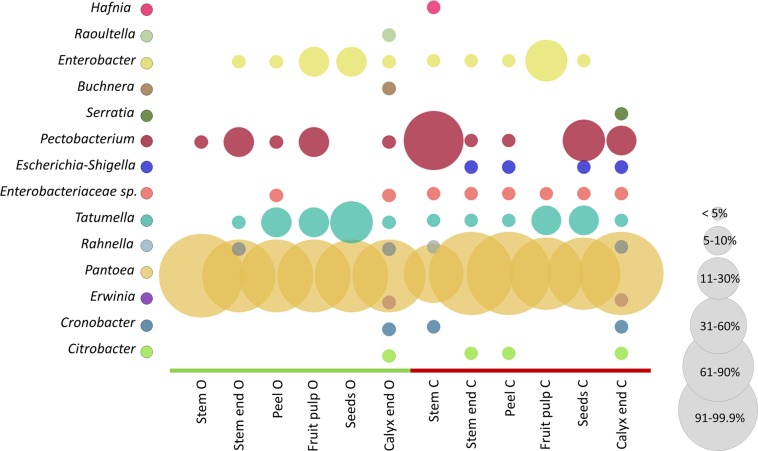
Apples are among the most consumed fruits world-wide. They represent a source of direct human exposure to bacterial communities, which is less studied. We analyzed the apple microbiome to detect differences between tissues and the impact of organic and conventional management by a combined approach of 16S rRNA gene amplicon analysis and qPCR, and visualization using fluorescence hybridization and confocal laser scanning microscopy (FISH-CLSM). Each apple fruit harbors different tissues (stem, peel, fruit pulp, seeds, and calyx), which were colonized by distinct bacterial communities. Interestingly, fruit pulp and seeds were bacterial hot spots, while the peel was less colonized. In all, approximately 10 16S rRNA bacterial gene copy numbers were determined in each g apple. Abundances were not influenced by the management practice but we found a strong reduction in bacterial diversity and evenness in conventionally managed apples. In addition, despite the similar structure in general dominated by (80%), (9%), (5%), and (3%), significant shifts of almost 40% of bacterial genera and orders were monitored. Among them, especially bacterial signatures known for health-affecting potential were found to be enhanced in conventionally managed apples. Our results suggest that we consume about 100 million bacterial cells with one apple. Although this amount was the same, the bacterial composition was significantly different in conventionally and organically produced apples.
苹果是全球消费最多的水果之一。它们是人类直接接触细菌群落的一个来源,而这方面的研究较少。我们通过16S rRNA基因扩增子分析和定量PCR相结合的方法,并使用荧光杂交和共聚焦激光扫描显微镜(FISH-CLSM)进行可视化,分析了苹果微生物组,以检测不同组织之间的差异以及有机和传统管理方式的影响。每个苹果果实都包含不同的组织(果柄、果皮、果肉、种子和花萼),这些组织被不同的细菌群落定殖。有趣的是,果肉和种子是细菌热点,而果皮的定殖程度较低。总体而言,每克苹果中大约测定了10个16S rRNA细菌基因拷贝数。丰度不受管理方式的影响,但我们发现传统管理的苹果中细菌多样性和均匀度大幅降低。此外,尽管总体结构相似,主要由(80%)、(9%)、(5%)和(3%)主导,但监测到近40%的细菌属和目发生了显著变化。其中,特别是已知具有健康影响潜力的细菌特征在传统管理的苹果中有所增强。我们的结果表明,我们吃一个苹果会摄入约1亿个细菌细胞。尽管这个数量相同,但传统生产和有机生产的苹果中的细菌组成有显著差异。