Department of Rheumatology and Clinical Immunology, Charité-Universitätsmedizin Berlin, Berlin, Germany.
German Rheumatism Research Centre (DRFZ) Berlin, Berlin, Germany.
Front Immunol. 2019 Jul 24;10:1744. doi: 10.3389/fimmu.2019.01744. eCollection 2019.
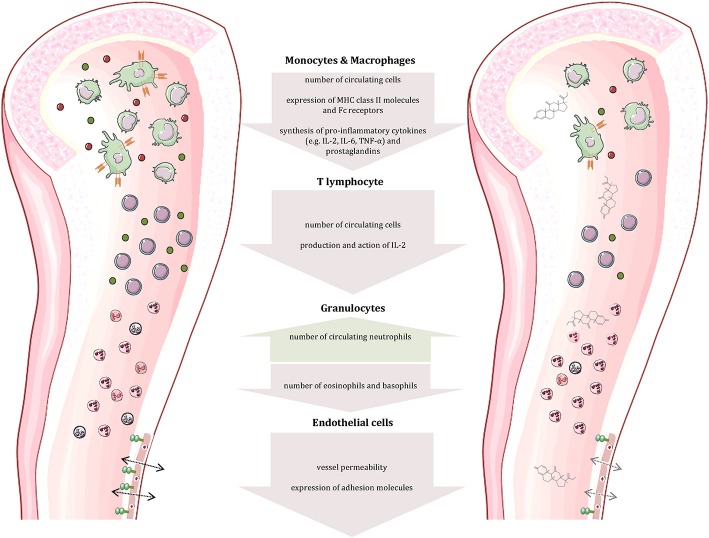
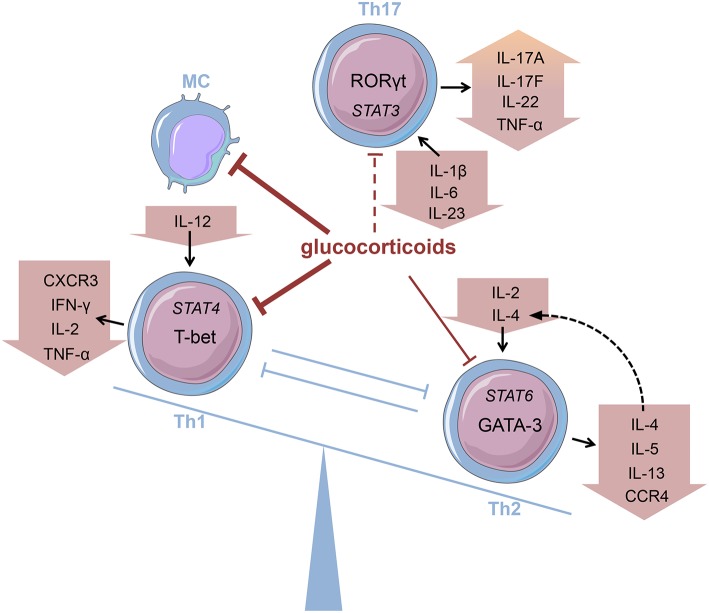
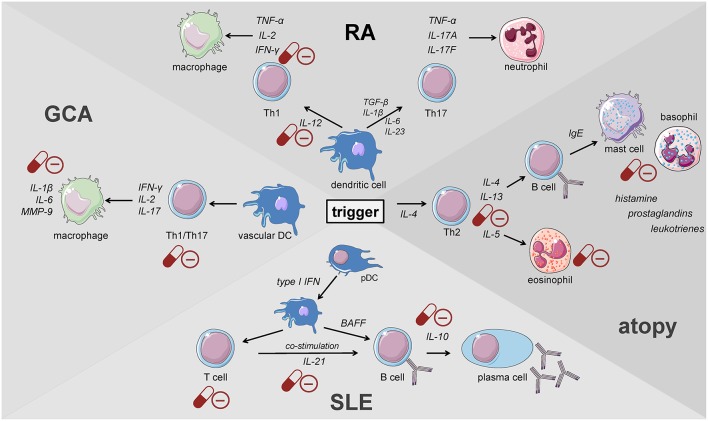
Glucocorticoids regulate fundamental processes of the human body and control cellular functions such as cell metabolism, growth, differentiation, and apoptosis. Moreover, endogenous glucocorticoids link the endocrine and immune system and ensure the correct function of inflammatory events during tissue repair, regeneration, and pathogen elimination via genomic and rapid non-genomic pathways. Due to their strong immunosuppressive, anti-inflammatory and anti-allergic effects on immune cells, tissues and organs, glucocorticoids significantly improve the quality of life of many patients suffering from diseases caused by a dysregulated immune system. Despite the multitude and seriousness of glucocorticoid-related adverse events including diabetes mellitus, osteoporosis and infections, these agents remain indispensable, representing the most powerful, and cost-effective drugs in the treatment of a wide range of rheumatic diseases. These include rheumatoid arthritis, vasculitis, and connective tissue diseases, as well as many other pathological conditions of the immune system. Depending on the therapeutically affected cell type, glucocorticoid actions strongly vary among different diseases. While immune responses always represent complex reactions involving different cells and cellular processes, specific immune cell populations with key responsibilities driving the pathological mechanisms can be identified for certain autoimmune diseases. In this review, we will focus on the mechanisms of action of glucocorticoids on various leukocyte populations, exemplarily portraying different autoimmune diseases as heterogeneous targets of glucocorticoid actions: (i) Abnormalities in the innate immune response play a crucial role in the initiation and perpetuation of giant cell arteritis (GCA). (ii) Specific types of CD4+ T helper (Th) lymphocytes, namely Th1 and Th17 cells, represent important players in the establishment and course of rheumatoid arthritis (RA), whereas (iii) B cells have emerged as central players in systemic lupus erythematosus (SLE). (iv) Allergic reactions are mainly triggered by several different cytokines released by activated Th2 lymphocytes. Using these examples, we aim to illustrate the versatile modulating effects of glucocorticoids on the immune system. In contrast, in the treatment of lymphoproliferative disorders the pro-apoptotic action of glucocorticoids prevails, but their mechanisms differ depending on the type of cancer. Therefore, we will also give a brief insight into the current knowledge of the mode of glucocorticoid action in oncological treatment focusing on leukemia.
糖皮质激素调节人体的基本过程,控制细胞代谢、生长、分化和凋亡等细胞功能。此外,内源性糖皮质激素连接内分泌和免疫系统,通过基因组和快速非基因组途径,确保组织修复、再生和病原体消除过程中炎症事件的正确功能。由于糖皮质激素对免疫细胞、组织和器官具有强大的免疫抑制、抗炎和抗过敏作用,它们显著提高了许多患有免疫系统失调疾病的患者的生活质量。尽管糖皮质激素相关的不良反应很多且严重,包括糖尿病、骨质疏松症和感染,但这些药物仍然不可或缺,是治疗广泛的风湿性疾病最有效和最具成本效益的药物。这些疾病包括类风湿关节炎、血管炎和结缔组织疾病,以及许多其他免疫系统疾病。根据治疗受影响的细胞类型,糖皮质激素在不同疾病中的作用差异很大。虽然免疫反应总是代表涉及不同细胞和细胞过程的复杂反应,但对于某些自身免疫性疾病,可以确定具有关键责任驱动病理机制的特定免疫细胞群体。在这篇综述中,我们将重点介绍糖皮质激素对各种白细胞群体的作用机制,举例说明不同的自身免疫性疾病作为糖皮质激素作用的异质靶点:(i)固有免疫反应异常在巨细胞动脉炎(GCA)的启动和持续中起关键作用。(ii)特定类型的 CD4+辅助性 T 淋巴细胞,即 Th1 和 Th17 细胞,是类风湿关节炎(RA)建立和病程的重要参与者,而(iii)B 细胞已成为系统性红斑狼疮(SLE)的核心参与者。(iv)过敏反应主要由激活的 Th2 淋巴细胞释放的几种不同细胞因子触发。使用这些例子,我们旨在说明糖皮质激素对免疫系统的多种调节作用。相比之下,在淋巴增生性疾病的治疗中,糖皮质激素的促凋亡作用占主导地位,但它们的机制因癌症类型而异。因此,我们还将简要介绍当前关于糖皮质激素在癌症治疗中作用模式的知识,重点介绍白血病。