Pang Dandan, Ruch Willibald
Section of Personality and Assessment, Department of Psychology, University of Zurich, Binzmuehlestrasse 14, 8050 Zurich, Switzerland.
Mindfulness (N Y). 2019;10(8):1545-1559. doi: 10.1007/s12671-019-01103-z. Epub 2019 Feb 16.
Numerous studies have confirmed robust relationships between general well-being and mindfulness or character strengths, respectively, but few have examined associations between mindfulness and character strengths. Two studies were carried out to explore these relationships comprehensively in the framework of the Values in Action (VIA) classification of character strengths.
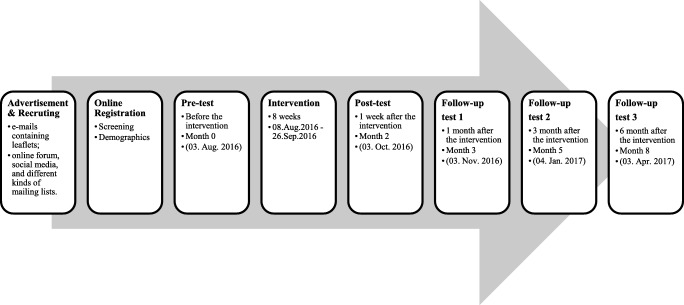
In study 1, participants ( = 1335) completed validated assessments of mindfulness and character strengths, and the relationship between the two was investigated in a broad online sample. In study 2, the effect of a mindfulness training on specific character strengths was investigated using a randomized-control design ( = 42).
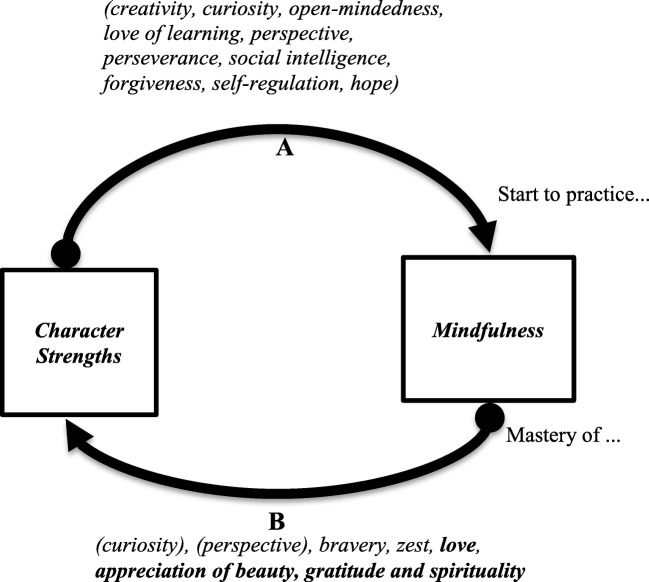
The results of study 1 confirmed positive relationships between mindfulness and character strengths and further identified a list of character strengths that might overlap with mindfulness-i.e., creativity, curiosity, open-mindedness, love of learning, perspective, bravery, perseverance, zest, love, social intelligence, forgiveness, self-regulation, appreciation of beauty, gratitude, hope, and spirituality. The findings of study 2 provided further support for the hypothesis that mindfulness training could help cultivate certain character strengths. Compared with participants in the waitlist control condition, those who attended an 8-week mindfulness-based training program showed significant increases in the strengths of love, appreciation of beauty, gratitude, and spirituality, and a trend toward significant increases in the strengths of zest and bravery.
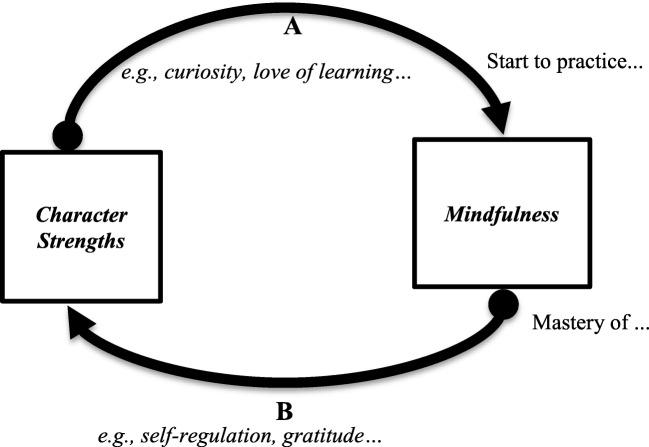
The results provide initial evidence for a mutual support model of mindfulness and character strengths.
众多研究分别证实了总体幸福感与正念或性格优势之间存在紧密联系,但很少有研究探讨正念与性格优势之间的关联。开展了两项研究,以在性格优势的行动价值观(VIA)分类框架内全面探究这些关系。
在研究1中,参与者(n = 1335)完成了经过验证的正念和性格优势评估,并在一个广泛的在线样本中研究了两者之间的关系。在研究2中,采用随机对照设计(n = 42)研究了正念训练对特定性格优势的影响。
研究1的结果证实了正念与性格优势之间存在正相关关系,并进一步确定了一系列可能与正念重叠的性格优势,即创造力、好奇心、开放性思维、热爱学习、洞察力、勇敢、毅力、热情、爱、社交智慧、宽恕、自我调节、对美的欣赏、感恩、希望和灵性。研究2的结果为正念训练有助于培养某些性格优势这一假设提供了进一步支持。与候补控制组的参与者相比,参加了为期8周的正念训练计划的参与者在爱、对美的欣赏、感恩和灵性等优势方面有显著提升,在热情和勇敢等优势方面有显著提升的趋势。
研究结果为正念与性格优势的相互支持模型提供了初步证据。