Ozturk Gulustan, German J Bruce, de Moura Bell Juliana M L N
1Department of Food Science and Technology, University of California, Davis, One Shields Avenue, Davis, CA 95616 USA.
2Foods for Health Institute, University of California, Davis, One Shields Avenue, Davis, CA 95616 USA.
NPJ Sci Food. 2019 Aug 2;3:13. doi: 10.1038/s41538-019-0046-8. eCollection 2019.
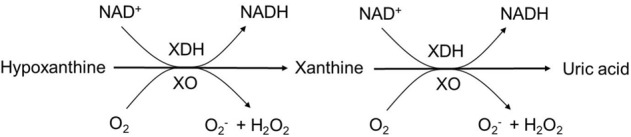
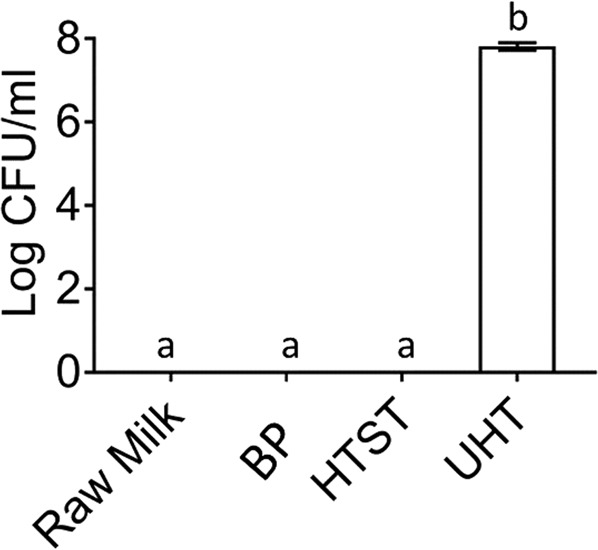
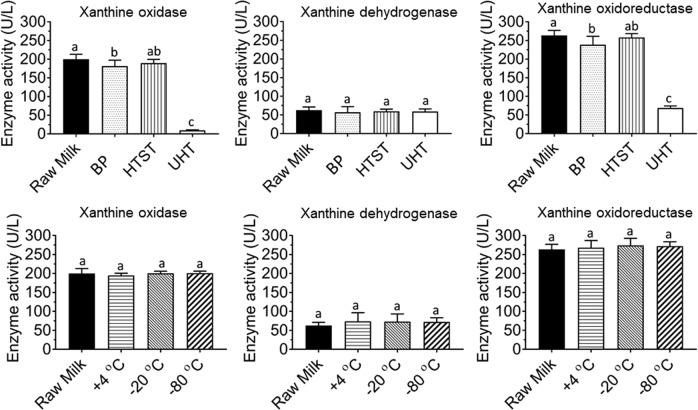
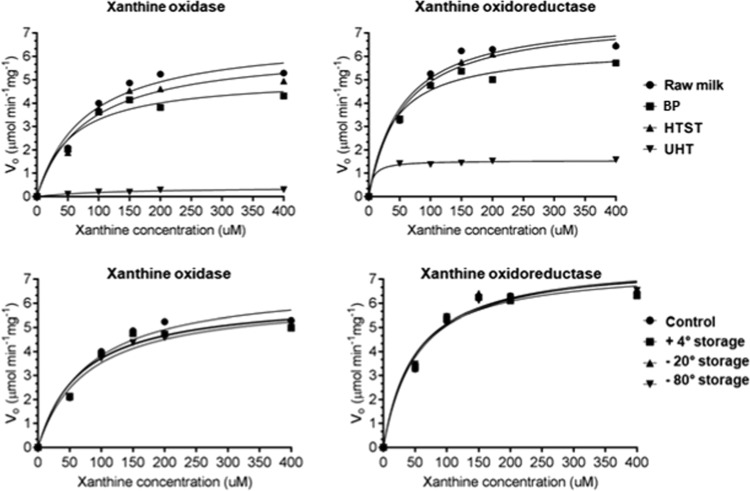
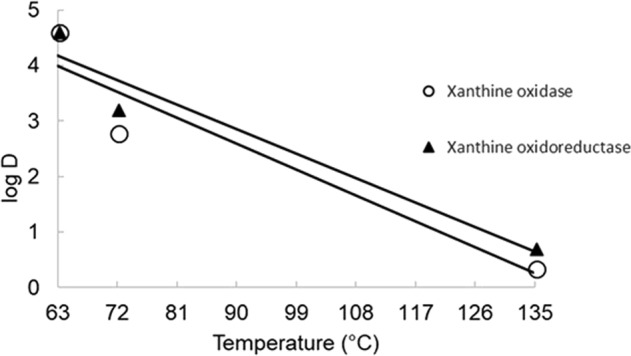
Milk is a source of antimicrobial systems such as xanthine oxidoreductase, which has been proposed to modulate the oral and gut microbiota of infants. Heat treatments are applied to milk to ensure its microbial safety, however, the effects of heat on this antimicrobial enzyme are not known. The effects of batch pasteurization (BP), high-temperature short time (HTST), and ultra high temperature (UHT) on kinetics of inactivation of xanthine oxidase and its antimicrobial properties were determined. Xanthine oxidase activity was preserved by HTST (100%). Partial (8%) and nearly complete (95%) enzyme inactivation were observed for BP and UHT milks, respectively. values of 100 μM and values of 6.85, 5.12, 6.31, and 0.40 μmol/min/mg were determined for xanthine oxidase in raw, BP, HTST, and UHT milks, respectively. These results demonstrate that xanthine oxidase maintains apparent affinity and activity for its substrate when milk is treated by BP and HTST and yet the enzyme is inactivated with UHT. To investigate heat treatment-induced alterations in the biological activity of xanthine oxidase, heat treated milks were compared to raw milk for their ability to inhibit the growth of . Raw, BP, and HTST milk xanthine oxidase efficiently inhibited growth. However, these antibacterial properties were lost when milk was subjected to UHT. These results demonstrate that HTST and BP preserves bovine milk xanthine oxidase activity compared with UHT and that, the judicious selection of thermal treatments could be exploited to preserve the antimicrobial properties of bovine milk.
牛奶是黄嘌呤氧化还原酶等抗菌系统的来源,有人提出该酶可调节婴儿口腔和肠道微生物群。对牛奶进行热处理以确保其微生物安全性,然而,热对这种抗菌酶的影响尚不清楚。测定了分批巴氏杀菌(BP)、高温短时(HTST)和超高温(UHT)对黄嘌呤氧化酶失活动力学及其抗菌特性的影响。HTST可保留黄嘌呤氧化酶活性(100%)。BP牛奶和UHT牛奶中分别观察到部分(8%)和几乎完全(95%)的酶失活。生牛奶、BP牛奶、HTST牛奶和UHT牛奶中黄嘌呤氧化酶的米氏常数分别为100μM和6.85、5.12、6.31及0.40μmol/分钟/毫克。这些结果表明,当牛奶经BP和HTST处理时,黄嘌呤氧化酶对其底物保持明显的亲和力和活性,但该酶在UHT处理时失活。为了研究热处理引起的黄嘌呤氧化酶生物活性变化,将热处理牛奶与生牛奶抑制大肠杆菌生长的能力进行了比较。生牛奶、BP牛奶和HTST牛奶中的黄嘌呤氧化酶能有效抑制大肠杆菌生长。然而,当牛奶经UHT处理后,这些抗菌特性丧失。这些结果表明,与UHT相比,HTST和BP可保留牛奶中黄嘌呤氧化酶的活性,并且可以通过明智地选择热处理方法来保留牛奶的抗菌特性。