RMIT University-School of Engineering, Bundoora, VIC 3083, Australia.
THALES Australia, WTC North Wharf, Melbourne, VIC 3000, Australia.
Sensors (Basel). 2019 Aug 8;19(16):3465. doi: 10.3390/s19163465.
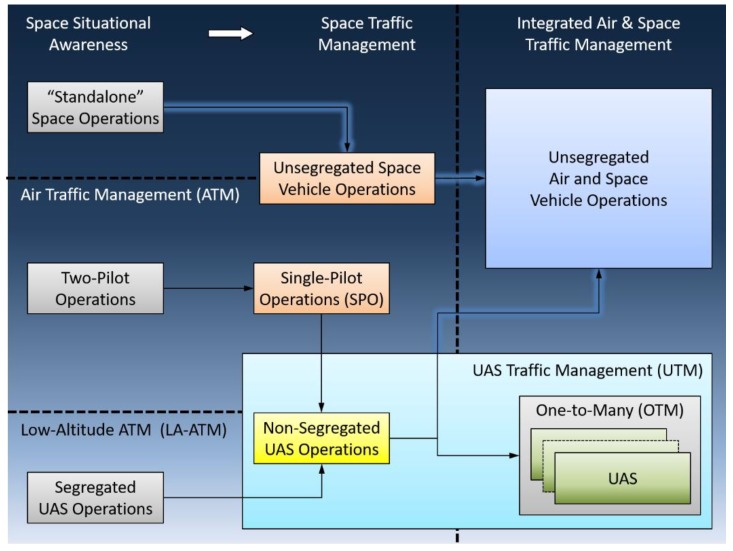
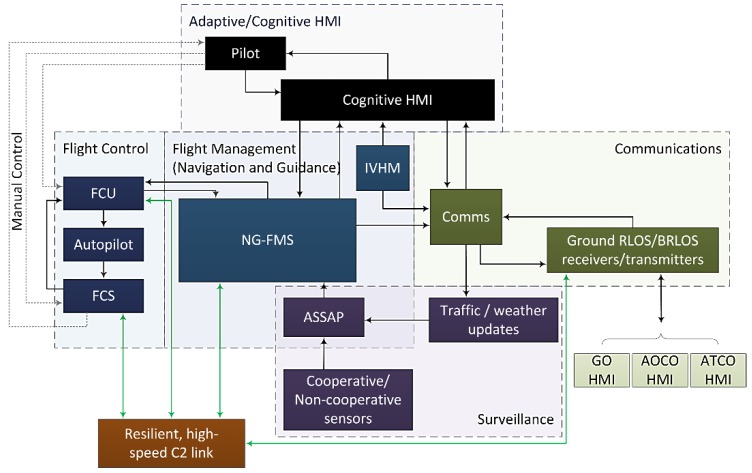
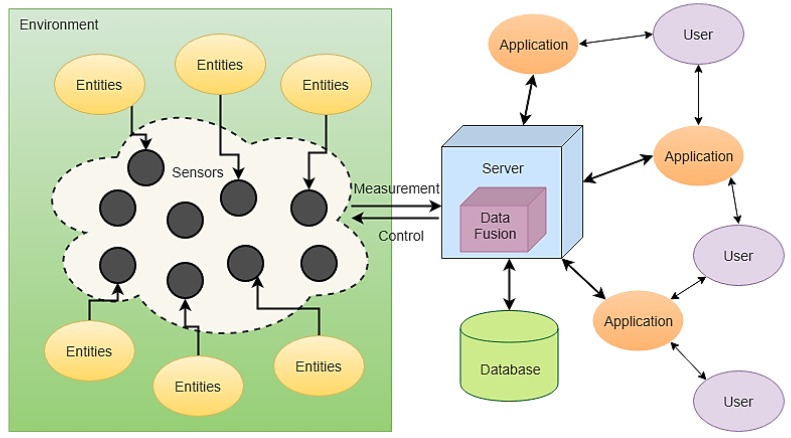
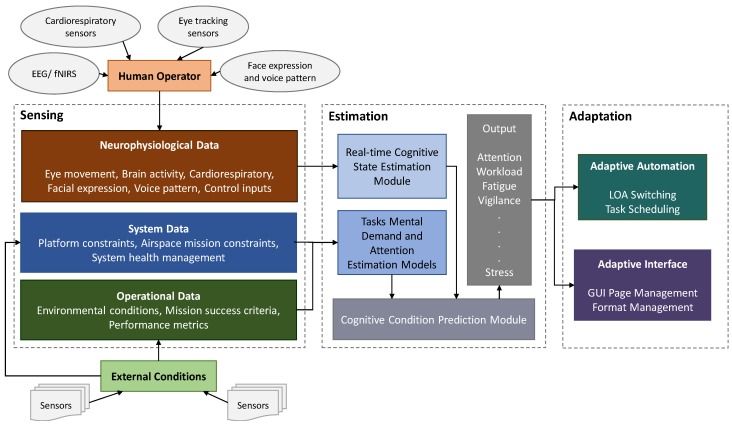
Intelligent automation and trusted autonomy are being introduced in aerospace cyber-physical systems to support diverse tasks including data processing, decision-making, information sharing and mission execution. Due to the increasing level of integration/collaboration between humans and automation in these tasks, the operational performance of closed-loop human-machine systems can be enhanced when the machine monitors the operator's cognitive states and adapts to them in order to maximise the effectiveness of the Human-Machine Interfaces and Interactions (HMI). Technological developments have led to neurophysiological observations becoming a reliable methodology to evaluate the human operator's states using a variety of wearable and remote sensors. The adoption of sensor networks can be seen as an evolution of this approach, as there are notable advantages if these sensors collect and exchange data in real-time, while their operation is controlled remotely and synchronised. This paper discusses recent advances in sensor networks for aerospace cyber-physical systems, focusing on Cognitive HMI (CHMI) implementations. The key neurophysiological measurements used in this context and their relationship with the operator's cognitive states are discussed. Suitable data analysis techniques based on machine learning and statistical inference are also presented, as these techniques allow processing both neurophysiological and operational data to obtain accurate cognitive state estimations. Lastly, to support the development of sensor networks for CHMI applications, the paper addresses the performance characterisation of various state-of-the-art sensors and the propagation of measurement uncertainties through a machine learning-based inference engine. Results show that a proper sensor selection and integration can support the implementation of effective human-machine systems for various challenging aerospace applications, including Air Traffic Management (ATM), commercial airliner Single-Pilot Operations (SIPO), one-to-many Unmanned Aircraft Systems (UAS), and space operations management.
智能自动化和可信自主化正在航空航天网络物理系统中得到引入,以支持包括数据处理、决策、信息共享和任务执行在内的各种任务。由于在这些任务中人类与自动化之间的集成/协作程度不断提高,当机器监测操作员的认知状态并根据这些状态进行自适应调整以最大程度地提高人机界面和交互(HMI)的有效性时,闭环人机系统的运行性能可以得到增强。技术的发展使得神经生理观测成为一种可靠的方法,可使用各种可穿戴式和远程传感器来评估人类操作员的状态。传感器网络的采用可以被视为这种方法的一种演进,因为如果这些传感器能够实时地收集和交换数据,并且远程控制和同步其操作,那么就会具有显著的优势。本文讨论了航空航天网络物理系统中传感器网络的最新进展,重点介绍了认知人机界面(CHMI)的实现。讨论了在这种情况下使用的关键神经生理测量及其与操作员认知状态的关系。还提出了基于机器学习和统计推断的合适数据分析技术,因为这些技术允许处理神经生理和操作数据以获得准确的认知状态估计。最后,为了支持 CHMI 应用的传感器网络的开发,本文针对各种最先进的传感器的性能特征以及通过基于机器学习的推理引擎传播测量不确定性进行了研究。结果表明,适当的传感器选择和集成可以支持各种具有挑战性的航空航天应用的有效人机系统的实现,包括空中交通管理(ATM)、商用客机单飞行员操作(SIPO)、一对多无人机系统(UAS)和空间操作管理。