Peter Medawar Building for Pathogen Research, University of Oxford, Oxford, UK.
Centre for Vaccines and Immunity, The Research Institute at Nationwide Children's Hospital, Columbus, OH.
Hepatology. 2020 Mar;71(3):794-807. doi: 10.1002/hep.30894. Epub 2019 Oct 11.
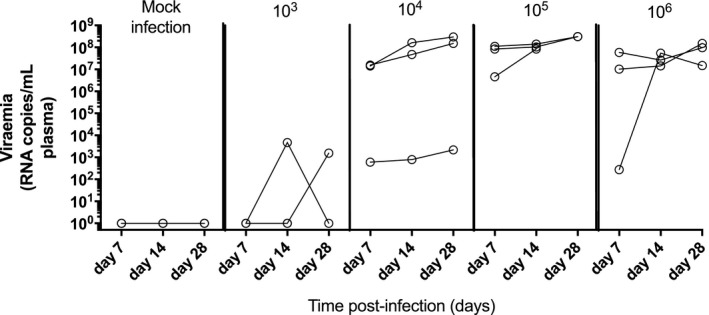
The lack of immunocompetent small animal models for hepatitis C virus (HCV) has greatly hindered the development of effective vaccines. Using rodent hepacivirus (RHV), a homolog of HCV that shares many characteristics of HCV infection, we report the development and application of an RHV outbred rat model for HCV vaccine development.
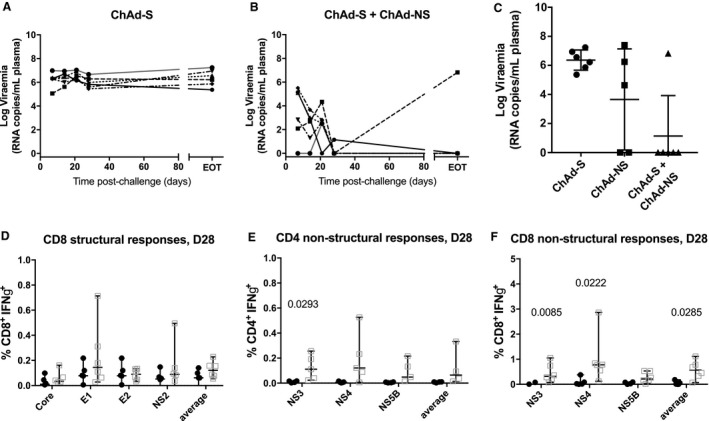
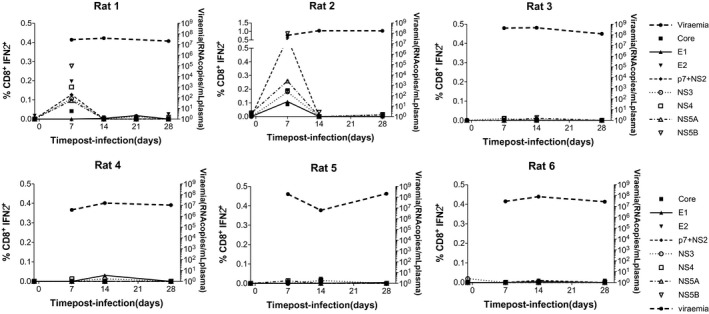
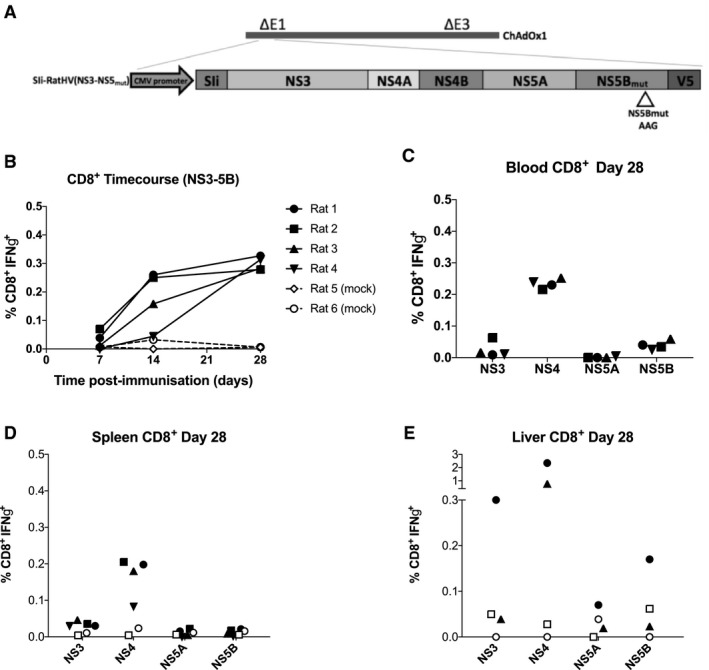
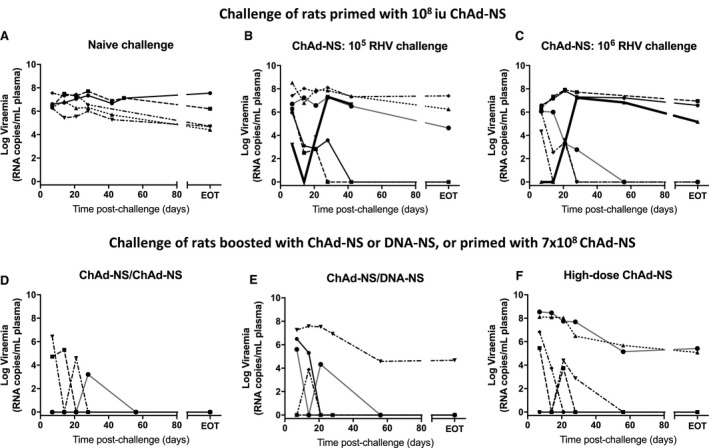
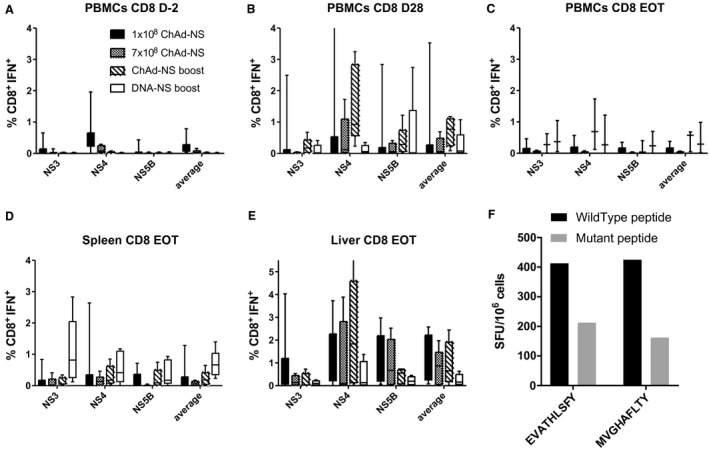
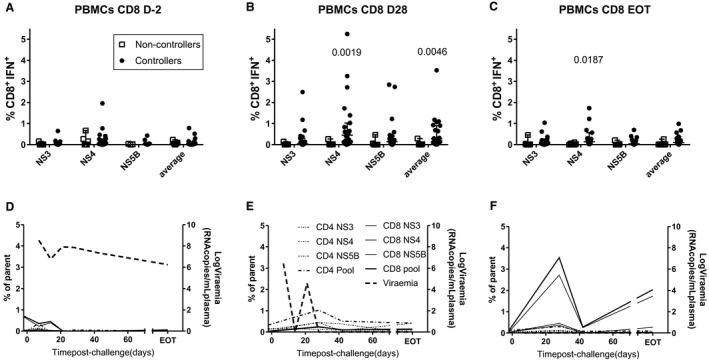
Simian adenovirus (ChAdOx1) encoding a genetic immune enhancer (truncated shark class II invariant chain) fused to the nonstructural (NS) proteins NS3-NS5B from RHV (ChAd-NS) was used to vaccinate Sprague-Dawley rats, resulting in high levels of cluster of differentiation 8-positive (CD8 ) T-cell responses. Following RHV challenge (using 10 or 100 times the minimum infectious dose), 42% of vaccinated rats cleared infection within 6-8 weeks, while all mock vaccinated controls became infected with high-level viremia postchallenge. A single, 7-fold higher dose of ChAd-NS increased efficacy to 67%. Boosting with ChAd-NS or with a plasmid encoding the same NS3-NS5B antigens increased efficacy to 100% and 83%, respectively. A ChAdOx1 vector encoding structural antigens (ChAd-S) was also constructed. ChAd-S alone showed no efficacy. Strikingly, when combined with ChAd-NS, ChAD-S produced 83% efficacy. Protection was associated with a strong CD8 interferon gamma-positive recall response against NS4. Next-generation sequencing of a putative RHV escape mutant in a vaccinated rat identified mutations in both identified immunodominant CD8 T-cell epitopes.
A simian adenovirus vector vaccine strategy is effective at inducing complete protective immunity in the rat RHV model. The RHV Sprague-Dawley rat challenge model enables comparative testing of vaccine platforms and antigens and identification of correlates of protection and thereby provides a small animal experimental framework to guide the development of an effective vaccine for HCV in humans.
缺乏丙型肝炎病毒(HCV)免疫活性的小动物模型极大地阻碍了有效疫苗的发展。我们使用与 HCV 感染具有许多相似特征的啮齿动物戊型肝炎病毒(RHV),报告了开发和应用 HCV 疫苗开发的 RHV 远交大鼠模型。
编码遗传免疫增强剂(截断的鲨鱼 II 类不变链)与 RHV 的非结构(NS)蛋白 NS3-NS5B 融合的猴腺病毒(ChAdOx1)(ChAd-NS)用于接种 Sprague-Dawley 大鼠,导致高水平的分化群 8 阳性(CD8)T 细胞反应。在 RHV 挑战(使用 10 或 100 倍最小感染剂量)后,42%的接种疫苗的大鼠在 6-8 周内清除感染,而所有模拟接种的对照在挑战后均感染高水平病毒血症。单次,7 倍高剂量的 ChAd-NS 将疗效提高至 67%。用 ChAd-NS 或编码相同 NS3-NS5B 抗原的质粒进行加强可分别将疗效提高至 100%和 83%。还构建了编码结构抗原的 ChAdOx1 载体(ChAd-S)。单独使用 ChAd-S 没有疗效。引人注目的是,当与 ChAd-NS 结合使用时,ChAD-S 产生 83%的疗效。保护与针对 NS4 的强烈 CD8 干扰素 γ阳性回忆反应相关。在接种疫苗的大鼠中对一种假定的 RHV 逃逸突变体进行下一代测序,鉴定出两个鉴定出的免疫优势 CD8 T 细胞表位都发生了突变。
使用猴腺病毒载体疫苗策略可在 RHV 大鼠模型中有效诱导完全保护性免疫。RHV Sprague-Dawley 大鼠挑战模型可用于比较测试疫苗平台和抗原,并确定保护相关性,从而为 HCV 人类疫苗的开发提供了一个小动物实验框架。