Department of Urology, Institute of Urology, West China Hospital, Sichuan University, Chengdu, China, 610041.
Department of Pathology, West China Hospital, Sichuan University, Chengdu, China, 610041.
Neoplasia. 2019 Sep;21(9):921-931. doi: 10.1016/j.neo.2019.07.004. Epub 2019 Aug 8.
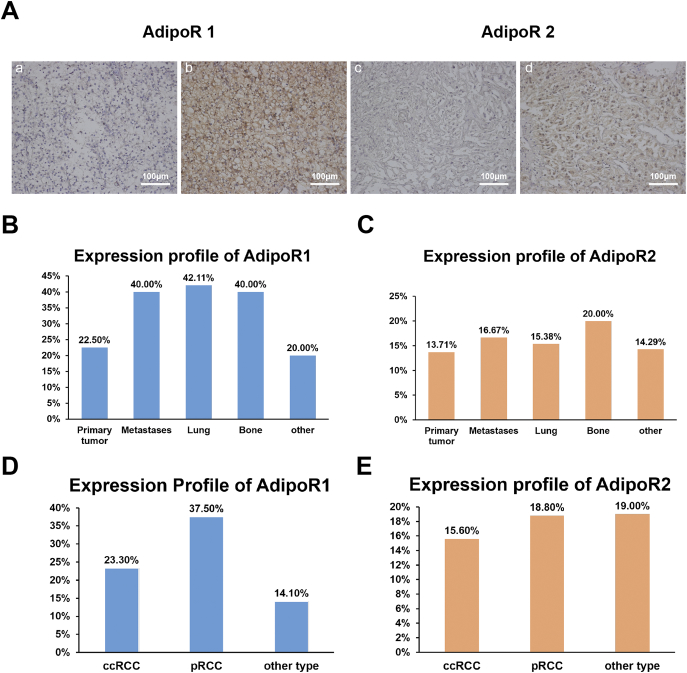
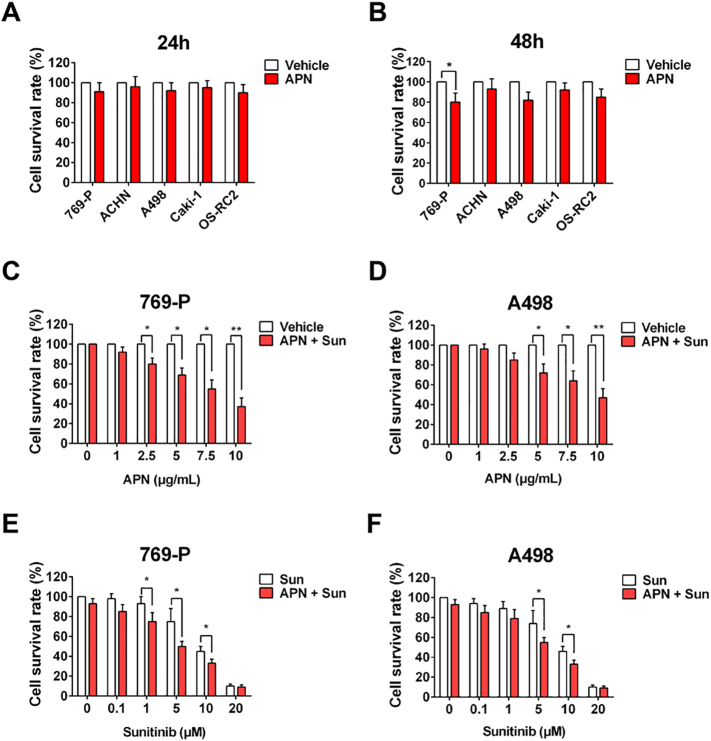
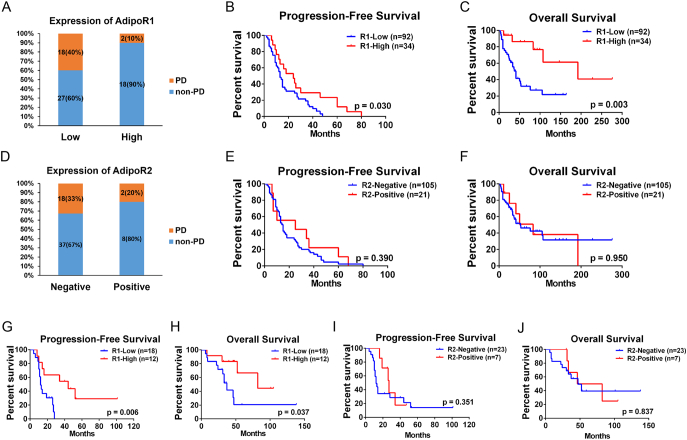
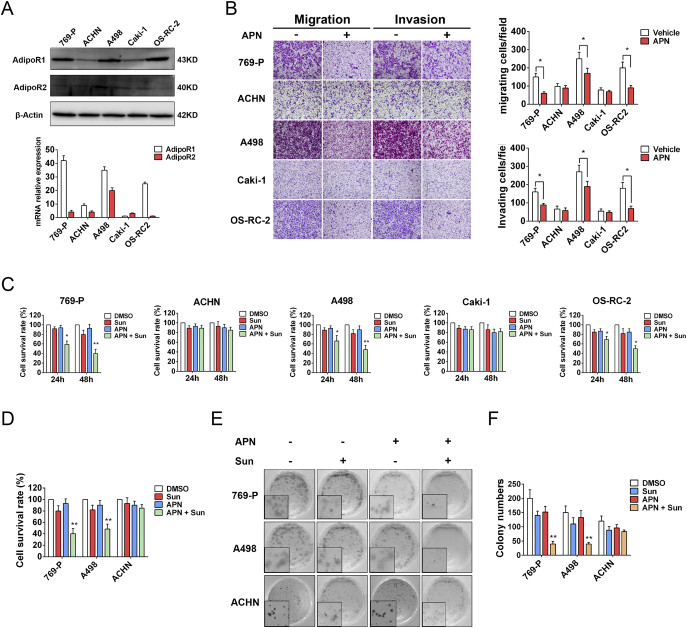
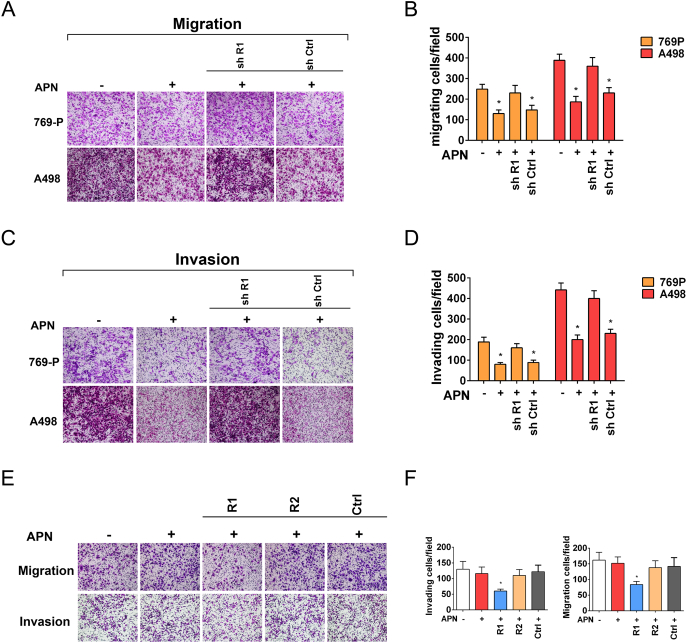
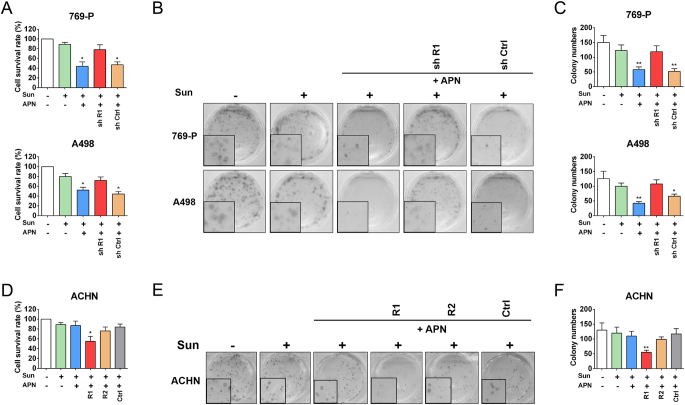
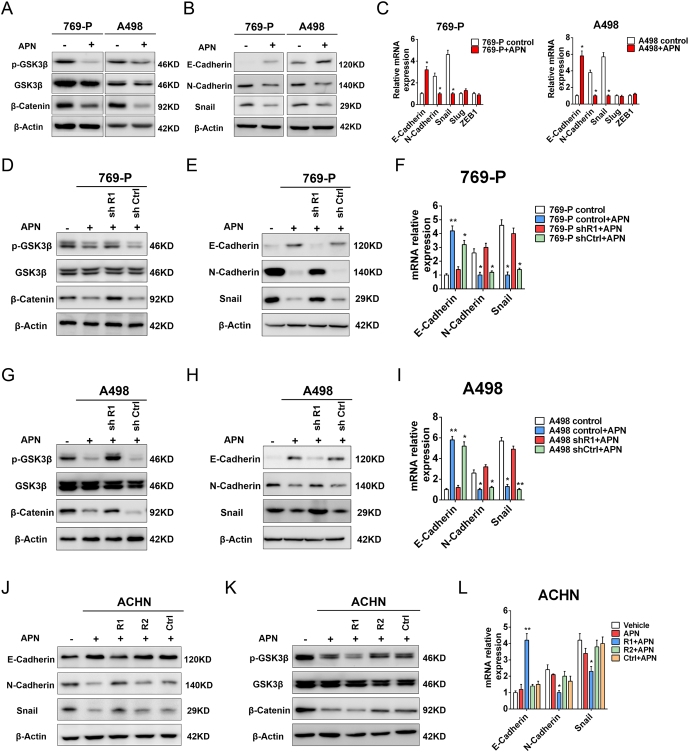
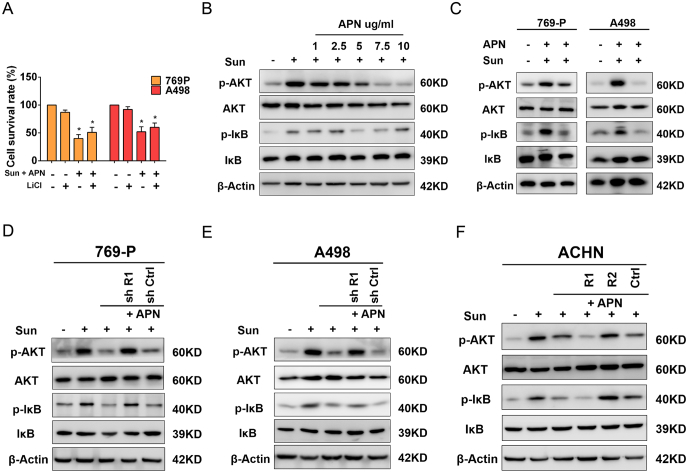
The survival of patients diagnosed with metastatic renal cell carcinoma (RCC) is still limited and the current targeted therapies are only partially effective. Herein, we investigated the clinical value and functions of adiponectin receptors (AdipoR1 and AdipoR2) in metastatic renal cell carcinoma (RCC) patients treated with tyrosine kinase inhibitors (TKIs). A total of 127 mRCC patients treated with first-line TKIs between 2008 and 2017 at a single institution were collected. AdipoR1 and AdipoR2 expression was assessed by immunohistochemistry. AdipoR1 was positively expressed in 87.4% (111/127) of tumors, especially, highly expressed in pulmonary and bone lesions. Patients with low-AdipoR1 expression in primary tumor tissues were more likely to suffer from progressive disease during TKIs treatment (40.0% vs. 11.1%, P = 0 .02), and with decreased progression-free survival (PFS: 19.5 vs. 37.8 mo, P = .001) and overall survival (OS: 62.3 vs 101.1 mo, P = .004) compared to those with high-AdipoR1 expression. Moreover, low-AdipoR1 expression in metastatic tissues was also associated with poor PFS (P = .006) and OS (P = .037). In contrast, AdipoR2 expression was neither associated with sunitinib response nor patient survival. In vitro, we found that adiponectin inhibited migration, invasion and sensitized RCC cells to sunitinib though interacting with AdipoR1, but not AdipoR2. Furthermore, we demonstrated that adiponentin-AdipoR1 axis inhibits tumor cells migration and invasion by blocking the GSK3β/β-Catenin pathway and enhances sunitinib sensitivity via abrogating PI3K/AKT/NF-κB signaling. Our results suggest that adiponentin-AdipoR1 axis may serve as a predictor of TKIs response and could be a potential therapeutic target in the future treatment for metastatic RCC.
接受酪氨酸激酶抑制剂 (TKI) 治疗的转移性肾细胞癌 (RCC) 患者的生存仍然有限,目前的靶向治疗方法仅部分有效。在此,我们研究了脂联素受体 (AdipoR1 和 AdipoR2) 在接受一线 TKI 治疗的转移性肾细胞癌 (RCC) 患者中的临床价值和功能。共收集了 2008 年至 2017 年在一家机构接受一线 TKI 治疗的 127 例 mRCC 患者。采用免疫组织化学法评估 AdipoR1 和 AdipoR2 的表达。AdipoR1 在 87.4% (111/127) 的肿瘤中呈阳性表达,特别是在肺和骨病变中高表达。原发肿瘤组织中低表达 AdipoR1 的患者在 TKI 治疗期间更容易发生疾病进展 (40.0% vs. 11.1%,P = 0.02),无进展生存期 (PFS:19.5 vs. 37.8 mo,P = 0.001) 和总生存期 (OS:62.3 vs. 101.1 mo,P = 0.004) 均低于高表达 AdipoR1 的患者。此外,转移组织中低表达 AdipoR1 也与 PFS (P = 0.006) 和 OS (P = 0.037) 差相关。相反,AdipoR2 表达与舒尼替尼反应或患者生存均无相关性。在体外,我们发现脂联素通过与 AdipoR1 相互作用抑制 RCC 细胞迁移、侵袭,并增强舒尼替尼敏感性,而不是 AdipoR2。此外,我们证明脂联素-AdipoR1 轴通过阻断 GSK3β/β-Catenin 通路抑制肿瘤细胞迁移和侵袭,并通过抑制 PI3K/AKT/NF-κB 信号通路增强舒尼替尼敏感性。我们的研究结果表明,脂联素-AdipoR1 轴可能是 TKI 反应的预测因子,并可能成为未来转移性 RCC 治疗的潜在治疗靶点。