Department of Medical Sciences, University of Turin, Turin, Italy.
Italian Institute for Genomic Medicine, Turin, Italy.
Front Immunol. 2019 Jul 25;10:1720. doi: 10.3389/fimmu.2019.01720. eCollection 2019.
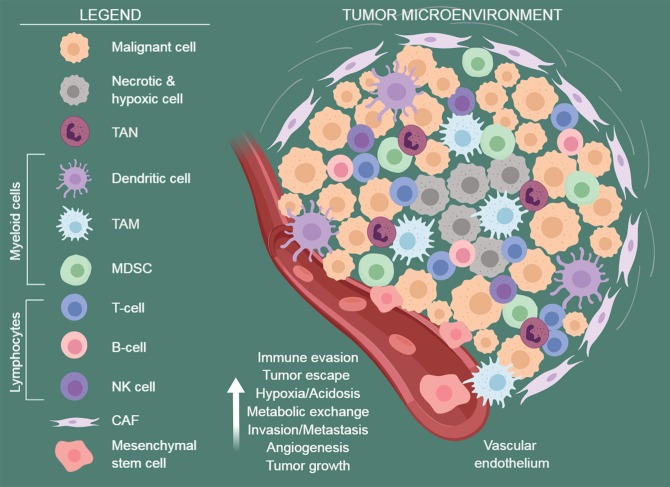
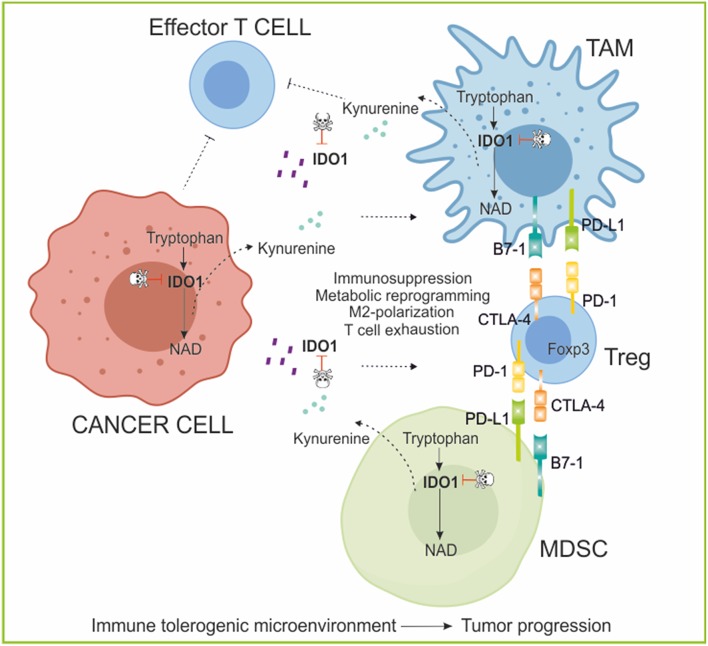
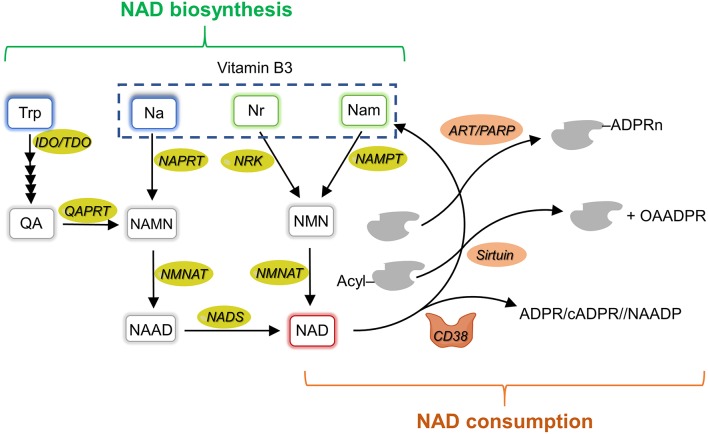
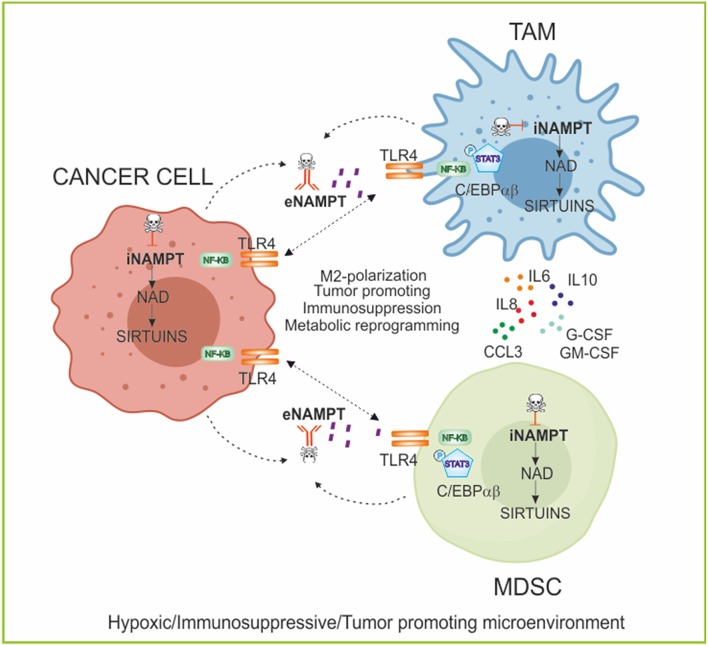
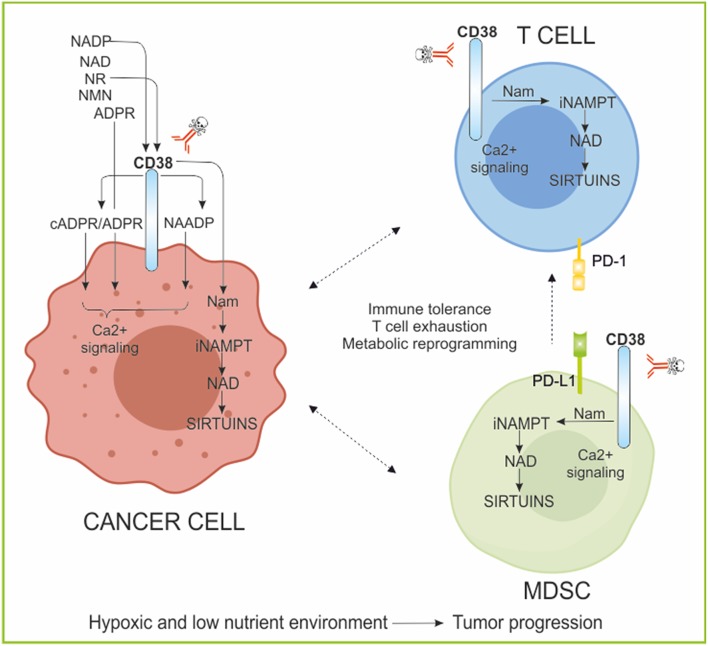
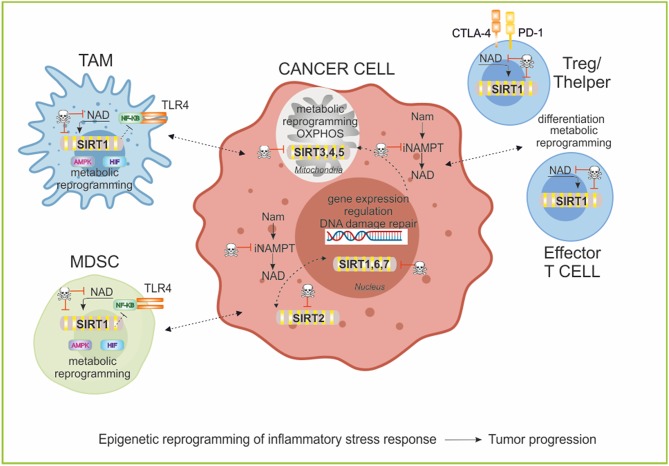
Cancer cells, particularly in solid tumors, are surrounded by non-neoplastic elements, including endothelial and stromal cells, as well as cells of immune origin, which can support tumor growth by providing the right conditions. On the other hand, local hypoxia, and lack of nutrients induce tumor cells to reprogram their metabolism in order to survive, proliferate, and disseminate: the same conditions are also responsible for building a tumor-suppressive microenvironment. In addition to tumor cells, it is now well-recognized that metabolic rewiring occurs in all cellular components of the tumor microenvironment, affecting epigenetic regulation of gene expression and influencing differentiation/proliferation decisions of these cells. Nicotinamide adenine dinucleotide (NAD) is an essential co-factor for energy transduction in metabolic processes. It is also a key component of signaling pathways, through the regulation of NAD-consuming enzymes, including sirtuins and PARPs, which can affect DNA plasticity and accessibility. In addition, both NAD-biosynthetic and NAD-consuming enzymes can be present in the extracellular environment, adding a new layer of complexity to the system. In this review we will discuss the role of the "NADome" in the metabolic cross-talk between cancer and infiltrating immune cells, contributing to cancer growth and immune evasion, with an eye to therapeutic implications.
癌细胞,特别是在实体肿瘤中,被非肿瘤性细胞所包围,包括内皮细胞和基质细胞,以及免疫来源的细胞,这些细胞可以通过提供适当的条件来支持肿瘤生长。另一方面,局部缺氧和缺乏营养会诱导肿瘤细胞重新编程其代谢,以存活、增殖和扩散:同样的条件也负责构建肿瘤抑制性微环境。除了肿瘤细胞,现在人们已经认识到,代谢重编程发生在肿瘤微环境的所有细胞成分中,影响基因表达的表观遗传调控,并影响这些细胞的分化/增殖决策。烟酰胺腺嘌呤二核苷酸(NAD)是代谢过程中能量转导的必需辅酶。它也是信号通路的关键组成部分,通过调节 NAD 消耗酶,包括沉默调节蛋白和 PARP,可以影响 DNA 的可塑性和可及性。此外,NAD 合成酶和 NAD 消耗酶都可以存在于细胞外环境中,为系统增加了一层新的复杂性。在这篇综述中,我们将讨论“NADome”在癌症和浸润性免疫细胞之间代谢交叉对话中的作用,它有助于癌症的生长和免疫逃避,并着眼于治疗意义。