Stephenson Erin L, Zhang Ping, Ghorbani Samira, Wang Aixia, Gu Jiamin, Keough Michael B, Rawji Khalil Sherali, Silva Claudia, Yong V Wee, Ling Chang-Chun
Hotchkiss Brain Institute and Department of Clinical Neurosciences, University of Calgary, 3330 Hospital Drive NW, Calgary, Alberta T2N 4N1, Canada.
Alberta Glycomics Centre, Department of Chemistry, University of Calgary, 2500 University Drive NW, Calgary, Alberta T2N 1N4, Canada.
ACS Cent Sci. 2019 Jul 24;5(7):1223-1234. doi: 10.1021/acscentsci.9b00327. Epub 2019 May 30.
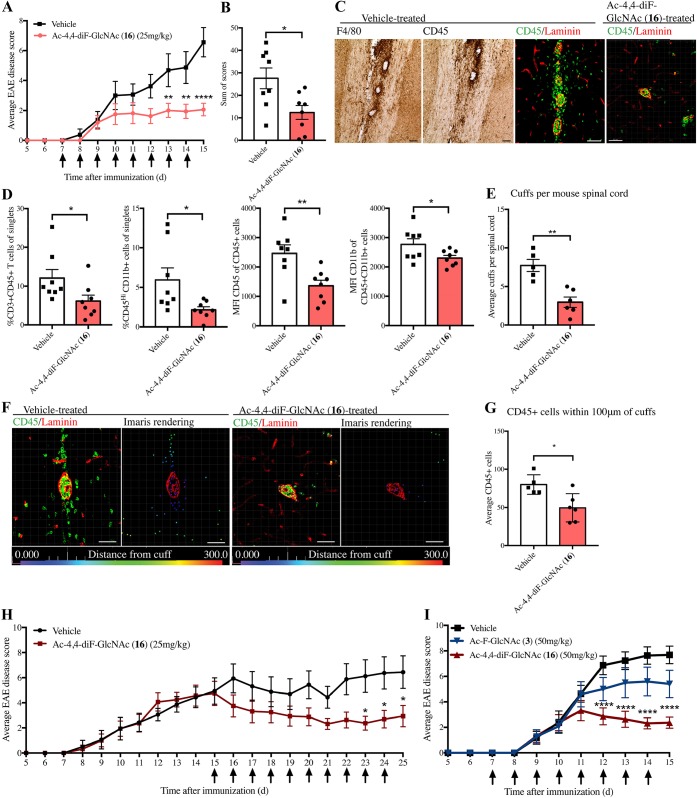
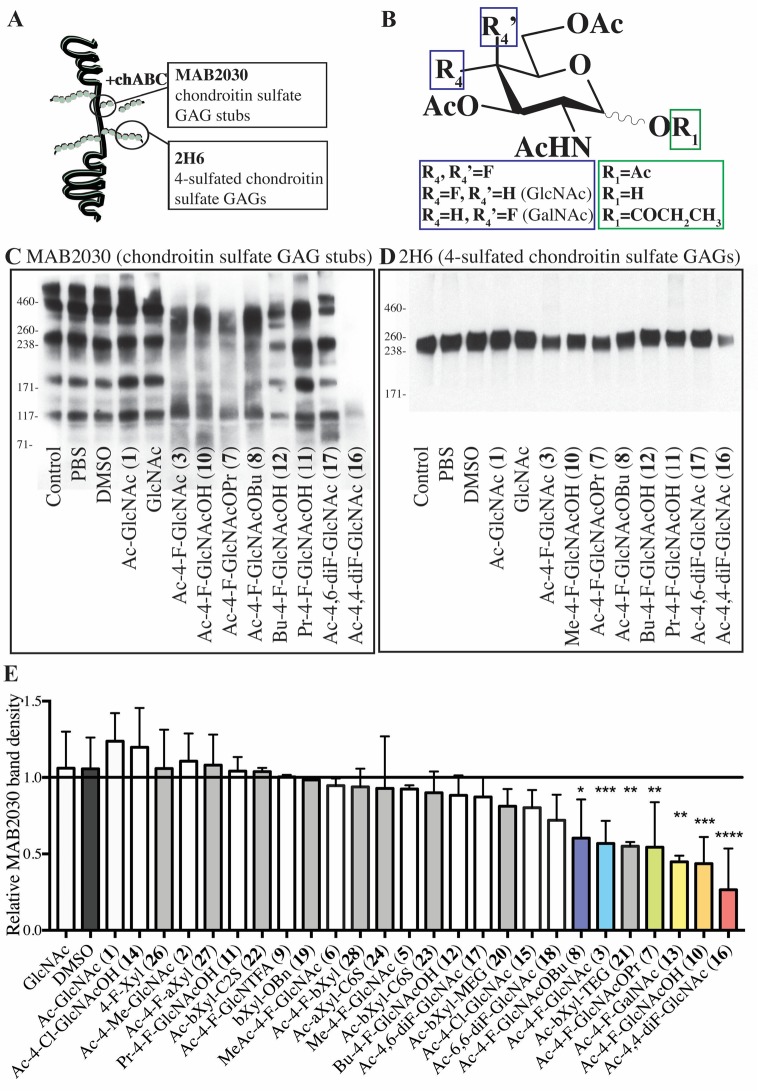
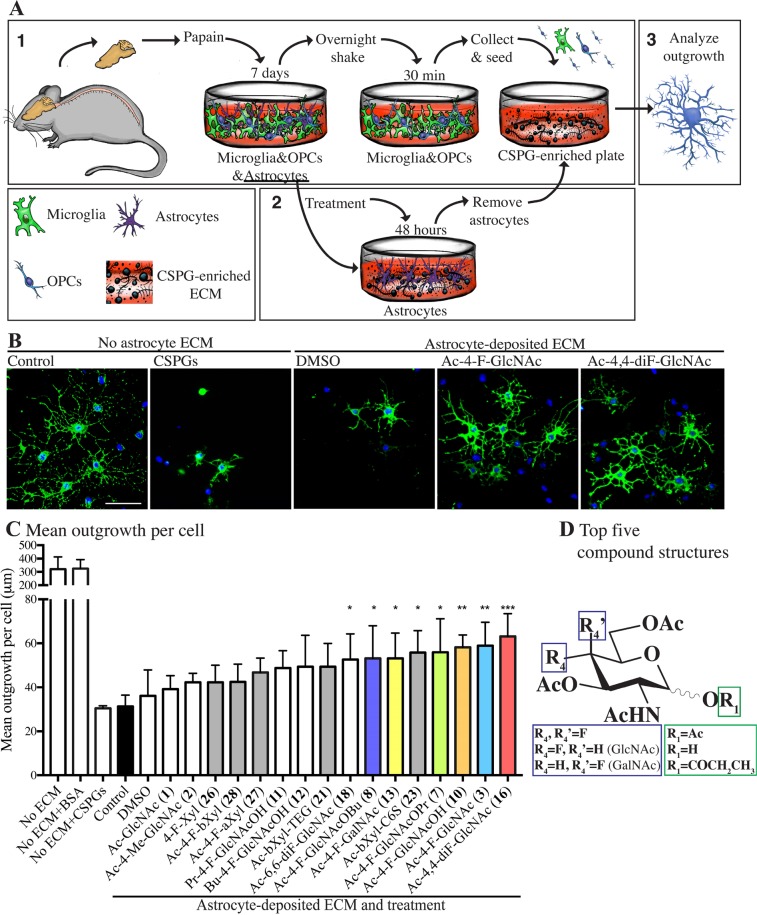
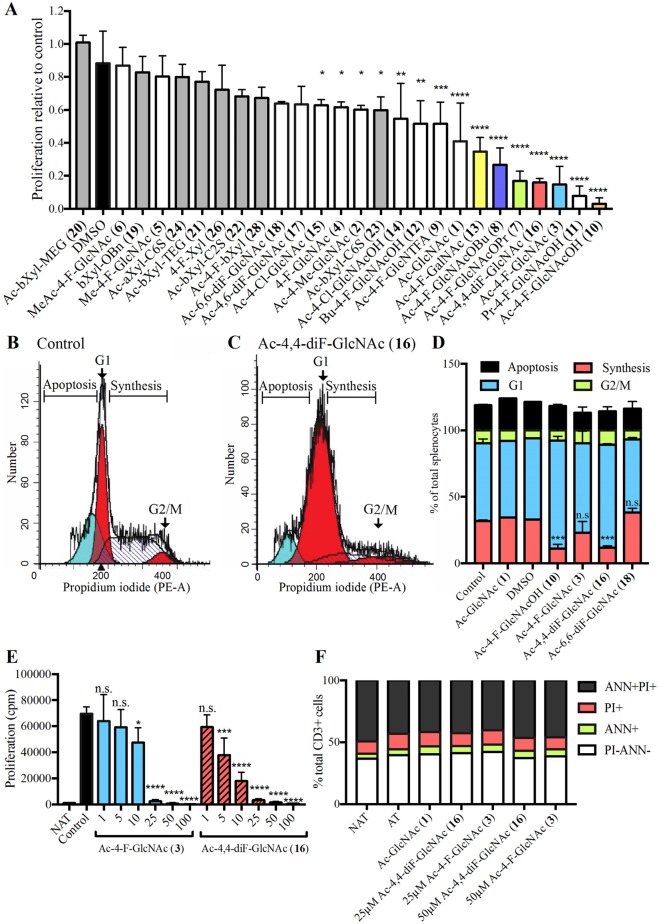
Chondroitin sulfate proteoglycans (CSPGs) are upregulated in insults to the central nervous system, including multiple sclerosis (MS), an inflammatory demyelinating condition of the central nervous system. CSPGs appear to be detrimental in MS, as they enhance immune responses and act as barriers to oligodendrocyte differentiation and thus remyelination. Despite their deleterious roles, strategies to selectively reduce CSPG production are lacking. The purpose of this study was to develop, screen, and describe a series of glucosamine derivatives and xylosides for their capacity to overcome detrimental CSPGs and inflammatory processes. Specifically, we assess the ability of analogues to interfere with CSPG biosynthesis, promote the outgrowth of oligodendrocyte precursor cells in an inhibitory environment, and lower inflammation by attenuating the proliferation of T lymphocytes. We highlight the beneficial activities of a novel compound, per-O-acetylated 4,4-difluoro--acetylglucosamine (Ac-4,4-diF-GlcNAc) , and report that it reduced inflammation and clinical severity in a mouse model of MS. Thus, this study represents an important advance, as we uncover that targeting CSPG biosynthesis with a potent inhibitor is an effective avenue to ameliorate inflammatory cascades and promote repair processes in MS and other neurological conditions.
硫酸软骨素蛋白聚糖(CSPGs)在包括多发性硬化症(MS)在内的中枢神经系统损伤中上调,MS是一种中枢神经系统的炎性脱髓鞘疾病。CSPGs在MS中似乎具有有害作用,因为它们会增强免疫反应,并成为少突胶质细胞分化以及髓鞘再生的障碍。尽管它们具有有害作用,但缺乏选择性降低CSPG产生的策略。本研究的目的是开发、筛选和描述一系列氨基葡萄糖衍生物和木糖苷,以评估它们克服有害CSPGs和炎症过程的能力。具体而言,我们评估类似物干扰CSPG生物合成、在抑制性环境中促进少突胶质细胞前体细胞生长以及通过减弱T淋巴细胞增殖来减轻炎症的能力。我们强调了一种新型化合物全-O-乙酰化4,4-二氟-N-乙酰葡糖胺(Ac-4,4-diF-GlcNAc)的有益活性,并报告其在MS小鼠模型中减轻了炎症和临床严重程度。因此,本研究是一项重要进展,因为我们发现用一种强效抑制剂靶向CSPG生物合成是改善MS和其他神经疾病中炎症级联反应并促进修复过程的有效途径。