Jiang Zhihui, Guo Xiao, Zhang Kunpeng, Sekaran Ganesh, Cao Baorui, Zhao Qingqing, Zhang Shouquan, Kirby Gordon M, Zhang Xiaoying
Henan Joint International Research Laboratory of Veterinary Biologics Research and Application, Anyang Institute of Technology, Anyang, China.
College of Veterinary Medicine, Northwest A&F University, Xianyang, China.
Front Pharmacol. 2019 Jul 25;10:782. doi: 10.3389/fphar.2019.00782. eCollection 2019.
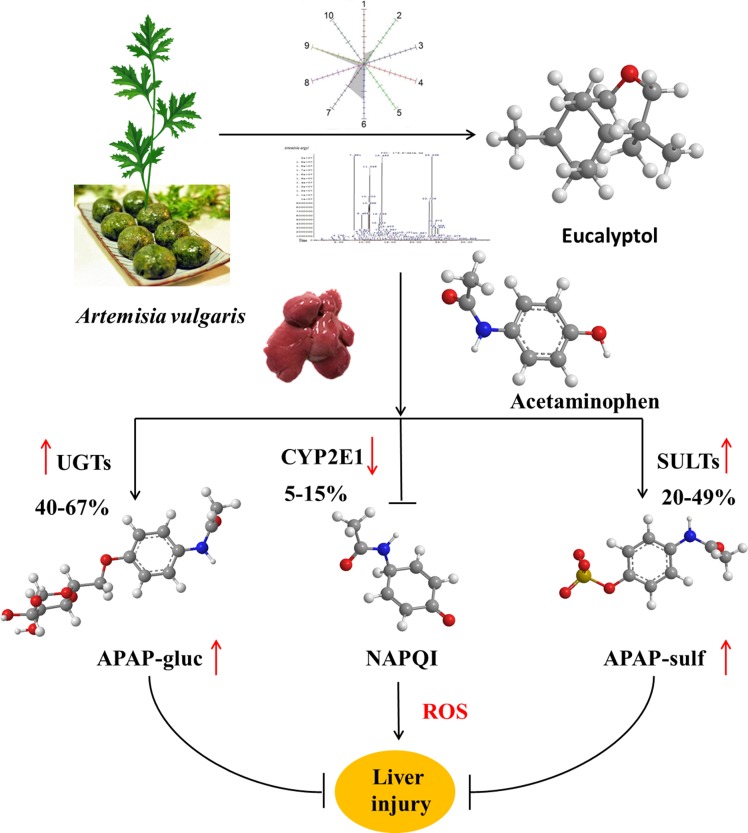
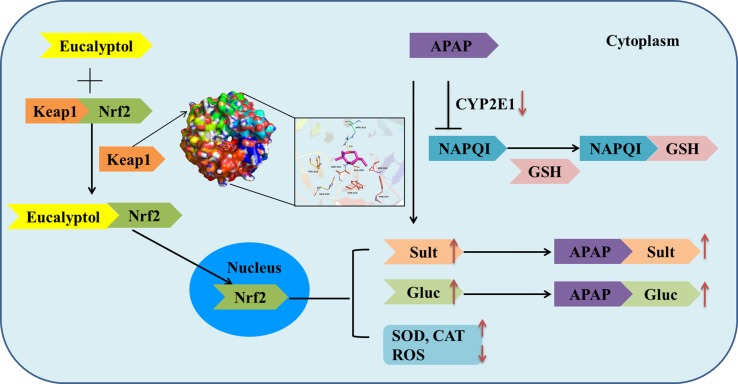
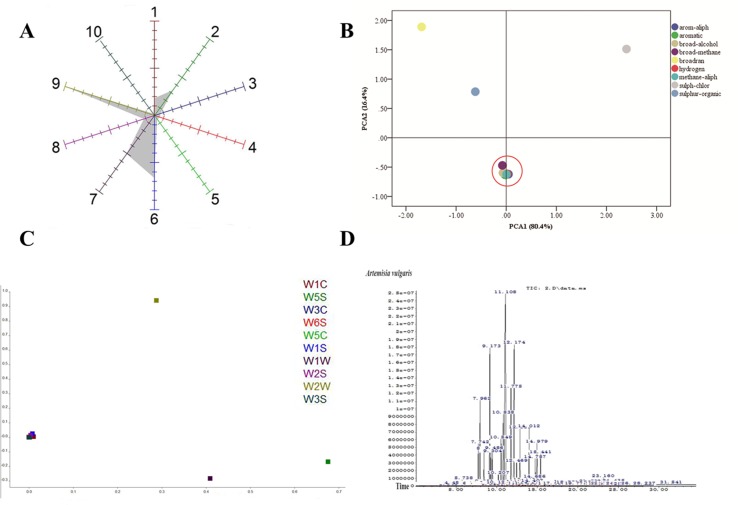
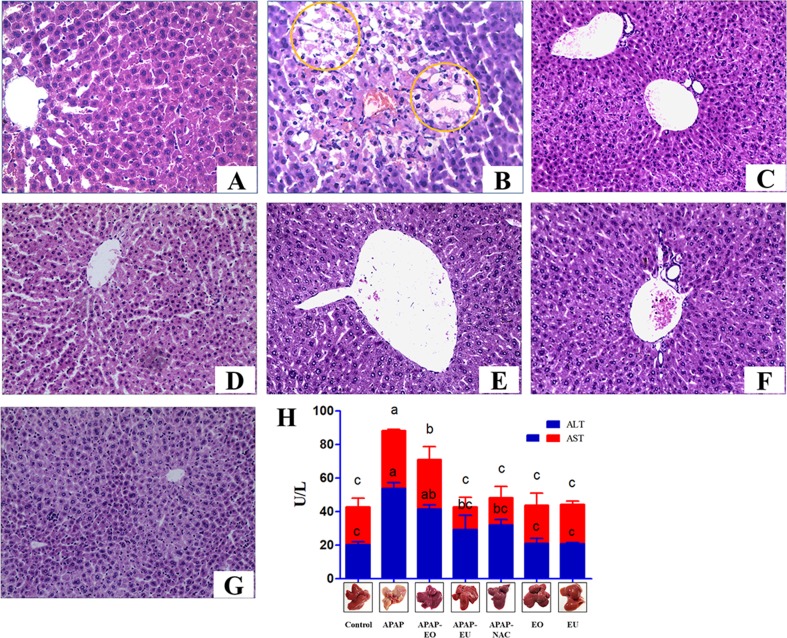
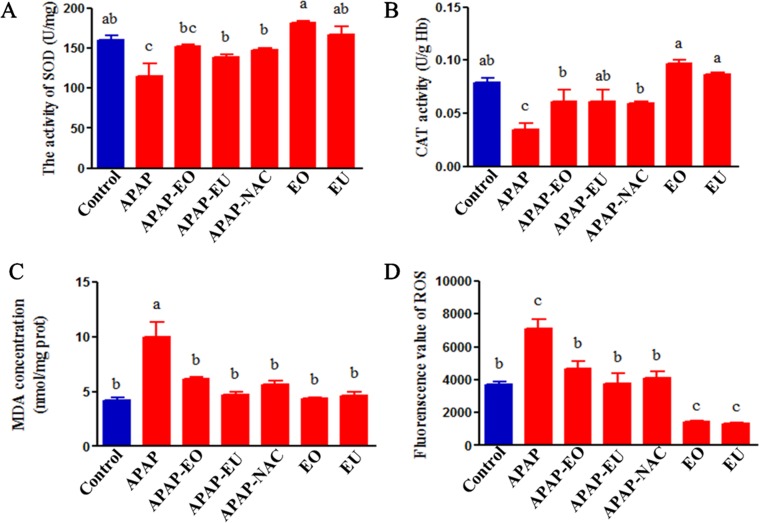
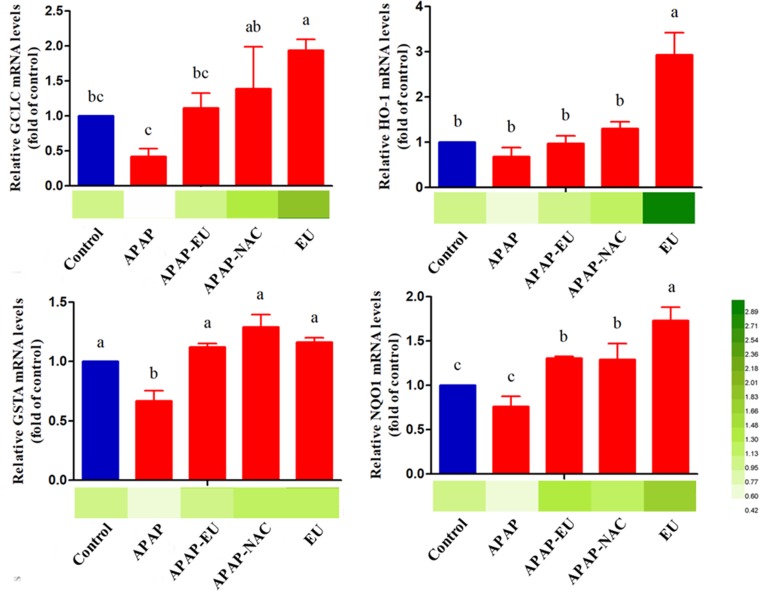
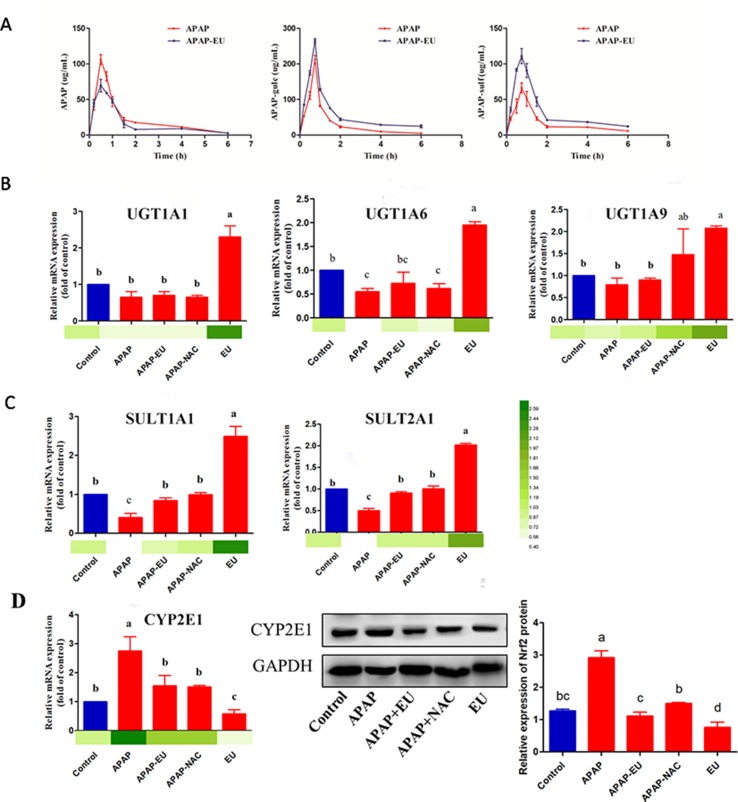
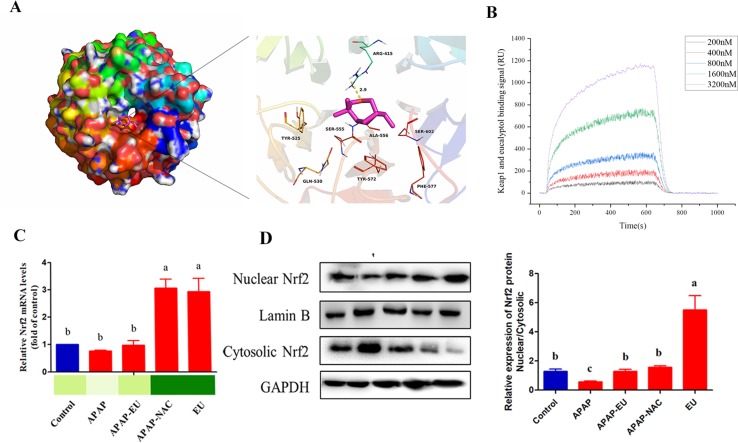
has long been used in traditional medicine and as a food source for different functions in eastern Asia. L. (AV) is a species of the genus Artemisia. Essential oils (EOs) were extracted from AV by subcritical butane extraction. EO contents were detected by electronic nose and headspace solid-phase microextraction coupled with gas chromatography (HS-SPME-GC-MS). To investigate the hepatoprotective effects, mice subjected to liver injury were treated intragastrically with EOs or eucalyptol for 3 days. Acetaminophen (APAP) alone caused severe liver injury characterized by significantly increased serum AST and ALT levels, ROS and hepatic malondialdehyde (MDA), as well as liver superoxide dismutase (SOD) and catalase (CAT) depletions. EOs significantly attenuated APAP-induced liver damages. Further study confirmed that eucalyptol is an inhibitor of Keap1, the affinity of eucalyptol and Keap1 was 1.42 × 10, which increased the Nrf2 translocation from the cytoplasm into the mitochondria. The activated Nrf2 increased the mRNA expression of uridine diphosphate glucuronosyltransferases (UGTs) and sulfotransferases (SULTs), also inhibiting CYP2E1 activities. Thus, the activated Nrf2 suppressed toxic intermediate formation, promoting APAP hepatic non-toxicity, whereby APAP was metabolized into APAP-gluc and APAP-sulf. Collectively, APAP non-toxic metabolism was accelerated by eucalyptol in protecting the liver against APAP-induced injury, indicating eucalyptol or EOs from AV potentials as a natural source of hepatoprotective agent.
长期以来,它一直被用于传统医学,并作为东亚地区具有不同功能的食物来源。艾(青蒿变种)是蒿属的一个物种。通过亚临界丁烷萃取法从艾中提取挥发油。通过电子鼻和顶空固相微萃取结合气相色谱法(HS-SPME-GC-MS)检测挥发油含量。为了研究其肝脏保护作用,对遭受肝损伤的小鼠进行为期3天的挥发油或桉叶油胃内给药治疗。单独使用对乙酰氨基酚(APAP)会导致严重的肝损伤,其特征为血清天冬氨酸转氨酶(AST)和丙氨酸转氨酶(ALT)水平、活性氧(ROS)和肝丙二醛(MDA)显著升高,以及肝脏超氧化物歧化酶(SOD)和过氧化氢酶(CAT)耗竭。挥发油显著减轻了APAP诱导的肝损伤。进一步研究证实,桉叶油是Keap1的抑制剂,桉叶油与Keap1的亲和力为1.42×10,这增加了核因子E2相关因子2(Nrf2)从细胞质向线粒体的转位。活化的Nrf2增加了尿苷二磷酸葡萄糖醛酸转移酶(UGTs)和磺基转移酶(SULTs)的mRNA表达,同时抑制细胞色素P450 2E1(CYP2E1)活性。因此,活化的Nrf2抑制了有毒中间体的形成,促进了APAP的肝脏无毒化,从而使APAP代谢为APAP-葡萄糖醛酸苷和APAP-硫酸盐。总体而言,桉叶油加速了APAP的无毒代谢,从而保护肝脏免受APAP诱导的损伤,表明桉叶油或艾中的挥发油有潜力作为肝脏保护剂的天然来源。