Thaler Andrew D, Amon Diva
Blackbeard Biologic: Science and Environmental Advisors, St. Michaels, MD, USA.
Center for Environmental Science, Horn Point Laboratory, University of Maryland, Cambridge, MD, USA.
PeerJ. 2019 Aug 6;7:e7397. doi: 10.7717/peerj.7397. eCollection 2019.
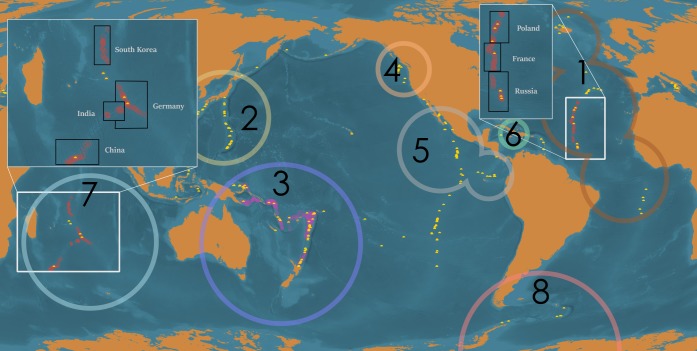
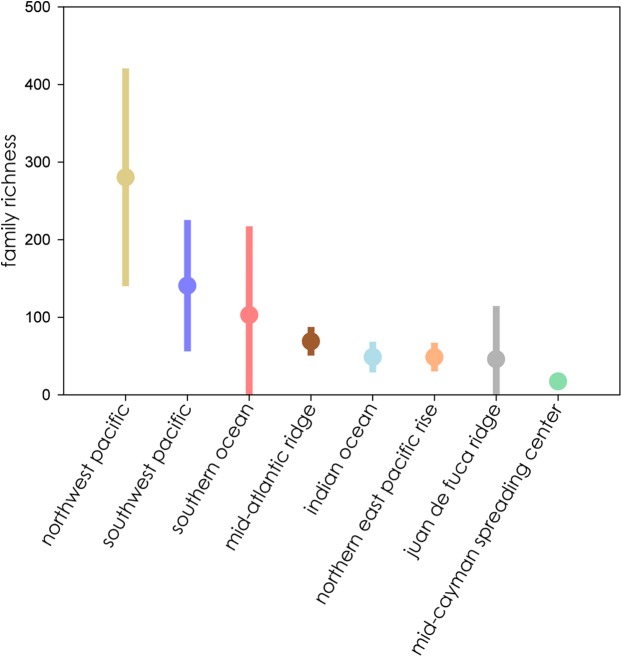
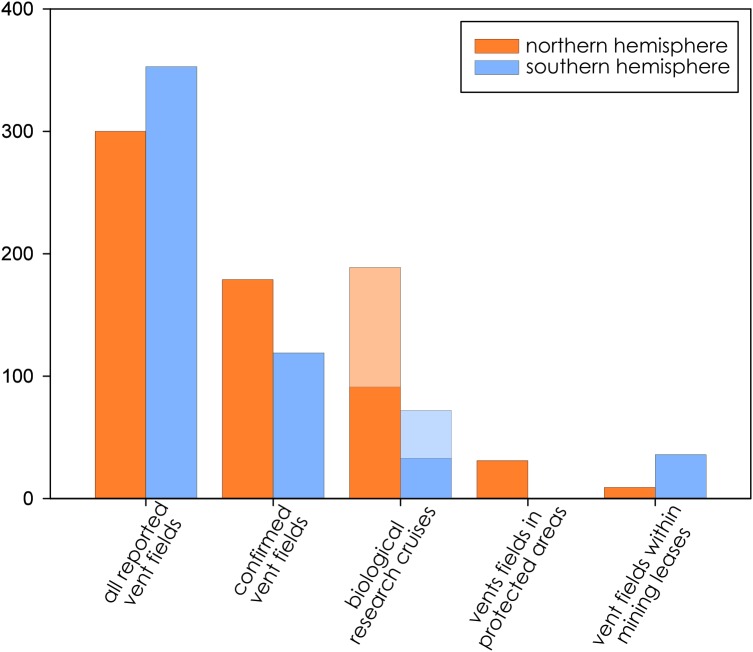
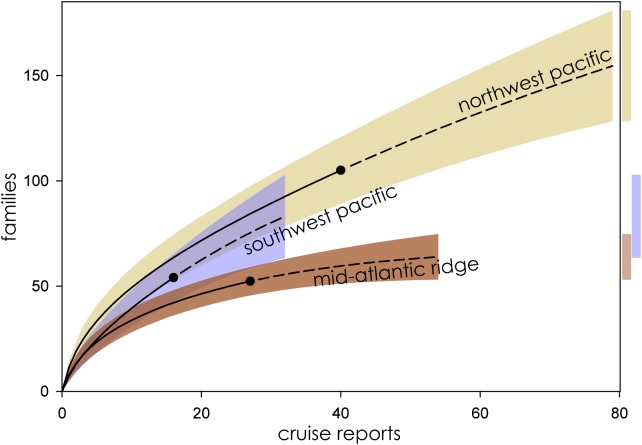
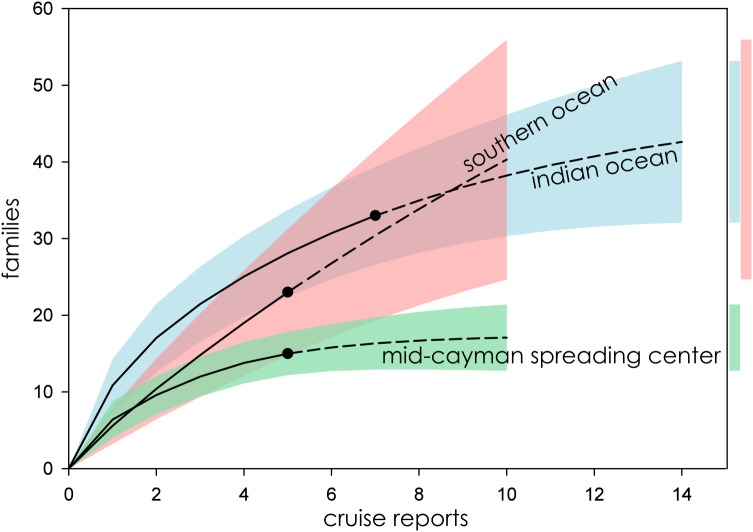
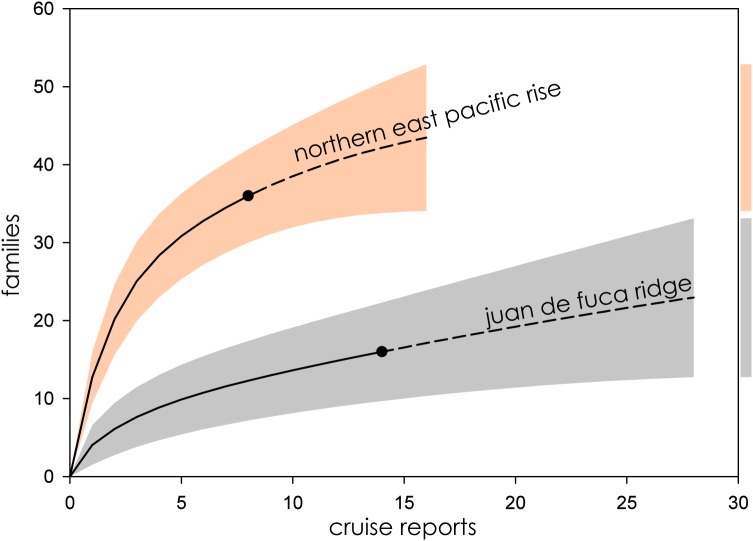
For over 40 years, hydrothermal vents and the communities that thrive on them have been a source of profound discovery for deep-sea ecologists. These ecosystems are found throughout the world on active plate margins as well as other geologically active features. In addition to their ecologic interest, hydrothermal vent fields are comprised of metallic ores, sparking a nascent industry that aims to mine these metal-rich deposits for their mineral wealth. Here, we provide the first systematic assessment of macrofaunal and megafaunal biodiversity at hydrothermal vents normalized against research effort. Cruise reports from scientific expeditions as well as other literature were used to characterize the extent of exploration, determine the relative biodiversity of different biogeographic provinces, identify knowledge gaps related to the distribution of research effort, and prioritize targets for additional sampling to establish biodiversity baselines ahead of potential commercial exploitation. The Northwest Pacific, Southwest Pacific, and Southern Ocean biogeographic provinces were identified as high biodiversity using rarefaction of family-level incidence data, whereas the North East Pacific Rise, Northern East Pacific, Mid-Atlantic Ridge, and Indian Ocean provinces had medium biodiversity, and the Mid-Cayman Spreading Center was identified as a province of relatively low biodiversity. A North/South divide in the extent of biological research and the targets of hydrothermal vent mining prospects was also identified. Finally, we provide an estimate of sampling completeness for each province to inform scientific and stewardship priorities.
四十多年来,热液喷口及其周围繁盛的生物群落一直是深海生态学家重大发现的源泉。这些生态系统在全球各地的活动板块边缘以及其他地质活跃地带均有发现。除了具有生态学研究价值外,热液喷口区域还蕴藏着金属矿石,催生了一个新兴产业,该产业旨在开采这些富含金属的矿床以获取矿产资源。在此,我们首次对热液喷口处的大型动物和巨型动物生物多样性进行了系统评估,并将其与研究投入进行了归一化处理。利用科学考察的航次报告以及其他文献资料,来描述勘探范围,确定不同生物地理区域的相对生物多样性,找出与研究投入分布相关的知识空白,并确定在潜在商业开发之前进行额外采样以建立生物多样性基线的优先目标。通过对科级出现数据进行稀疏分析,确定西北太平洋、西南太平洋和南大洋生物地理区域具有高生物多样性,而东北太平洋海隆、东北太平洋北部、大西洋中脊和印度洋区域生物多样性中等,中开曼海脊扩张中心被确定为生物多样性相对较低的区域。此外,还发现了生物研究范围和热液喷口采矿前景目标上的南北差异。最后,我们对每个区域的采样完整性进行了估计,以为科学研究和管理重点提供参考。