Cenkoglu Brunilda Gashi, Balcioglu Nilufer Bolukbasi, Ozdemir Tayfun, Mijiritsky Eitan
Department of Oral & Maxillofacial Surgery, Faculty of Dentistry, Albanian University, 1001 Tirana, Albania.
Department of Oral Implantology, Faculty of Dentistry, Istanbul University, 34093 Istanbul, Turkey.
Materials (Basel). 2019 Aug 11;12(16):2556. doi: 10.3390/ma12162556.
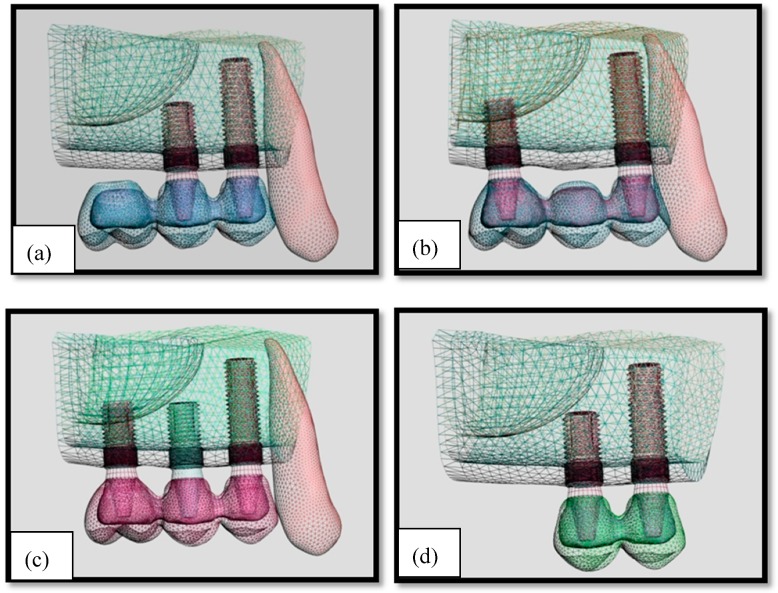
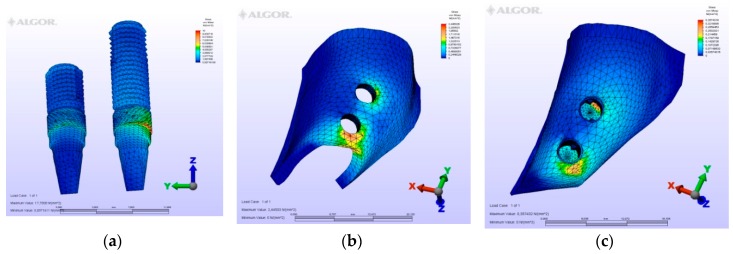
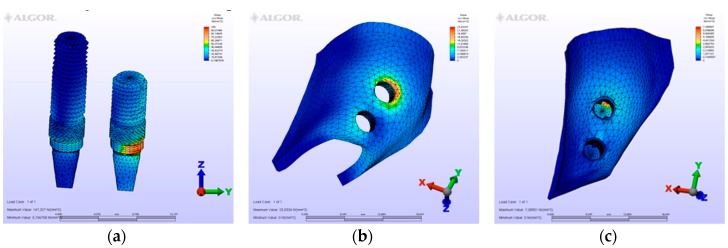
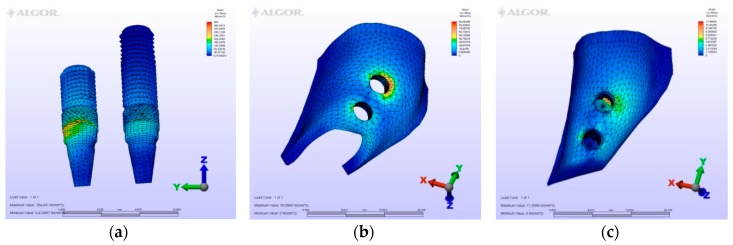
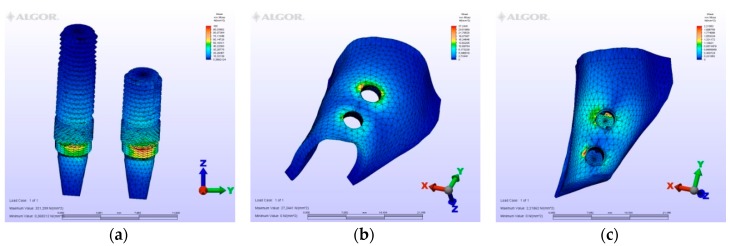
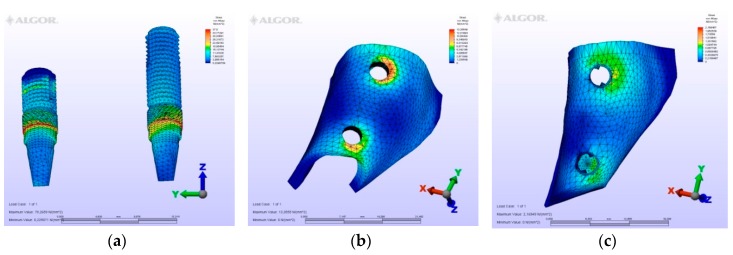
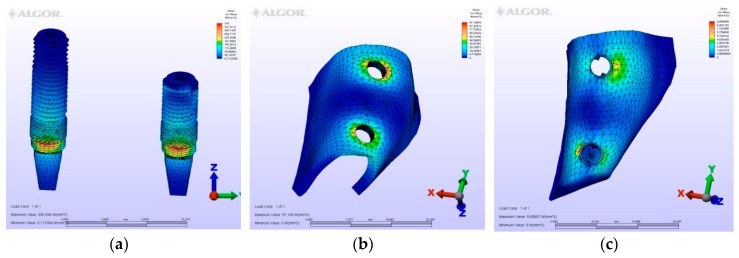
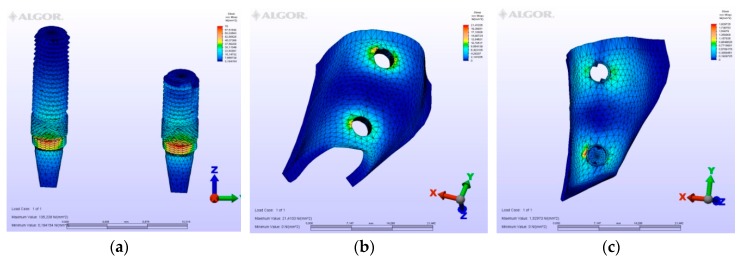
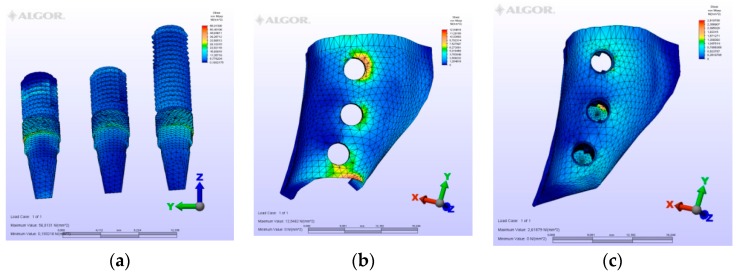
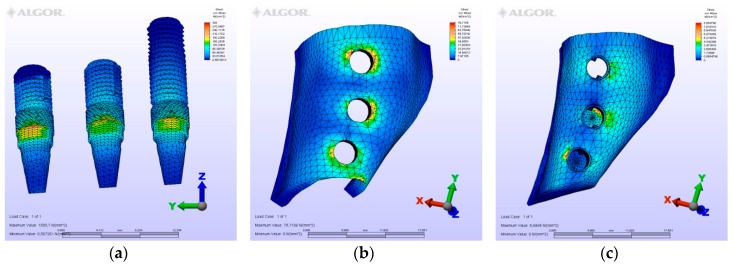
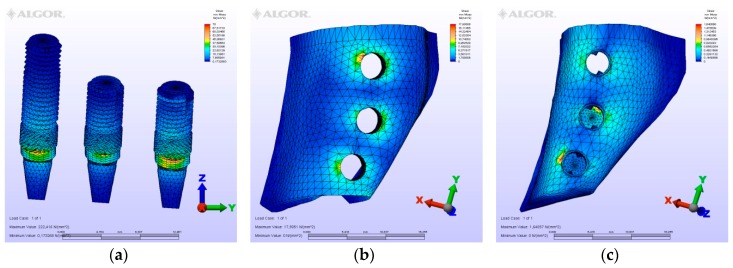
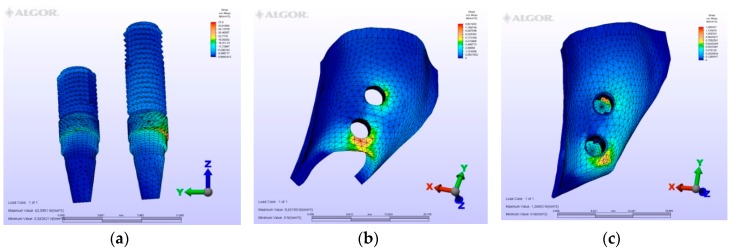
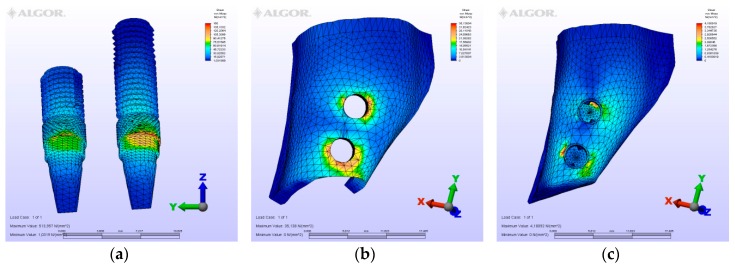
In this study, different prosthetic designs that could be applied instead of advanced surgical techniques in atrophic maxilla were evaluated with finite element analysis. Atrophic posterior maxilla was modeled using computer tomography images and four models were prepared as follows: Model 1 (M1), two implants supporting a three-unit distal cantilever prosthesis; Model 2 (M2), two implants supporting a three-unit conventional fixed partial denture; Model 3 (M3), three implants supporting three connected crowns; and Model 4 (M4), two implants supporting two connected crowns. Implants 4 mm in width and 8 mm or 13 mm in length were used. A linear three-dimensional finite element programme was used for analysis. The maximum principle stress (tensile) and minimum principle stress (compressive) were used to display stress in cortical and cancellous bones. The von Mises criteria were used to evaluate the stress on the implants. M1 was found to be the most risky model. The short dental arch case (M4) revealed the lowest stresses among the models but is not recommended when one more implant can be placed because of the bending forces that could occur at the mesial implant. In M2 and M3, the distal implants were placed bicortically between the crestal and sinus cortical plates, causing a fall of the stresses because of the bicortical stability of these implants.
在本研究中,利用有限元分析评估了可用于替代萎缩性上颌骨先进手术技术的不同修复设计。使用计算机断层扫描图像对萎缩性上颌后牙区进行建模,并制备了如下四种模型:模型1(M1),两颗种植体支持一个三单位远中悬臂式修复体;模型2(M2),两颗种植体支持一个三单位传统固定局部义齿;模型3(M3),三颗种植体支持三个相连的牙冠;模型4(M4),两颗种植体支持两个相连的牙冠。使用宽度为4mm、长度为8mm或13mm的种植体。采用线性三维有限元程序进行分析。最大主应力(拉伸)和最小主应力(压缩)用于显示皮质骨和松质骨中的应力。采用冯·米塞斯准则评估种植体上的应力。发现M1是风险最高的模型。短牙弓病例(M4)在各模型中应力最低,但当由于近中种植体可能出现的弯曲力而可以多植入一颗种植体时,不建议采用该模型。在M2和M3中,远中种植体双皮质植入牙槽嵴顶皮质板和窦皮质板之间,由于这些种植体的双皮质稳定性,应力降低。