Department of Obstetrics and Gynaecology, Renmin Hospital of Wuhan University, Wuhan, People's Republic of China.
Cell Death Dis. 2019 Aug 13;10(8):609. doi: 10.1038/s41419-019-1849-x.
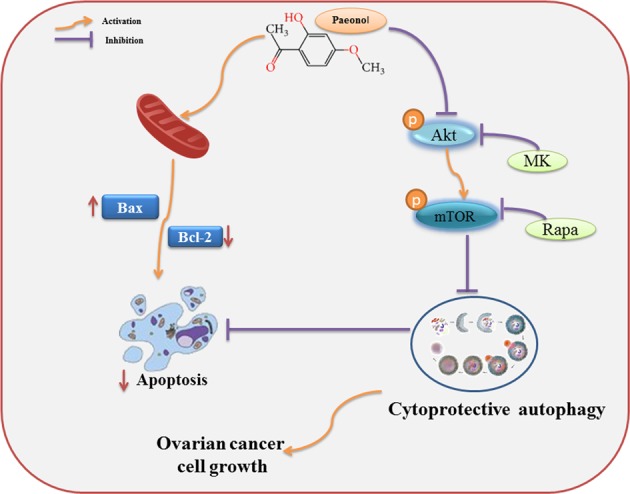
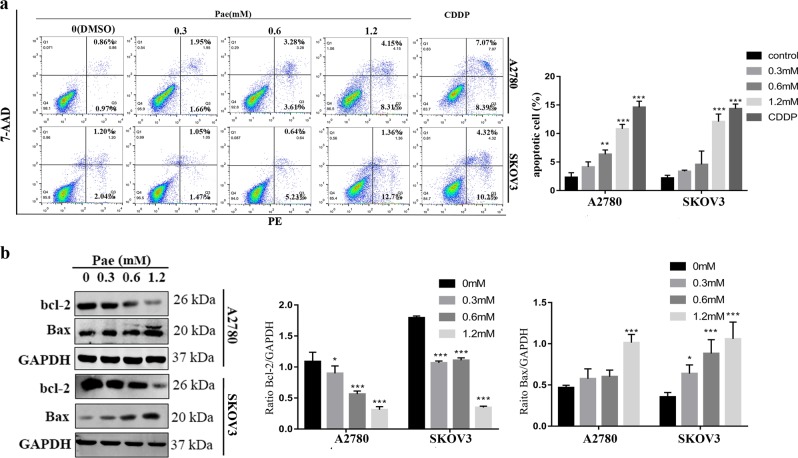
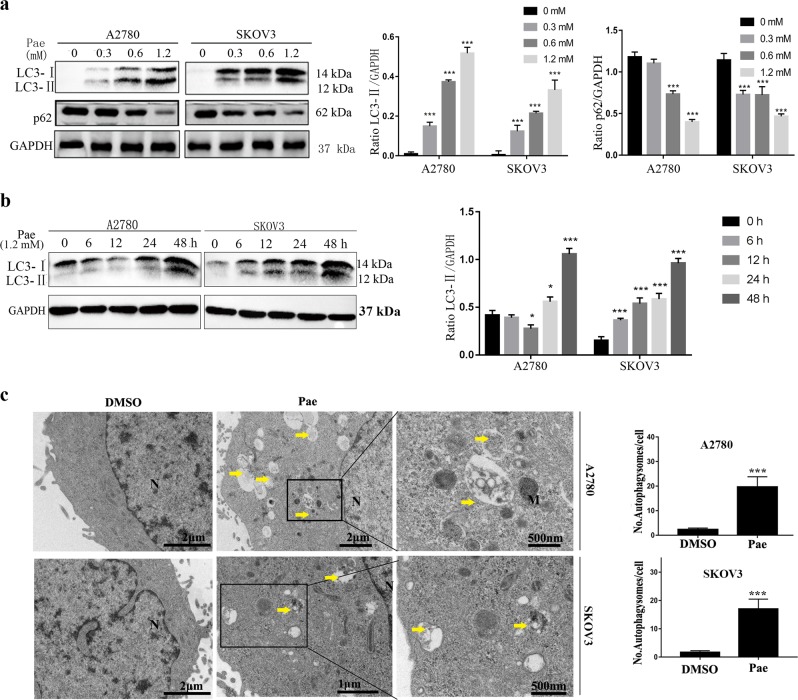
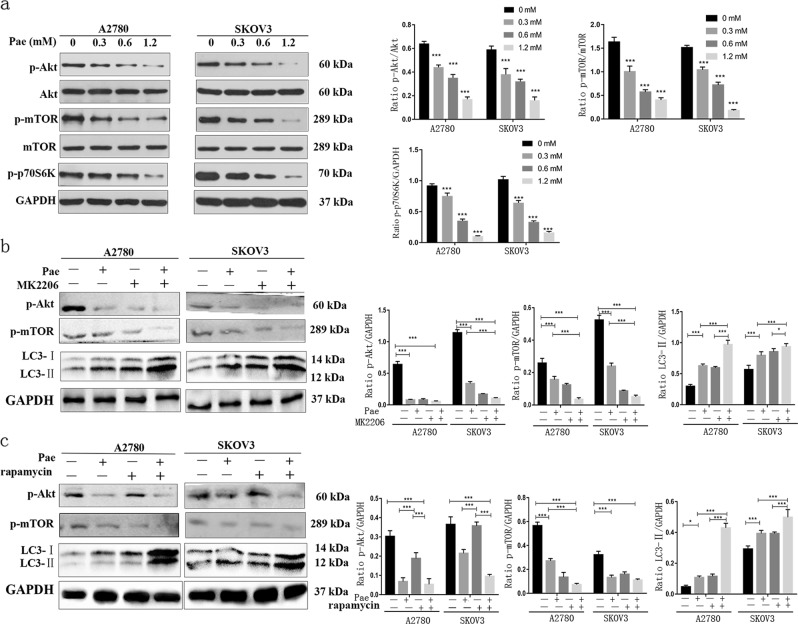
Paeonol (Pae), a phenolic acid compound isolated from the Moutan Cortex, was previously demonstrated to exert multiple anticancer effects. The rational control of autophagy has been considered a potential treatment strategy for epithelial ovarian cancer. However, whether Pae induces autophagy and the relationship between its antitumour activities and autophagy in epithelial ovarian cancer are still unclear. In this study, we found that Pae induced not only antiproliferation activity and apoptosis but also autophagy, and complete autophagic flux was observed in A2780 and SKOV3 cells. In addition, combination treatment with Pae and an autophagy inhibitor (3-methyladenine and hydroxychloroquine) showed significant synergetic effects on inhibiting cell viability and promoting apoptosis in vitro and in the A2780 xenograft model, without severe side effects, which was often had by cisplatin. These results indicate that autophagy induced by Pae has a cytoprotective role in both A2780 and SKOV3 cells. Mechanistically, we found that Pae inhibited the protein kinase B(Akt)/mammalian target of rapamycin (mTOR) pathway. Furthermore, when combined with the inhibitors MK2206 and rapamycin to inhibit Akt and mTOR kinase activity, Pae-induced autophagy was increased. Taken together, our results demonstrate that Pae induced cytoprotective autophagy by inhibiting the Akt/mTOR pathway in ovarian cancer cells. Thus, the strategy of combining Pae with an autophagy inhibitor to block Akt/mTOR-dependent autophagy could enhance the antitumour activity of Pae and warrants further application for the treatment of ovarian cancer.
丹皮酚(Pae)是从牡丹皮中分离得到的一种酚酸类化合物,先前的研究表明其具有多种抗癌作用。合理调控自噬已被认为是治疗上皮性卵巢癌的一种潜在策略。然而,丹皮酚是否诱导自噬以及其在卵巢癌细胞中的抗肿瘤活性与自噬之间的关系尚不清楚。在本研究中,我们发现丹皮酚不仅诱导了增殖抑制和细胞凋亡,还诱导了自噬,并且在 A2780 和 SKOV3 细胞中观察到完全的自噬流。此外,丹皮酚与自噬抑制剂(3-甲基腺嘌呤和羟氯喹)联合治疗在体外和 A2780 异种移植模型中显示出显著的协同抑制细胞活力和促进细胞凋亡的作用,而没有顺铂等药物常有的严重副作用。这些结果表明,丹皮酚诱导的自噬在 A2780 和 SKOV3 细胞中均具有细胞保护作用。在机制上,我们发现丹皮酚抑制了蛋白激酶 B(Akt)/哺乳动物雷帕霉素靶蛋白(mTOR)通路。此外,当与抑制剂 MK2206 和 rapamycin 联合使用以抑制 Akt 和 mTOR 激酶活性时,丹皮酚诱导的自噬增加。综上所述,我们的研究结果表明,丹皮酚通过抑制 Akt/mTOR 通路在上皮性卵巢癌细胞中诱导细胞保护自噬。因此,将丹皮酚与自噬抑制剂联合阻断 Akt/mTOR 依赖性自噬的策略可能增强丹皮酚的抗肿瘤活性,值得进一步应用于卵巢癌的治疗。