Aghdam Araz Sheibani, Ghorbani Morteza, Deprem Gokberk, Cebeci Fevzi Çakmak, Koşar Ali
Faculty of Engineering and Natural Sciences, Sabanci University, Tuzla, Istanbul, 34956, Turkey.
Mechatronics Engineering Program, Faculty of Engineering and Natural Science, Sabanci University, Istanbul, 34956, Turkey.
Sci Rep. 2019 Aug 12;9(1):11600. doi: 10.1038/s41598-019-48175-4.
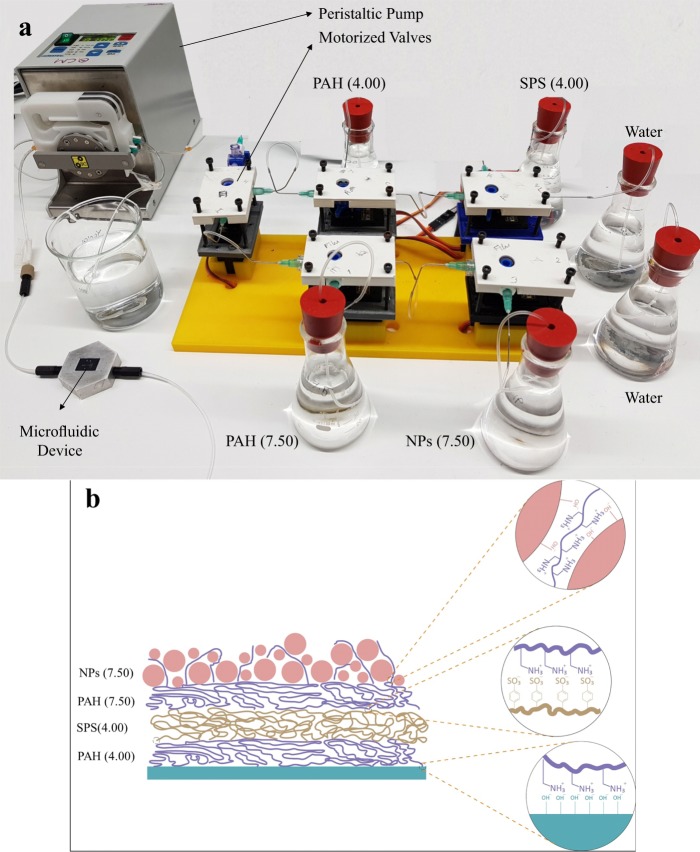
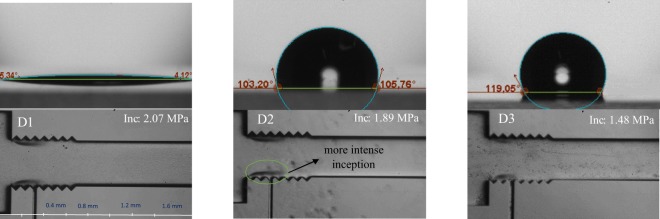
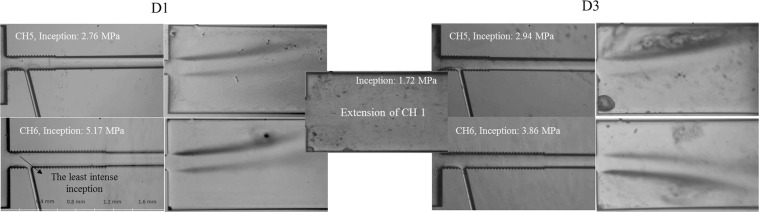
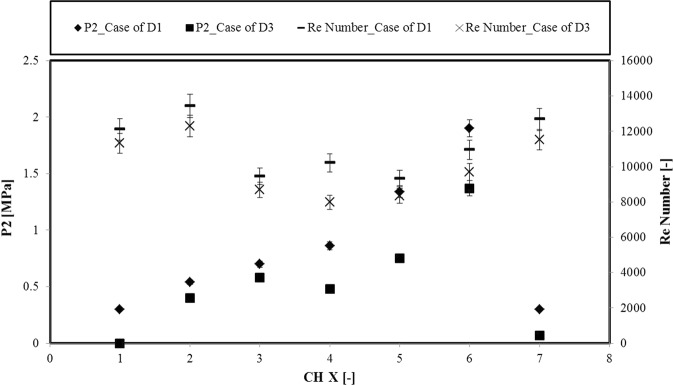
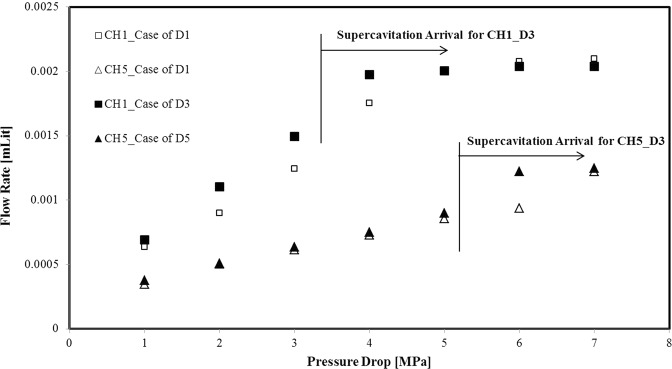
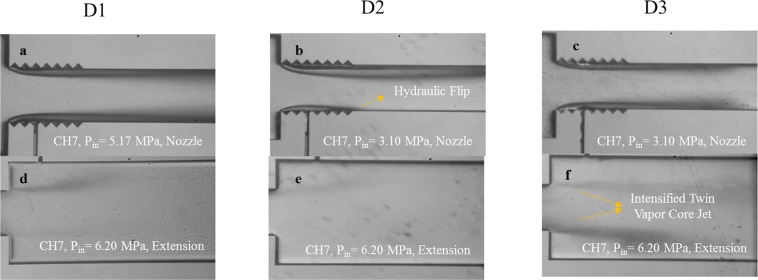
The importance of surface topology for the generation of cavitating flows in micro scale has been emphasized during the last decade. In this regard, the utilization of surface roughness elements is not only beneficial in promoting mass transportation mechanisms, but also in improving the surface characteristics by offering new interacting surface areas. Therefore, it is possible to increase the performance of microfluidic systems involving multiphase flows via modifying the surface. In this study, we aim to enhance generation and intensification of cavitating flows inside microfluidic devices by developing artificial roughness elements and trapping hydrophobic fluorinated lubricants. For this, we employed different microfluidic devices with various hydraulic diameters, while roughness structures with different lengths were formed on the side walls of microchannel configurations. The surface roughness of these devices was developed by assembling various sizes of silica nanoparticles using the layer-by-layer technique (D2). In addition, to compare the cavitating flow intensity with regular devices having plain surfaces (D1), highly fluorinated oil was trapped within the pores of the existing thin films in the configuration D2 via providing the Slippery Liquid-Infused Porous Surface (D3). The microfluidic devices housing the short microchannel and the extended channel were exposed to upstream pressures varying from 1 to 7.23 MPa. Cavitation inception and supercavitation condition occured at much lower upstream pressures for the configurations of D2 and D3. Interestingly, hydraulic flip, which rarely appears in the conventional conical nozzles at high pressures, was observed at moderate upstream pressures for the configuration D2 proving the air passage existence along one side of the channel wall.
在过去十年中,表面拓扑结构对微尺度空化流生成的重要性已得到强调。在这方面,利用表面粗糙度元件不仅有利于促进传质机制,还能通过提供新的相互作用表面积来改善表面特性。因此,通过修饰表面有可能提高涉及多相流的微流体系统的性能。在本研究中,我们旨在通过开发人工粗糙度元件并捕获疏水性氟化润滑剂来增强微流体装置内空化流的产生和强化。为此,我们采用了具有不同水力直径的不同微流体装置,同时在微通道结构的侧壁上形成了不同长度的粗糙度结构。这些装置的表面粗糙度是通过使用逐层技术(D2)组装各种尺寸的二氧化硅纳米颗粒而形成的。此外,为了将空化流强度与具有光滑表面的常规装置(D1)进行比较,通过提供光滑液体注入多孔表面(D3),将高度氟化油捕获在D2结构中现有薄膜的孔隙内。容纳短微通道和延长通道的微流体装置承受1至7.23 MPa的上游压力。对于D2和D3结构,空化起始和超空化条件在低得多的上游压力下就会出现。有趣的是,在常规锥形喷嘴中高压下很少出现的水力翻转,在D2结构的中等上游压力下被观察到,这证明了沿通道壁一侧存在空气通道。