Laboratoire des systèmes perceptifs, Département d'études cognitives, École normale supérieure, PSL University, CNRS, 75005, Paris, France.
CNRS and Paris School of Economics, Paris, France.
Sci Rep. 2019 Aug 12;9(1):11622. doi: 10.1038/s41598-019-48063-x.
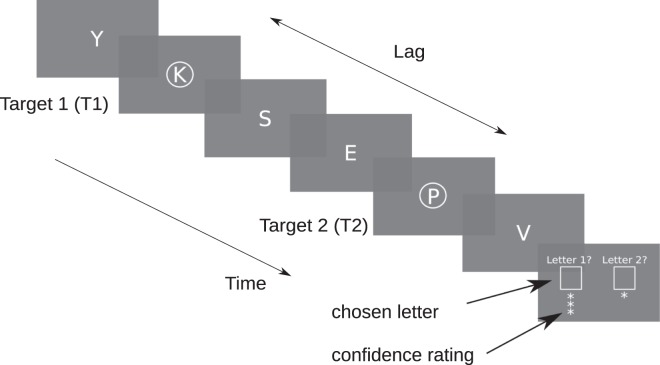
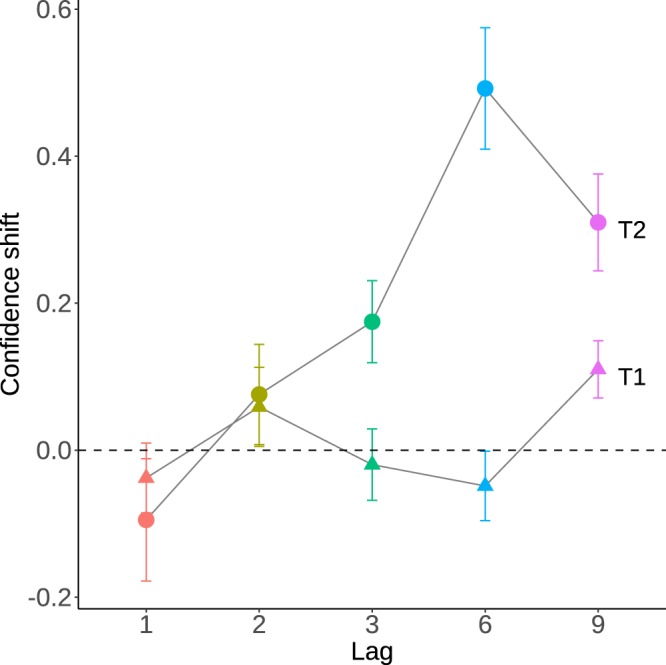
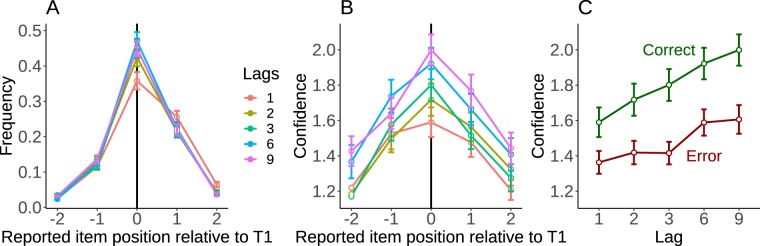
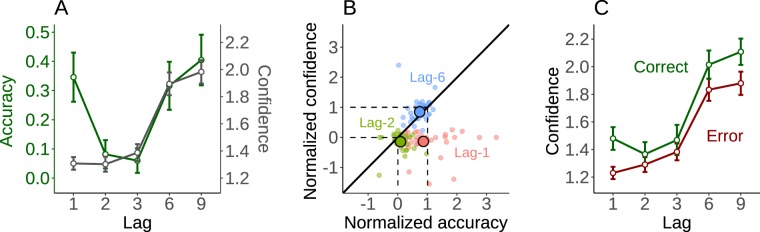
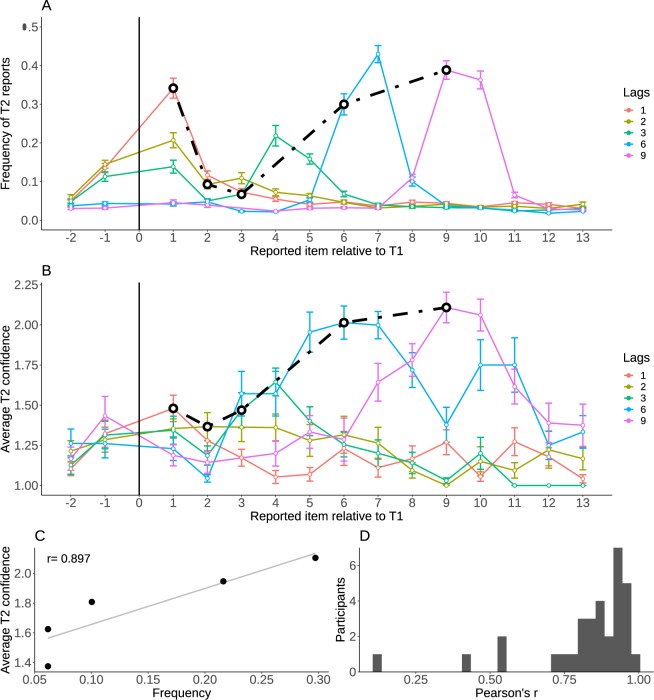
Temporal attention enhances the perceptual representation of a stimulus at a particular point in time. The number of possible attentional episodes in a given period is limited, but whether observers' confidence reflects such limitations is still unclear. To investigate this issue, we adapted an "Attentional Blink" paradigm, presenting observers with a rapid visual stream of letters containing two targets cued for subsequent perceptual reports and confidence judgments. We found three main results. First, when two targets fell within the same attentional episode, the second target underwent a strong under-confidence bias. In other words, confidence neglected that a single attentional episode can benefit to both targets. Second, despite this initial bias, confidence was strongly correlated with response probability. Third, as confidence was yoked to the evidence used in perceptual reports, it remains blind to delays in response selection for the second target. Notably, the second target was often mistaken with a later item associated with higher confidence. These results suggest that confidence does not perfectly evaluate the limits of temporal attention in challenging situations.
时间注意增强了在特定时间点对刺激的感知表现。在给定时间段内,可能的注意事件的数量是有限的,但观察者的信心是否反映了这种限制仍然不清楚。为了研究这个问题,我们改编了一个“注意瞬脱”范式,向观察者呈现一个快速的字母视觉流,其中包含两个目标,这些目标被提示进行随后的感知报告和信心判断。我们发现了三个主要结果。首先,当两个目标处于同一注意事件中时,第二个目标经历了强烈的低估信心偏差。换句话说,信心忽略了一个单一的注意事件可以同时受益于两个目标。其次,尽管存在这种初始偏差,信心与反应概率高度相关。第三,由于信心与用于感知报告的证据相联系,它仍然对第二个目标的反应选择延迟视而不见。值得注意的是,第二个目标经常被误认为是与更高信心相关的后来的项目。这些结果表明,在具有挑战性的情况下,信心并不能完美地评估时间注意的限制。