Population Research Center, University of Texas-Austin, 305 E. 23rd Street, Stop G1800, RLP 2.606, Austin, TX, 78712-1699, USA.
Demography. 2019 Oct;56(5):1957-1973. doi: 10.1007/s13524-019-00806-1.
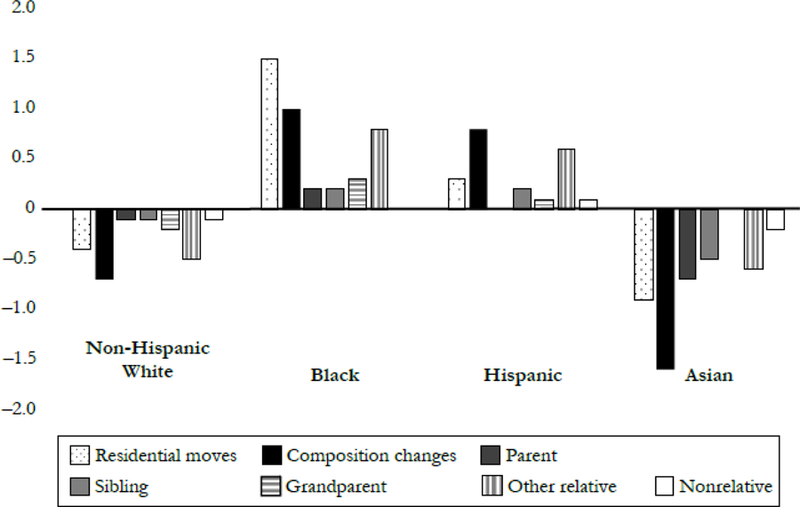
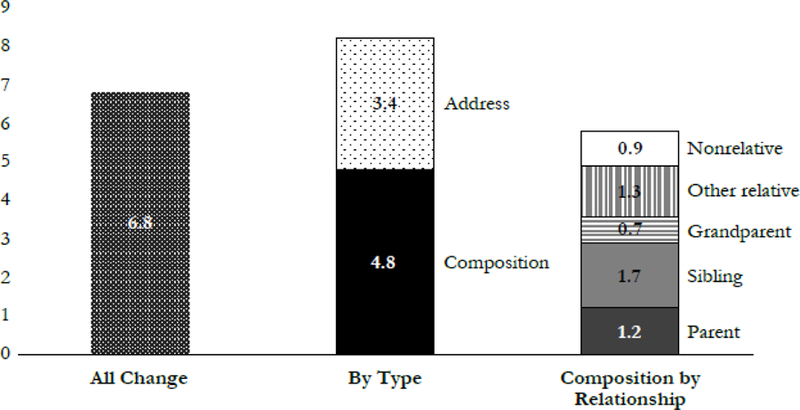
Previous descriptions of the composition and stability of children's households have focused on the presence of parents and the stability of mothers' marital and cohabiting relationships. We use data available in the 2008 Survey of Income and Program Participation to expand the description of children's household composition and stability. We find that one in five children lives with nonnuclear household members. These other household members are a source of substantial household instability. In addition, during the period of observation (2008-2013), children experienced considerable residential instability. Thus, children's experience of household instability is much more common and frequent than previously documented. Moreover, levels of both residential and compositional instability are higher for children with less-educated mothers and for racial/ethnic minorities.
先前对儿童家庭组成和稳定性的描述主要集中在父母的存在以及母亲婚姻和同居关系的稳定性上。我们利用 2008 年收入和计划参与调查中提供的数据,扩展了对儿童家庭组成和稳定性的描述。我们发现,五分之一的儿童与非核心家庭成员生活在一起。这些其他家庭成员是家庭不稳定的重要来源。此外,在观察期间(2008-2013 年),儿童经历了相当大的居住不稳定。因此,儿童的家庭不稳定经历比以前记录的更为常见和频繁。此外,受教育程度较低的母亲和少数族裔/族裔的儿童的居住和组成不稳定程度更高。