Kang Yea Eun, Kim Jung Tae, Lim Mi Ae, Oh Chan, Liu Lihua, Jung Seung-Nam, Won Ho-Ryun, Lee Kyungmin, Chang Jae Won, Yi Hyon-Seung, Kim Hyun Jin, Ku Bon Jeong, Shong Minho, Koo Bon Seok
Department of Endocrinology and Metabolism, Chungnam National University College of Medicine, Daejeon 35015, Korea.
Department of Medical Science, College of Medicine, Chungnam National University, Daejeon 35015, Korea.
Cancers (Basel). 2019 Aug 12;11(8):1154. doi: 10.3390/cancers11081154.
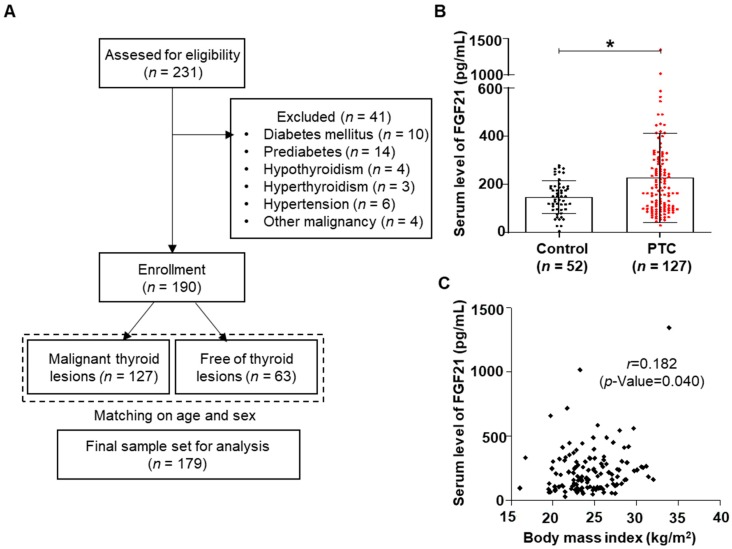
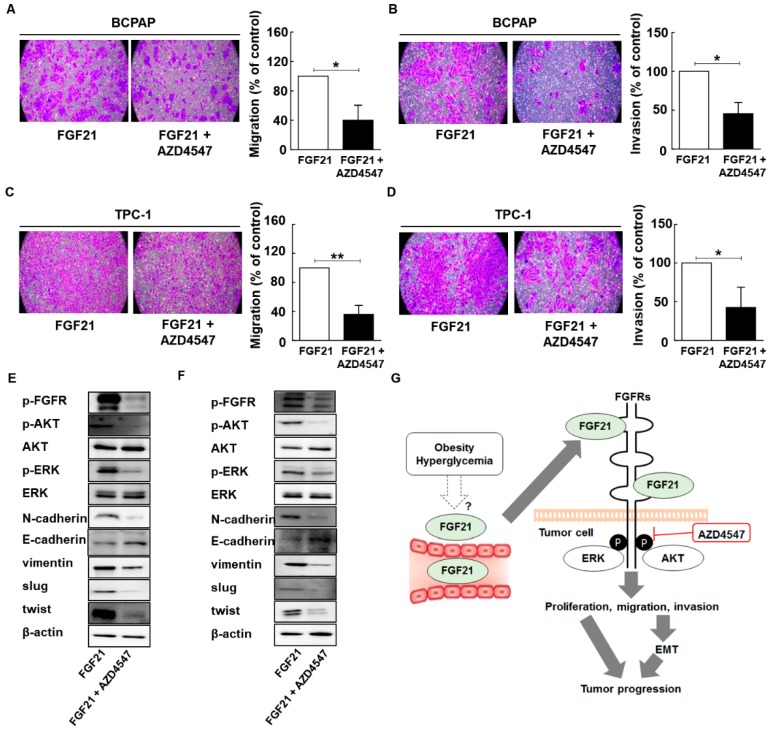
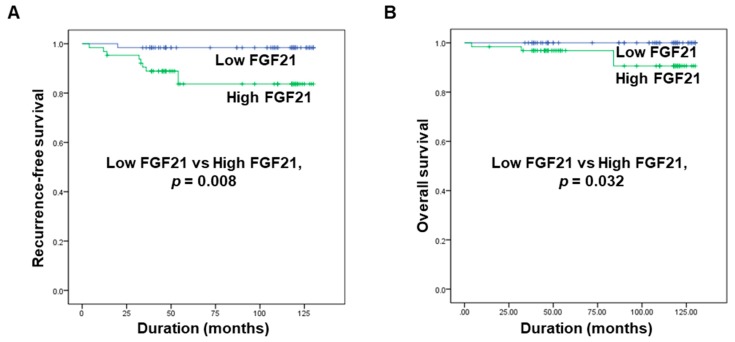
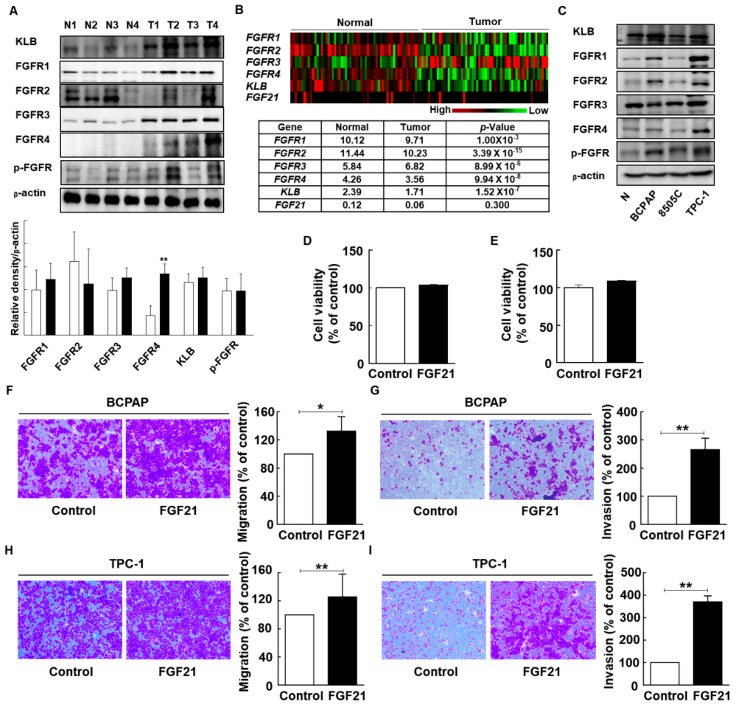
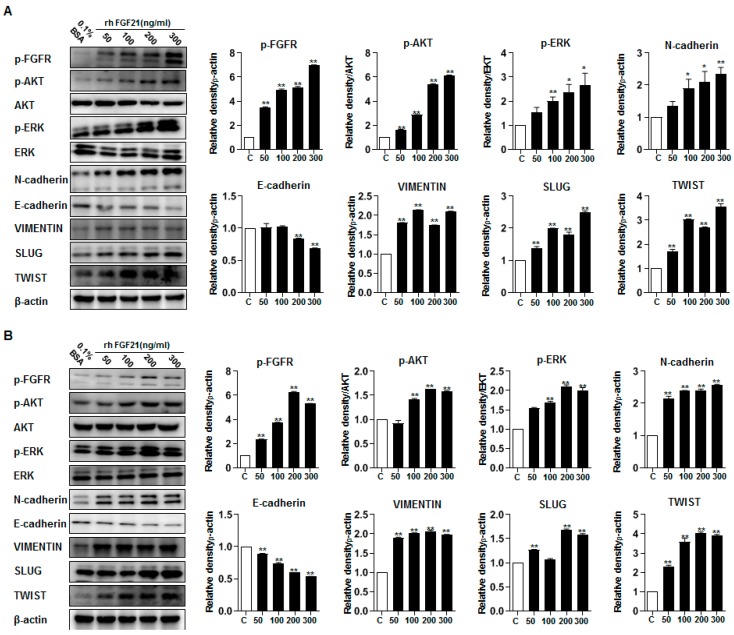
Fibroblast growth factor 21 (FGF21) plays important roles in regulating glucose, lipid, and energy metabolism; however, its effects in tumors remain poorly understood. To understand the role of FGF21 in regulating tumor aggressiveness in thyroid cancer, serum levels of FGF21 were measured in healthy subjects and patients with papillary thyroid cancer (PTC), and expression levels of FGF21, FGF receptors (FGFRs), and β-klotho (KLB) were investigated in human thyroid tissues. The cell viability, migrating cells, and invading cells were measured in PTC cells after treatment with recombinant FGF21. Higher serum levels of FGF21 were found in patients with thyroid cancer than in control participants, and were significantly associated with body mass index (BMI), fasting glucose levels, triglyceride levels, tumor stage, lymphovascular invasion, and recurrence. Serum FGF21 levels were positively correlated with the BMI in patients with PTC, and significantly associated with recurrence. Recombinant FGF21 led to tumor aggressiveness via activation of the FGFR signaling axis and epithelial-to-mesenchymal transition (EMT) signaling in PTC cells, and AZD4547, an FGFR tyrosine kinase inhibitor, attenuated the effects of FGF21. Hence, FGF21 may be a new biomarker for predicting tumor progression, and targeting FGFR may be a novel therapy for the treatment of obese patients with PTC.
成纤维细胞生长因子21(FGF21)在调节葡萄糖、脂质和能量代谢中发挥着重要作用;然而,其在肿瘤中的作用仍知之甚少。为了了解FGF21在调节甲状腺癌肿瘤侵袭性中的作用,我们检测了健康受试者和甲状腺乳头状癌(PTC)患者血清中FGF21的水平,并研究了人甲状腺组织中FGF21、FGF受体(FGFRs)和β-klotho(KLB)的表达水平。在用重组FGF21处理后,我们检测了PTC细胞的细胞活力、迁移细胞和侵袭细胞。结果发现,甲状腺癌患者血清中FGF21水平高于对照组参与者,且与体重指数(BMI)、空腹血糖水平、甘油三酯水平、肿瘤分期、淋巴血管浸润和复发显著相关。PTC患者血清FGF21水平与BMI呈正相关,且与复发显著相关。重组FGF21通过激活PTC细胞中的FGFR信号轴和上皮-间质转化(EMT)信号导致肿瘤侵袭性增加,而FGFR酪氨酸激酶抑制剂AZD4547减弱了FGF21的作用。因此,FGF21可能是预测肿瘤进展的新生物标志物,靶向FGFR可能是治疗肥胖PTC患者的新疗法。