Winter Helen, Rassam Joseph, Virdee Pradeep S, Goldin Rob, Pitcheshwar Priyankaa, Weaver Klara, Primrose John, Berry David P, Wasan Harpreet S, Sharma Ricky A
NIHR Oxford Biomedical Research Centre, CRUK-MRC Institute for Radiation Oncology, Department of Oncology, University of Oxford, Oxford OX3 7DQ, UK.
Centre of Pathology, Imperial College London, London W2 1NY, UK.
Cancers (Basel). 2019 Aug 12;11(8):1155. doi: 10.3390/cancers11081155.
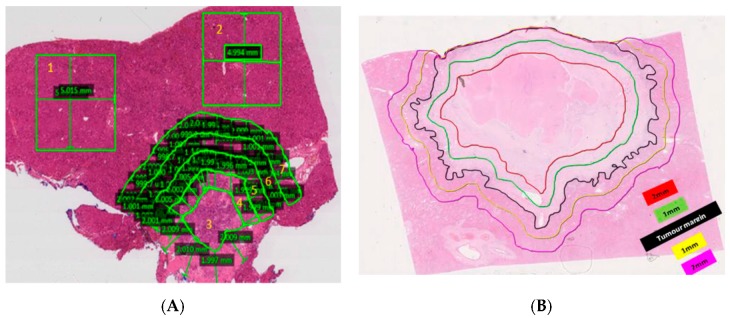
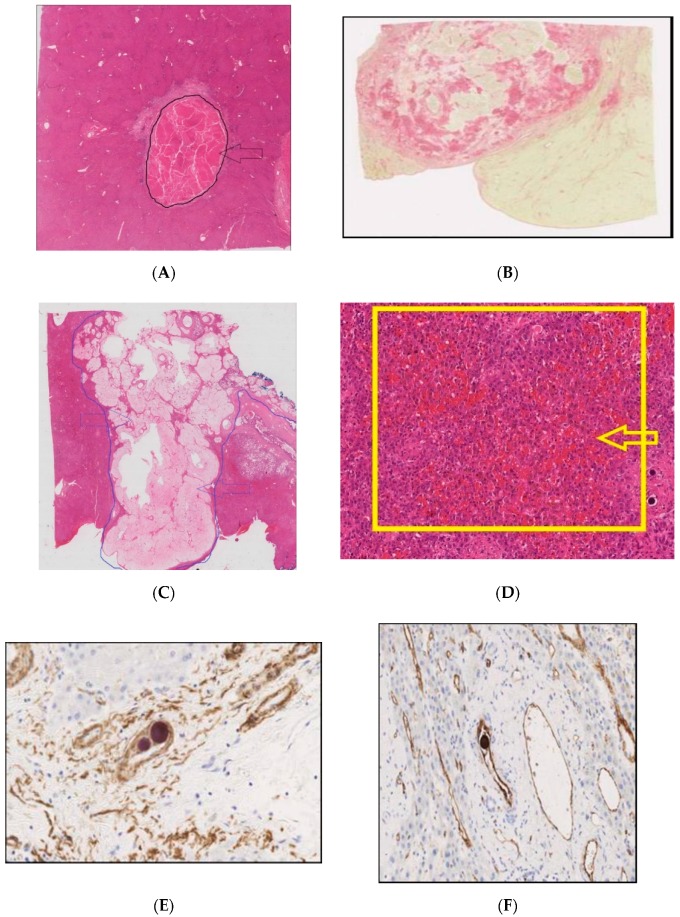
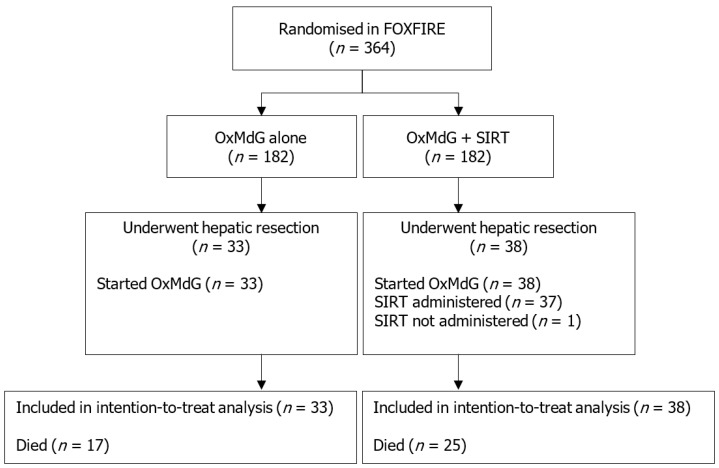
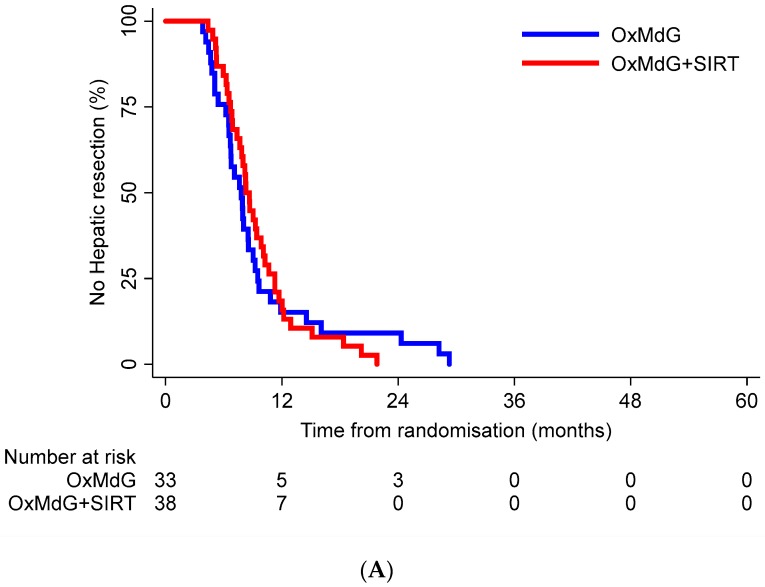
The FOXFIRE (5-Fluorouracil, OXaliplatin and Folinic acid ± Interventional Radio-Embolisation) clinical trial combined systemic chemotherapy (OxMdG: Oxaliplatin, 5-fluorouracil and folic acid) with Selective Internal Radiation Therapy (SIRT or radio-embolisation) using yttrium-90 resin microspheres in the first-line management for liver-dominant metastatic colorectal cancer (CRC). We report clinical outcomes for patients having hepatic resection after this novel combination therapy and an exploratory analysis of histopathology. Multi-Disciplinary Teams deemed all patients inoperable before trial registration and reassessed them during protocol therapy. Proportions were compared using Chi-squared tests and survival using Cox models. FOXFIRE randomised 182 participants to chemotherapy alone and 182 to chemotherapy with SIRT. There was no statistically significant difference in the resection rate between groups: Chemotherapy alone was 18%, ( = 33); SIRT combination was 21% ( = 38) ( = 0.508). There was no statistically significant difference between groups in the rate of liver surgery, nor in survival from time of resection (hazard ratio (HR) = 1.55; 95% confidence interval (CI) = 0.83-2.89). In the subgroup studied for histopathology, microsphere density was highest at the tumour periphery. Patients treated with SIRT plus chemotherapy displayed lower values of viable tumour in comparison to those treated with chemotherapy alone ( < 0.05). This study promotes the feasibility of hepatic resection following SIRT. Resin microspheres appear to preferentially distribute at the tumour periphery and may enhance tumour regression.
FOXFIRE(5-氟尿嘧啶、奥沙利铂和亚叶酸±介入性放射性栓塞)临床试验将全身化疗(OxMdG:奥沙利铂、5-氟尿嘧啶和叶酸)与使用钇-90树脂微球的选择性体内放射治疗(SIRT或放射性栓塞)相结合,用于以肝脏为主的转移性结直肠癌(CRC)的一线治疗。我们报告了接受这种新型联合治疗后进行肝切除的患者的临床结果以及组织病理学的探索性分析。多学科团队在试验登记前认为所有患者无法手术,并在方案治疗期间对他们进行了重新评估。使用卡方检验比较比例,使用Cox模型比较生存率。FOXFIRE将182名参与者随机分为单纯化疗组和化疗联合SIRT组。两组之间的切除率没有统计学上的显著差异:单纯化疗组为18%(n = 33);SIRT联合组为21%(n = 38)(P = 0.508)。两组在肝脏手术率以及切除后的生存率方面没有统计学上的显著差异(风险比(HR)= 1.55;95%置信区间(CI)= 0.83 - 2.89)。在研究组织病理学的亚组中,微球密度在肿瘤周边最高。与单纯接受化疗的患者相比,接受SIRT加化疗的患者的存活肿瘤值较低(P < 0.05)。本研究促进了SIRT后肝切除的可行性。树脂微球似乎优先分布在肿瘤周边,并可能增强肿瘤消退。