Chovancek Erik, Zivcak Marek, Botyanszka Lenka, Hauptvogel Pavol, Yang Xinghong, Misheva Svetlana, Hussain Sajad, Brestic Marian
Department of Plant Physiology, Faculty of Agrobiology and Food Resources, Slovak University of Agriculture, Trieda A. Hlinku 2, 949 76 Nitra, Slovakia.
National Agricultural and Food Centre, Research Institute of Plant Production, Bratislavska cesta 122, 921 68 Piešt'any, Slovakia.
Plants (Basel). 2019 Aug 12;8(8):282. doi: 10.3390/plants8080282.
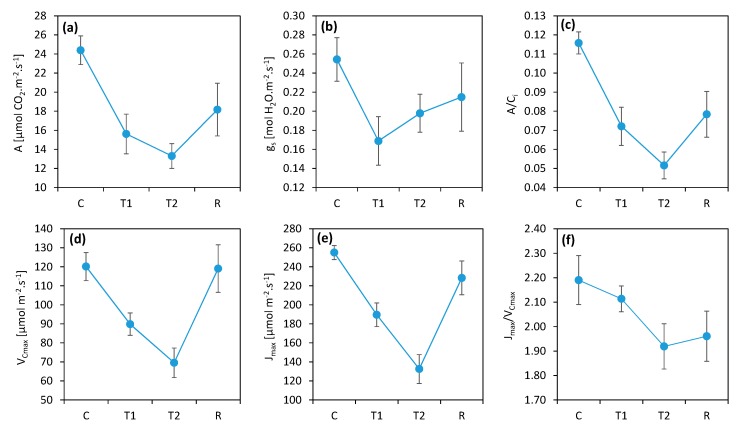
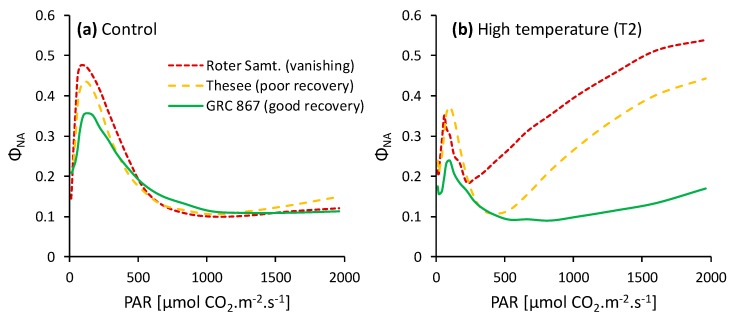
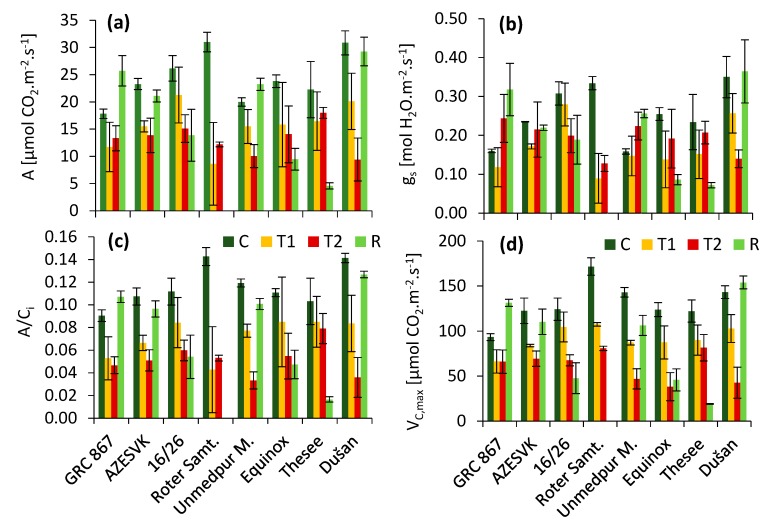
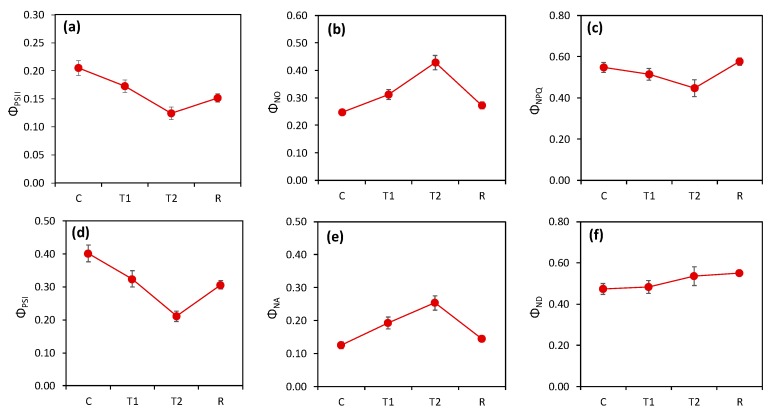
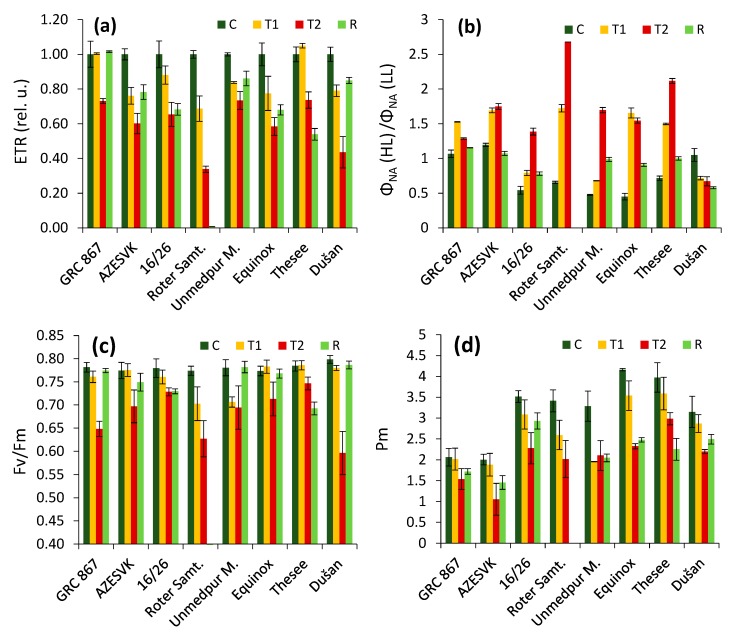
We assessed the photosynthetic responses of eight wheat varieties in conditions of a simulated heat wave in a transparent plastic tunnel for one week. We found that high temperatures (up to 38 °C at midday and above 20 °C at night) had a negative effect on the photosynthetic functions of the plants and provided differentiation of genotypes through sensitivity to heat. Measurements of gas exchange showed that the simulated heat wave led to a 40% decrease in photosynthetic activity on average in comparison to the control, with an unequal recovery of individual genotypes after a release from stress. Our results indicate that the ability to recover after heat stress was associated with an efficient regulation of linear electron transport and the prevention of over-reduction in the acceptor side of photosystem I.
我们在透明塑料隧道中模拟热浪条件下,对八个小麦品种的光合反应进行了为期一周的评估。我们发现,高温(中午高达38°C,夜间高于20°C)对植物的光合功能产生负面影响,并通过对热的敏感性实现了基因型的分化。气体交换测量结果表明,与对照相比,模拟热浪使光合活性平均降低了40%,应激解除后各基因型的恢复情况不均等。我们的结果表明,热应激后恢复的能力与线性电子传递的有效调节以及防止光系统I受体侧过度还原有关。