Plant Breeding and Genetics Division, Nuclear Institute for Agriculture and Biology (NIAB), Faisalabad, 38950, Pakistan.
Pakistan Institute of Engineering and Applied Sciences, Islamabad, Pakistan.
Sci Rep. 2024 Aug 29;14(1):20134. doi: 10.1038/s41598-024-70630-0.
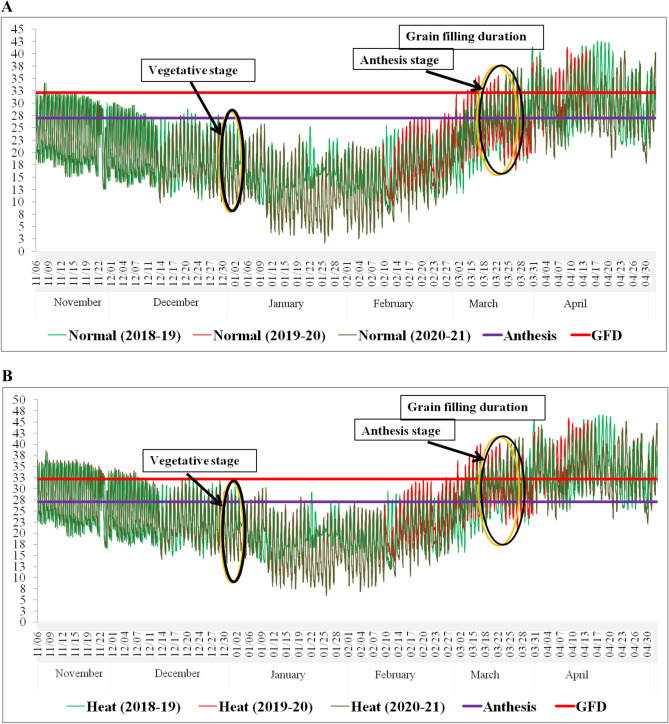
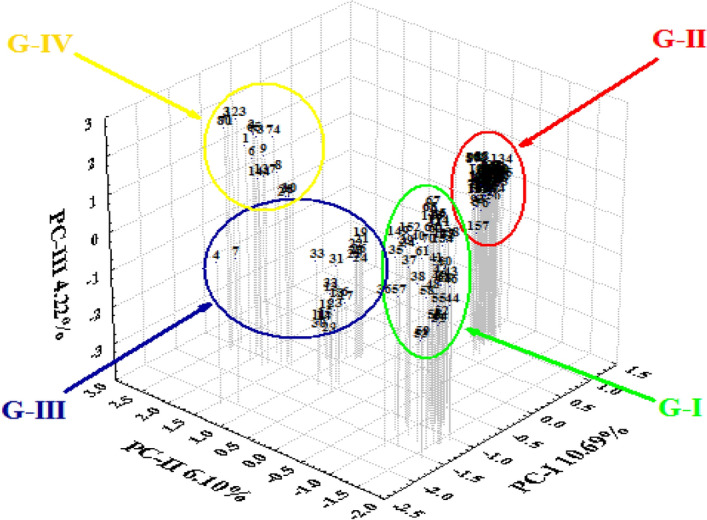
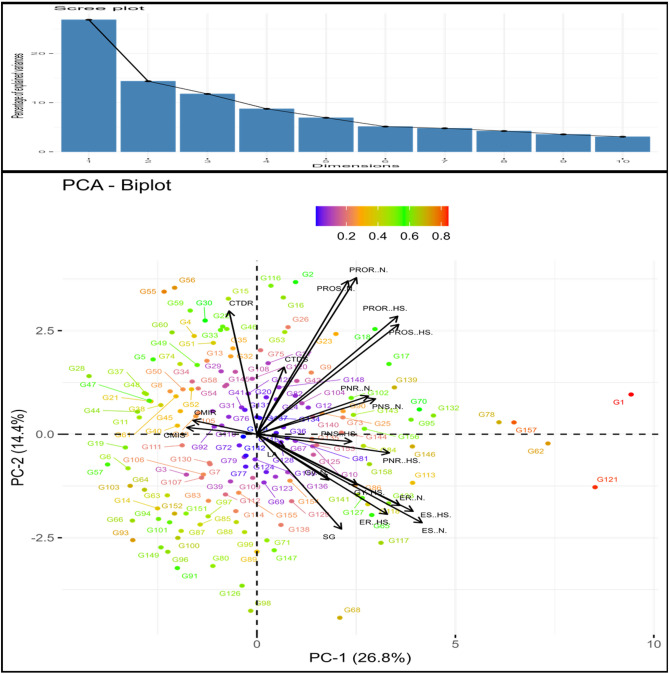
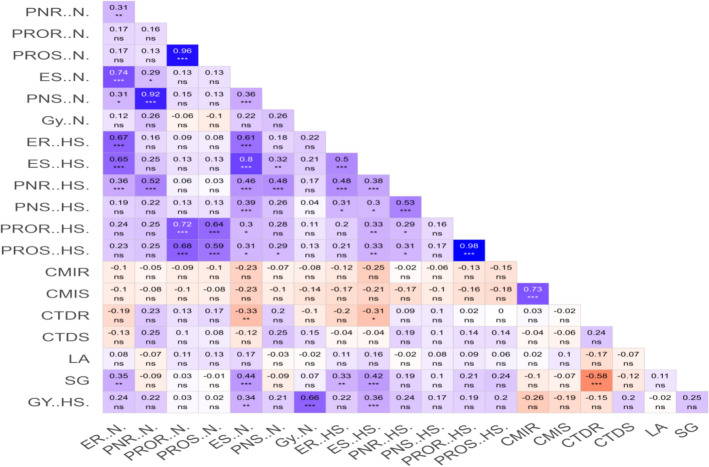
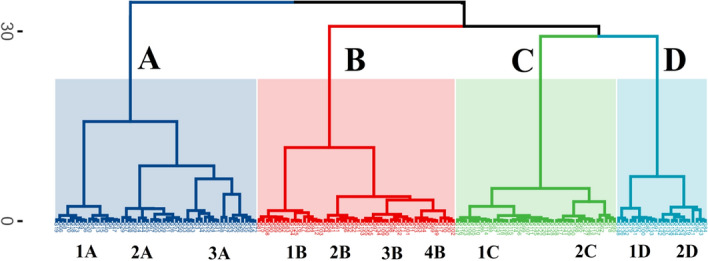
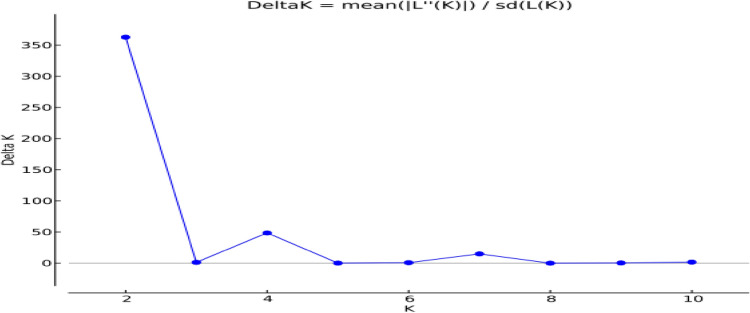
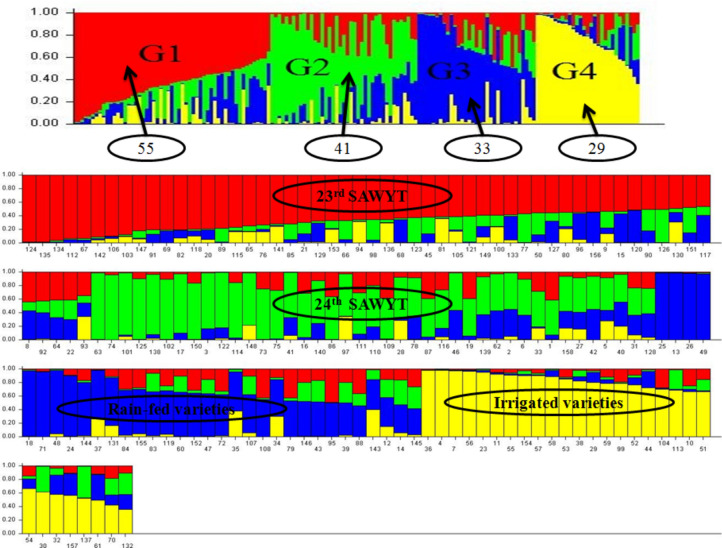
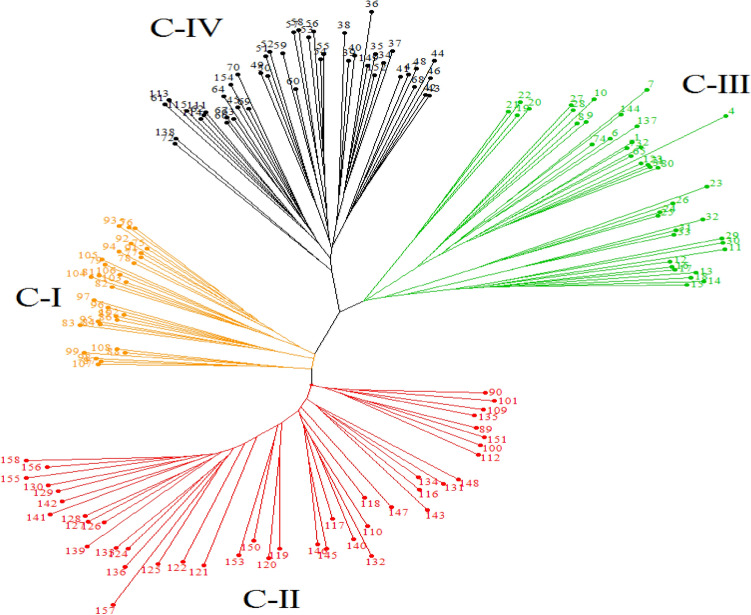
Heat stress poses a significant environmental challenge that profoundly impacts wheat productivity. It disrupts vital physiological processes such as photosynthesis, by impeding the functionality of the photosynthetic apparatus and compromising plasma membrane stability, thereby detrimentally affecting grain development in wheat. The scarcity of identified marker trait associations pertinent to thermotolerance presents a formidable obstacle in the development of marker-assisted selection strategies against heat stress. To address this, wheat accessions were systematically exposed to both normal and heat stress conditions and phenotypic data were collected on physiological traits including proline content, canopy temperature depression, cell membrane injury, photosynthetic rate, transpiration rate (at vegetative and reproductive stage and 'stay-green'. Principal component analysis elucidated the most significant contributors being proline content, transpiration rate, and canopy temperature depression, which exhibited a synergistic relationship with grain yield. Remarkably, cluster analysis delineated the wheat accessions into four discrete groups based on physiological attributes. Moreover, to explore the relationship between physiological traits and DNA markers, 158 wheat accessions were genotyped with 186 SSRs. Allelic frequency and polymorphic information content value were found to be highest on genome A (4.94 and 0.688), chromosome 1A (5.00 and 0.712), and marker Xgwm44 (13.0 and 0.916). Population structure, principal coordinate analysis and cluster analysis also partitioned the wheat accessions into four subpopulations based on genotypic data, highlighting their genetic homogeneity. Population diversity and presence of linkage disequilibrium established the suitability of population for association mapping. Additionally, linkage disequilibrium decay was most pronounced within a 15-20 cM region on chromosome 1A. Association mapping revealed highly significant marker trait associations at Bonferroni correction P < 0.00027. Markers Xwmc418 (located on chromosome 3D) and Xgwm233 (chromosome 7A) demonstrated associations with transpiration rate, while marker Xgwm494 (chromosome 3A) exhibited an association with photosynthetic rates at both vegetative and reproductive stages under heat stress conditions. Additionally, markers Xwmc201 (chromosome 6A) and Xcfa2129 (chromosome 1A) displayed robust associations with canopy temperature depression, while markers Xbarc163 (chromosome 4B) and Xbarc49 (chromosome 5A) were strongly associated with cell membrane injury at both stages. Notably, marker Xbarc49 (chromosome 5A) exhibited a significant association with the 'stay-green' trait under heat stress conditions. These results offers the potential utility in marker-assisted selection, gene pyramiding and genomic selection models to predict performance of wheat accession under heat stress conditions.
热应激对小麦生产力造成了重大环境挑战。它通过干扰光合作用装置的功能和破坏质膜稳定性,破坏了光合作用等重要的生理过程,从而对小麦的籽粒发育产生不利影响。目前,与耐热性相关的标记性状关联很少,这是开发针对热应激的标记辅助选择策略的一个巨大障碍。为了解决这个问题,我们系统地将小麦品系暴露在正常和热应激条件下,并收集包括脯氨酸含量、冠层温度降低、细胞膜损伤、光合速率、蒸腾速率(在营养和生殖阶段和“保持绿色”)在内的生理性状的表型数据。主成分分析表明,脯氨酸含量、蒸腾速率和冠层温度降低是最重要的贡献者,它们与籽粒产量呈协同关系。值得注意的是,聚类分析根据生理属性将小麦品系分为四个离散组。此外,为了探讨生理性状与 DNA 标记之间的关系,我们对 158 个小麦品系进行了 186 个 SSR 的基因型分析。发现等位基因频率和多态信息含量值在基因组 A(4.94 和 0.688)、染色体 1A(5.00 和 0.712)和标记 Xgwm44(13.0 和 0.916)上最高。群体结构、主坐标分析和聚类分析也根据基因型数据将小麦品系分为四个亚群,突出了它们的遗传同质性。群体多样性和连锁不平衡的存在证明了群体适合关联作图。此外,在染色体 1A 的 15-20 cM 区域内,连锁不平衡的衰减最为明显。关联作图在 Bonferroni 校正 P < 0.00027 时揭示了高度显著的标记性状关联。标记 Xwmc418(位于 3D 染色体上)和 Xgwm233(7A 染色体上)与蒸腾速率呈显著相关,而标记 Xgwm494(3A 染色体上)在热应激条件下与营养和生殖阶段的光合速率呈显著相关。此外,标记 Xwmc201(6A 染色体)和 Xcfa2129(1A 染色体)与冠层温度降低呈显著相关,而标记 Xbarc163(4B 染色体)和 Xbarc49(5A 染色体)在两个阶段均与细胞膜损伤呈强相关。值得注意的是,标记 Xbarc49(5A 染色体)在热应激条件下与“保持绿色”性状呈显著相关。这些结果为标记辅助选择、基因聚合和基因组选择模型提供了潜在的应用,以预测小麦品系在热应激条件下的表现。