IGF, CNRS, INSERM, University of Montpellier, LabEx 'Ion Channel Science and Therapeutics', Montpellier, France.
Sci Rep. 2019 Aug 13;9(1):11791. doi: 10.1038/s41598-019-48071-x.
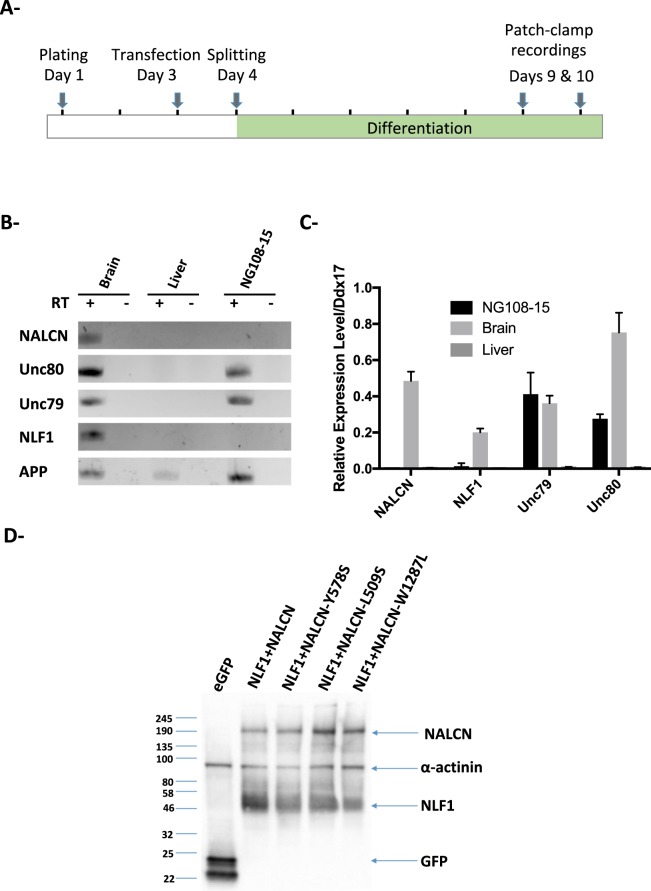
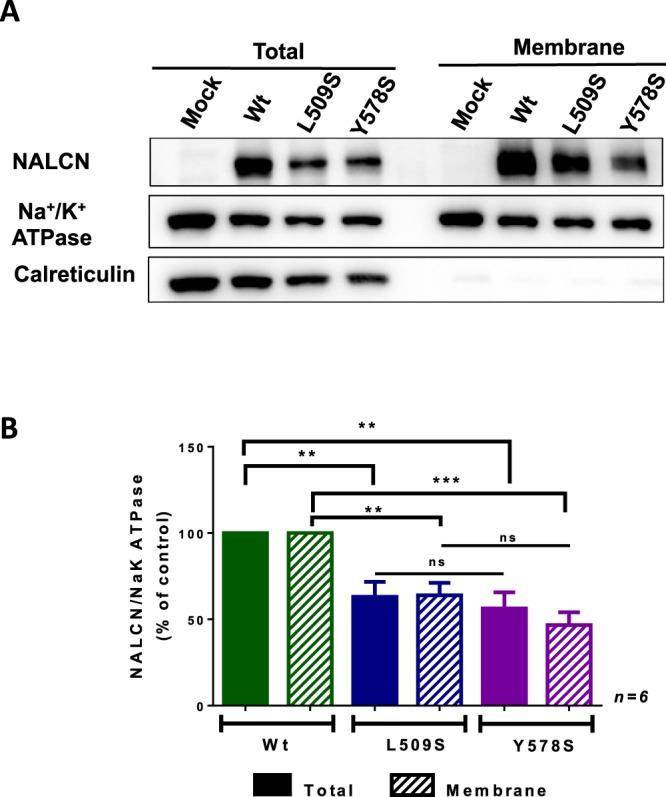
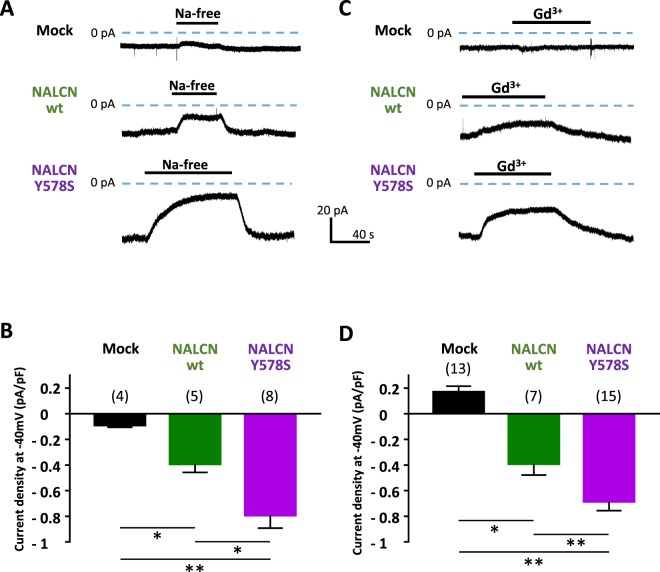
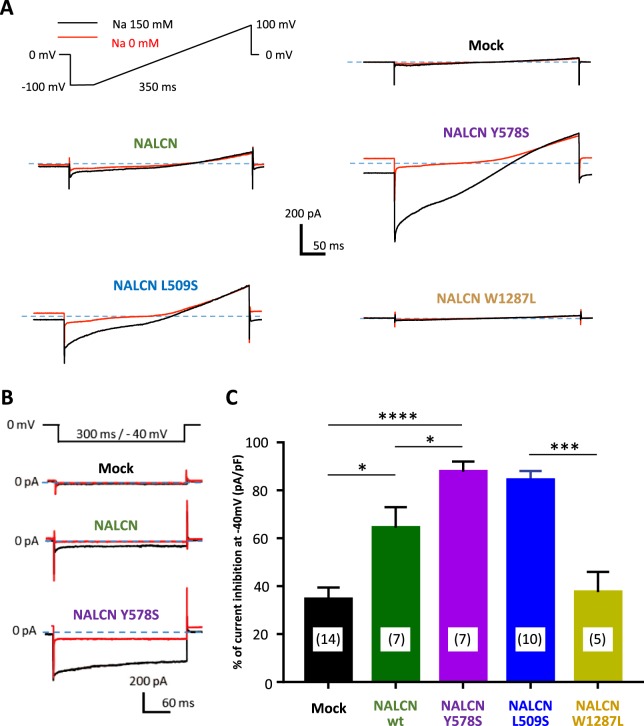
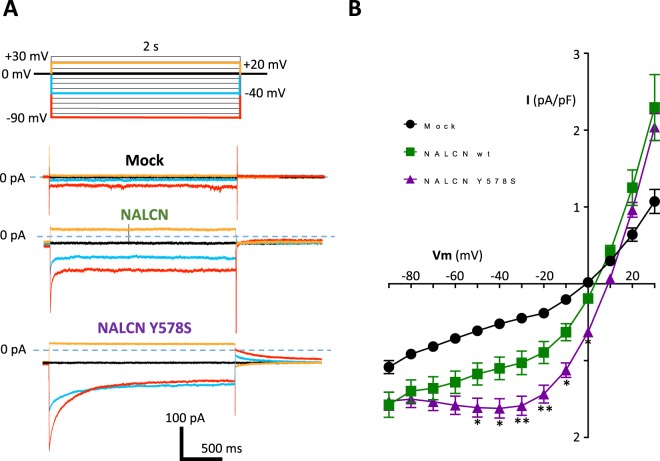
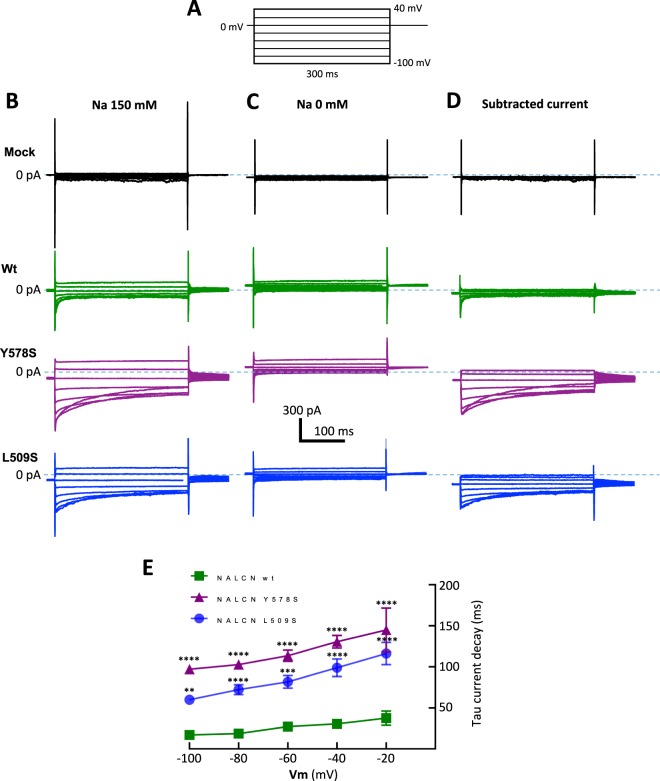
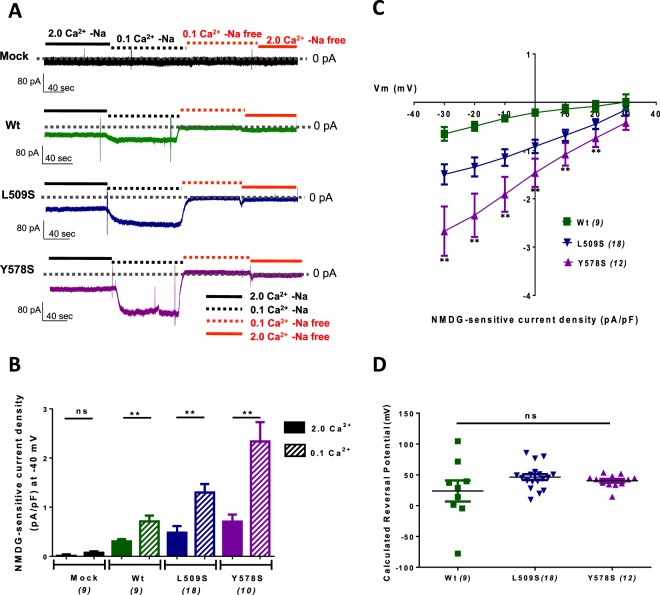
The excitability of neurons is tightly dependent on their ion channel repertoire. Among these channels, the leak sodium channel NALCN plays a crucial role in the maintenance of the resting membrane potential. Importantly, NALCN mutations lead to complex neurodevelopmental syndromes, including infantile hypotonia with psychomotor retardation and characteristic facies (IHPRF) and congenital contractures of limbs and face, hypotonia and developmental delay (CLIFAHDD), which are recessively and dominantly inherited, respectively. Unfortunately, the biophysical properties of NALCN are still largely unknown to date, as well as the functional consequences of both IHPRF and CLIFAHDD mutations on NALCN current. Here we have set-up the heterologous expression of NALCN in the neuronal cell line NG108-15 to investigate the electrophysiological properties of NALCN carrying representative IHPRF and CLIFAHDD mutations. Several original properties of the wild-type (wt) NALCN current were retrieved: mainly carried by external Na, blocked by Gd, insensitive to TTX and potentiated by low external Ca concentration. However, we found that this current displays a time-dependent inactivation in the -80/-40 mV range of membrane potential, and a non linear current-voltage relationship indicative of voltage sensitivity. Importantly, no detectable current was recorded with the IHPRF missense mutation p.Trp1287Leu (W1287L), while the CLIFAHDD mutants, p.Leu509Ser (L509S) and p.Tyr578Ser (Y578S), showed higher current densities and slower inactivation, compared to wt NALCN current. This study reveals that heterologous expression of NALCN channel can be achieved in the neuronal cell line NG108-15 to study the electrophysiological properties of wt and mutants. From our results, we conclude that IHPRF and CLIFAHDD missense mutations are loss- and gain-of-function variants, respectively.
神经元的兴奋性与其离子通道组成密切相关。在这些通道中,渗漏钠通道 NALCN 在维持静息膜电位中起着至关重要的作用。重要的是,NALCN 突变导致复杂的神经发育综合征,包括婴儿期肌张力减退伴精神运动发育迟缓和面特征(IHPRF)以及先天性四肢和面部挛缩、肌张力减退和发育迟缓(CLIFAHDD),分别为隐性和显性遗传。不幸的是,NALCN 的生物物理特性至今仍知之甚少,以及 IHPRF 和 CLIFAHDD 突变对 NALCN 电流的功能后果。在这里,我们在神经元细胞系 NG108-15 中建立了 NALCN 的异源表达,以研究携带代表性 IHPRF 和 CLIFAHDD 突变的 NALCN 电流的电生理特性。我们发现野生型(wt)NALCN 电流具有几个原始特性:主要由外部 Na 携带,被 Gd 阻断,对 TTX 不敏感,低外部 Ca 浓度增强。然而,我们发现该电流在-80/-40 mV 的膜电位范围内显示出时间依赖性失活,并且电流-电压关系呈非线性,表明对电压敏感。重要的是,与 wt NALCN 电流相比,IHPRF 错义突变 p.Trp1287Leu(W1287L)未记录到可检测的电流,而 CLIFAHDD 突变体 p.Leu509Ser(L509S)和 p.Tyr578Ser(Y578S)显示出更高的电流密度和更慢的失活。这项研究表明,NALCN 通道的异源表达可以在神经元细胞系 NG108-15 中实现,以研究 wt 和突变体的电生理特性。从我们的结果中,我们得出结论,IHPRF 和 CLIFAHDD 错义突变分别是失活和功能获得的变体。