Kuo Chun-Lin, Hsieh Li Shu-Man, Liang Shu-Yi, Liu Shu-Ting, Huang Li-Chun, Wang Wei-Ming, Yen Li-Chen, Huang Shih-Ming
Department of Orthopaedic Surgery, Tri-Service General Hospital, National Defense Medical Center, Taiwan, Republic of China.
Department of Biochemistry, National Defense Medical Center, Taiwan, Republic of China.
Cancer Manag Res. 2019 Jul 15;11:6567-6579. doi: 10.2147/CMAR.S210637. eCollection 2019.
Differentiated embryo chondrocyte 1 (DEC1) is a helix-loop-helix transcription factor that directly binds to the class B E-box in target genes. DEC1 exerts both pro-survival and pro-apoptotic effects in a cell- and tissue-dependent manner. Its actions play role the progression of cancer remains unclear.
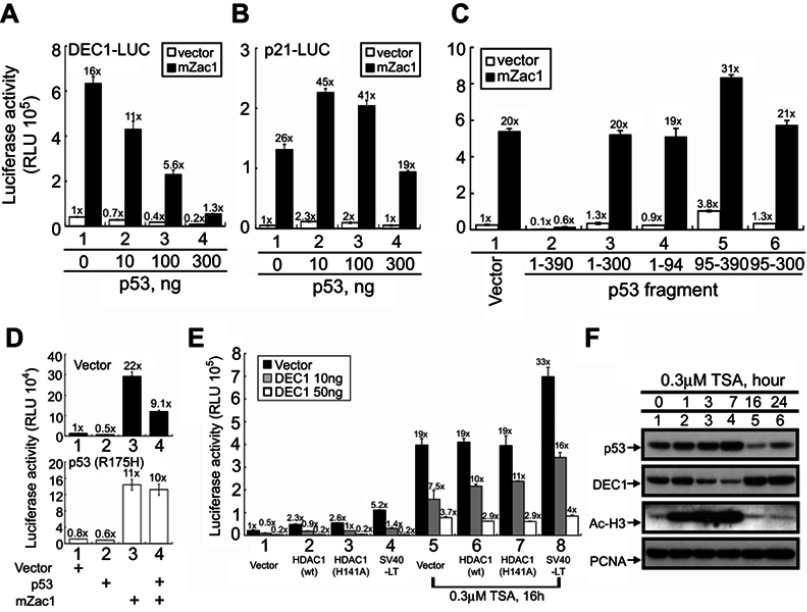
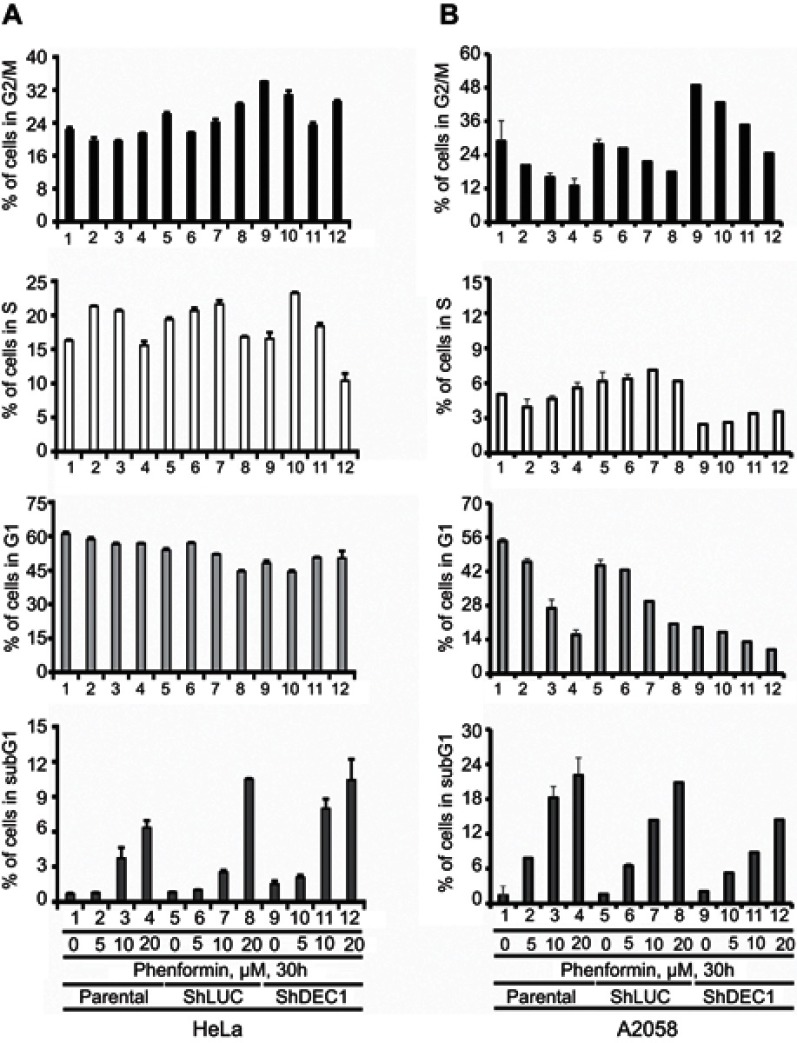
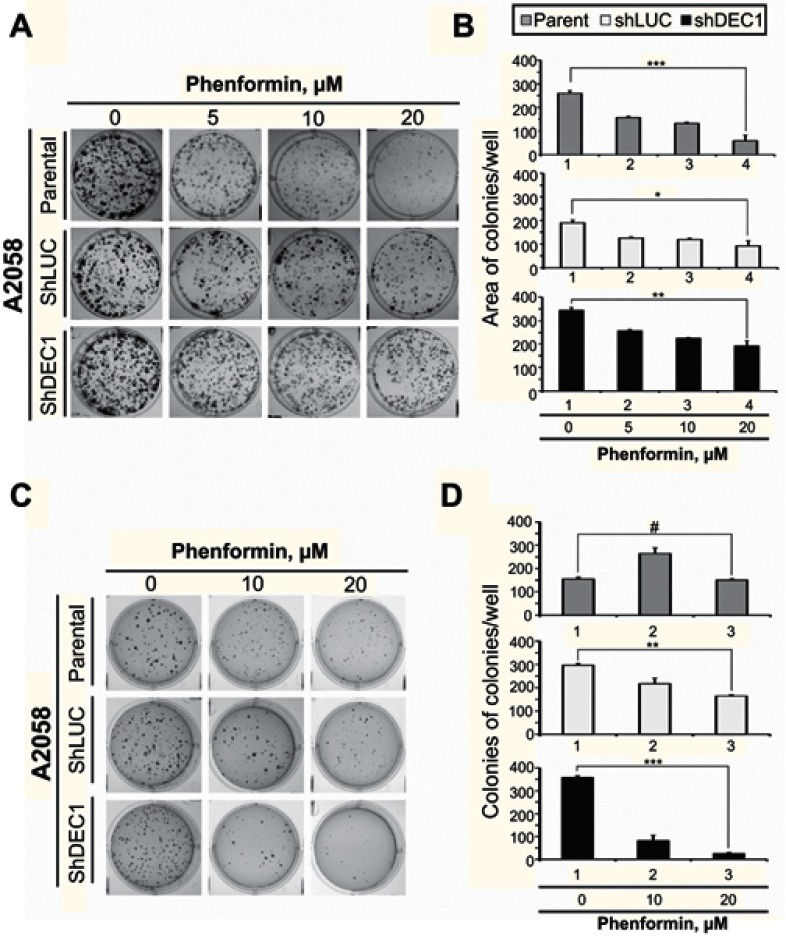
We first examined the functional roles of DEC1 using the transient promoter reporter assay. Then, the knockdown of DEC1 expression was performed with the short hairpin RNA strategy in HeLa and A2058 cancer cell lines to check the cell cycle and mitochondrial function profile using the flow cytometry and Seahorse assays. We later clarified the role of DEC1 in the tumorigenesis using the colony formation, anchorage-independent growth assay, and cellular proliferation analysis.
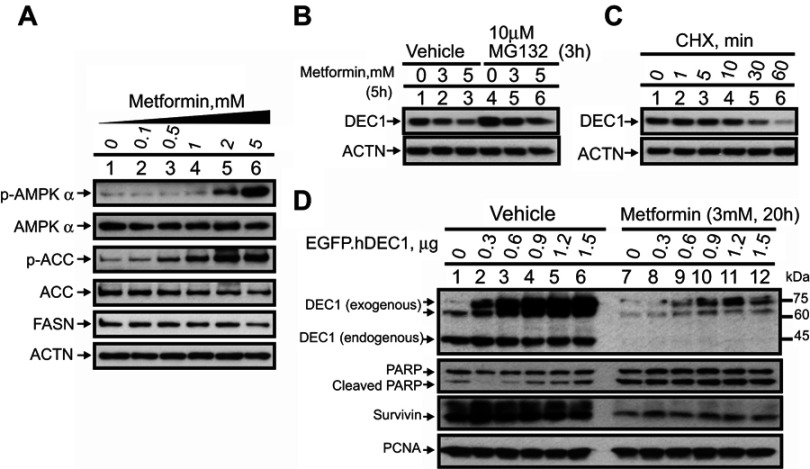
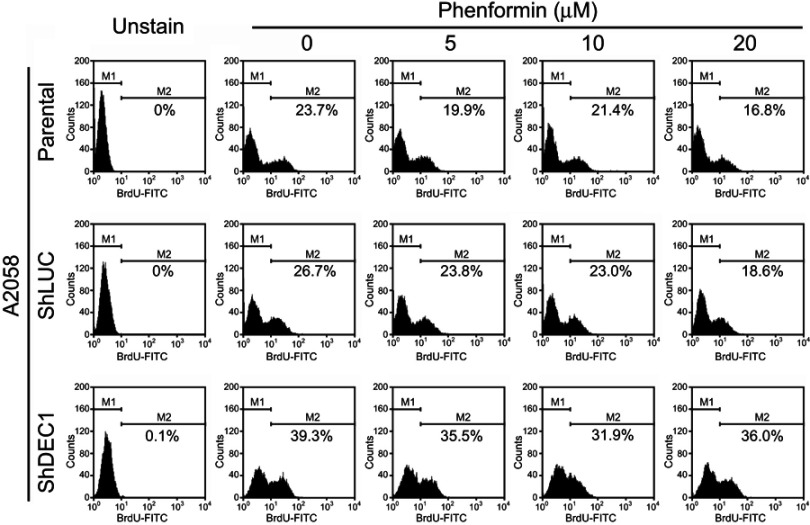
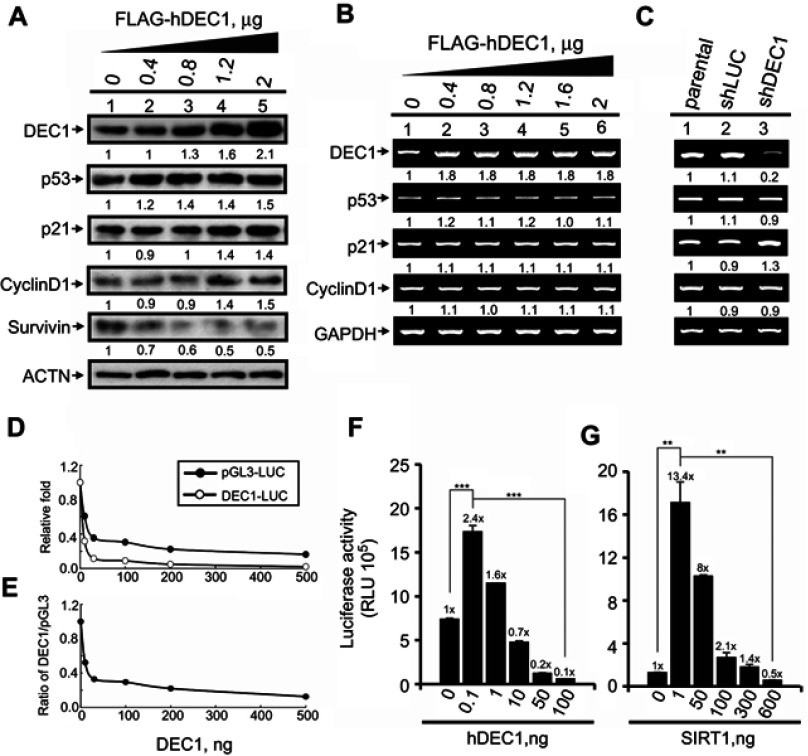
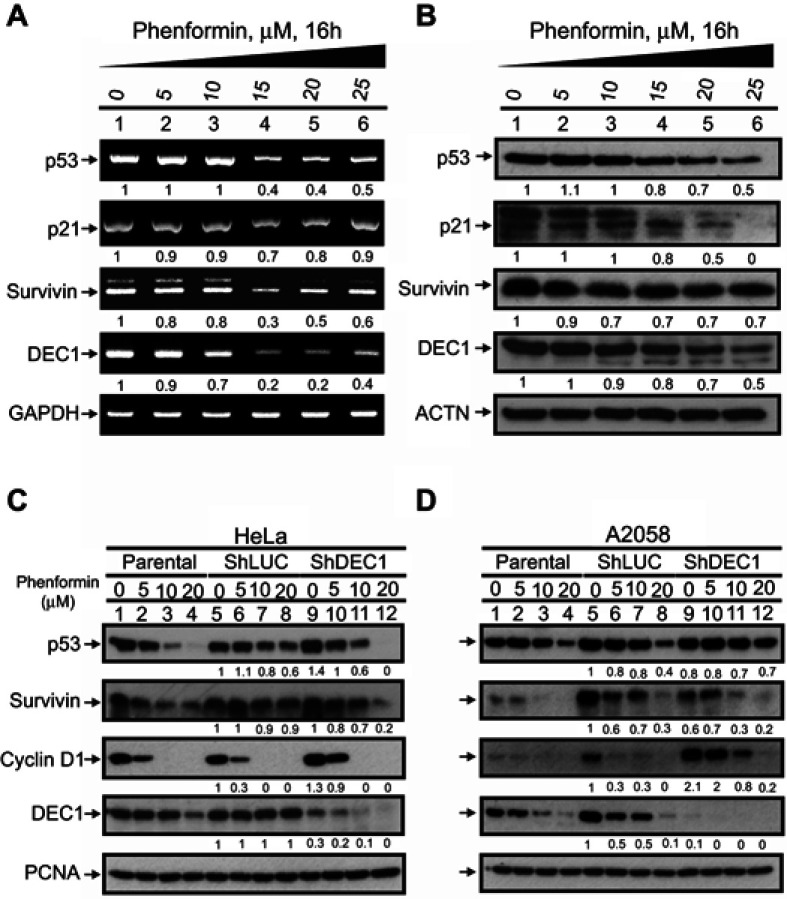
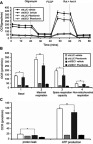
In the present study, we tested two guanide-containing drugs, metformin and phenformin, and found that both exhibit cytotoxicity against HeLa cervical carcinoma and A2058 melanoma cells. This effect was mediated, at least in part, through activation of the AMPK pathway; degradation of important cellular proteins, such as DEC1 and p53; and suppression of mitochondrial function, colony formation, and anchorage-independent cell proliferation. Our results further suggest that the cytotoxicity of metformin and phenformin reflect the impact of the repressive actions of DEC1 on gene expression, including DEC1 itself. This in turn suppresses both anchorage-independent growth and cell proliferation.
These findings provide several lines of evidence suggesting that DEC1 activity contributes to tumorigenicity and that the antitumor properties of biguanides reflect their ability to inhibit DEC1 functions.
分化胚胎软骨细胞1(DEC1)是一种螺旋-环-螺旋转录因子,可直接与靶基因中的B类E盒结合。DEC1以细胞和组织依赖性方式发挥促生存和促凋亡作用。其在癌症进展中的作用尚不清楚。
我们首先使用瞬时启动子报告基因检测法研究DEC1的功能作用。然后,在HeLa和A2058癌细胞系中采用短发夹RNA策略敲低DEC1表达,使用流式细胞术和海马检测法检查细胞周期和线粒体功能概况。我们随后使用集落形成、非锚定依赖性生长检测法和细胞增殖分析来阐明DEC1在肿瘤发生中的作用。
在本研究中,我们测试了两种含胍药物二甲双胍和苯乙双胍,发现它们对HeLa宫颈癌和A2058黑色素瘤细胞均表现出细胞毒性。这种作用至少部分是通过激活AMPK途径、降解重要细胞蛋白(如DEC1和p53)以及抑制线粒体功能、集落形成和非锚定依赖性细胞增殖介导的。我们的结果进一步表明,二甲双胍和苯乙双胍的细胞毒性反映了DEC1对基因表达(包括DEC1自身)的抑制作用的影响。这反过来又抑制了非锚定依赖性生长和细胞增殖。
这些发现提供了几条证据,表明DEC1活性有助于肿瘤发生,双胍类药物的抗肿瘤特性反映了它们抑制DEC1功能的能力。