Ren Aijun, Wen Zhenzhen, Zheng Liangjie
Department of Oncology, The People's Hospital of Yucheng, Yucheng, Shandong 251200, P.R. China.
Department of Oncology, The People's Hospital of Leling, Leling, Shandong 253600, P.R. China.
Exp Ther Med. 2019 Sep;18(3):1653-1660. doi: 10.3892/etm.2019.7718. Epub 2019 Jul 1.
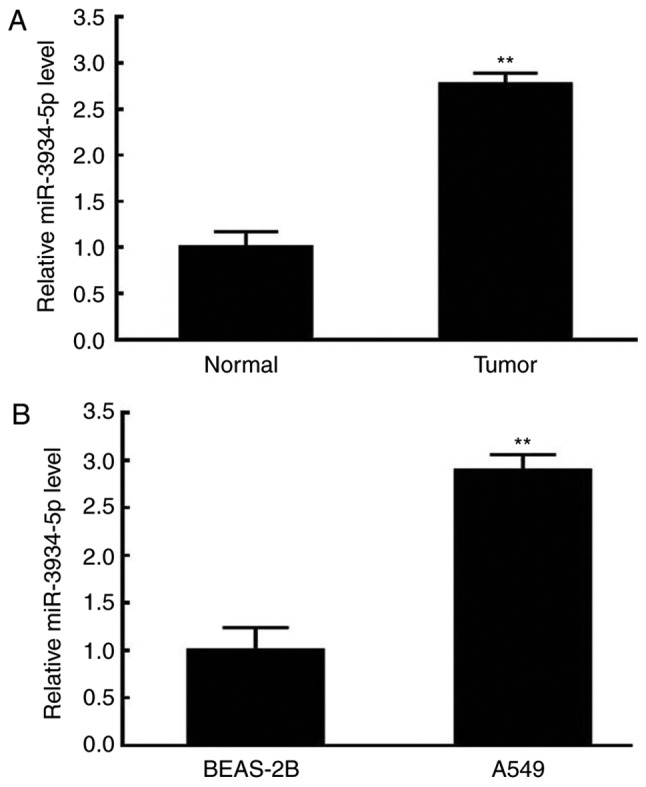
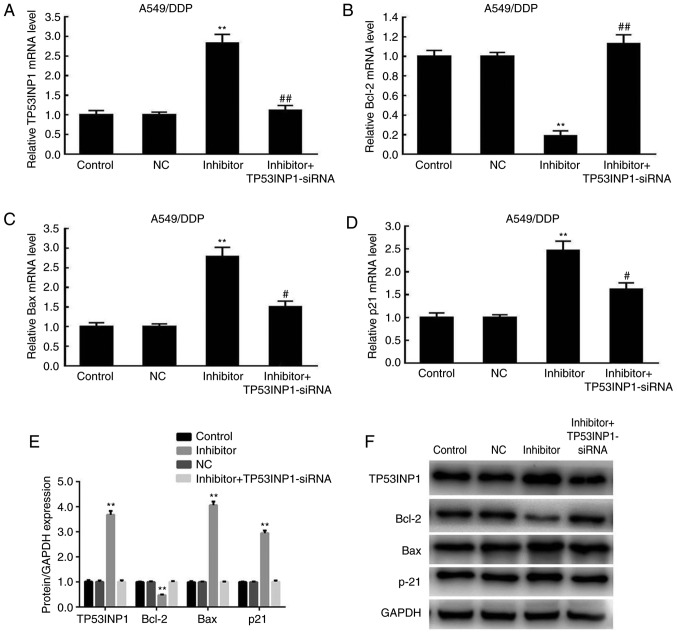
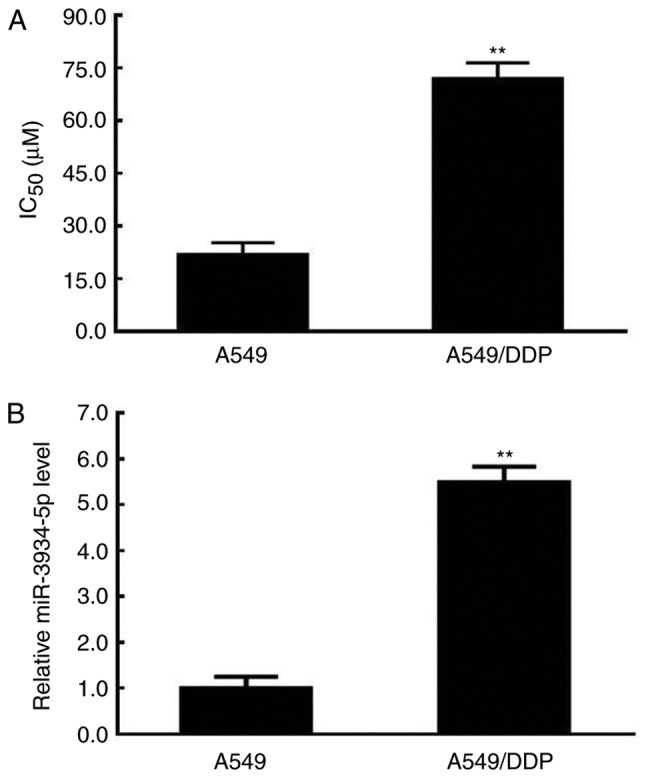
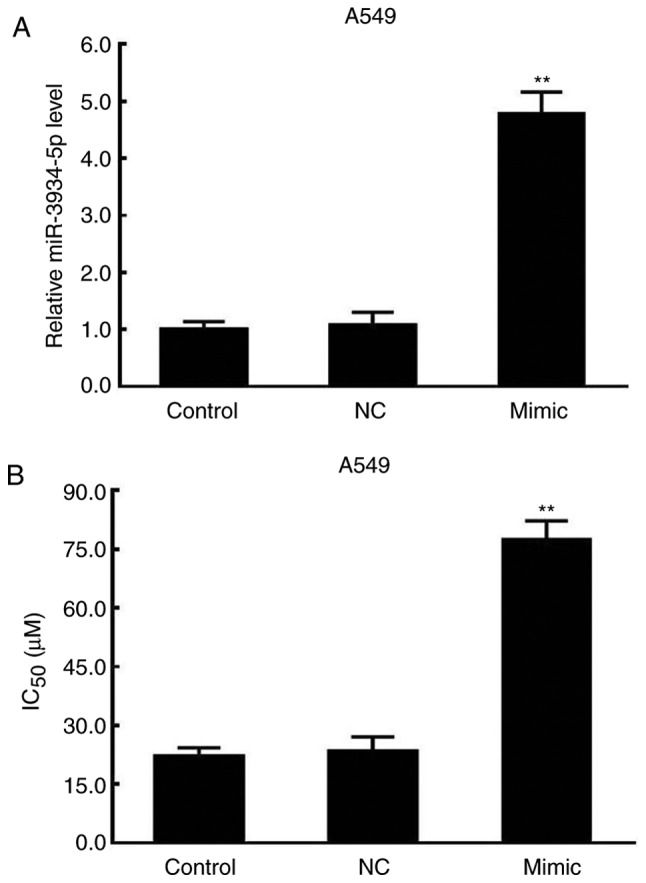
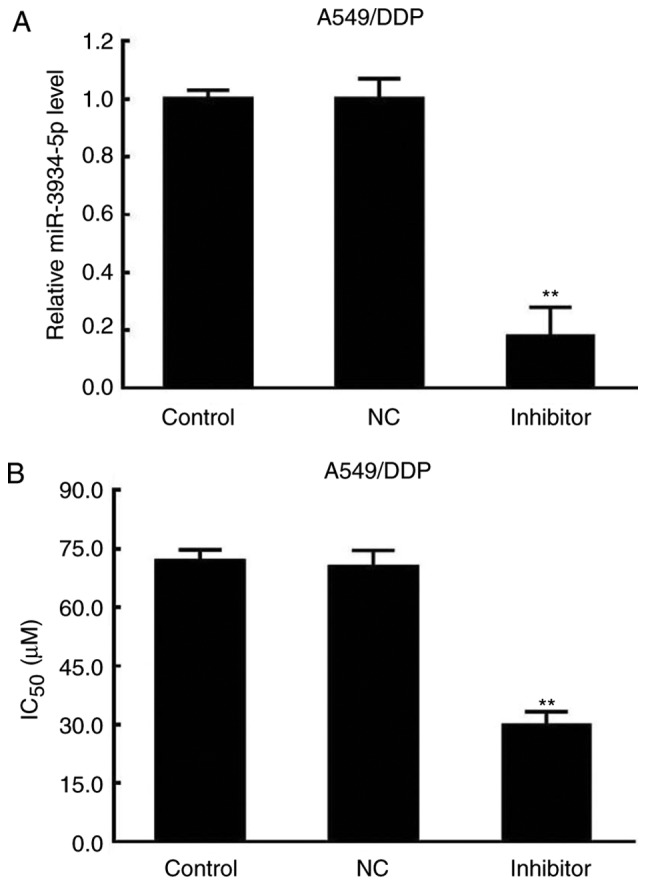
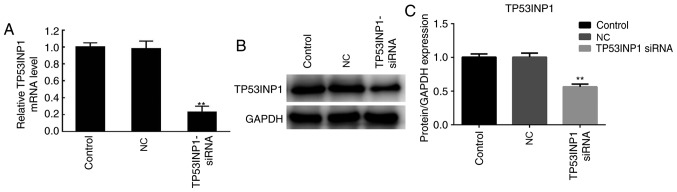
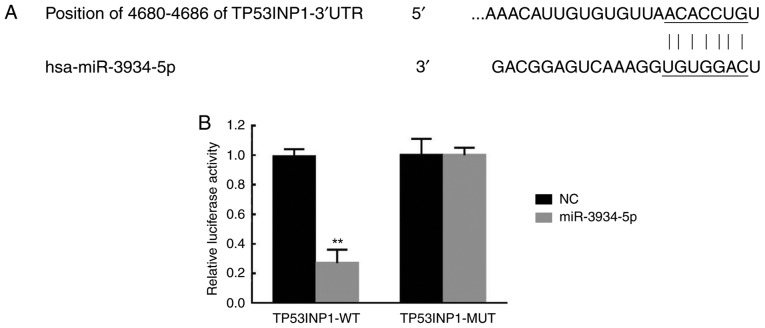
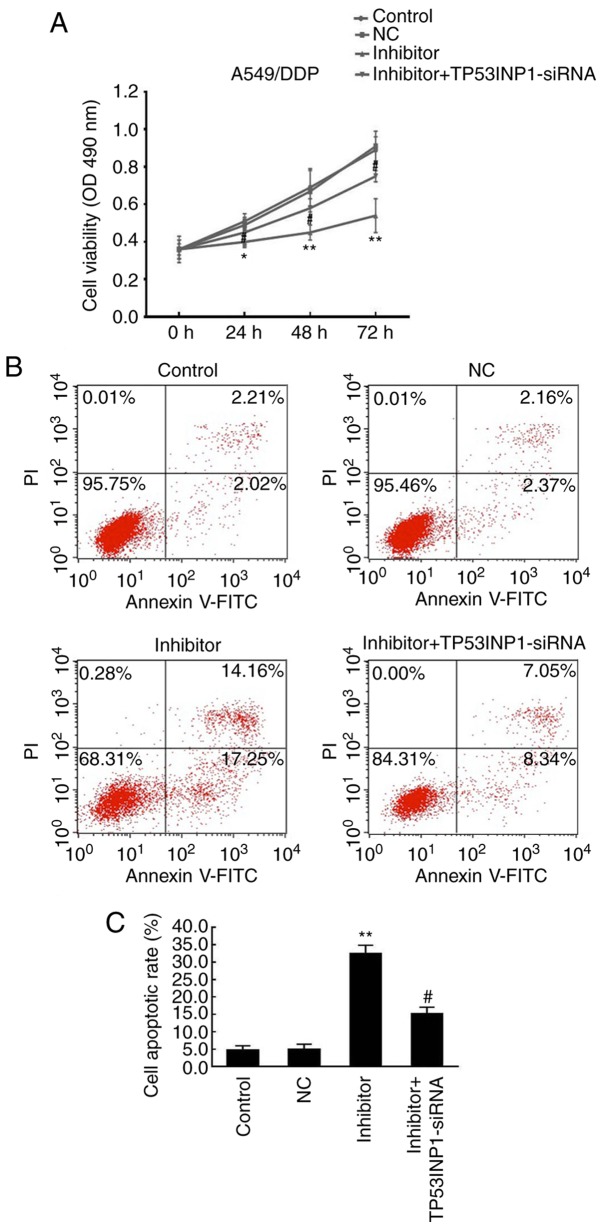
Tumor protein p53-inducible nuclear protein 1 (TP53INP1) is a tumor suppressor associated with malignant tumor metastasis. In addition, it has been reported that hsa-microRNA (miR)-3934 serves key roles in various types of lung cancer, including small-cell lung carcinomas (SCLC) and non-SCLC (NSCLC). Therefore, the present study aimed to determine the effects of miR-3934-5p on cell proliferation and apoptosis, and on sensitivity to cisplatin (DDP). Reverse transcription-quantitative polymerase chain reaction analysis and western blotting were conducted for the analysis of mRNA and protein expression, respectively. Furthermore, the target of miR-3934-5p was investigated using a luciferase reporter assay and apoptosis was analyzed by flow cytometry. The results demonstrated that miR-3934-5p was upregulated in NSCLC tissues and A549 cells. Increases in the half-maximal inhibitory concentration (IC) and the expression of miR-3934-5p were observed in the A549/DDP group. miR-3934-5p mimic promoted the expression of miR-3934-5p and the IC of the A549 cells. miR-3934-5p inhibitor downregulated miR-3934-5p and reduced the IC of A549/DDP cells. miR-3934-5p was revealed to target the 3'-untranslated region of TP53INP1. The downregulation of miR-3934-5p significantly suppressed the proliferation and promoted the apoptosis of A549/DDP cells, which were reversed by transfection with TP53INP1 small interfering (si)RNA. The protein and mRNA expression levels of TP53INP1, B-cell lymphoma 2 (Bcl-2)-associated-X and p21 were significantly increased, whereas those of Bcl-2 were significantly decreased in the miR-3934-5p inhibitor group, which was significantly reduced by TP53INP1 siRNA transfection. miR-3934-5p, as a tumor suppressor in NSCLC, may promote the sensitivity of cells to DDP by targeting TP53INP1, associated with the suppression of cell proliferation and promotion of apoptosis.
肿瘤蛋白p53诱导核蛋白1(TP53INP1)是一种与恶性肿瘤转移相关的肿瘤抑制因子。此外,据报道,hsa-微小RNA(miR)-3934在包括小细胞肺癌(SCLC)和非小细胞肺癌(NSCLC)在内的多种类型肺癌中发挥关键作用。因此,本研究旨在确定miR-3934-5p对细胞增殖、凋亡以及对顺铂(DDP)敏感性的影响。分别进行逆转录-定量聚合酶链反应分析和蛋白质印迹法以分析mRNA和蛋白质表达。此外,使用荧光素酶报告基因检测法研究miR-3934-5p的靶标,并通过流式细胞术分析凋亡情况。结果表明,miR-3934-5p在NSCLC组织和A549细胞中上调。在A549/DDP组中观察到半数最大抑制浓度(IC)和miR-3934-5p表达增加。miR-3934-5p模拟物促进了miR-3934-5p的表达以及A549细胞的IC。miR-3934-5p抑制剂下调了miR-3934-5p并降低了A549/DDP细胞的IC。miR-3934-5p被发现靶向TP53INP1的3'-非翻译区。miR-3934-5p的下调显著抑制了A549/DDP细胞的增殖并促进其凋亡,而用TP53INP1小干扰(si)RNA转染可逆转这种情况。在miR-3934-5p抑制剂组中,TP53INP1、B细胞淋巴瘤2(Bcl-2)相关X蛋白和p21的蛋白质和mRNA表达水平显著升高,而Bcl-2的表达水平显著降低,TP53INP1 siRNA转染可使其显著降低。miR-3934-5p作为NSCLC中的一种肿瘤抑制因子,可能通过靶向TP53INP1促进细胞对DDP的敏感性,这与抑制细胞增殖和促进凋亡有关。