Ma Xiuzhen, Deng Junfeng, Cui Xinmu, Chen Qi, Wang Weihua
Department of Obstetrics and Gynecology, Yantai Hospital of Traditional Chinese Medicine, Yantai, Shandong 264000, P.R. China.
Exp Ther Med. 2019 Sep;18(3):2122-2130. doi: 10.3892/etm.2019.7772. Epub 2019 Jul 12.
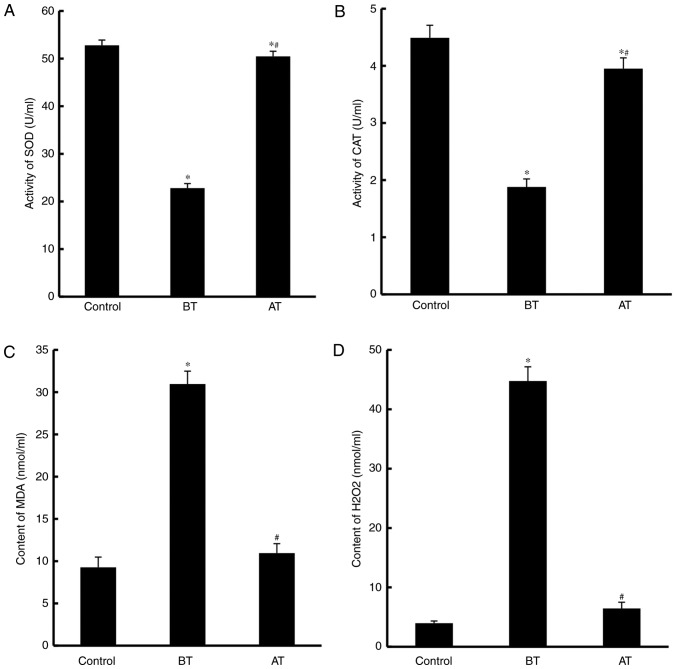
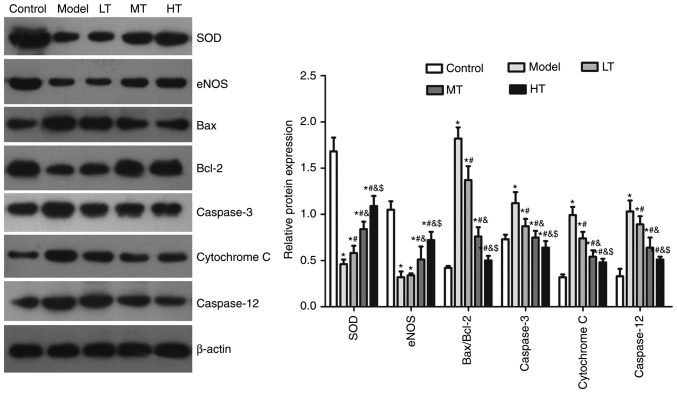
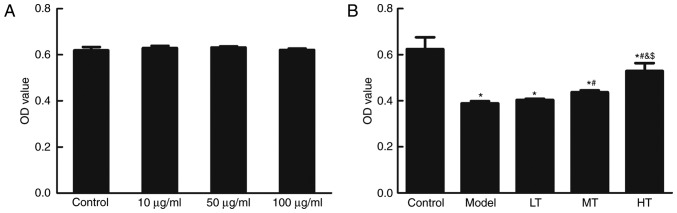
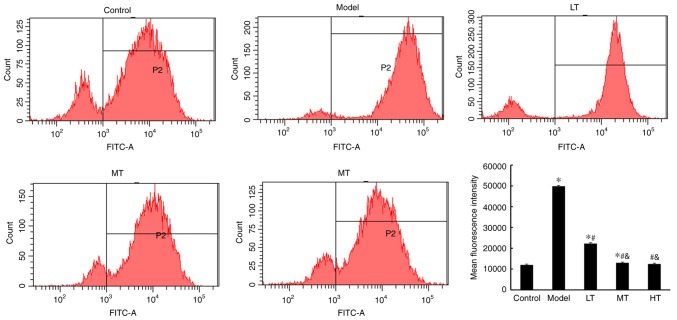
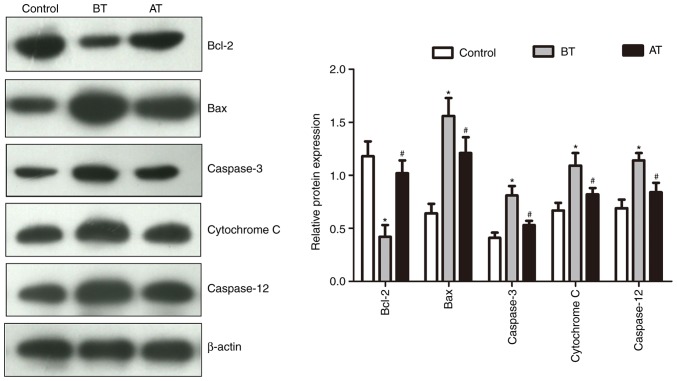
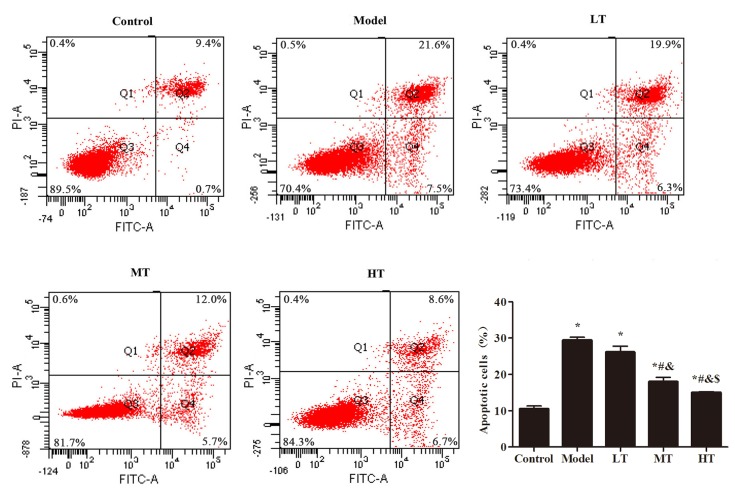
Bacterial vaginosis (BV) is a common type of vaginitis. Berberine is a natural alkaline product that reduces oxidative stress and apoptosis in cells. The aim of the present study was to investigate the effects of berberine on oxidative stress and apoptotic rates of BV. Vaginal epithelial and discharge samples were obtained from 60 healthy individuals and 180 patients with BV before and after one month of berberine treatment. Clinical observation was documented for all patients before and after treatment for comparison. Additionally, an study was performed; the samples were divided into groups the following groups: Control, model (HO-treated), LT (low-dose berberine), MT (medium-dose berberine) and HT (high-dose berberine). Expression levels of the oxidative stress related proteins were detected by western blotting. Clinical symptoms of patients with BV significantly improved following berberine treatment. Oxidative stress in vaginal discharge was significantly lower following treatment, indicated by the increased activity of superoxide dismutase (SOD) and catalase, as well as the reduced levels of malondialdehyde and HO. Apoptosis of the vaginal epithelial cells was also reduced, which was indicated by the reduced expression of apoptosis proteins caspase-3, cytochrome C, capase-12 and Bax, and increased expression of Bcl-2. The results of the experiments demonstrated a dose-dependent decrease in apoptosis with berberine treatment compared with levels before treatment. Oxidative stress relief was demonstrated by the reduced reactive oxygen species level and increased SOD and endothelial nitric oxide synthase levels, whereas suppression of apoptosis was further supported by the reduction in apoptotic proteins, as well as a decreased Bax/Bcl-2 ratio. Berberine exhibited effects on lowering oxidative stress in vaginal discharge and reducing oxidative damage, as well as apoptosis of the vaginal epithelium, which are beneficial to patients with bacterial vaginosis.
细菌性阴道病(BV)是一种常见的阴道炎类型。黄连素是一种天然碱性产物,可降低细胞中的氧化应激和细胞凋亡。本研究的目的是探讨黄连素对BV氧化应激和凋亡率的影响。在黄连素治疗前及治疗1个月后,从60名健康个体和180例BV患者中获取阴道上皮和分泌物样本。记录所有患者治疗前后的临床观察结果以作比较。此外,进行了一项研究;样本被分为以下几组:对照组、模型组(过氧化氢处理组)、低剂量黄连素组(LT)、中剂量黄连素组(MT)和高剂量黄连素组(HT)。通过蛋白质免疫印迹法检测氧化应激相关蛋白的表达水平。黄连素治疗后,BV患者的临床症状明显改善。治疗后,阴道分泌物中的氧化应激显著降低,表现为超氧化物歧化酶(SOD)和过氧化氢酶活性增加,丙二醛和过氧化氢水平降低。阴道上皮细胞的凋亡也减少,表现为凋亡蛋白半胱天冬酶-3、细胞色素C、半胱天冬酶-12和Bax的表达降低,以及Bcl-2的表达增加。实验结果表明,与治疗前水平相比,黄连素治疗可使细胞凋亡呈剂量依赖性降低。氧化应激减轻表现为活性氧水平降低、SOD和内皮型一氧化氮合酶水平升高,而凋亡蛋白减少以及Bax/Bcl-2比值降低进一步支持了对细胞凋亡的抑制作用。黄连素对降低阴道分泌物中的氧化应激、减少氧化损伤以及阴道上皮细胞凋亡均有作用,这对细菌性阴道病患者有益。