Abbe Carmen, Mitchell Caroline M
Elson S. Floyd College of Medicine, Washington State University, Spokane, WA, United States.
Vincent Center for Reproductive Biology, Massachusetts General Hospital, Boston, MA, United States.
Front Reprod Health. 2023 May 31;5:1100029. doi: 10.3389/frph.2023.1100029. eCollection 2023.
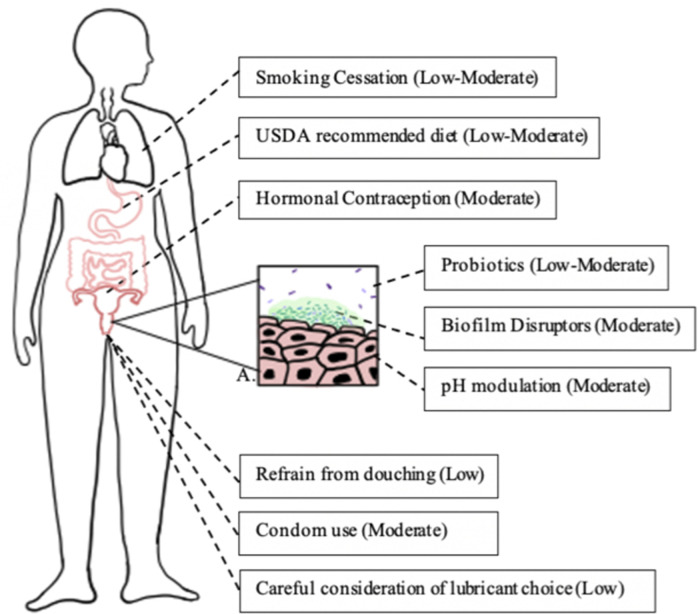
Bacterial vaginosis (BV) is a common cause of vaginitis worldwide and is associated with serious reproductive health outcomes, including increased risk of preterm birth, sexually transmitted infections, and pelvic inflammatory disease. The current and only FDA-approved treatment regimens for BV are antibiotics, such as metronidazole and clindamycin. Antibiotics provide a short-term cure for bacterial vaginosis; however, fail to provide a consistent long-term cure for many women. Fifty to eighty percent of women experience a BV recurrence within a year of completing antibiotic treatment. This may be because after antibiotic treatment, beneficial strains of , such as do not recolonize the vagina. In the absence of an effective long-term cure, patients, providers, and researchers are exploring different approaches to treatment and prevention, resulting in a rapid evolution of perspectives on BV pathogenesis and approaches to management. Current areas of investigation for BV management include probiotics, vaginal microbiome transplantation, pH modulation, and biofilm disruption. Behavioral modifications that may help include smoking cessation, condom use and hormonal contraception. Additional strategies considered by many people include dietary modification, non-medical vaginally applied products, choice of lubricant, and treatments from medical practices outside of allopathic medicine. This review aims to provide a comprehensive and up to date outline of the landscape of ongoing and potential treatment and prevention strategies for BV.
细菌性阴道病(BV)是全球范围内阴道炎的常见病因,与严重的生殖健康后果相关,包括早产、性传播感染和盆腔炎风险增加。目前美国食品药品监督管理局(FDA)批准的唯一用于治疗BV的方案是抗生素,如甲硝唑和克林霉素。抗生素能为细菌性阴道病提供短期治愈;然而,许多女性未能获得持续的长期治愈。50%至80%的女性在完成抗生素治疗后的一年内会出现BV复发。这可能是因为抗生素治疗后,有益菌株,如 没有重新在阴道定植。在缺乏有效长期治愈方法的情况下,患者、医疗服务提供者和研究人员正在探索不同的治疗和预防方法,导致对BV发病机制和管理方法的观点迅速演变。目前BV管理的研究领域包括益生菌、阴道微生物群移植、pH调节和生物膜破坏。可能有帮助的行为改变包括戒烟、使用避孕套和激素避孕。许多人考虑的其他策略包括饮食调整、非医疗性阴道应用产品、润滑剂选择以及来自非对抗疗法医学实践的治疗方法。这篇综述旨在全面且最新地概述BV当前和潜在的治疗与预防策略。