College of Food Science and Nutritional Engineer Engineering, China Agricultural University, Beijing, 100083, China.
School of Agricultural Economics and Rural Development, Renmin University of China, Beijing, 100872, China.
BMC Plant Biol. 2019 Aug 14;19(1):354. doi: 10.1186/s12870-019-1939-z.
High temperature is a major environmental stress that limits plant growth and agriculture productivity. Mitogen-activated protein kinases (MAPKs) are highly conserved serine and threonine protein kinases that participate in response to diverse environmental stresses in plants. A total of 16 putative SlMAPK genes are identified in tomato, and SlMAPK3 is one of the most extensively studied SlMAPKs. However, the role of SlMAPK3 in response to heat stress is not clearly understood in tomato plants. In this study, we performed functional analysis of SlMAPK3 for its possible role in response to heat stress.
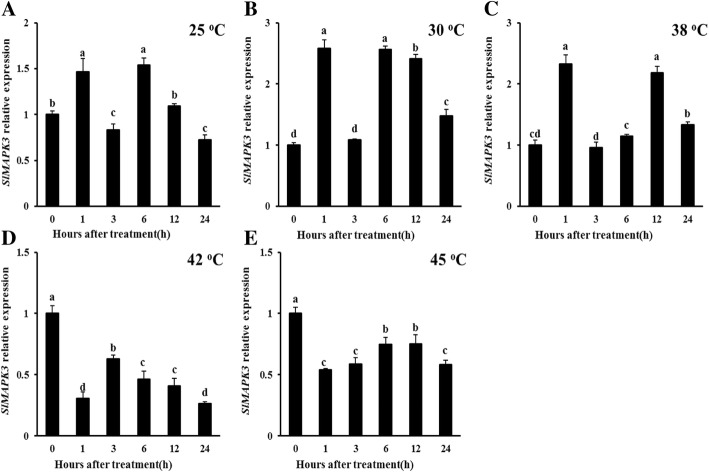
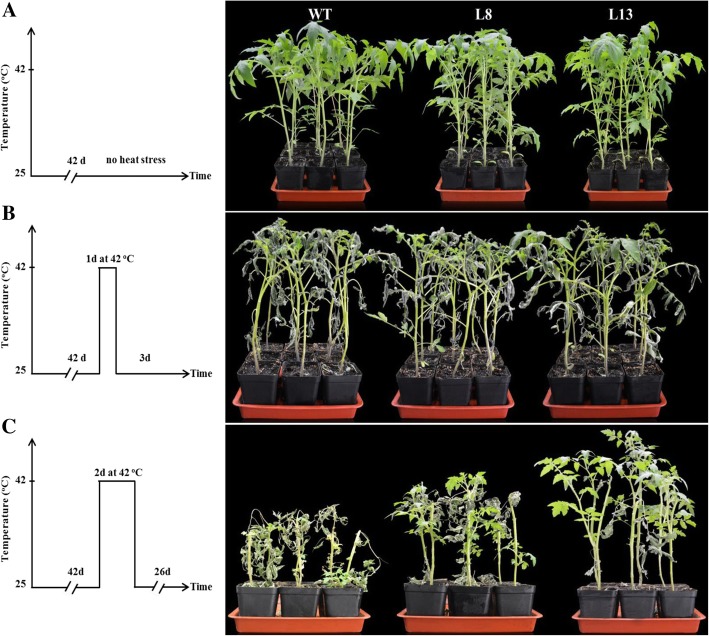
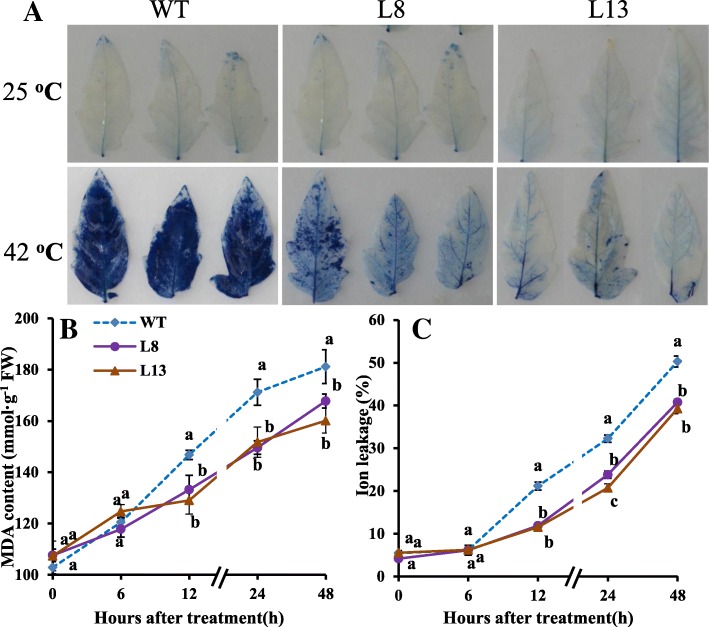
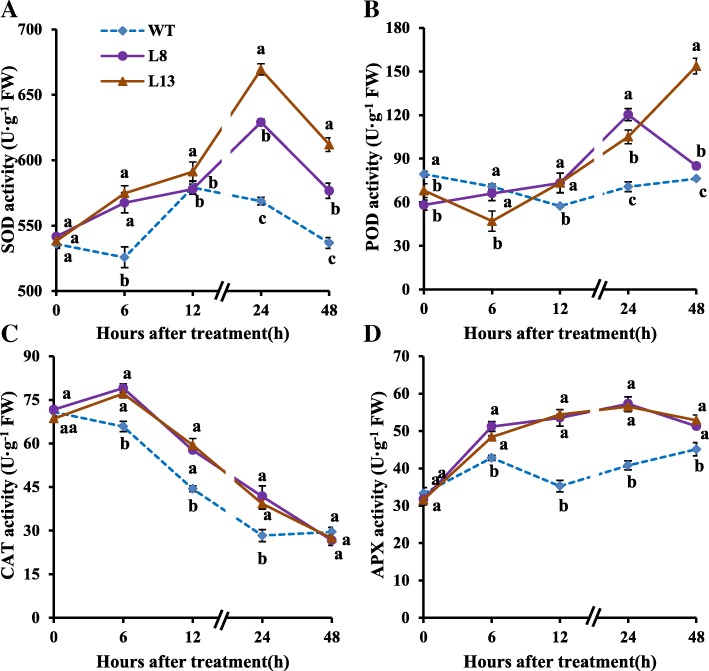
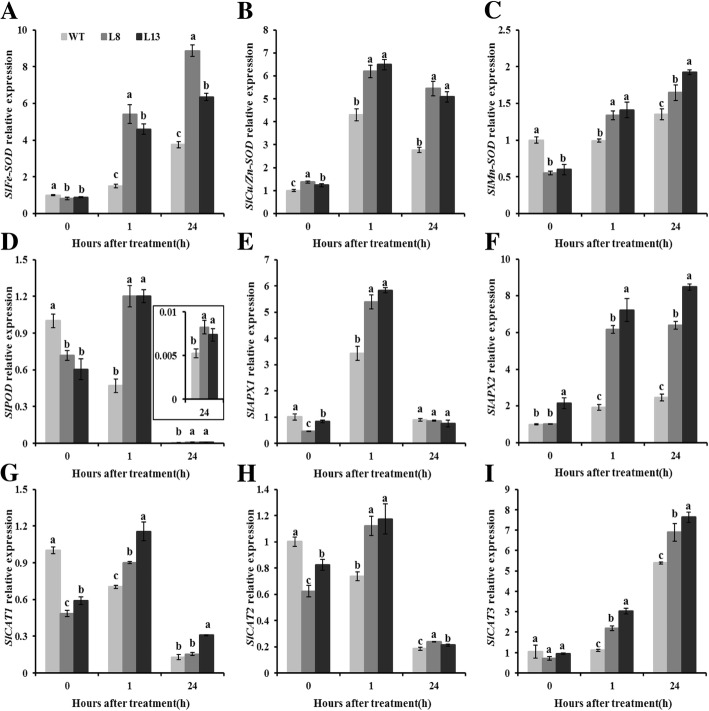
qRT-PCR analyses revealed that SlMAPK3 relative expression was depressed by heat stress. Here, wild-type (WT) tomato plants and CRISPR/Cas9-mediated slmapk3 mutant lines (L8 and L13) were used to investigate the function of SlMAPK3 in response to heat stress. Compared with WT plants, slmapk3 mutants exhibited less severe wilting and less membrane damage, showed lower reactive oxygen species (ROS) contents, and presented higher both activities and transcript levels of antioxidant enzymes, as well as elevated expressions of genes encoding heat stress transcription factors (HSFs) and heat shock proteins (HSPs).
CRISPR/Cas9-mediated slmapk3 mutants exhibited more tolerance to heat stress than WT plants, suggesting that SlMAPK3 was a negative regulator of thermotolerance. Moreover, antioxidant enzymes and HSPs/HSFs genes expression were involved in SlMAPK3-mediated heat stress response in tomato plants.
高温是限制植物生长和农业生产力的主要环境胁迫因素。丝裂原活化蛋白激酶(MAPKs)是高度保守的丝氨酸和苏氨酸蛋白激酶,参与植物对各种环境胁迫的反应。在番茄中鉴定出了 16 个推定的 SlMAPK 基因,SlMAPK3 是研究最广泛的 SlMAPK 之一。然而,SlMAPK3 在番茄植物中对热应激的反应作用尚不清楚。在本研究中,我们对 SlMAPK3 进行了功能分析,以研究其在应对热应激中的可能作用。
qRT-PCR 分析显示 SlMAPK3 的相对表达受热胁迫抑制。在这里,使用野生型(WT)番茄植株和 CRISPR/Cas9 介导的 slmapk3 突变体系(L8 和 L13)来研究 SlMAPK3 在应对热应激中的功能。与 WT 植株相比,slmapk3 突变体表现出较轻的萎蔫和较少的膜损伤,较低的活性氧(ROS)含量,较高的抗氧化酶活性和转录水平,以及热应激转录因子(HSFs)和热休克蛋白(HSPs)编码基因的较高表达。
CRISPR/Cas9 介导的 slmapk3 突变体比 WT 植株表现出更高的耐热性,表明 SlMAPK3 是耐热性的负调节剂。此外,抗氧化酶和 HSPs/HSFs 基因的表达参与了 SlMAPK3 介导的番茄植物热应激反应。