Lee Minjung, Oikawa Satoshi, Ushida Takashi, Suzuki Katsuhiko, Akimoto Takayuki
Faculty of Sport Sciences, Waseda University, Saitama, Japan.
Division of Regenerative Medical Engineering, Center for Disease Biology and Integrative Medicine, Graduate School of Medicine, The University of Tokyo, Bunkyo, Japan.
Front Physiol. 2019 Jul 31;10:970. doi: 10.3389/fphys.2019.00970. eCollection 2019.
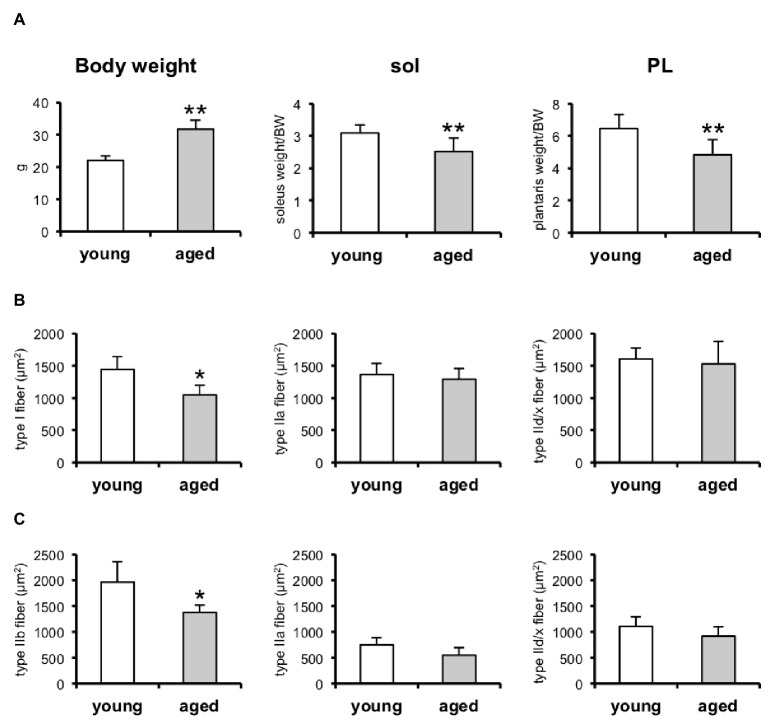
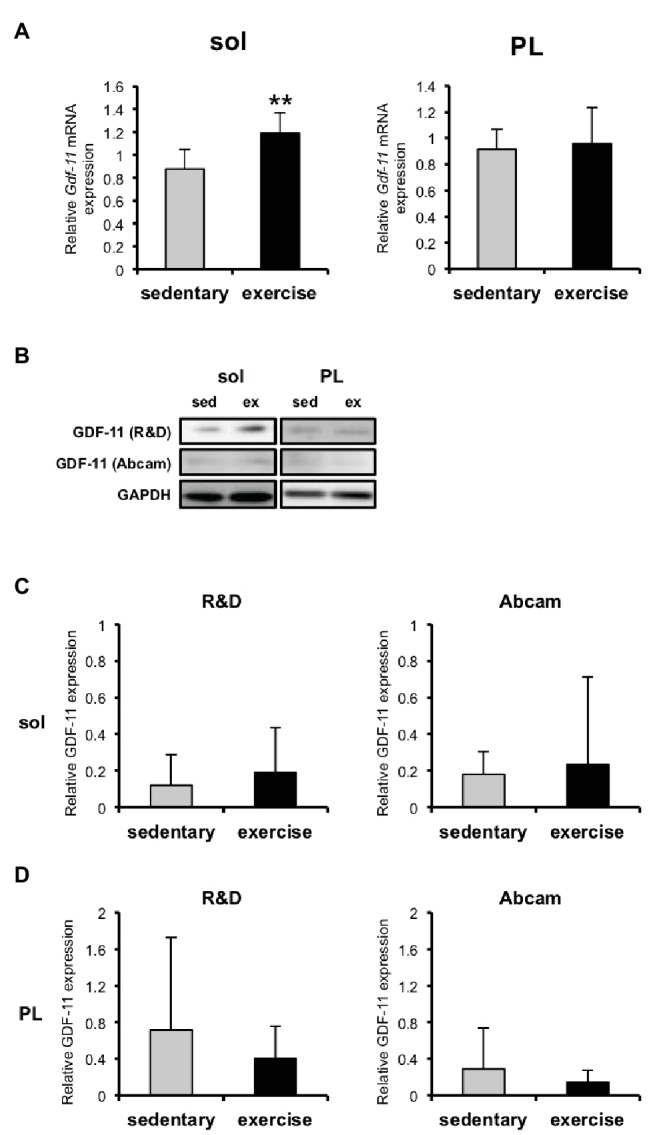
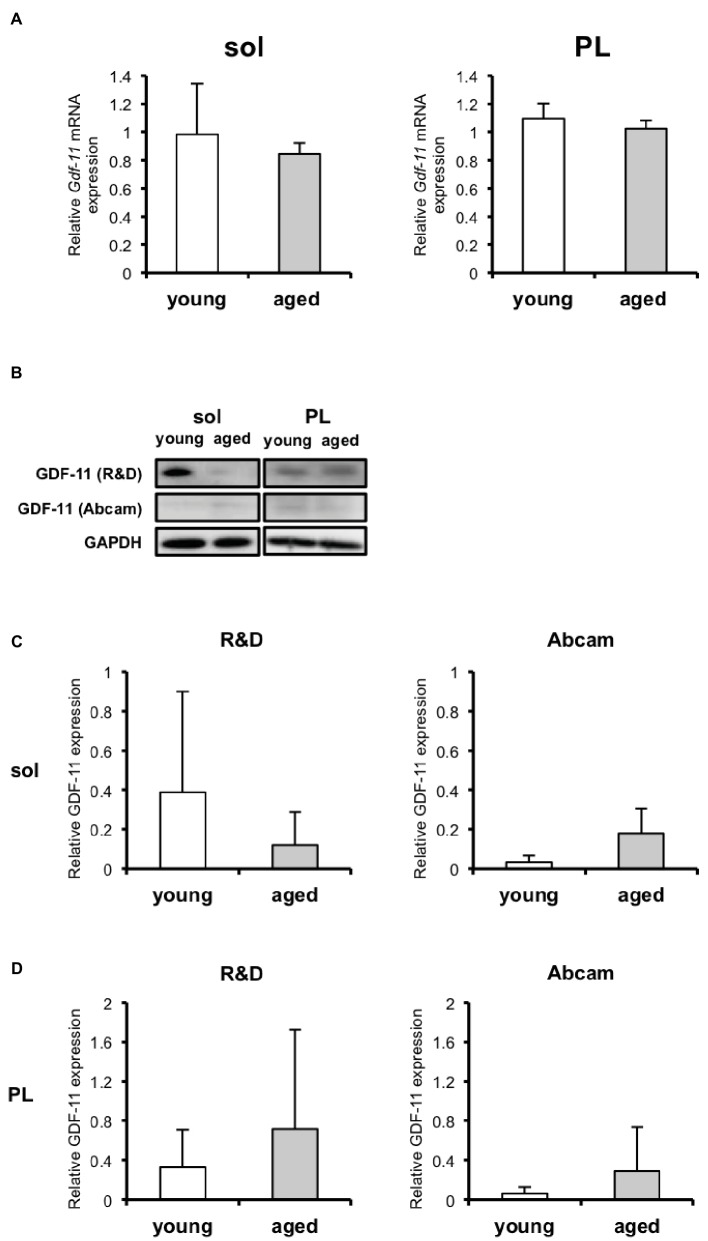
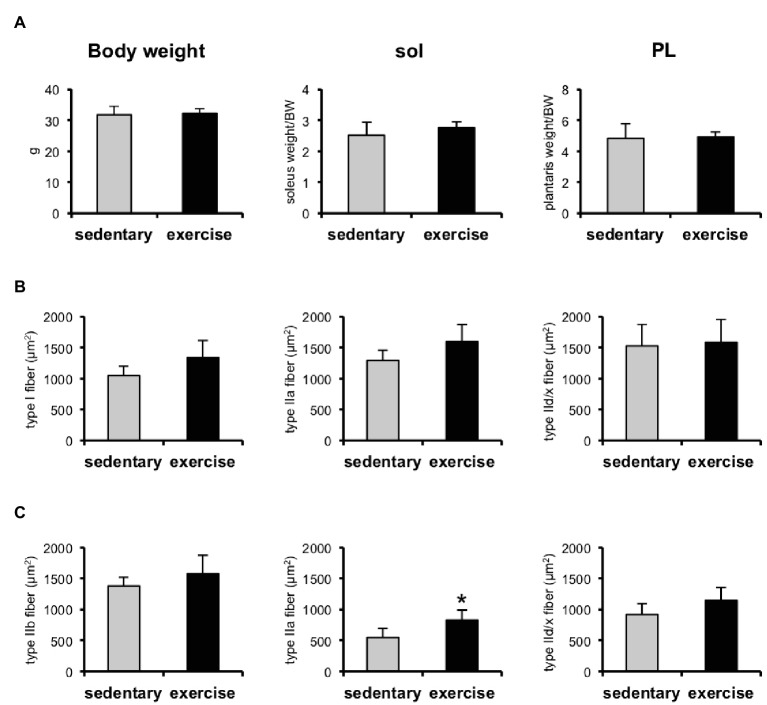
Exercise training is considered an effective way to prevent age-related skeletal muscle loss. However, the molecular mechanism has not been clarified. Growth and differentiation factor 11 (GDF11) has been controversially considered a regulator of skeletal muscle aging. In this study, we examined whether GDF11 is associated with skeletal muscle aging and the effects of exercise training on age-related skeletal muscle loss. First, we observed that mRNA and protein expression levels in young (5-month-old, = 6) and aged (22-to 26-month-old, = 5) mice were not significantly different. Aged mice were then divided into sedentary ( = 5) and exercise ( = 6) groups. The exercise group performed moderate-intensity treadmill running for 6 weeks. Treadmill exercise training increased mRNA expression in the soleus muscle, but its protein expression was not altered. In contrast, the GDF11 level in the plantaris muscle was not changed at either the mRNA or protein level. Collectively, our data demonstrate that GDF11 levels do not change during aging, and that treadmill exercise training increased mRNA expression in a predominantly slow-twitch muscle.
运动训练被认为是预防与年龄相关的骨骼肌流失的有效方法。然而,其分子机制尚未阐明。生长分化因子11(GDF11)一直被争议地认为是骨骼肌衰老的调节因子。在本研究中,我们研究了GDF11是否与骨骼肌衰老相关,以及运动训练对与年龄相关的骨骼肌流失的影响。首先,我们观察到年轻(5个月大,n = 6)和老年(22至26个月大,n = 5)小鼠中的mRNA和蛋白质表达水平没有显著差异。然后将老年小鼠分为久坐组(n = 5)和运动组(n = 6)。运动组进行了6周的中等强度跑步机跑步。跑步机运动训练增加了比目鱼肌中mRNA的表达,但其蛋白质表达没有改变。相比之下,跖肌中的GDF11水平在mRNA或蛋白质水平上均未改变。总体而言,我们的数据表明,衰老过程中GDF11水平没有变化,并且跑步机运动训练增加了主要为慢肌纤维的肌肉中的mRNA表达。