State Key Laboratory of Food Science and Technology, Jiangnan University, Wuxi, China.
School of Food Science and Technology, Jiangnan University, Wuxi, China.
Front Immunol. 2019 Jul 30;10:1733. doi: 10.3389/fimmu.2019.01733. eCollection 2019.
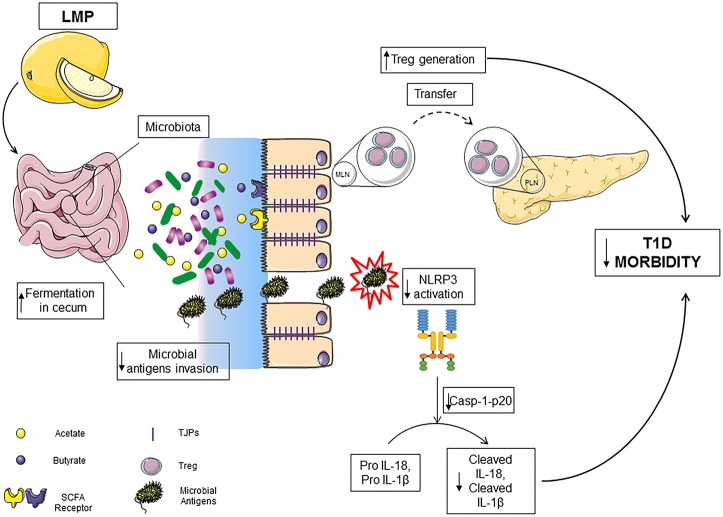
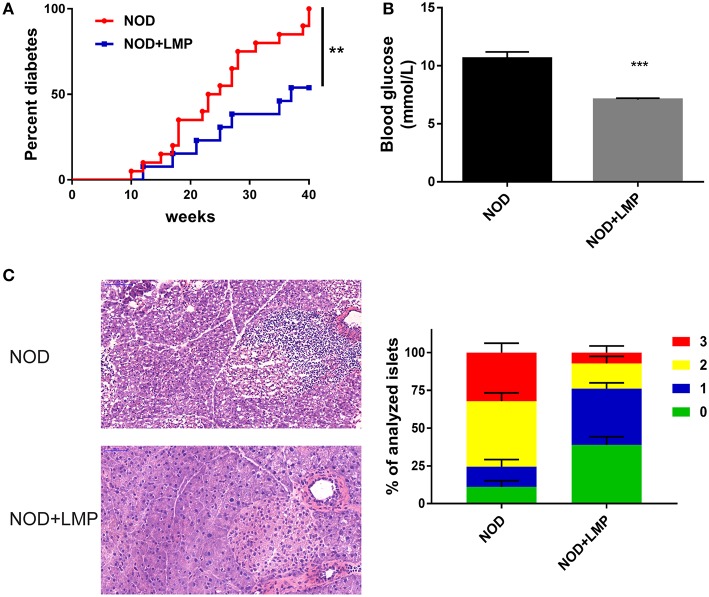
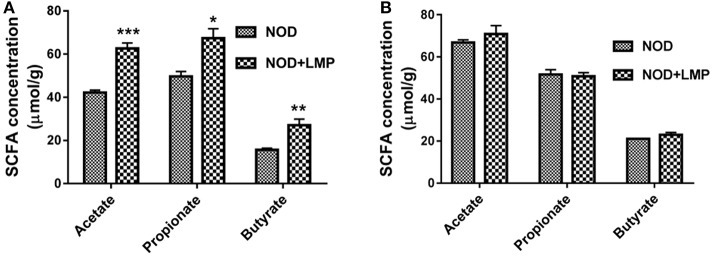
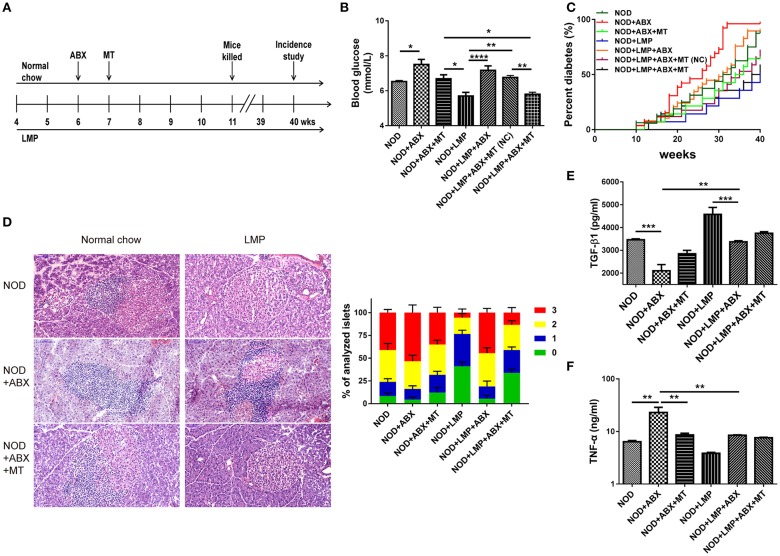
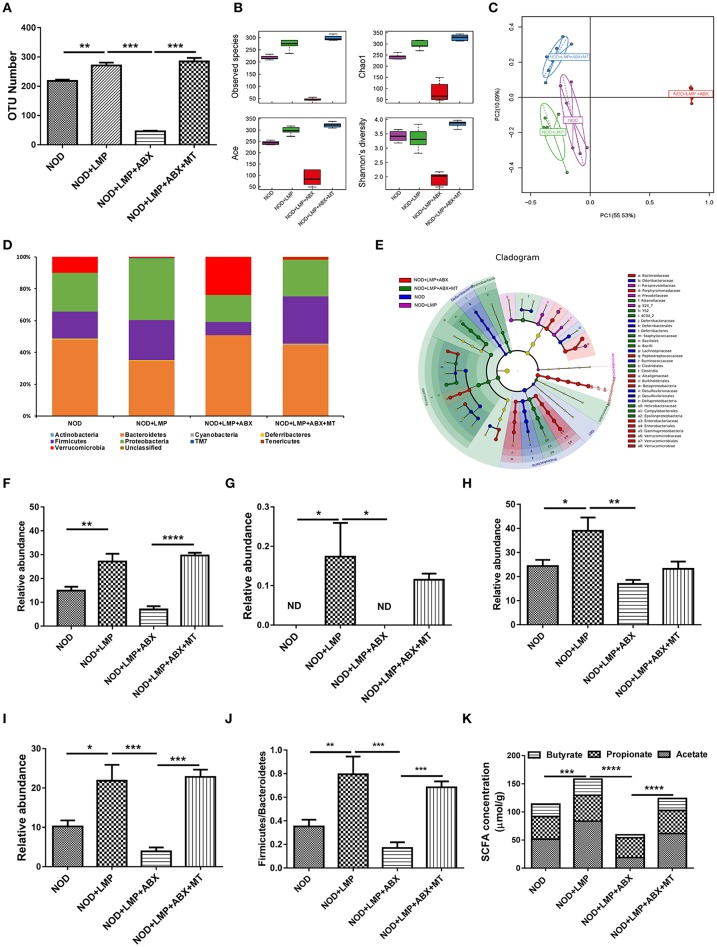
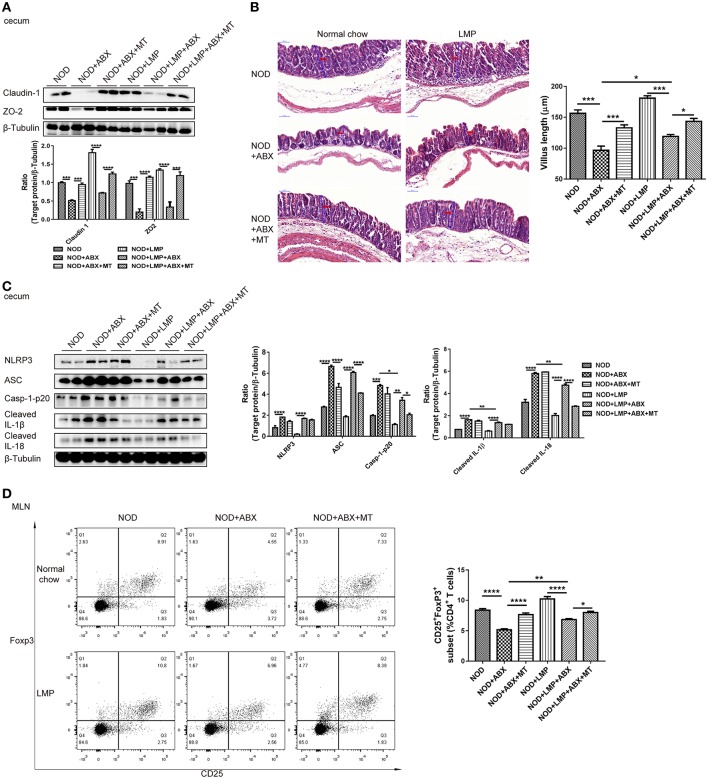
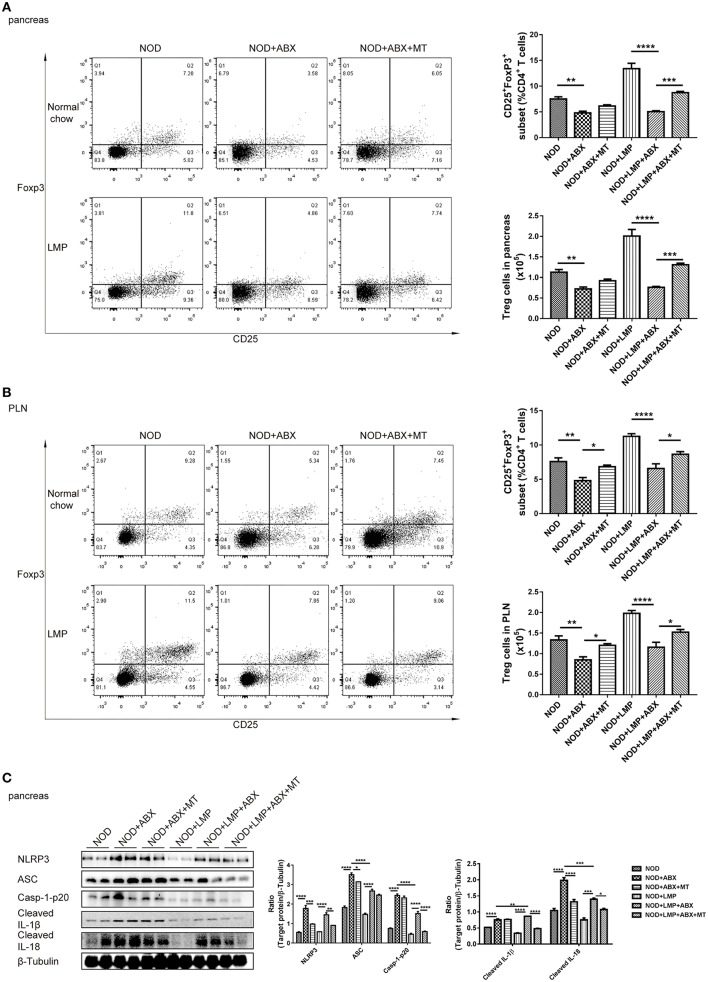
Intestinal homeostasis underpins the development of type 1 diabetes (T1D), and dietary manipulations to enhance intestinal homeostasis have been proposed to prevent T1D. The current study aimed to investigate the efficacy of supplementing a novel specific low-methoxyl pectin (LMP) dietary fiber in preventing T1D development. Female NOD mice were weaned onto control or 5% (wt/wt) LMP supplemented diets for up to 40 weeks of age, overt diabetes incidence and blood glucose were monitored. Then broad-spectrum antibiotics (ABX) treatment per os for 7 days followed by gut microbiota transfer was performed to demonstrate gut microbiota-dependent effects. Next-generation sequencing was used for analyzing the composition of microbiota in caecum. Concentration of short chain fatty acids were determined by GC-MS. The barrier reinforcing tight junction proteins zonula occludens-2 (ZO-2), claudin-1 and NOD like receptor protein 3 (NLRP3) inflammasome activation were determined by Western blot. The proportion of CD25Foxp3CD4 regulatory T cell (Foxp3 Treg) in the pancreas, pancreatic and mesenteric lymph nodes was analyzed by flow cytometry. We found that LMP supplementation ameliorated T1D development in non-obese diabetic (NOD) mice, as evidenced by decreasing diabetes incidence and fasting glucose levels in LMP fed NOD mice. Further microbiota analysis revealed that LMP supplementation prevented T1D-associated caecal dysbiosis and selectively enriched caecal bacterial species to produce more SCFAs. The LMP-mediated microbial balance further enhanced caecal barrier function and shaped gut-pancreatic immune environment, as characterized by higher expression of tight junction proteins claudin-1, ZO-2 in caecum, increased Foxp3 Treg population and decreased NLRP3 inflammasome activation in both caecum and pancreas. The microbiota-dependent beneficial effect of LMP on T1D was further proven by the fact that aberration of caecal microbiota by ABX treatment worsened T1D autoimmunity and could be restored with transfer of feces of LMP-fed NOD mice. These data demonstrate that this novel LMP limits T1D development by inducing caecal homeostasis to shape pancreatic immune environment. This finding opens a realistic option for gut microbiota manipulation and prevention of T1D in humans.
肠道稳态是 1 型糖尿病(T1D)发生的基础,通过饮食干预增强肠道稳态被认为可以预防 T1D。本研究旨在探讨补充新型低甲氧基果胶(LMP)膳食纤维对预防 T1D 发生的疗效。雌性 NOD 小鼠断奶后分别给予对照或 5%(wt/wt)LMP 补充饮食,直至 40 周龄,监测显性糖尿病发病率和血糖。然后进行口服广谱抗生素(ABX)治疗 7 天,随后进行肠道微生物群转移,以证明肠道微生物群依赖性效应。采用下一代测序分析盲肠微生物群组成。采用 GC-MS 测定短链脂肪酸浓度。采用 Western blot 测定紧密连接蛋白 zonula occludens-2(ZO-2)、claudin-1 和 NOD 样受体蛋白 3(NLRP3)炎症小体激活的浓度。采用流式细胞术分析胰腺、胰腺和肠系膜淋巴结中 CD25Foxp3CD4 调节性 T 细胞(Foxp3 Treg)的比例。我们发现,LMP 补充可改善非肥胖型糖尿病(NOD)小鼠的 T1D 发生,表现为 LMP 喂养的 NOD 小鼠糖尿病发病率和空腹血糖水平降低。进一步的微生物组分析显示,LMP 补充可预防 T1D 相关的盲肠菌群失调,并选择性富集盲肠细菌种类以产生更多的 SCFAs。LMP 介导的微生物平衡进一步增强了盲肠屏障功能,并塑造了肠道-胰腺免疫环境,特征为盲肠中紧密连接蛋白 claudin-1、ZO-2 的表达增加,Foxp3 Treg 群体增加,胰腺中 NLRP3 炎症小体激活减少。ABX 处理导致盲肠微生物群失调,加重 T1D 自身免疫,而用 LMP 喂养的 NOD 小鼠粪便转移可恢复这种肠道微生物群依赖性的有益作用,进一步证明了 LMP 对 T1D 的依赖于微生物群的有益作用。这些数据表明,这种新型 LMP 通过诱导盲肠稳态来塑造胰腺免疫环境,从而限制 T1D 的发生。这一发现为人类肠道微生物群的操纵和 T1D 的预防提供了一种现实的选择。