Immunoendocrinology, Division of Medical Biology, Department of Pathology and Medical Biology, University Medical Center Groningen, Groningen, Netherlands.
Laboratory of Food Chemistry, Wageningen University, Wageningen, Netherlands.
Front Immunol. 2018 Mar 1;9:383. doi: 10.3389/fimmu.2018.00383. eCollection 2018.
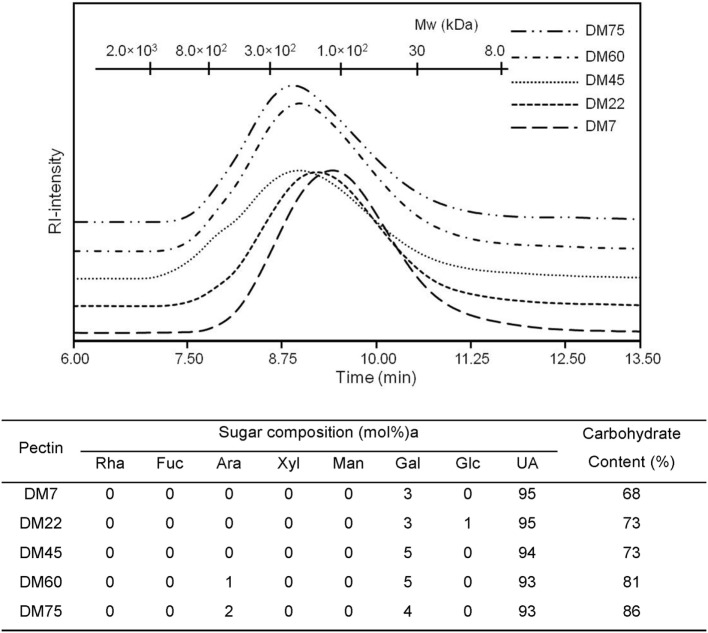
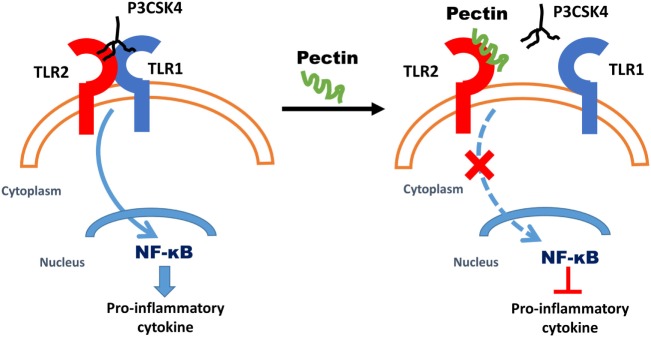
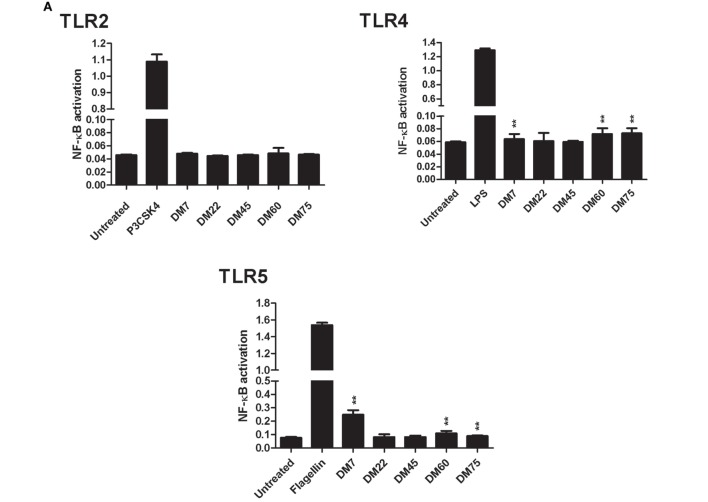
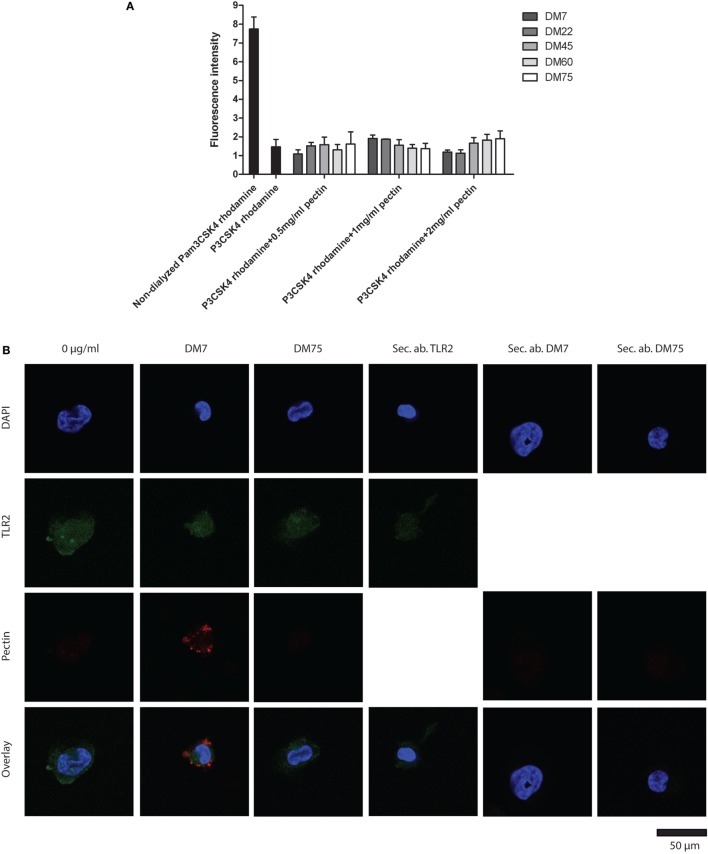
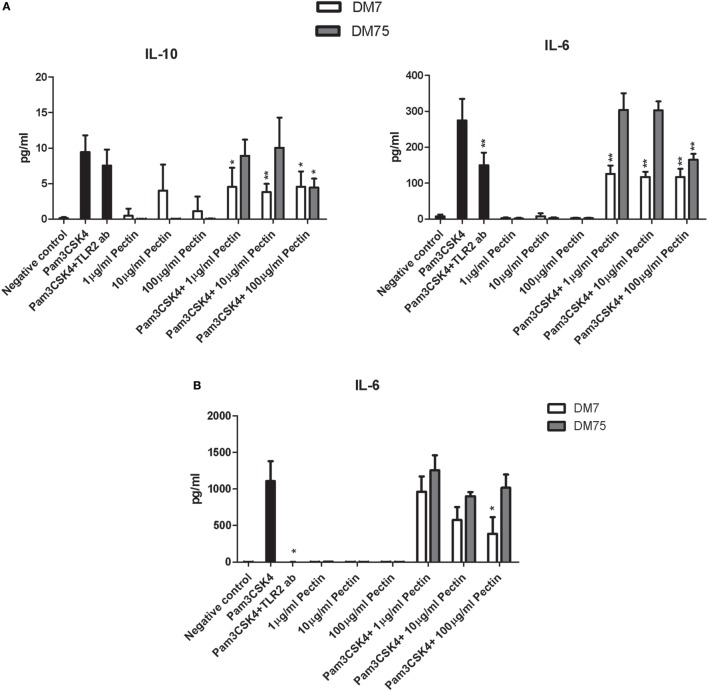
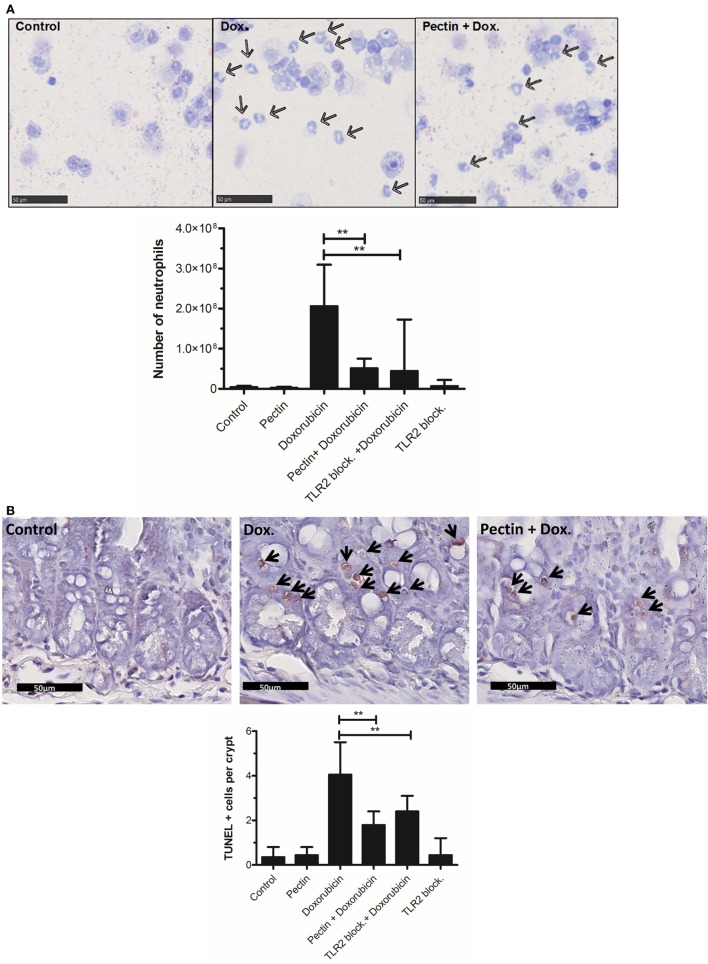
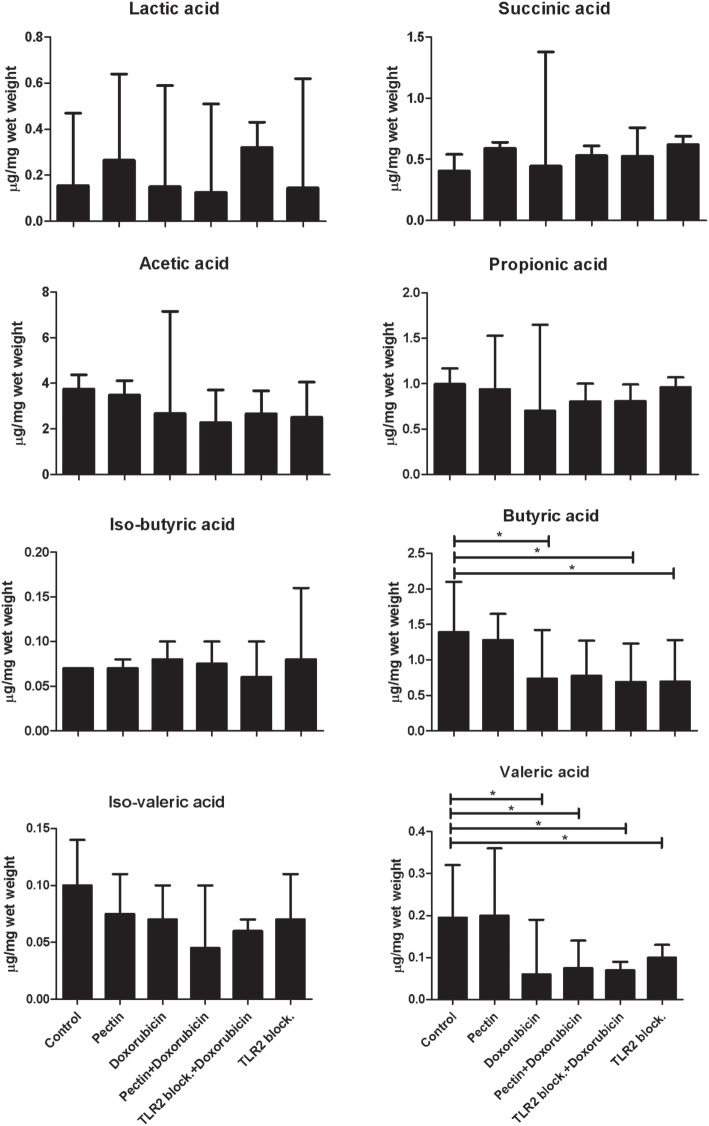
Dietary carbohydrate fibers are known to prevent immunological diseases common in Western countries such as allergy and asthma but the underlying mechanisms are largely unknown. Until now beneficial effects of dietary fibers are mainly attributed to fermentation products of the fibers such as anti-inflammatory short-chain fatty acids (SCFAs). Here, we found and present a new mechanism by which dietary fibers can be anti-inflammatory: a commonly consumed fiber, pectin, blocks innate immune receptors. We show that pectin binds and inhibits, toll-like receptor 2 (TLR2) and specifically inhibits the proinflammatory TLR2-TLR1 pathway while the tolerogenic TLR2-TLR6 pathway remains unaltered. This effect is most pronounced with pectins having a low degree of methyl esterification (DM). Low-DM pectin interacts with TLR2 through electrostatic forces between non-esterified galacturonic acids on the pectin and positive charges on the TLR2 ectodomain, as confirmed by testing pectin binding on mutated TLR2. The anti-inflammatory effect of low-DM pectins was first studied in human dendritic cells and mouse macrophages and was subsequently tested in TLR2-dependent ileitis in a mouse model. In these mice, ileitis was prevented by pectin administration. Protective effects were shown to be TLR2-TLR1 dependent and independent of the SCFAs produced by the gut microbiota. These data suggest that low-DM pectins as a source of dietary fiber can reduce inflammation through direct interaction with TLR2-TLR1 receptors.
膳食纤维已知可预防西方国家常见的免疫性疾病,如过敏和哮喘,但其中的具体机制尚不清楚。到目前为止,膳食纤维的有益作用主要归因于纤维的发酵产物,如抗炎的短链脂肪酸(SCFA)。在这里,我们发现并提出了膳食纤维具有抗炎作用的一种新机制:一种常见的膳食纤维果胶可与先天免疫受体结合并抑制其活性。我们发现果胶可与 Toll 样受体 2(TLR2)结合并抑制其活性,特异性地抑制促炎 TLR2-TLR1 途径,而耐受性 TLR2-TLR6 途径不受影响。具有低酯化度(DM)的果胶作用最为明显。低 DM 果胶通过果胶上未酯化的半乳糖醛酸与 TLR2 外域上的正电荷之间的静电相互作用与 TLR2 相互作用,这一点通过对突变型 TLR2 进行果胶结合测试得到了证实。低 DM 果胶的抗炎作用首先在人树突状细胞和小鼠巨噬细胞中进行了研究 ,随后在 TLR2 依赖性小鼠回肠炎模型中进行了测试 。在这些小鼠中,果胶给药可预防回肠炎。保护作用被证明是 TLR2-TLR1 依赖性的,与肠道微生物群产生的 SCFA 无关。这些数据表明,低 DM 果胶作为膳食纤维的来源,可通过与 TLR2-TLR1 受体的直接相互作用来减轻炎症。