Department of Biological and Medical Sciences, Headington Campus, Oxford Brookes University, United Kingdom.
Faculty of Education, University of Cambridge, United Kingdom.
J Speech Lang Hear Res. 2019 Sep 20;62(9):3381-3396. doi: 10.1044/2019_JSLHR-L-19-0001. Epub 2019 Aug 19.
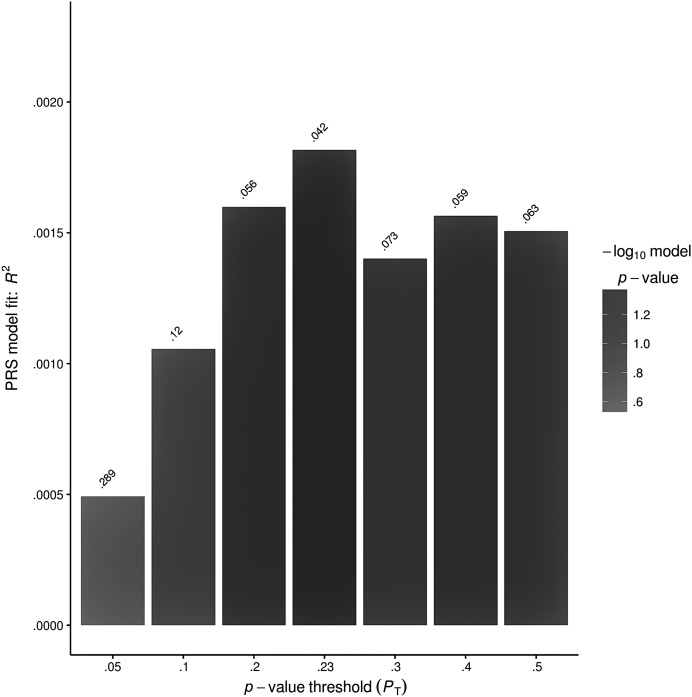
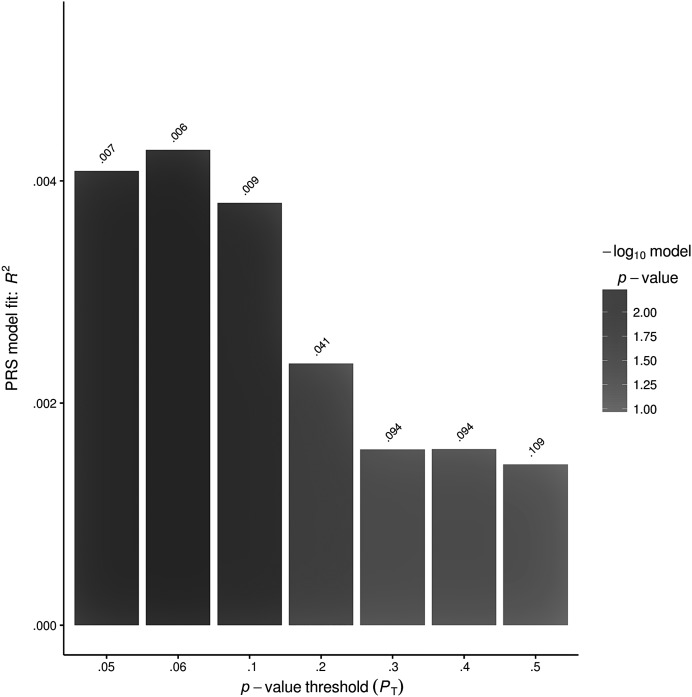
Purpose Children with poor language tend to have worse psychosocial outcomes compared to their typically developing peers. The most common explanations for such adversities focus on developmental psychological processes whereby poor language triggers psychosocial difficulties. Here, we investigate the possibility of shared biological effects by considering whether the same genetic variants, which are thought to influence language development, are also predictors of elevated psychosocial difficulties during childhood. Method Using data from the U.K.-based Avon Longitudinal Study of Parents and Children, we created a number of multi-single-nucleotide polymorphism polygenic profile scores, based on language and reading candidate genes ( and 1,229 single-nucleotide polymorphisms) in a sample of 5,435 children. Results A polygenic profile score for expressive language (8 years) that was created in a discovery sample ( = 2,718) predicted not only expressive language (8 years) but also peer problems (11 years) in a replication sample ( = 2,717). Conclusions These findings provide a proof of concept for the use of such a polygenic approach in child language research when larger data sets become available. Our indicative findings suggest consideration should be given to concurrent intervention targeting both linguistic and psychosocial development as early language interventions may not stave off later psychosocial difficulties in children.
目的
与正常发育的同龄人相比,语言能力较差的儿童往往有更差的心理社会结果。对于这些逆境,最常见的解释集中在发展心理学过程上,即较差的语言会引发心理社会困难。在这里,我们通过考虑那些被认为影响语言发展的相同遗传变异是否也是儿童期心理社会困难升高的预测因子,来研究是否存在共同的生物学效应。
方法
利用英国阿冯纵向研究父母和儿童的数据,我们在一个 5435 名儿童的样本中,基于语言和阅读候选基因(和 1229 个单核苷酸多态性),创建了一些多单核苷酸多态性多基因谱评分。
结果
在一个发现样本(= 2718)中创建的表达性语言(8 岁)的多基因谱评分不仅预测了表达性语言(8 岁),而且预测了复制样本(= 2717)中的同伴问题(11 岁)。
结论
这些发现为在更大的数据集可用时,在儿童语言研究中使用这种多基因方法提供了一个概念验证。我们的指示性发现表明,应该考虑同时针对语言和心理社会发展进行干预,因为早期的语言干预可能无法避免儿童后期的心理社会困难。