Department of Maternal and Child Health and Urologic Sciences, Umberto I Hospital, Sapienza University of Rome, Rome 00161, Italy.
Department of Translation and Precision Medicine, Sapienza University of Rome, Rome 00185, Italy.
Cells. 2019 Aug 16;8(8):914. doi: 10.3390/cells8080914.
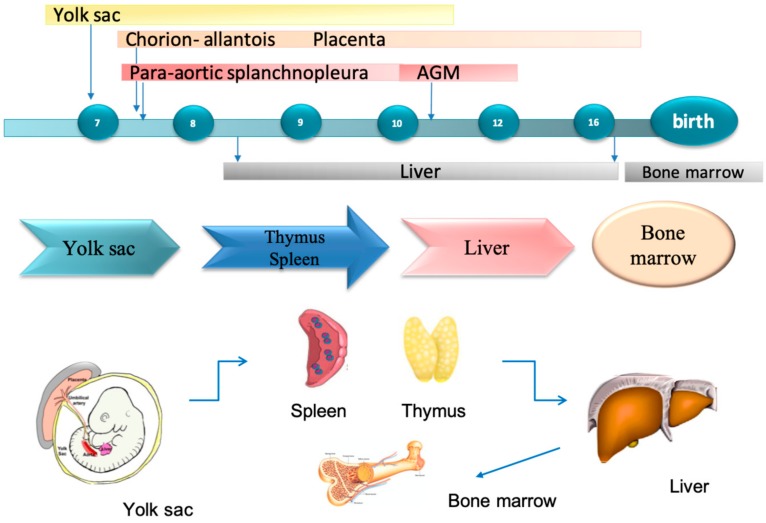
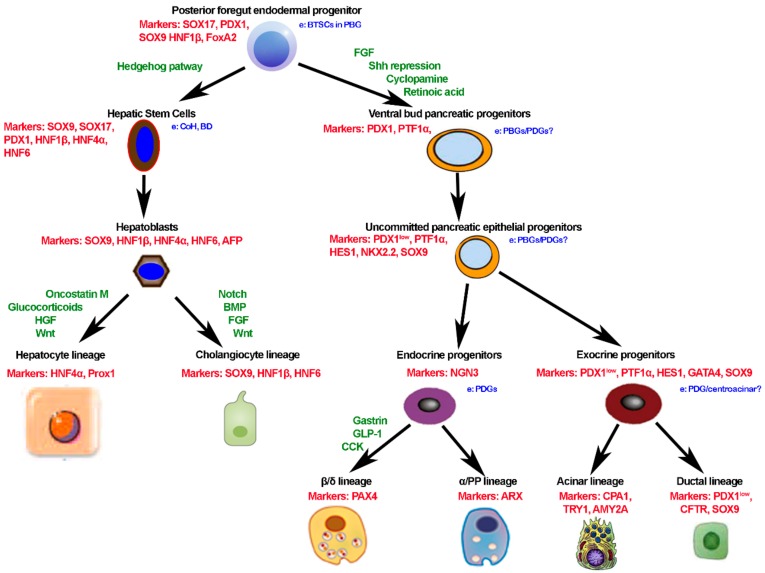
During foetal life, the liver plays the important roles of connection and transient hematopoietic function. Foetal liver cells develop in an environment called a hematopoietic stem cell niche composed of several cell types, where stem cells can proliferate and give rise to mature blood cells. Embryologically, at about the third week of gestation, the liver appears, and it grows rapidly from the fifth to 10th week under WNT/β-Catenin signaling pathway stimulation, which induces hepatic progenitor cells proliferation and differentiation into hepatocytes. Development of new strategies and identification of new cell sources should represent the main aim in liver regenerative medicine and cell therapy. Cells isolated from organs with endodermal origin, like the liver, bile ducts, and pancreas, could be preferable cell sources. Furthermore, stem cells isolated from these organs could be more susceptible to differentiate into mature liver cells after transplantation with respect to stem cells isolated from organs or tissues with a different embryological origin. The foetal liver possesses unique features given the co-existence of cells having endodermal and mesenchymal origin, and it could be highly available source candidate for regenerative medicine in both the liver and pancreas. Taking into account these advantages, the foetal liver can be the highest potential and available cell source for cell therapy regarding liver diseases and diabetes.
在胎儿期,肝脏起着连接和短暂造血功能的重要作用。胎儿肝细胞在造血干细胞龛中发育,造血干细胞龛由几种细胞类型组成,干细胞可以在其中增殖并产生成熟的血细胞。胚胎学上,在妊娠的第三周左右,肝脏出现,在 WNT/β-连环蛋白信号通路的刺激下,从第五周到第十周迅速生长,诱导肝祖细胞增殖并分化为肝细胞。开发新策略和鉴定新的细胞来源应成为肝脏再生医学和细胞治疗的主要目标。源自内胚层来源的器官(如肝脏、胆管和胰腺)分离出的细胞可能是更好的细胞来源。此外,与源自不同胚胎起源的器官或组织分离出的干细胞相比,从这些器官分离出的干细胞在移植后更有可能分化为成熟的肝细胞。由于胎儿肝脏中存在同时具有内胚层和中胚层来源的细胞,因此它可能是肝脏和胰腺再生医学中非常有前途的候选来源。考虑到这些优势,胎儿肝脏可能是针对肝脏疾病和糖尿病的细胞治疗的最高潜在和可用的细胞来源。