Animal Ecology, Institute of Biochemistry and Biology, University of Potsdam, Potsdam, Germany.
Evolutionary Adaptive Genomics, Institute of Biochemistry and Biology, University of Potsdam, Potsdam, Germany.
Sci Rep. 2019 Aug 19;9(1):12054. doi: 10.1038/s41598-019-48459-9.
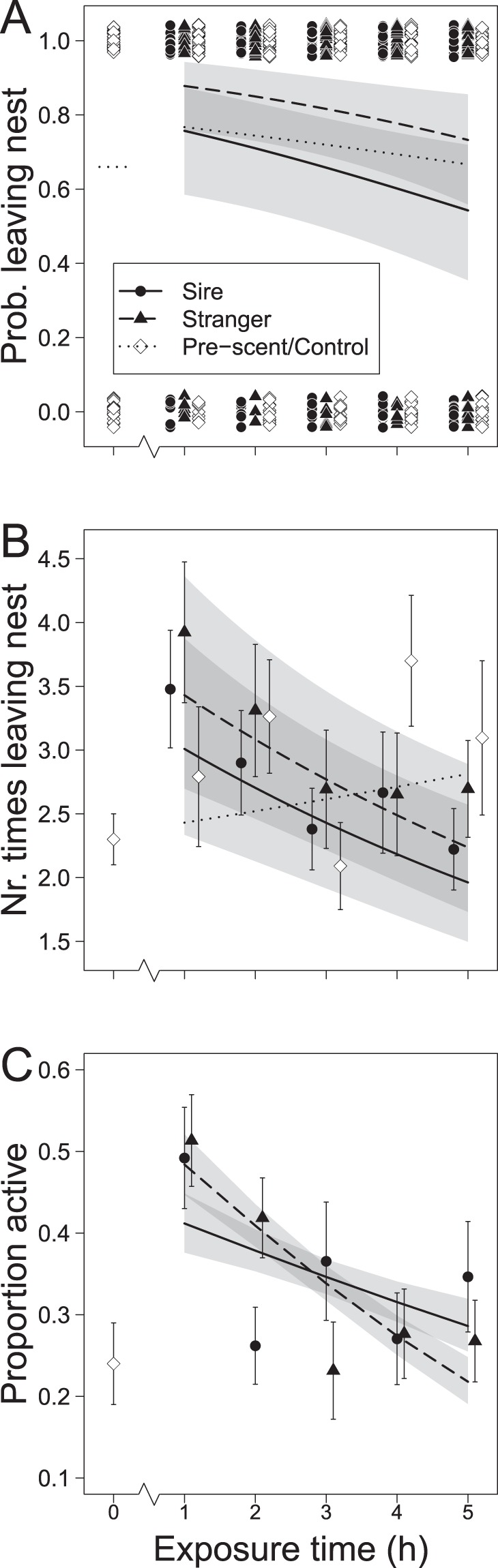
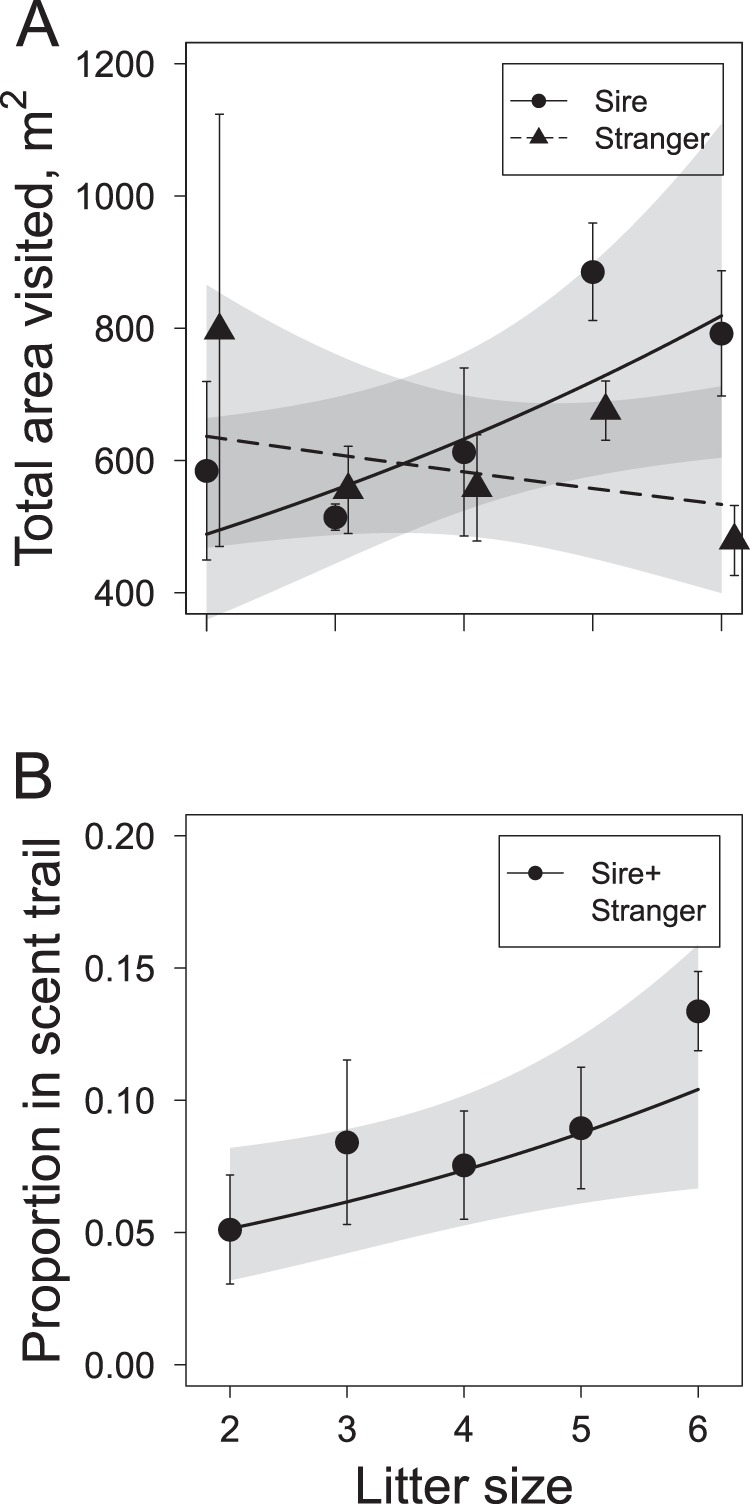
Infanticide, the killing of unrelated young, is widespread and frequently driven by sexual conflict. Especially in mammals with exclusive maternal care, infanticide by males is common and females suffer fitness costs. Recognizing infanticide risk and adjusting offspring protection accordingly should therefore be adaptive in female mammals. Using a small mammal (Myodes glareolus) in outdoor enclosures, we investigated whether lactating mothers adjust offspring protection, and potential mate search behaviour, in response to different infanticide risk levels. We presented the scent of the litter's sire or of a stranger male near the female's nest, and observed female nest presence and movement by radiotracking. While both scents simulated a mating opportunity, they represented lower (sire) and higher (stranger) infanticide risk. Compared to the sire treatment, females in the stranger treatment left their nest more often, showed increased activity and stayed closer to the nest, suggesting offspring protection from outside the nest through elevated alertness and vigilance. Females with larger litters spent more time investigating scents and used more space in the sire but not in the stranger treatment. Thus, current investment size affected odour inspection and resource acquisition under higher risk. Adjusting nest protection and resource acquisition to infanticide risk could allow mothers to elicit appropriate (fitness-saving) counterstrategies, and thus, may be widespread.
杀婴,即杀害无亲缘关系的幼仔,在自然界中广泛存在,且常由性冲突所驱动。特别是在具有专性母系抚育的哺乳动物中,雄性杀婴行为很常见,而雌性则会因此付出适合度代价。因此,雌性哺乳动物识别杀婴风险并相应地调整后代保护策略应该是一种适应性行为。本研究利用户外围栏中的小型哺乳动物(白足鼠),调查了哺乳期的母亲是否会根据不同的杀婴风险水平,调整后代保护和潜在的求偶行为。我们在雌性的巢附近展示了幼仔的父亲或陌生雄性的气味,并通过放射性追踪观察雌性巢的存在和移动。虽然这两种气味都模拟了交配机会,但它们代表了较低(父亲)和较高(陌生雄性)的杀婴风险。与父亲处理相比,处于陌生雄性处理的雌性离开巢穴的频率更高,活动增加,并且更靠近巢穴,这表明通过提高警觉和警惕,从巢外进行后代保护。幼仔数量较多的雌性在父亲处理中花更多时间检查气味,而在陌生雄性处理中则使用更多空间。因此,当前的投资规模会影响在更高风险下的气味检查和资源获取。根据杀婴风险调整巢穴保护和资源获取,可使母亲能够采取适当的(保存适合度)对策,因此,这种策略可能很普遍。