Delaware Biotechnology Institute and Department of Plant and Soil Sciences, University of Delaware, Newark, DE 19711, USA.
Nucleic Acids Res. 2019 Sep 26;47(17):9216-9230. doi: 10.1093/nar/gkz712.
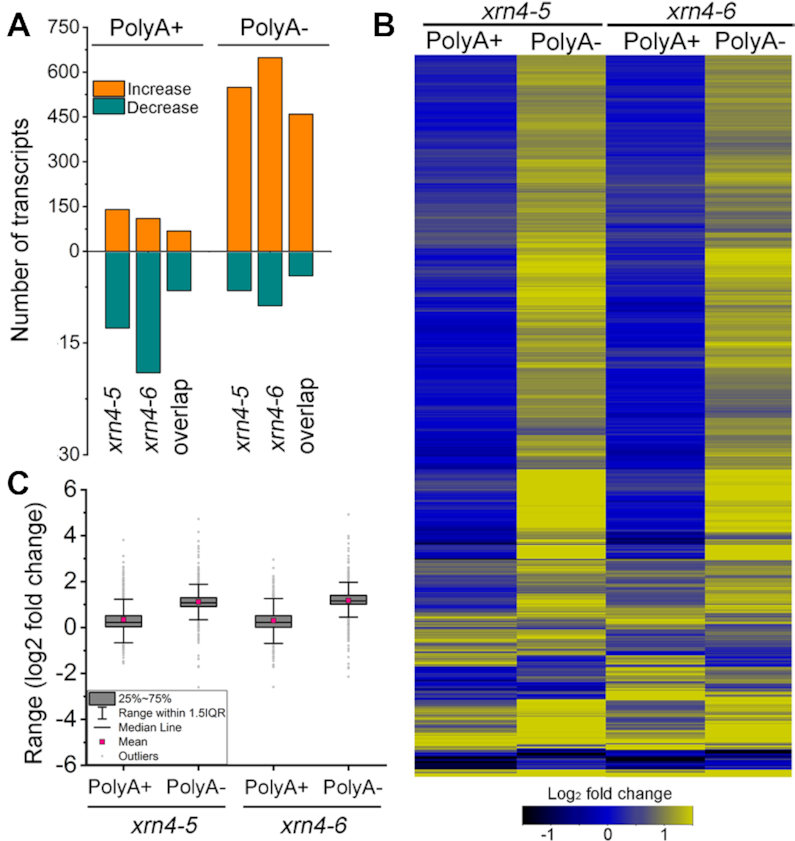
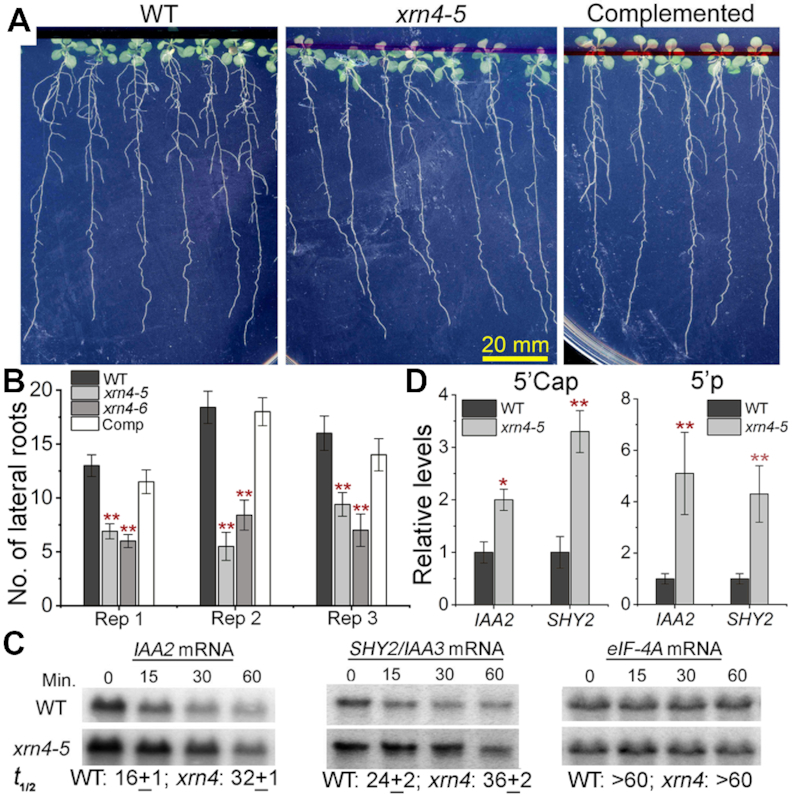
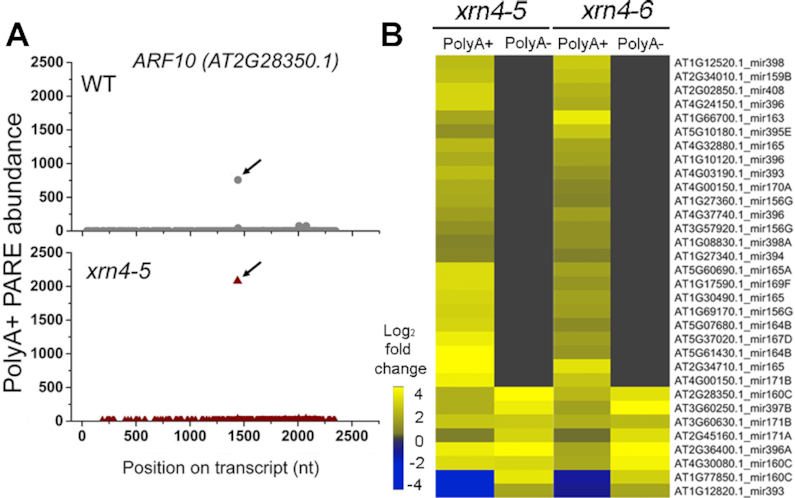
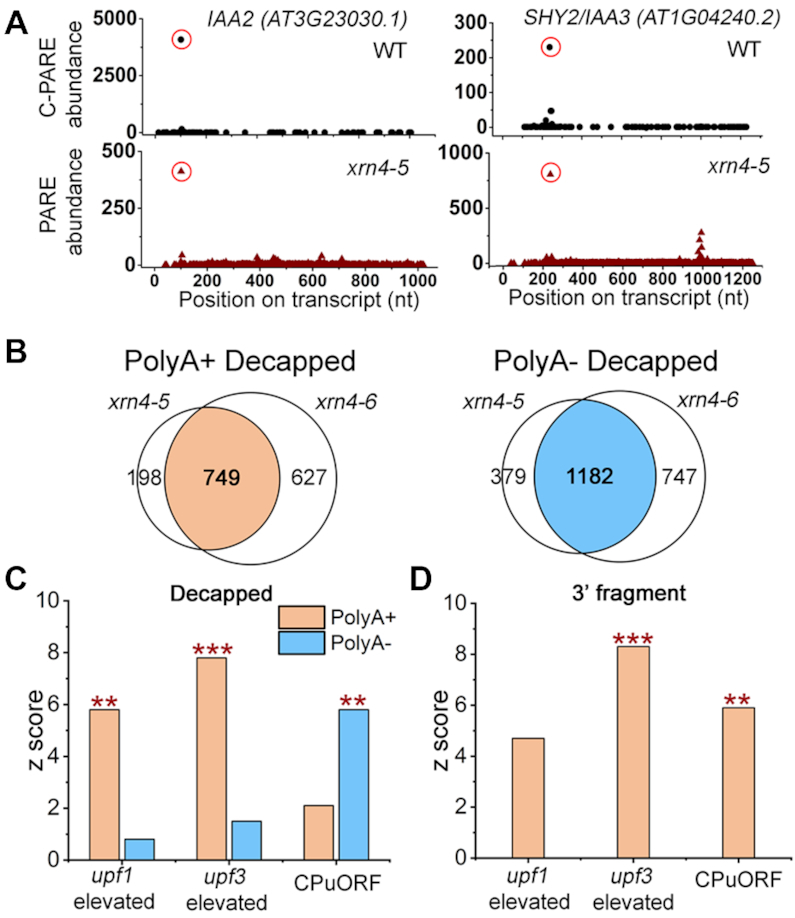
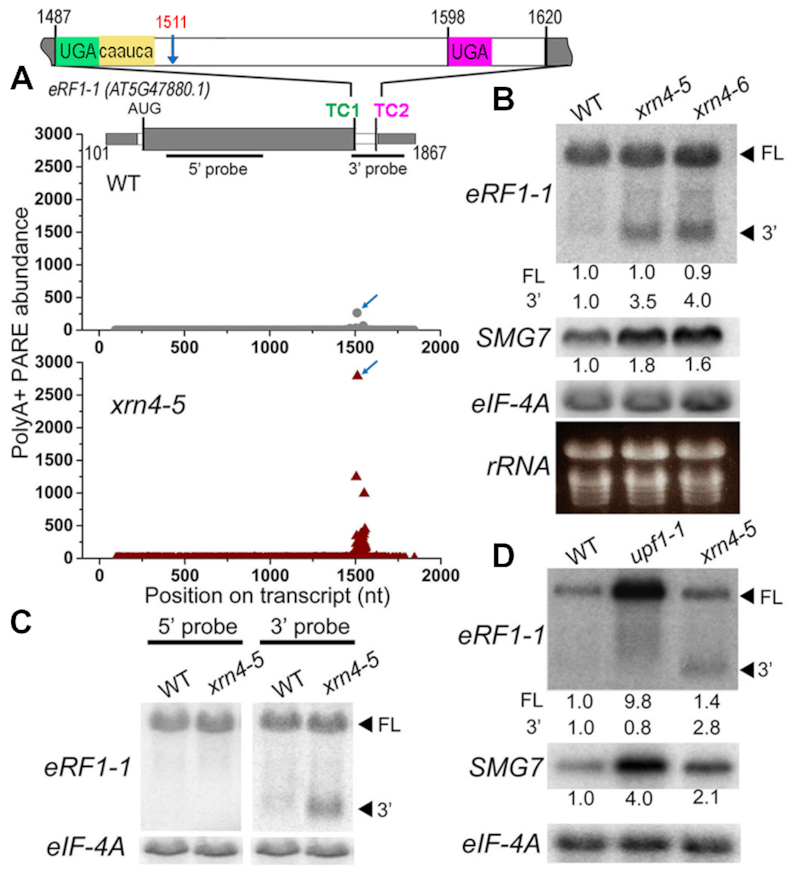
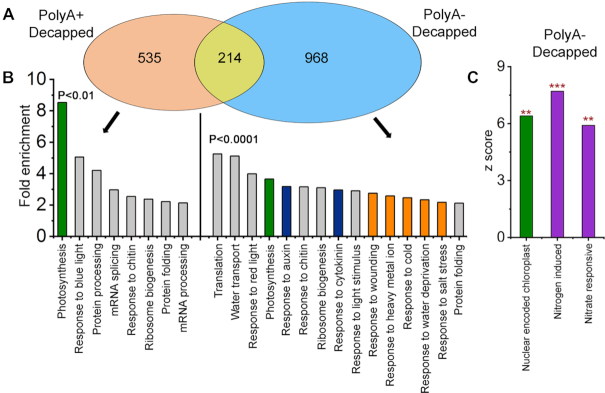
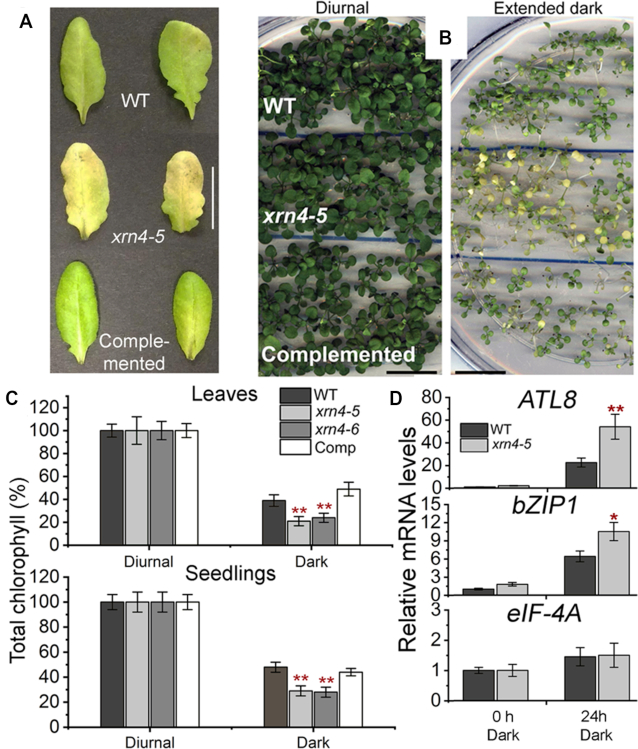
XRN4, the plant cytoplasmic homolog of yeast and metazoan XRN1, catalyzes exoribonucleolytic degradation of uncapped mRNAs from the 5' end. Most studies of cytoplasmic XRN substrates have focused on polyadenylated transcripts, although many substrates are likely first deadenylated. Here, we report the global investigation of XRN4 substrates in both polyadenylated and nonpolyadenylated RNA to better understand the impact of the enzyme in Arabidopsis. RNA degradome analysis demonstrated that xrn4 mutants overaccumulate many more decapped deadenylated intermediates than those that are polyadenylated. Among these XRN4 substrates that have 5' ends precisely at cap sites, those associated with photosynthesis, nitrogen responses and auxin responses were enriched. Moreover, xrn4 was found to be defective in the dark stress response and lateral root growth during N resupply, demonstrating that XRN4 is required during both processes. XRN4 also contributes to nonsense-mediated decay (NMD) and xrn4 accumulates 3' fragments of select NMD targets, despite the lack of the metazoan endoribonuclease SMG6 in plants. Beyond demonstrating that XRN4 is a major player in multiple decay pathways, this study identified intriguing molecular impacts of the enzyme, including those that led to new insights about mRNA decay and discovery of functional contributions at the whole-plant level.
XRN4 是植物细胞质中的酵母和后生动物 XRN1 的同源物,可从 5' 端催化无帽 mRNA 的外切核酶降解。大多数对细胞质 XRN 底物的研究都集中在多聚腺苷酸化转录本上,尽管许多底物可能首先被脱腺苷酸化。在这里,我们报告了对多聚腺苷酸化和非多聚腺苷酸化 RNA 中 XRN4 底物的全面研究,以更好地了解该酶在拟南芥中的作用。RNA 降解组分析表明,xrn4 突变体中积累的去帽脱腺苷酸化中间产物比那些多聚腺苷酸化的中间产物多得多。在这些 5' 端精确位于帽位点的 XRN4 底物中,与光合作用、氮响应和生长素响应相关的底物富集。此外,发现 xrn4 在黑暗胁迫反应和氮供应期间的侧根生长中存在缺陷,表明 XRN4 在这两个过程中都是必需的。XRN4 还参与无意义介导的衰变(NMD),并且尽管植物中缺乏后生动物内切核糖核酸酶 SMG6,xrn4 仍会积累选择 NMD 靶标的 3' 片段。除了证明 XRN4 是多种降解途径的主要参与者外,这项研究还确定了该酶的有趣分子影响,包括那些导致对 mRNA 降解的新见解和在整个植物水平上发现功能贡献的影响。