Department of Plant Cytology and Embryology, Institute of Botany, Faculty of Biology, Jagiellonian University in Kraków, 9 Gronostajowa St, 30-387, Kraków, Poland.
Department of Animal Histology and Embryology, University of Silesia in Katowice, 9 Bankowa St, 40-007, Katowice, Poland.
Protoplasma. 2020 Jan;257(1):245-259. doi: 10.1007/s00709-019-01433-8. Epub 2019 Aug 19.
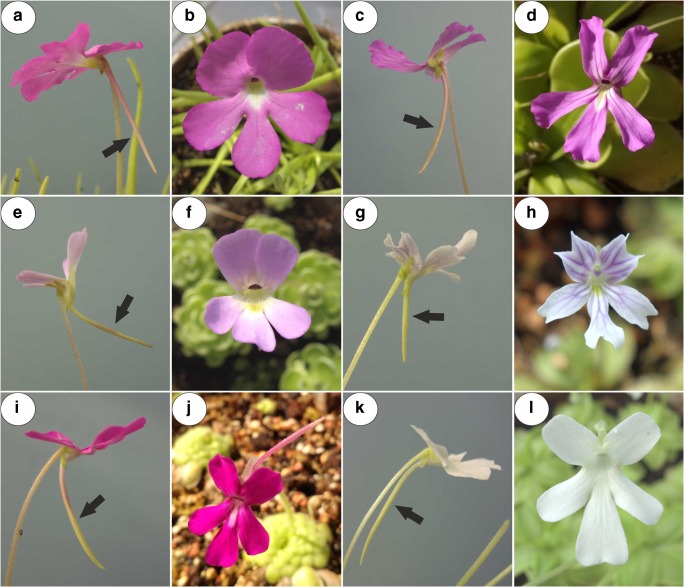
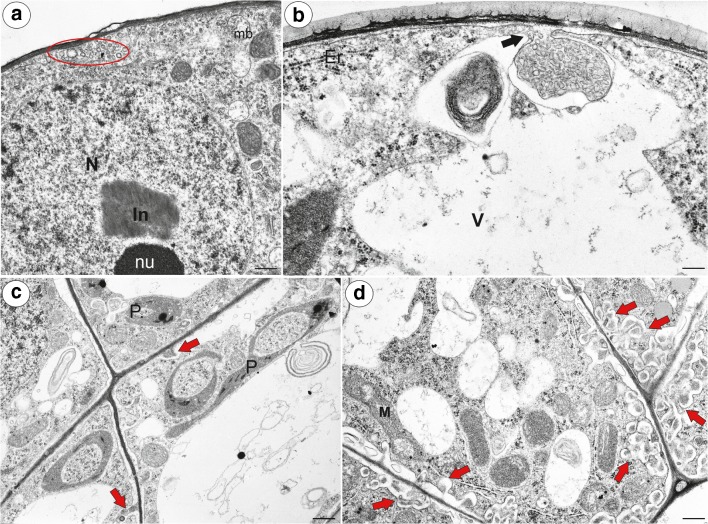
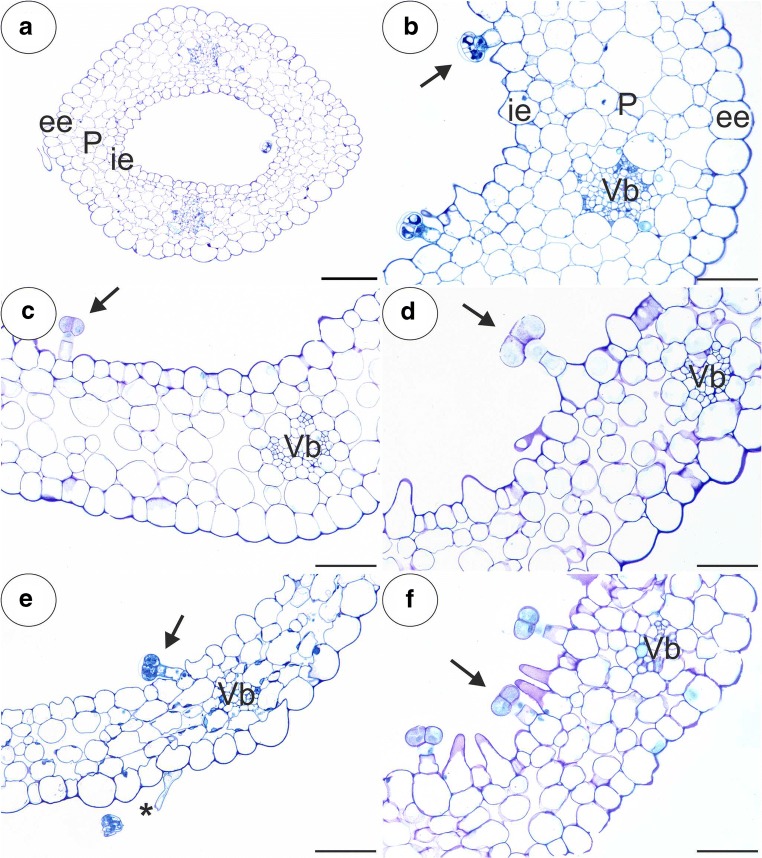
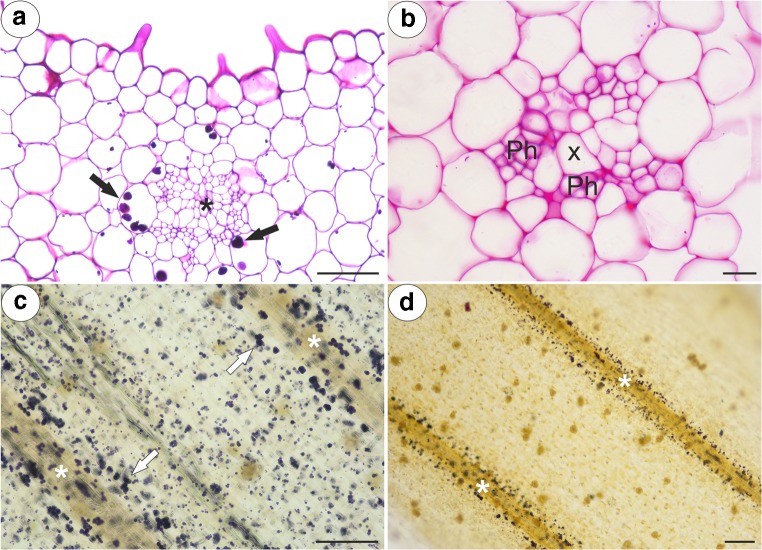
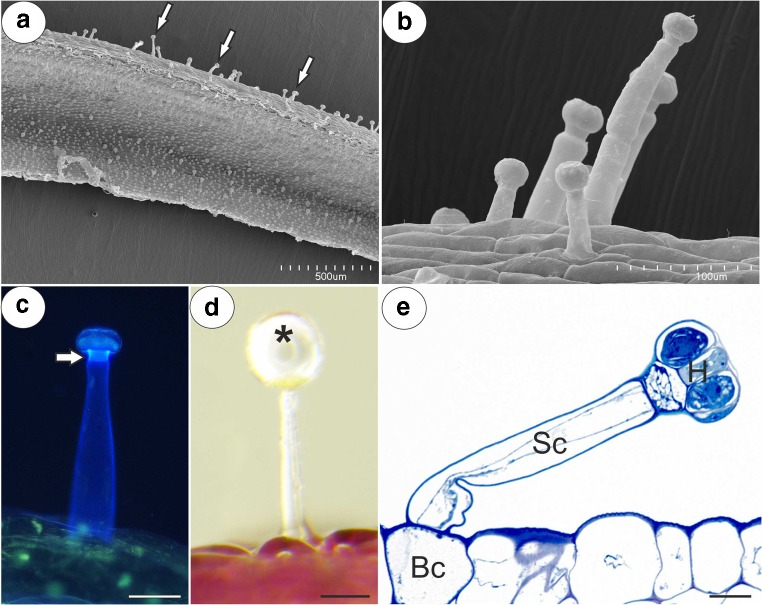
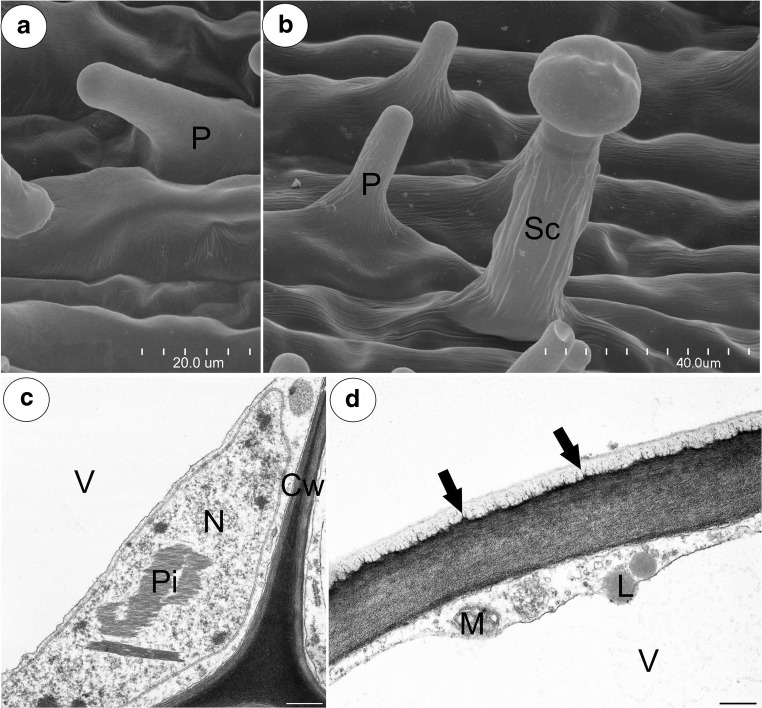
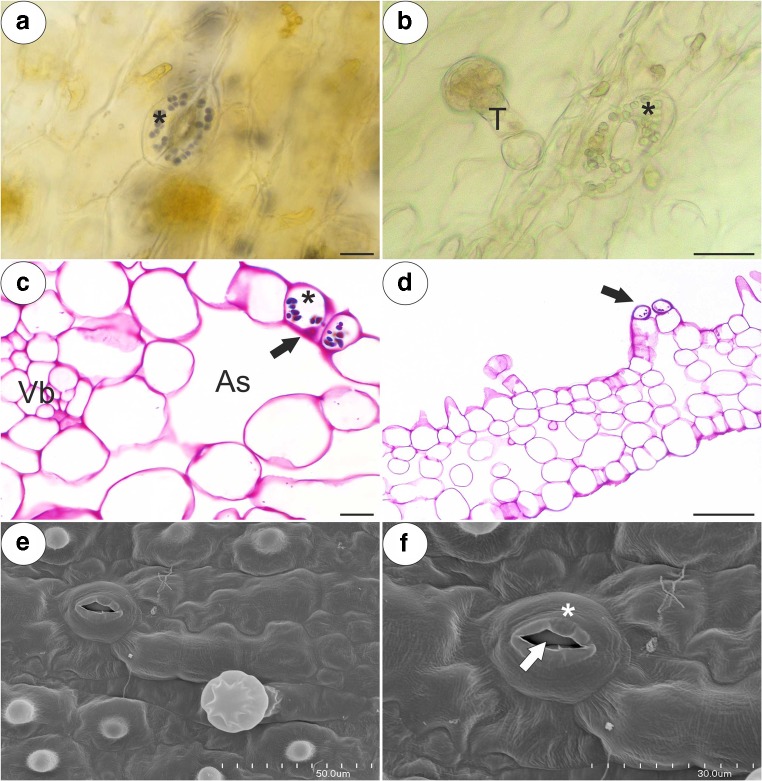
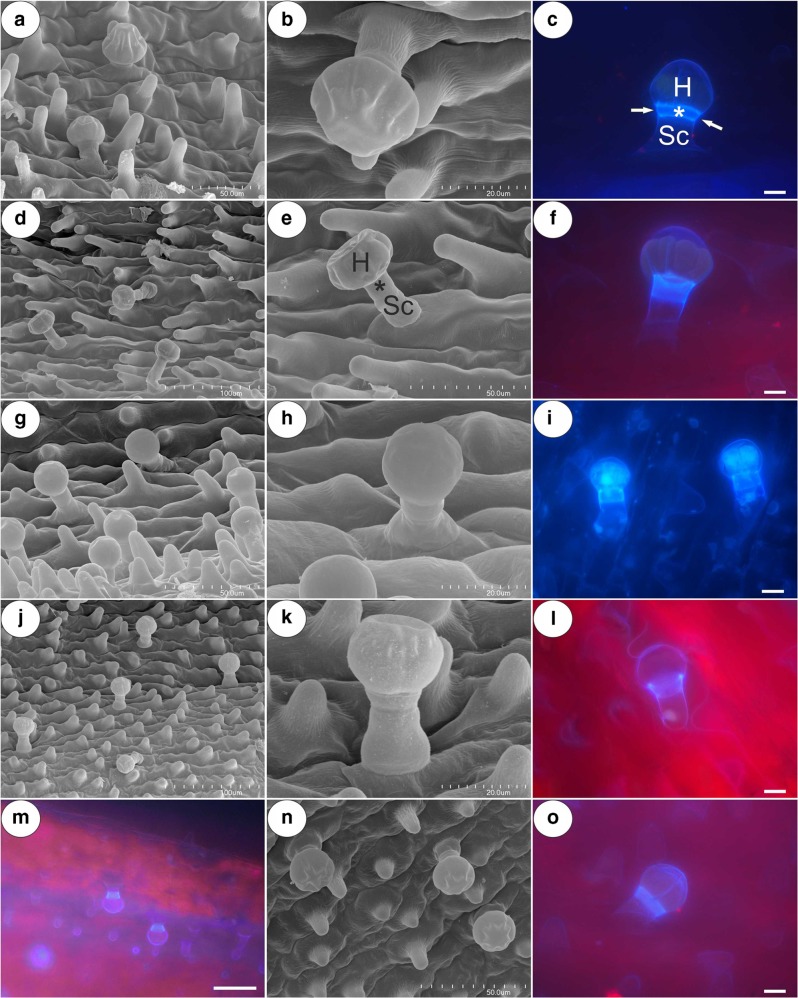
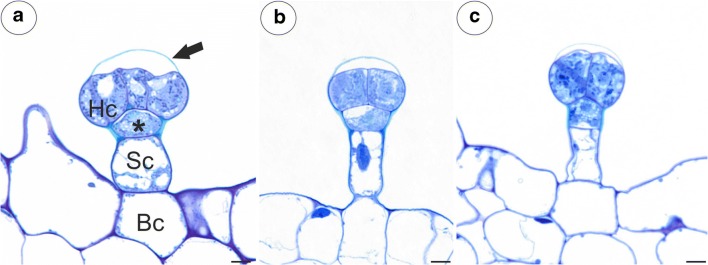
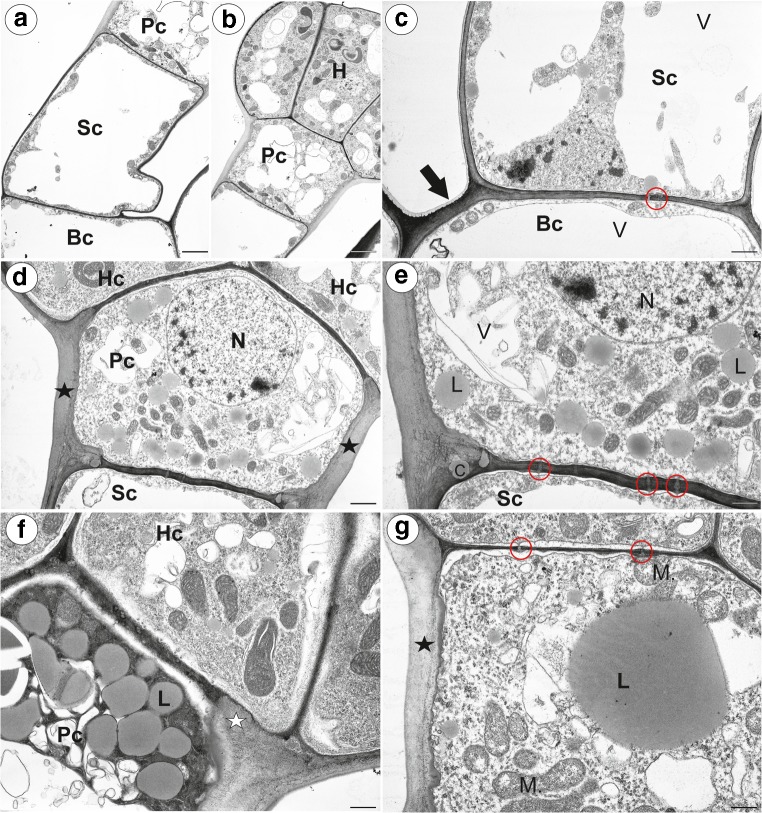
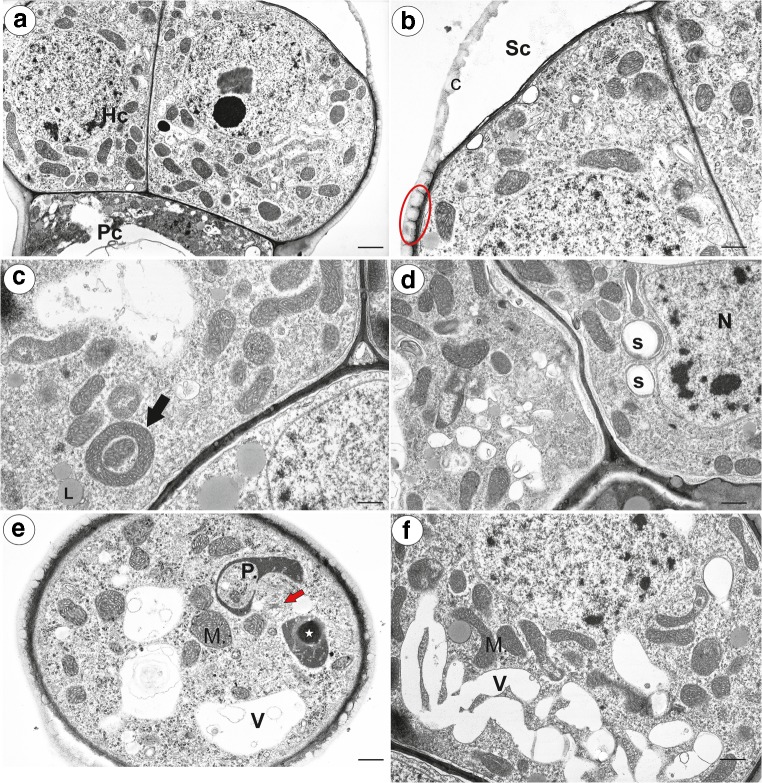
Pinguicula (Lentibulariaceae) is a genus comprising around 96 species of herbaceous, carnivorous plants, which are extremely diverse in flower size, colour and spur length and structure as well as pollination strategy. In Pinguicula, nectar is formed in the flower spur; however, there is a gap in the knowledge about the nectary trichome structure in this genus. Our aim was to compare the nectary trichome structure of various Pinguicula species in order to determine whether there are any differences among the species in this genus. The taxa that were sampled were Pinguicula moctezumae, P. moranensis, P. rectifolia, P. emarginata and P. esseriana. We used light microscopy, histochemistry, scanning and transmission electron microscopy to address those aims. We show a conservative nectary trichome structure and spur anatomy in various Mexican Pinguicula species. The gross structural similarities between the examined species were the spur anatomy, the occurrence of papillae, the architecture of the nectary trichomes and the ultrastructure characters of the trichome cells. However, there were some differences in the spur length, the size of spur trichomes, the occurrence of starch grains in the spur parenchyma and the occurrence of cell wall ingrowths in the terminal cells of the nectary trichomes. Similar nectary capitate trichomes, as are described here, were recorded in the spurs of species from other Lentibulariaceae genera. There are many ultrastructural similarities between the cells of nectary trichomes in Pinguicula and Utricularia.
捕虫堇属(狸藻科)是一个由约 96 种草本肉食植物组成的属,这些植物在花的大小、颜色和距的长度和结构以及授粉策略上具有极大的多样性。在捕虫堇中,花蜜是在距中形成的;然而,关于该属的蜜腺毛状体结构的知识还存在空白。我们的目的是比较不同捕虫堇物种的蜜腺毛状体结构,以确定该属的物种之间是否存在差异。采样的类群有墨西哥捕虫堇、莫雷纳尔捕虫堇、长距捕虫堇、裂瓣捕虫堇和埃萨捕虫堇。我们使用了光学显微镜、组织化学、扫描和透射电子显微镜来实现这些目标。我们展示了各种墨西哥捕虫堇物种中保守的蜜腺毛状体结构和距解剖结构。被研究的物种之间在距解剖结构、乳突的出现、蜜腺毛状体的结构以及毛状体细胞的超微结构特征方面具有显著的相似性。然而,在距的长度、距毛状体的大小、距薄壁组织中淀粉粒的存在以及蜜腺毛状体末端细胞中细胞壁内褶的存在方面存在一些差异。在其他狸藻科属的物种距中也记录了类似的蜜腺头状毛状体。捕虫堇和狸藻的蜜腺毛状体细胞具有许多相似的超微结构。