Department of Plant Cytology and Embryology, Institute of Botany, Faculty of Biology, Jagiellonian University in Kraków, 9 Gronostajowa Street, 30-387 Cracow, Poland.
Institute of Biology, Biotechnology and Environmental Protection, Faculty of Natural Sciences, University of Silesia in Katowice, 9 Bankowa Street, 40-007 Katowice, Poland.
Ann Bot. 2020 Oct 30;126(6):1039-1048. doi: 10.1093/aob/mcaa123.
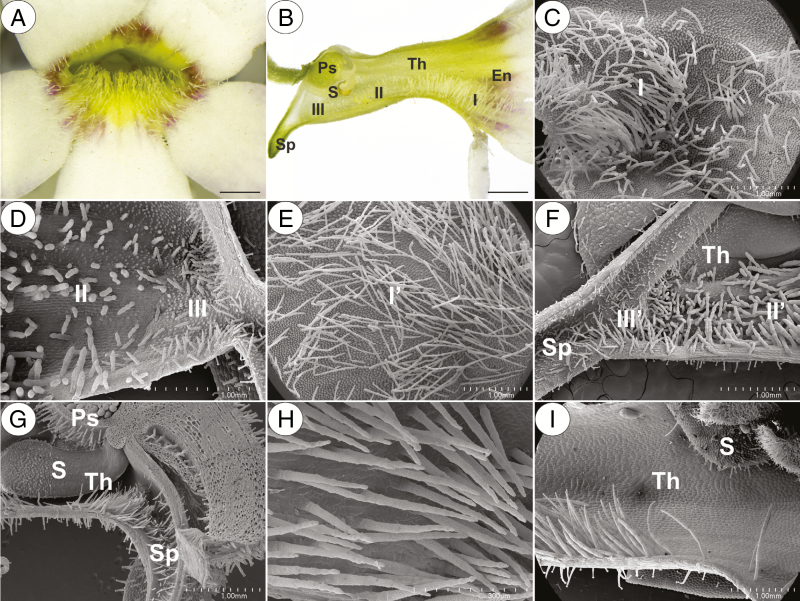
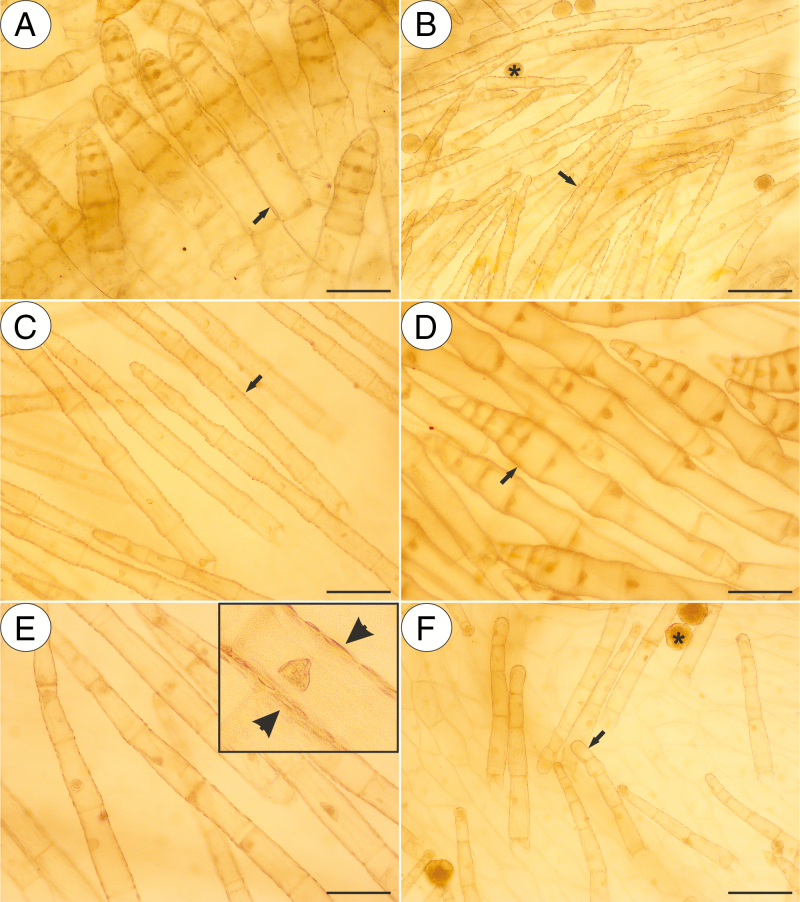
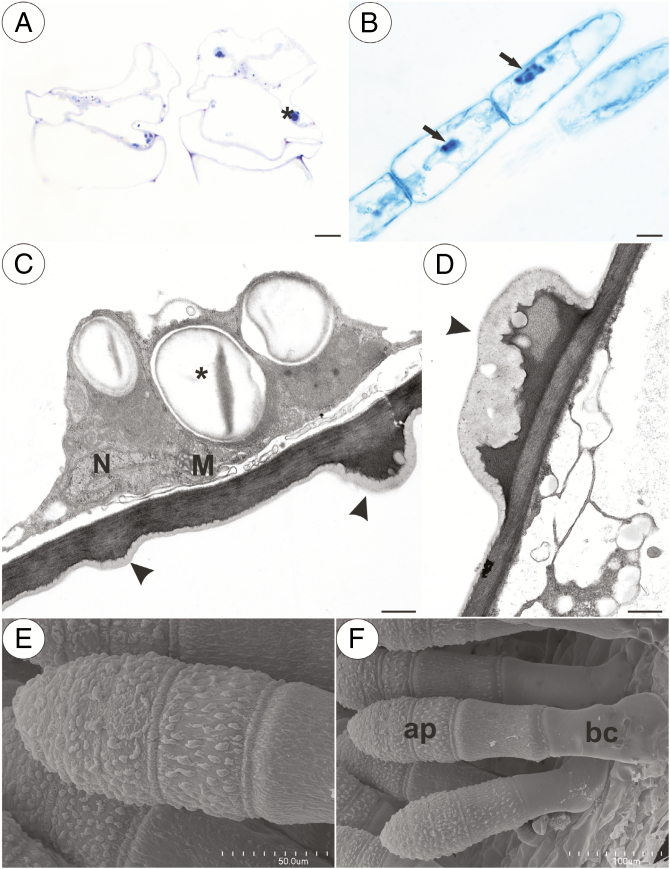
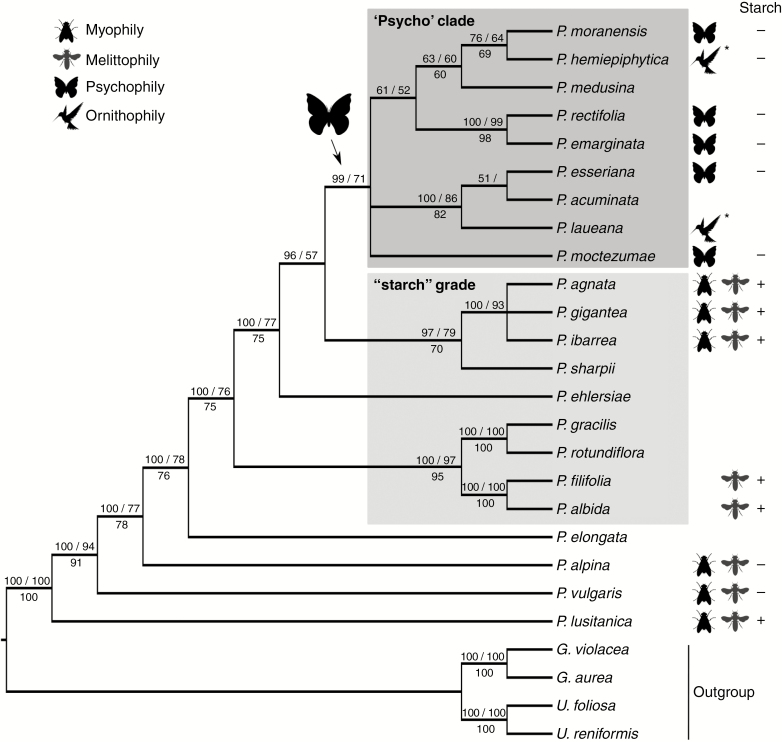
Floral food bodies (including edible trichomes) are a form of floral reward for pollinators. This type of nutritive reward has been recorded in several angiosperm families: Annonaceae, Araceae, Calycanthaceae, Eupomatiaceae, Himantandraceae, Nymphaeaceae, Orchidaceae, Pandanaceae and Winteraceae. Although these bodies are very diverse in their structure, their cells contain food material: starch grains, protein bodies or lipid droplets. In Pinguicula flowers, there are numerous multicellular clavate trichomes. Previous authors have proposed that these trichomes in the Pinguicula flower play the role of 'futterhaare' ('feeding hairs') and are eaten by pollinators. The main aim of this study was to investigate whether the floral non-glandular trichomes of Pinguicula contain food reserves and thus are a reward for pollinators. The trichomes from the Pinguicula groups, which differ in their taxonomy (species from the subgenera: Temnoceras, Pinguicula and Isoloba) as well as the types of their pollinators (butterflies/flies and bees/hummingbirds), were examined. Thus, it was determined whether there are any connections between the occurrence of food trichomes and phylogeny position or pollination biology. Additionally, we determined the phylogenetic history of edible trichomes and pollinator evolution in the Pinguicula species.
The species that were sampled were: Pinguicula moctezumae, P. esseriana, P. moranensis, P. emarginata, P. rectifolia, P. mesophytica, P. hemiepiphytica, P. agnata, P. albida, P. ibarrae, P. martinezii, P. filifolia, P. gigantea, P. lusitanica, P. alpina and P. vulgaris. Light microscopy, histochemistry, and scanning and transmission electron microscopy were used to address our aims with a phylogenetic perspective based on matK/trnK DNA sequences.
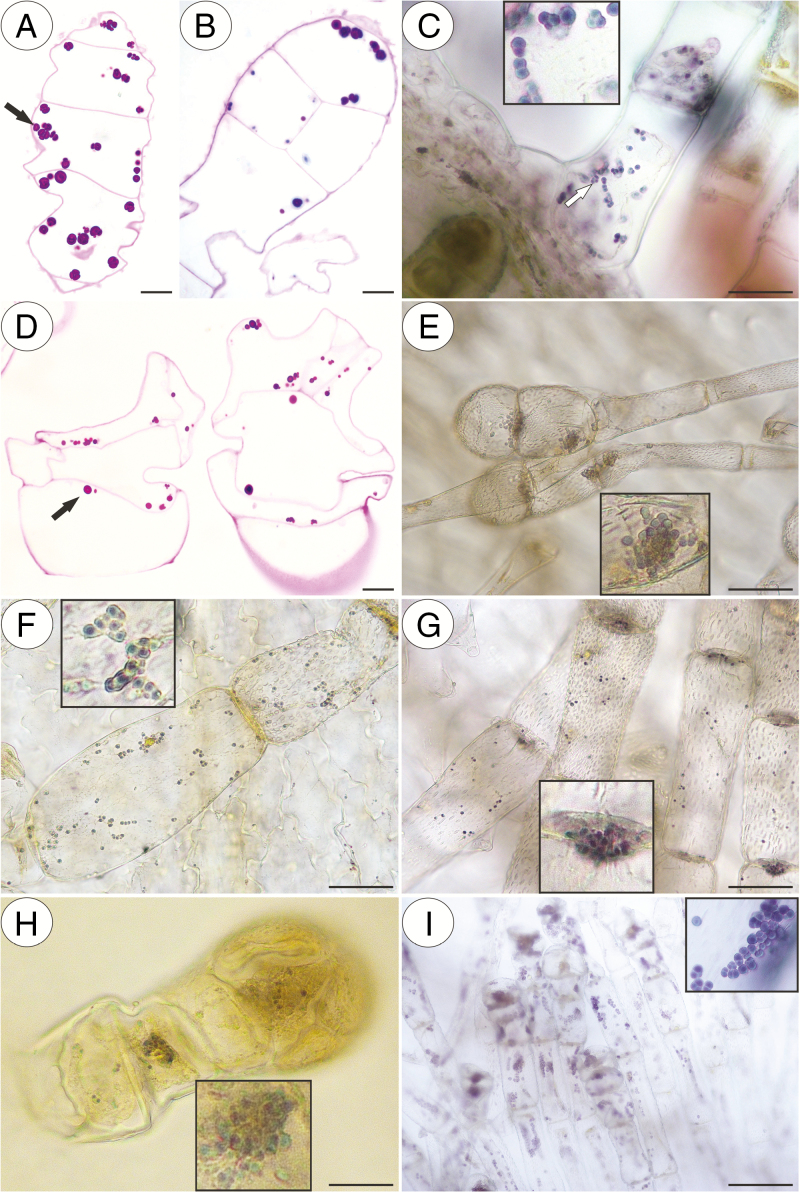
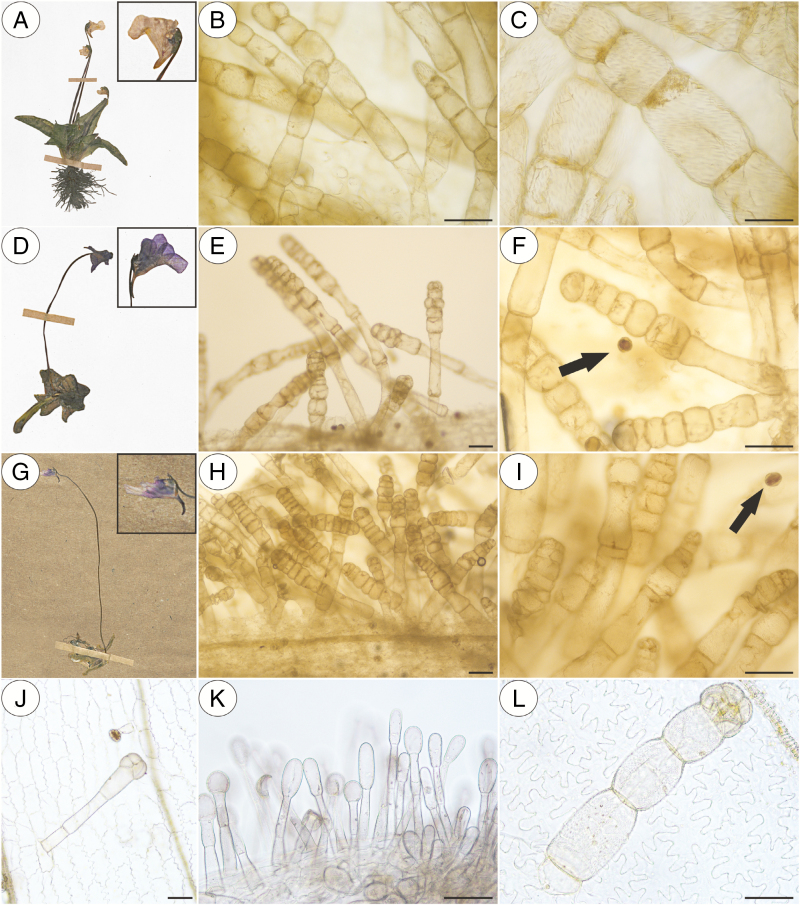
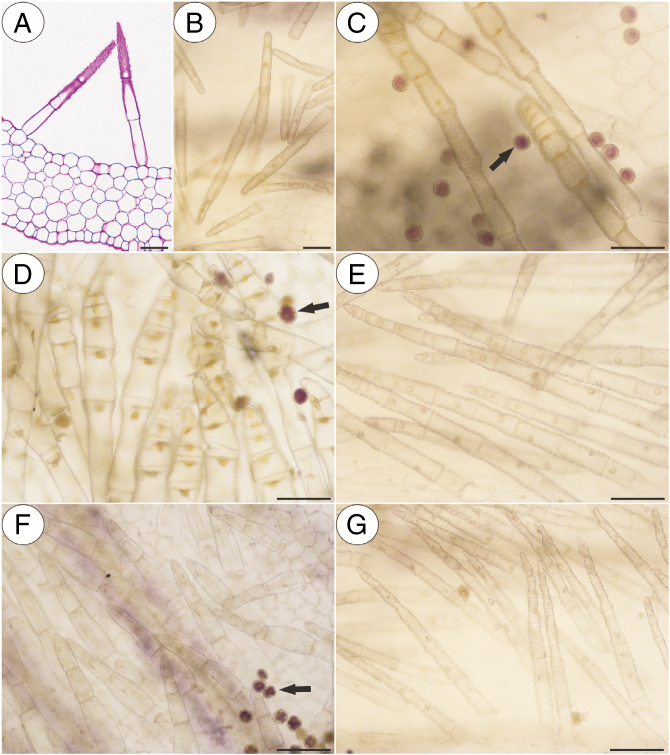
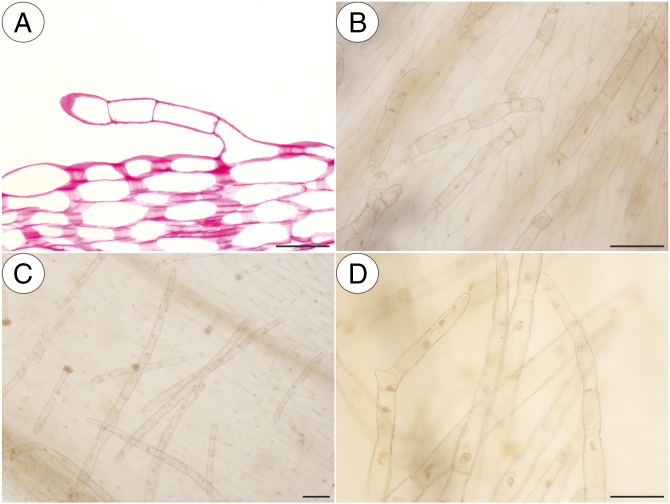
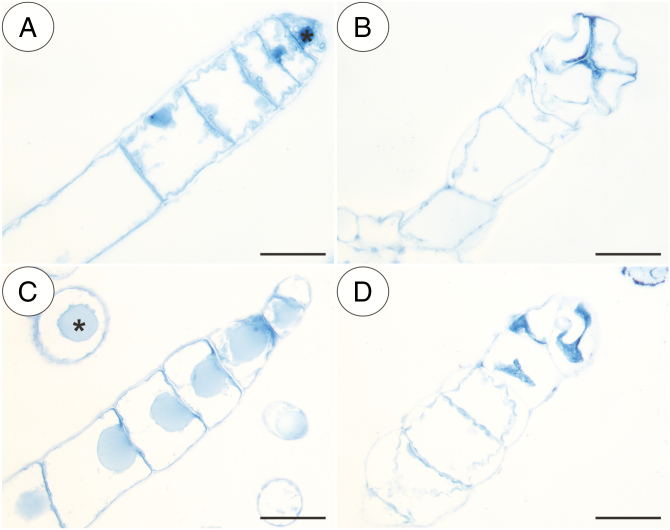
No accumulation of protein bodies or lipid droplets was recorded in the floral non-glandular trichomes of any of the analysed species. Starch grains occurred in the cells of the trichomes of the bee-/fly-pollinated species: P. agnata, P. albida, P. ibarrae, P. martinezii, P. filifolia and P. gigantea, but not in P. alpina or P. vulgaris. Moreover, starch grains were not recorded in the cells of the trichomes of the Pinguicula species that have long spurs, which are pollinated by Lepidoptera (P. moctezumae, P. esseriana, P. moranensis, P. emarginata and P. rectifolia) or birds (P. mesophytica and P. hemiepihytica), or in species with a small and whitish corolla that self-pollinate (P. lusitanica). The results on the occurrence of edible trichomes and pollinator syndromes were mapped onto a phylogenetic reconstruction of the genus.
Floral non-glandular trichomes play the role of edible trichomes in some Pinguicula species (P. agnata, P. albida, P. ibarrae, P. martinezii, P. filifolia and P. gigantea), which are mainly classified as bee-pollinated species that had originated from Central and South America. It seems that in the Pinguicula that are pollinated by other pollinator groups (Lepidoptera and hummingbirds), the non-glandular trichomes in the flowers play a role other than that of a floral reward for their pollinators. Edible trichomes are symplesiomorphic for the Pinguicula species, and thus do not support a monophyletic group such as a synapomorphy. Nevertheless, edible trichomes are derived and are possibly a specialization for fly and bee pollinators by acting as a food reward for these visitors.
花体(包括可食用的毛状体)是传粉者的一种花部报酬形式。这种营养报酬形式已在几个被子植物科中记录到:番荔枝科、天南星科、蜡梅科、海桑科、秋海棠科、睡莲科、兰科、露兜树科和樟科。尽管这些结构在结构上非常多样化,但它们的细胞含有食物物质:淀粉粒、蛋白体或脂滴。在猪笼草花中,有许多多细胞棍棒状毛状体。之前的作者提出,猪笼草花中的这些毛状体起着“futterhaare”(“食毛”)的作用,被传粉者吃掉。本研究的主要目的是调查猪笼草花中非腺毛状体是否含有食物储备,从而成为传粉者的一种报酬。研究了在分类学上不同(亚属:Temnoceras、Pinguicula 和 Isoloba 种,以及蝴蝶/蝇和蜜蜂/蜂鸟传粉者)以及传粉生物学类型不同(蝴蝶/蝇和蜜蜂/蜂鸟)的猪笼草组的毛状体。因此,确定了食毛体的出现与系统发育位置或传粉生物学之间是否存在任何联系。此外,我们还确定了猪笼草属中可食用毛状体和传粉者进化的系统发育历史。
采样的物种为:Pinguicula moctezumae、P. esseriana、P. moranensis、P. emarginata、P. rectifolia、P. mesophytica、P. hemiepiphytica、P. agnata、P. albida、P. ibarrae、P. martinezii、P. filifolia、P. gigantea、P. lusitanica、P. alpina 和 P. vulgaris。利用光学显微镜、组织化学和扫描及透射电子显微镜,根据 matK/trnK DNA 序列的系统发育观点来实现我们的目标。
在分析的任何物种的花中非腺毛状体中均未记录到蛋白体或脂滴的积累。淀粉粒存在于蜜蜂/蝇传粉物种的毛状体细胞中:P. agnata、P. albida、P. ibarrae、P. martinezii、P. filifolia 和 P. gigantea,但 P. alpina 或 P. vulgaris 中没有。此外,在具有长距的猪笼草物种(P. moctezumae、P. esseriana、P. moranensis、P. emarginata 和 P. rectifolia)或鸟类(P. mesophytica 和 P. hemiepihytica)传粉的或具有白色小花冠的自花传粉物种(P. lusitanica)的毛状体细胞中未记录到淀粉粒。食毛体和传粉者综合征的发生情况被映射到猪笼草属的系统发育重建上。
花中非腺毛状体在一些猪笼草物种(P. agnata、P. albida、P. ibarrae、P. martinezii、P. filifolia 和 P. gigantea)中起着可食用毛状体的作用,这些物种主要被归类为来自中美洲和南美洲的蜜蜂传粉者。似乎在由其他传粉者群体(鳞翅目和蜂鸟)传粉的猪笼草中,花中非腺毛状体的作用不是其传粉者的花部报酬。可食用毛状体是猪笼草物种的原始特征,因此不支持单系群,如共同衍征。然而,可食用毛状体是衍生的,可能是对蝇和蜜蜂传粉者的一种专门化,作为对这些访客的食物报酬。