Al-Mehaisen Lama M, Al-Husban Naser A, Matalka Alaa I, Al-Kuran Oqba A
Department of Obstetrics and Gynaecology, Medical School, Jordan University of Science and Technology, Irbid, Jordan.
University of Jordan, Amman, Jordan.
J Taibah Univ Med Sci. 2018 Oct 30;13(6):547-551. doi: 10.1016/j.jtumed.2018.09.004. eCollection 2018 Dec.
Food craving is a well-known phenomenon during pregnancy that is driven by nutritional requirements for optimal foetal development. This mechanism plays a vital role in ensuring normal prenatal and postnatal development. The goal of the present study is to assess whether cravings experienced during pregnancy are related to children's behaviour.
A retrospective study was conducted in the gynaecology outpatient unit of a local hospital on healthy non-pregnant women, with children aged between 18 months and 5 years. Eligible women completed a questionnaire regarding their child's behaviours and cravings experienced during their pregnancy. Chi-square tests were used to examine relationships between cravings and behaviour.
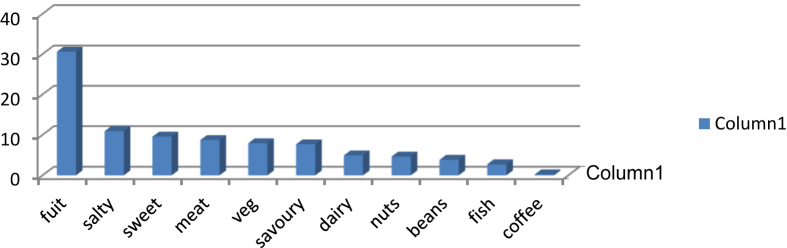
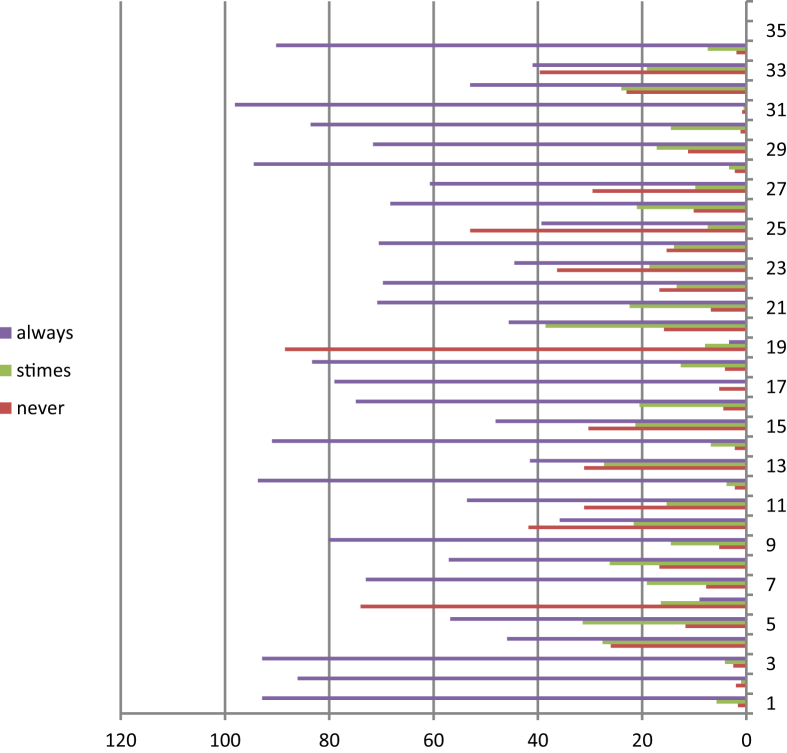
A total of 336 women were included in the study (child mean age = 44.11 ± 15.65 months; 55.7% females). Food cravings were experienced by 83.1% (n = 304/366) of the participants. The most commonly reported food craving was for fruit (n = 112, 33.3%). Other cravings included salty crackers (n = 40, 10.9%), sweets (n = 35, 9.6%), meat (n = 32, 8.7%), and vegetables (n = 29, 7.9%). There was variation in frequency of the children's behavioural problems: always (more than 50% of the occasions), sometimes (10-50% of the occasions), and none.
Our analyses showed that most behavioural issues were not associated with cravings during pregnancy. Further investigation into how diet and foetal development may impact childhood behaviour is warranted.
孕期食物渴望是一种众所周知的现象,由胎儿最佳发育所需的营养需求驱动。这一机制在确保正常的产前和产后发育中起着至关重要的作用。本研究的目的是评估孕期经历的食物渴望是否与儿童行为有关。
在当地一家医院的妇科门诊对健康的未怀孕女性及其18个月至5岁的孩子进行了一项回顾性研究。符合条件的女性完成了一份关于她们孩子的行为以及她们孕期经历的食物渴望的问卷。采用卡方检验来研究食物渴望与行为之间的关系。
共有336名女性纳入研究(孩子平均年龄 = 44.11 ± 15.65个月;55.7%为女性)。83.1%(n = 304/366)的参与者经历过食物渴望。最常报告的食物渴望是水果(n = 112,33.3%)。其他渴望包括咸饼干(n = 40,10.9%)、甜食(n = 35,9.6%)、肉类(n = 32,8.7%)和蔬菜(n = 29,7.9%)。儿童行为问题的频率存在差异:总是(超过50%的情况)、有时(10 - 50%的情况)以及没有行为问题。
我们的分析表明,大多数行为问题与孕期的食物渴望无关。有必要进一步研究饮食和胎儿发育如何影响儿童行为。