Evolutionary Genomics Group, Departamento de Producción Vegetal y Microbiología, Universidad Miguel Hernández, San Juan de Alicante, 03550, Alicante, Spain.
Moscow Institute of Physics and Technology, Dolgoprudny, 141701, Russia.
Microbiome. 2019 Aug 22;7(1):117. doi: 10.1186/s40168-019-0731-5.
The adaptation of a marine prokaryote to live in freshwater environments or vice versa is generally believed to be an unusual and evolutionary demanding process. However, the reasons are not obvious given the similarity of both kinds of habitats.
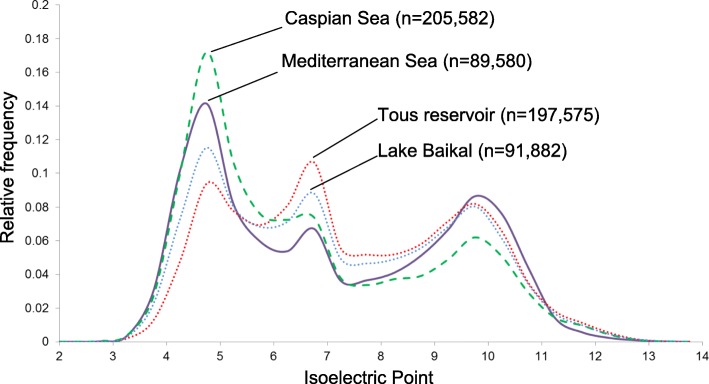
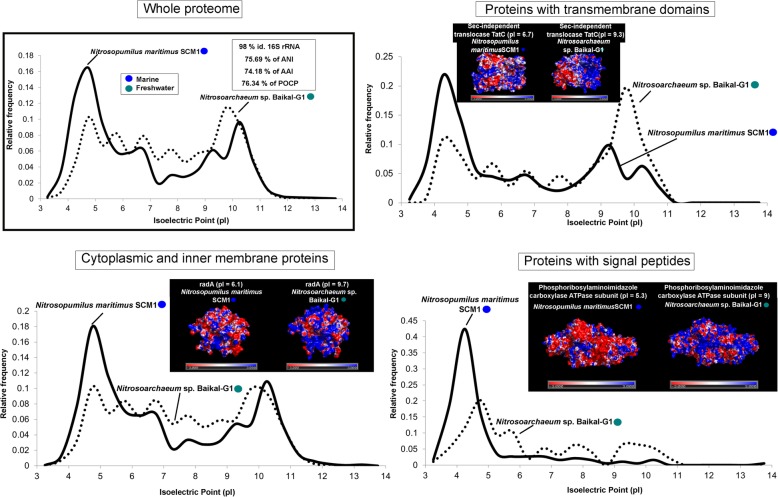
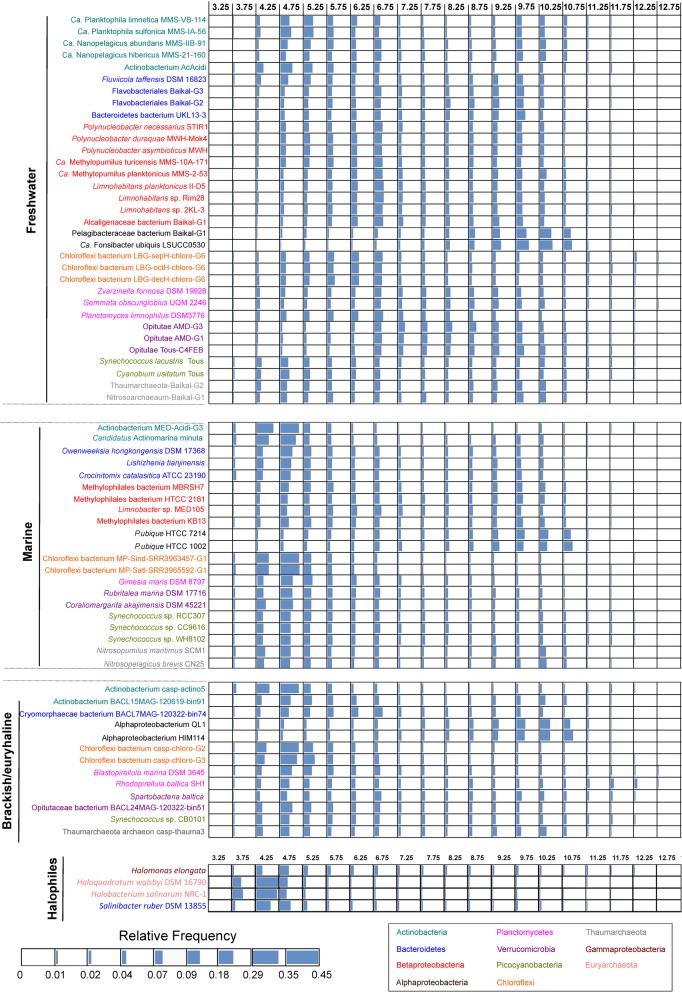
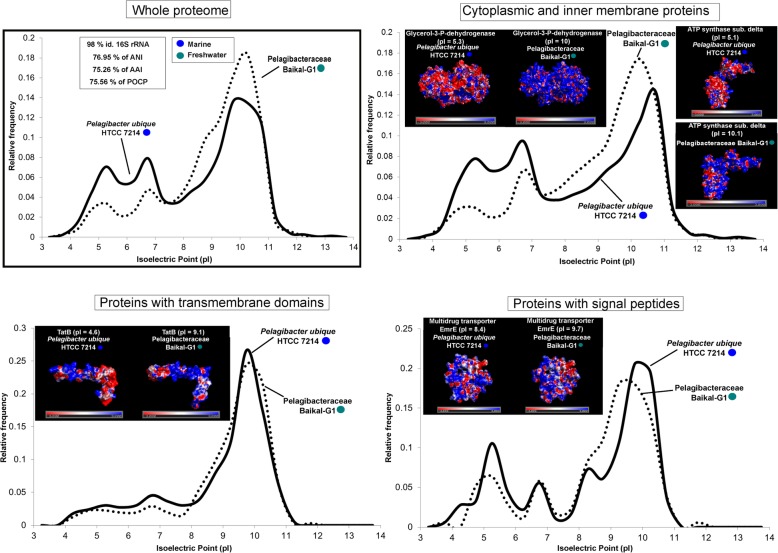
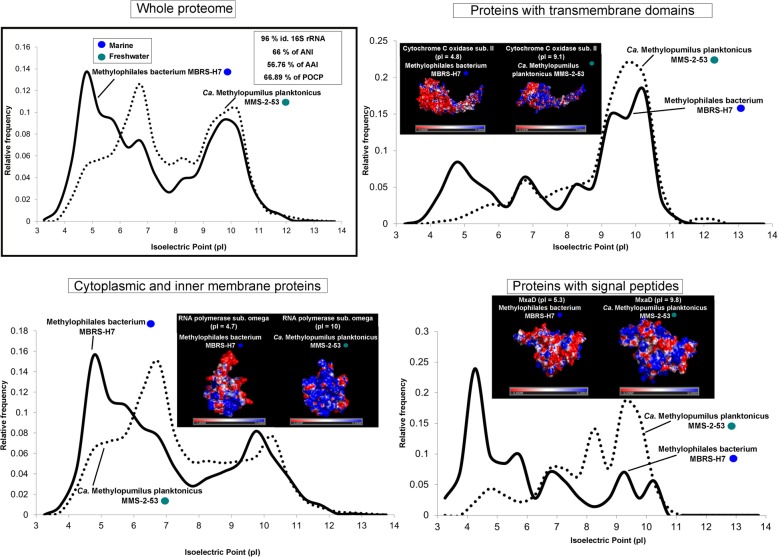
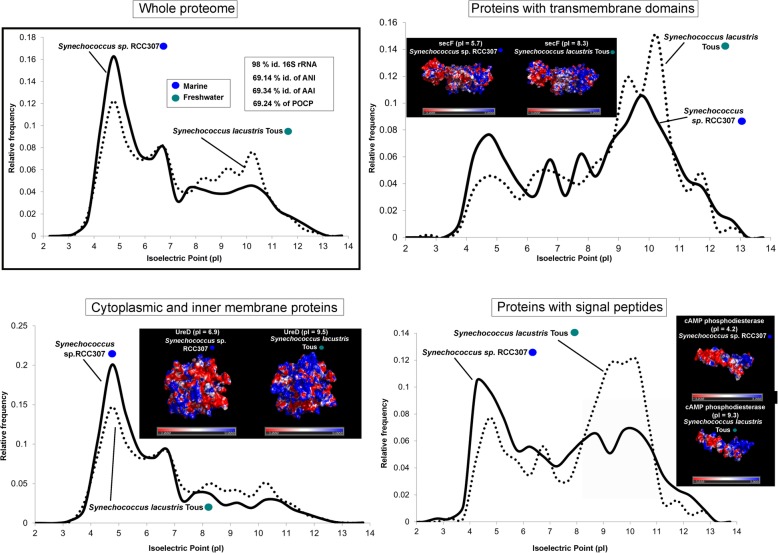
We have found major differences at the level of the predicted metaproteomes of marine and freshwater habitats with more acidic values of the isoelectric points (pI) in marine microbes. Furthermore, by comparing genomes of marine-freshwater phylogenetic relatives, we have found higher pI values (basic shift) in the freshwater ones. This difference was sharper in secreted > cytoplasmic > membrane proteins. The changes are concentrated on the surface of soluble proteins. It is also detectable at the level of total amino acid composition and involves similarly core and flexible genome- encoded proteins.
The marked changes at the level of protein amino acid composition and pI provide a tool to predict the preferred habitat of a culture or a metagenome-assembled genome (MAG). The exact physiological explanation for such variations in the pIs and electrostatic surface potentials is not known yet. However, these changes might reflect differences in membrane bioenergetics derived from the absence of significant Na concentrations in most freshwater habitats. In any case, the changes in amino acid composition in most proteins imply that a long evolutionary time is required to adapt from one type of habitat to the other.
人们普遍认为,海洋原核生物适应淡水环境或反之亦然,是一个不寻常且具有进化挑战性的过程。然而,鉴于这两种生境的相似性,其原因并不明显。
我们发现,海洋和淡水生境的预测宏蛋白质组在等电点(pI)方面存在显著差异,海洋微生物的 pI 值较低。此外,通过比较海洋-淡水系统发育相关的基因组,我们发现淡水微生物的 pI 值更高(碱性偏移)。这种差异在分泌蛋白>细胞质蛋白>膜蛋白中更为明显。这些变化集中在可溶性蛋白的表面。在总氨基酸组成水平和涉及类似核心和灵活的基因组编码蛋白的水平上也可以检测到这种差异。
蛋白质氨基酸组成和 pI 水平的显著变化为预测培养物或宏基因组组装基因组(MAG)的首选栖息地提供了一种工具。对于 pI 和静电表面电势的这种变化的确切生理解释尚不清楚。然而,这些变化可能反映了大多数淡水生境中缺乏显著 Na 浓度导致的膜生物能学的差异。在任何情况下,大多数蛋白质中的氨基酸组成变化意味着从一种生境适应到另一种生境需要很长的进化时间。