Ikemoto Tatsunori, Miki Kenji, Matsubara Takako, Wakao Norimitsu
Department of Orthopedic Surgery, Aichi Medical University, Nagakute, Japan.
Pain Medicine & Research Information Center, nonprofit organization, Aichi, Japan.
Spine Surg Relat Res. 2018 Oct 10;3(3):199-206. doi: 10.22603/ssrr.2018-0050. eCollection 2019.
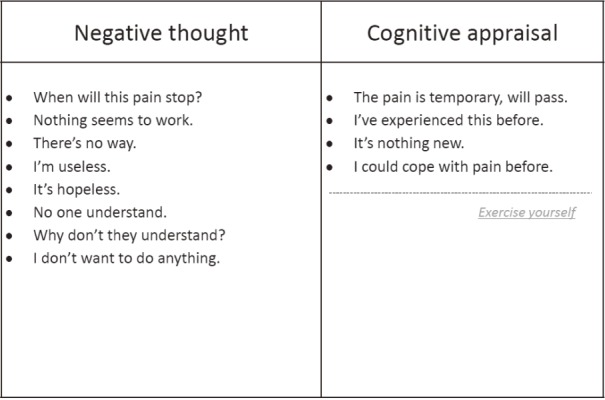
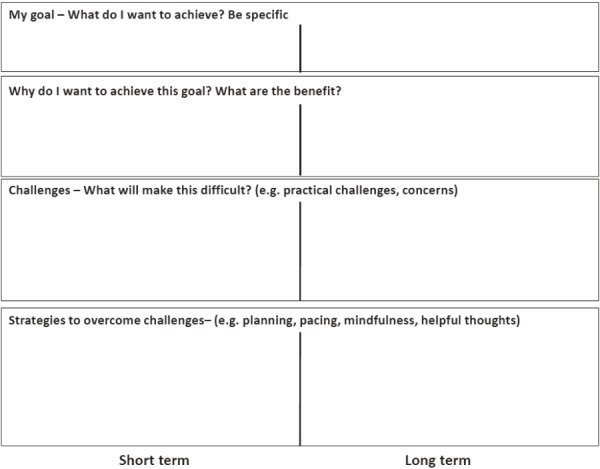
Studies have indicated that chronic low back pain (LBP) should be approached according to its morphological basis and in consideration of biopsychosocial interventions. This study presents an updated review on available psychological assessments and interventions for patients with chronic LBP. Psychosocial factors, including fear-avoidance behavior, low mood/withdrawal, expectation of passive treatment, and negative pain beliefs, are known as risk factors for the development of chronic LBP. The Örebro Musculoskeletal Pain Questionnaire, STarT Back Screening Tool, and Brief Scale for Psychiatric Problems in Orthopaedic Patients have been used as screening tools to assess the development of chronicity or identify possible psychiatric problems. The Pain Catastrophizing Scale, Pain Self-Efficacy Questionnaire, and Injustice Experience Questionnaire are also widely used to assess psychosocial factors in patients with chronic pain. With regard to interventions, the placebo effect can be enhanced by preferable patient-clinician relationship. Reassurance to patients with non-specific pain is advised by many guidelines. Cognitive behavioral therapy focuses on restructuring the negative cognition of the patient into realistic appraisal. Mindfulness may help improve pain acceptance. Self-management strategies with appropriate goal setting and pacing theory have proved to improve long-term pain-related outcomes in patients with chronic pain.
研究表明,慢性腰痛(LBP)应根据其形态学基础并考虑生物心理社会干预措施来进行处理。本研究对慢性腰痛患者可用的心理评估和干预措施进行了最新综述。心理社会因素,包括恐惧回避行为、情绪低落/退缩、对被动治疗的期望以及消极的疼痛信念,被认为是慢性腰痛发展的风险因素。厄勒布鲁肌肉骨骼疼痛问卷、STarT Back筛查工具和骨科患者精神问题简易量表已被用作筛查工具,以评估慢性化的发展或识别可能的精神问题。疼痛灾难化量表、疼痛自我效能问卷和不公正经历问卷也被广泛用于评估慢性疼痛患者的心理社会因素。关于干预措施,良好的医患关系可以增强安慰剂效应。许多指南建议对非特异性疼痛患者给予安慰。认知行为疗法侧重于将患者的消极认知重构为现实的评估。正念可能有助于提高对疼痛的接受度。已证明,采用适当的目标设定和节奏理论的自我管理策略可改善慢性疼痛患者与疼痛相关的长期预后。