Cassol Clarissa, Satoskar Anjali, Lozanski Gerard, Rovin Brad, Hebert Lee, Nadasdy Tibor, Brodsky Sergey V
Department of Pathology, The Ohio State University, Columbus, Ohio, USA.
Department of Medicine, The Ohio State University, Columbus, Ohio, USA.
Kidney Int Rep. 2019 Jun 20;4(8):1152-1160. doi: 10.1016/j.ekir.2019.06.001. eCollection 2019 Aug.
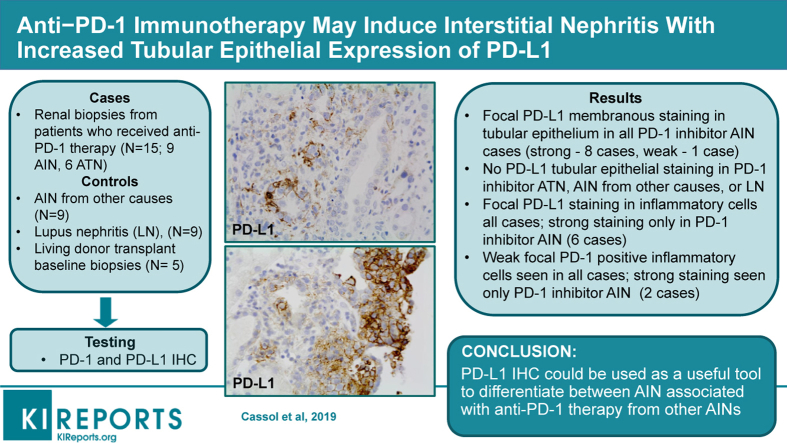
Novel anticancer therapies include anti-programmed cell death protein-1 (PD-1) and anti-programmed death ligand-1 (PD-L1) drugs. These novel medications have side effects in different organs, including the kidney. The most common adverse effect in the kidney is acute interstitial nephritis (AIN). No diagnostic criteria are available to distinguish AIN associated with anti-PD-1 therapy from other AINs.
Kidney biopsy specimens from patients on anti-PD-1 therapy were stained with antibodies to PD-1 and PD-L1. Herein we report morphologic and immunohistochemical findings in 15 patients who received anti-PD-1 therapy and developed acute kidney injury requiring a kidney biopsy.
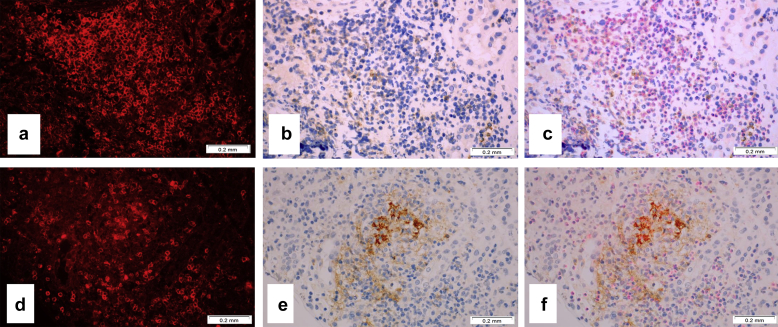
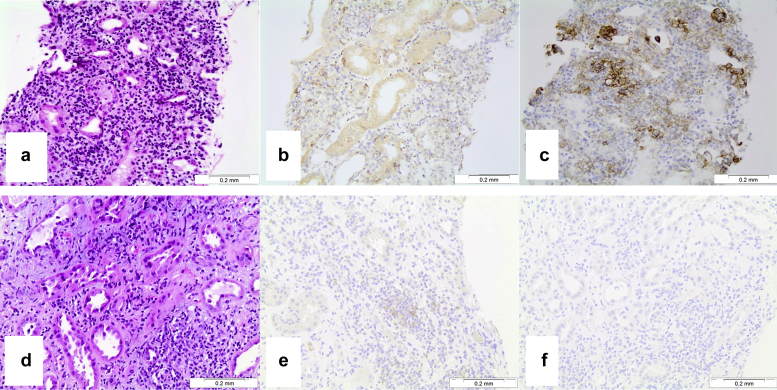
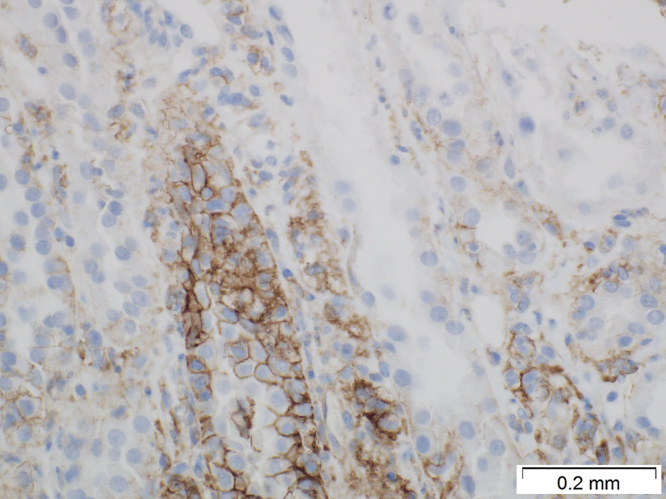
Among these patients, 9 had AIN and 6 had no AIN but showed acute tubular necrosis (ATN). Immunohistochemistry with antibodies to PD-1 and PD-L1 was performed on all of these biopsy specimens and on 9 randomly selected biopsy specimens with AIN from patients who did not receive anti-PD-1 medications, as well as 9 patients with lupus nephritis and active-appearing interstitial inflammation. There was weak staining for PD-1 in T cells in all patients with AIN and lupus; however, tubular epithelial cell membrane staining for PD-L1 was seen only in patients with anti-PD-1 therapy-associated AIN, and not in patients with anti-PD-1 therapy-associated ATN, and not in those with AIN secondary to other medications, or patients with lupus nephritis.
We propose that immunohistochemistry with PD-L1 could be a useful tool to differentiate AIN associated with anti-PD-1 therapy from other AINs.
新型抗癌疗法包括抗程序性细胞死亡蛋白1(PD-1)和抗程序性死亡配体1(PD-L1)药物。这些新型药物会对包括肾脏在内的不同器官产生副作用。肾脏最常见的不良反应是急性间质性肾炎(AIN)。目前尚无诊断标准可用于区分抗PD-1治疗相关的AIN与其他AIN。
对接受抗PD-1治疗患者的肾活检标本进行PD-1和PD-L1抗体染色。在此,我们报告了15例接受抗PD-1治疗并发生急性肾损伤且需要进行肾活检患者的形态学和免疫组化结果。
在这些患者中,9例患有AIN,6例没有AIN但表现为急性肾小管坏死(ATN)。对所有这些活检标本以及从未接受抗PD-1药物治疗的AIN患者中随机选取的9例活检标本、9例狼疮性肾炎且伴有明显活动性间质炎症的患者进行了PD-1和PD-L1抗体免疫组化检测。所有AIN患者和狼疮患者的T细胞中PD-1染色均较弱;然而,仅在抗PD-1治疗相关的AIN患者中观察到肾小管上皮细胞膜PD-L1染色,在抗PD-1治疗相关的ATN患者、其他药物所致AIN患者以及狼疮性肾炎患者中均未观察到。
我们提出,PD-L1免疫组化可能是区分抗PD-1治疗相关AIN与其他AIN的有用工具。