William Harvey Research Institute, Queen Mary University of London, c/o ACCU RESEARCH TEAM, 4th Floor, Central Tower, The Royal London Hospital, LONDON, E1 1BB, United Kingdom.
Practicality Consulting, London, UK.
Implement Sci. 2019 Aug 23;14(1):84. doi: 10.1186/s13012-019-0932-0.
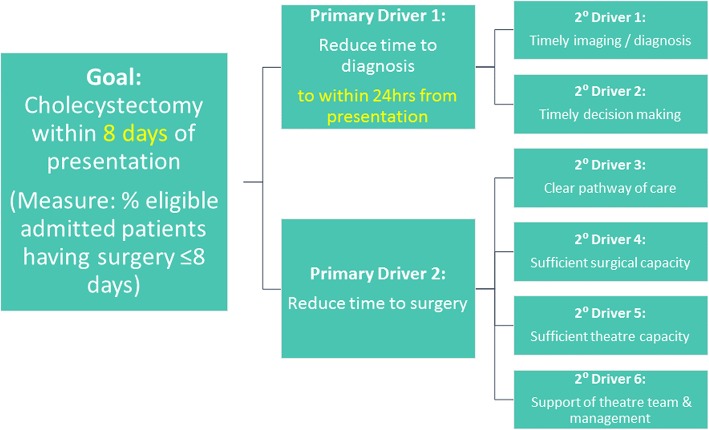
Acute gallstone disease is the highest volume Emergency General Surgical presentation in the UK. Recent data indicate wide variations in the quality of care provided across the country, with national guidance for care delivery not implemented in most UK hospitals. Against this backdrop, the Royal College of Surgeons of England set up a 13-hospital quality improvement collaborative (Chole-QuIC) to support clinical teams to reduce time to surgery for patients with acute gallstone disease requiring emergency cholecystectomy.
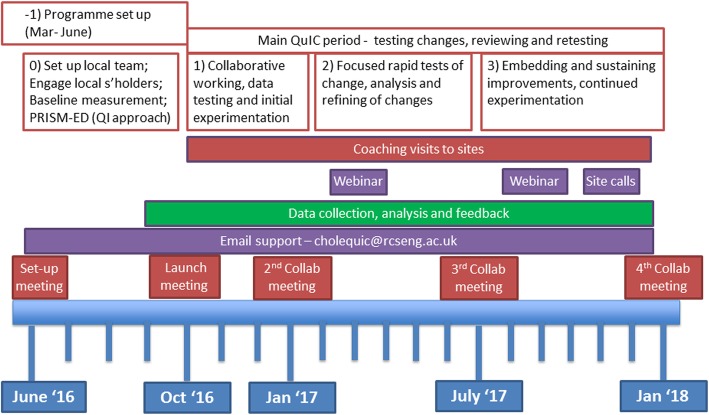
Prospective, mixed-methods process evaluation to answer the following: (1) how was the collaborative delivered by the faculty and received, understood and enacted by the participants; (2) what influenced teams' ability to improve care for patients requiring emergency cholecystectomy? We collected and analysed a range of data including field notes, ethnographic observations of meetings, and project documentation. Analysis was based on the framework approach, informed by Normalisation Process Theory, and involved the creation of comparative case studies based on hospital performance during the project.
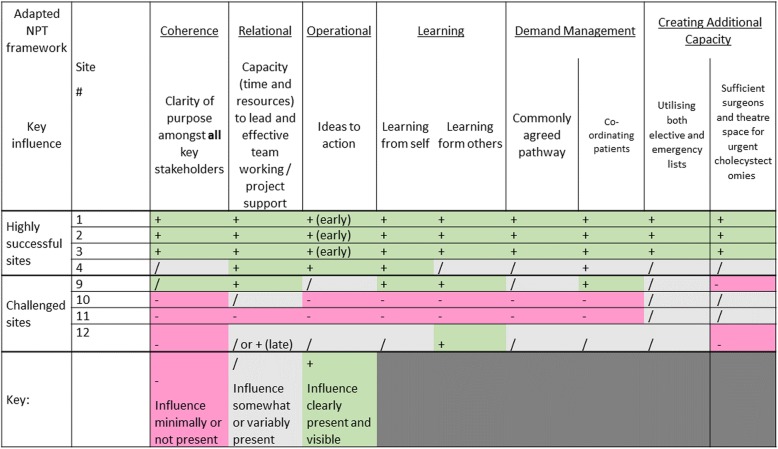
Chole-QuIC was delivered as planned and was well received and understood by participants. Four hospitals were identified as highly successful, based upon a substantial increase in the number of patients having surgery in line with national guidance. Conversely, four hospitals were identified as challenged, achieving no significant improvement. The comparative analysis indicate that six inter-related influences appeared most associated with improvement: (1) achieving clarity of purpose amongst site leads and key stakeholders; (2) capacity to lead and effective project support; (3) ideas to action; (4) learning from own and others' experience; (5) creating additional capacity to do emergency cholecystectomies; and (6) coordinating/managing the patient pathway.
Collaborative-based quality improvement is a viable strategy for emergency surgery but success requires the deployment of effective clinical strategies in conjunction with improvement strategies. In particular, achieving clarity of purpose about proposed changes amongst key stakeholders was a vital precursor to improvement, enabling the creation of additional surgical capacity and new pathways to be implemented effectively. Protected time, testing ideas, and the ability to learn quickly from data and experience were associated with greater impact within this cohort.
急性胆石病是英国急诊普通外科就诊量最高的疾病。最近的数据表明,全国各地的医疗质量存在很大差异,国家提供护理的指导方针并未在英国大多数医院实施。在此背景下,英格兰皇家外科学院成立了一个由 13 家医院组成的质量改进合作组织(Chole-QuIC),以支持临床团队为需要紧急胆囊切除术的急性胆石病患者缩短手术时间。
前瞻性、混合方法的过程评估,旨在回答以下问题:(1)教师如何提供合作,参与者如何接受、理解和实施;(2)是什么影响了团队为需要紧急胆囊切除术的患者改善护理的能力?我们收集和分析了一系列数据,包括现场记录、会议的民族志观察以及项目文件。分析基于框架方法,并借鉴了正常化进程理论,根据项目期间医院的绩效创建了对比案例研究。
Chole-QuIC 按计划交付,受到参与者的欢迎和理解。根据与国家指导方针一致的手术患者数量的大幅增加,有 4 家医院被确定为高度成功。相比之下,有 4 家医院被确定为面临挑战,没有取得显著改善。对比分析表明,有六个相互关联的影响因素似乎与改善最相关:(1)在现场领导和主要利益相关者中达成明确的目标;(2)领导能力和有效的项目支持;(3)将想法付诸行动;(4)从自身和他人的经验中学习;(5)创造额外的能力进行急诊胆囊切除术;以及(6)协调/管理患者路径。
基于合作的质量改进是急诊手术的可行策略,但成功需要在实施有效的临床策略的同时,采用改进策略。特别是,在关键利益相关者中就拟议变革达成明确目标是改进的重要前提,可以有效地实施额外的手术能力和新的途径。在本队列中,明确目标、测试想法以及从数据和经验中快速学习的能力与更大的影响力相关。