School of Medicine, Medical Sciences and Nutrition, Institute of Medical Sciences, Foresterhill, University of Aberdeen, Aberdeen AB25 2ZD, UK.
Rowett Institute of Nutrition and Health, Foresterhill, University of Aberdeen, Aberdeen AB25 2ZD, UK.
Psychoneuroendocrinology. 2019 Nov;109:104407. doi: 10.1016/j.psyneuen.2019.104407. Epub 2019 Aug 13.
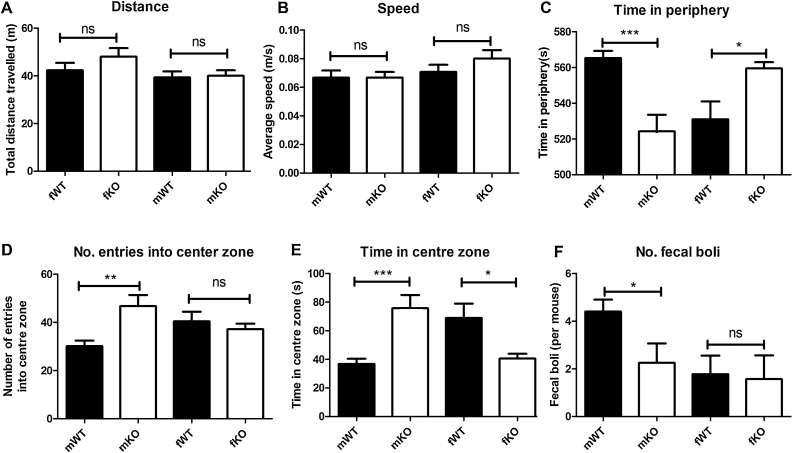
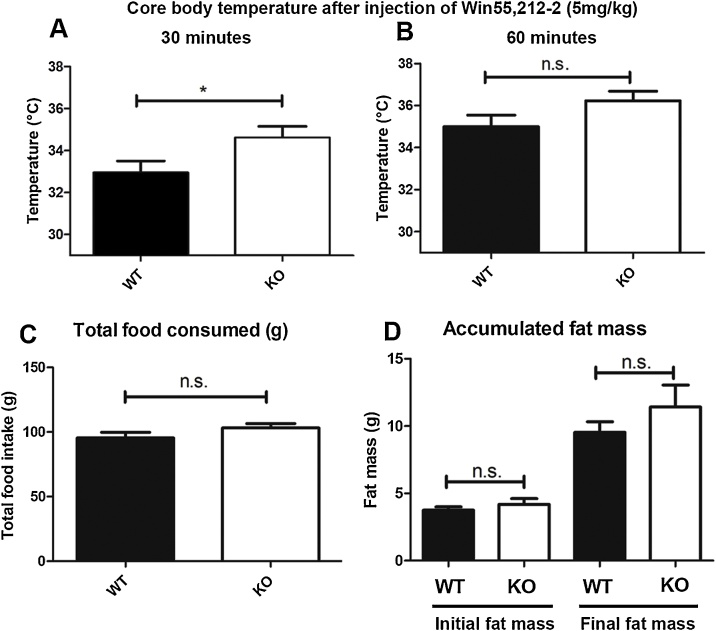
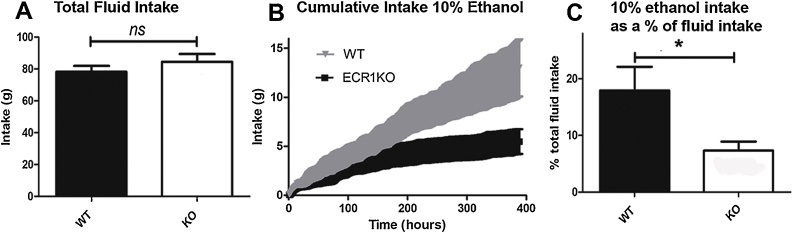
The cannabinoid-1 receptor (CB) plays a critical role in a number of biological processes including nutrient intake, addiction and anxiety-related behaviour. Numerous studies have shown that expression of the gene encoding CB1 (CNR1) is highly dynamic with changes in the tissue specific expression of CNR1 associated with brain homeostasis and disease progression. However, little is known of the mechanisms regulating this dynamic expression. To gain a better understanding of the genomic mechanisms modulating the expression of CNR1 in health and disease we characterised the role of a highly conserved regulatory sequence (ECR1) in CNR1 intron 2 that contained a polymorphism in linkage disequilibrium with disease associated SNPs. We used CRISPR/CAS9 technology to disrupt ECR1 within the mouse genome. Disruption of ECR1 significantly reduced CNR1 expression in the hippocampus but not in the hypothalamus. These mice also displayed an altered sex-specific anxiety-related behavioural profile (open field test), reduced ethanol intake and a reduced hypothermic response following CB agonism. However, no significant changes in feeding patterns were detected. These data suggest that, whilst not all of the expression of CNR1 is modulated by ECR1, this highly conserved enhancer is required for appropriate physiological responses to a number of stimuli. The combination of comparative genomics and CRISPR/CAS9 disruption used in our study to determine the functional effects of genetic and epigenetic changes on the activity of tissue-specific regulatory elements at the CNR1 locus represent an important first step in gaining a mechanistic understanding of cannabinoid regulatory pharmacogenetics.
大麻素-1 受体 (CB) 在许多生物学过程中发挥着关键作用,包括营养摄入、成瘾和焦虑相关行为。许多研究表明,编码 CB1(CNR1)的基因表达具有高度动态性,CNR1 的组织特异性表达变化与大脑内稳态和疾病进展有关。然而,对于调节这种动态表达的机制知之甚少。为了更好地了解调节 CNR1 在健康和疾病中表达的基因组机制,我们研究了高度保守的调节序列 (ECR1) 在 CNR1 内含子 2 中的作用,该序列与疾病相关 SNP 存在连锁不平衡的多态性。我们使用 CRISPR/CAS9 技术在小鼠基因组中破坏 ECR1。破坏 ECR1 会显著降低海马体中的 CNR1 表达,但不会降低下丘脑的 CNR1 表达。这些小鼠还表现出改变的性别特异性焦虑相关行为特征(旷场试验),减少乙醇摄入,以及 CB 激动剂后体温降低反应减少。然而,没有检测到摄食模式的显著变化。这些数据表明,尽管 ECR1 并非调节所有 CNR1 的表达,但这种高度保守的增强子对于对多种刺激做出适当的生理反应是必需的。本研究中使用比较基因组学和 CRISPR/CAS9 破坏来确定遗传和表观遗传变化对 CNR1 基因座组织特异性调节元件活性的功能影响,代表了在大麻素调节药物遗传学方面获得机制理解的重要第一步。