Laboratory of Immunology and Signal Transduction, Chaminade University , Honolulu , HI , USA.
Department of Chemistry, Chaminade University , Honolulu , HI , USA.
Channels (Austin). 2019 Dec;13(1):344-366. doi: 10.1080/19336950.2019.1654347.
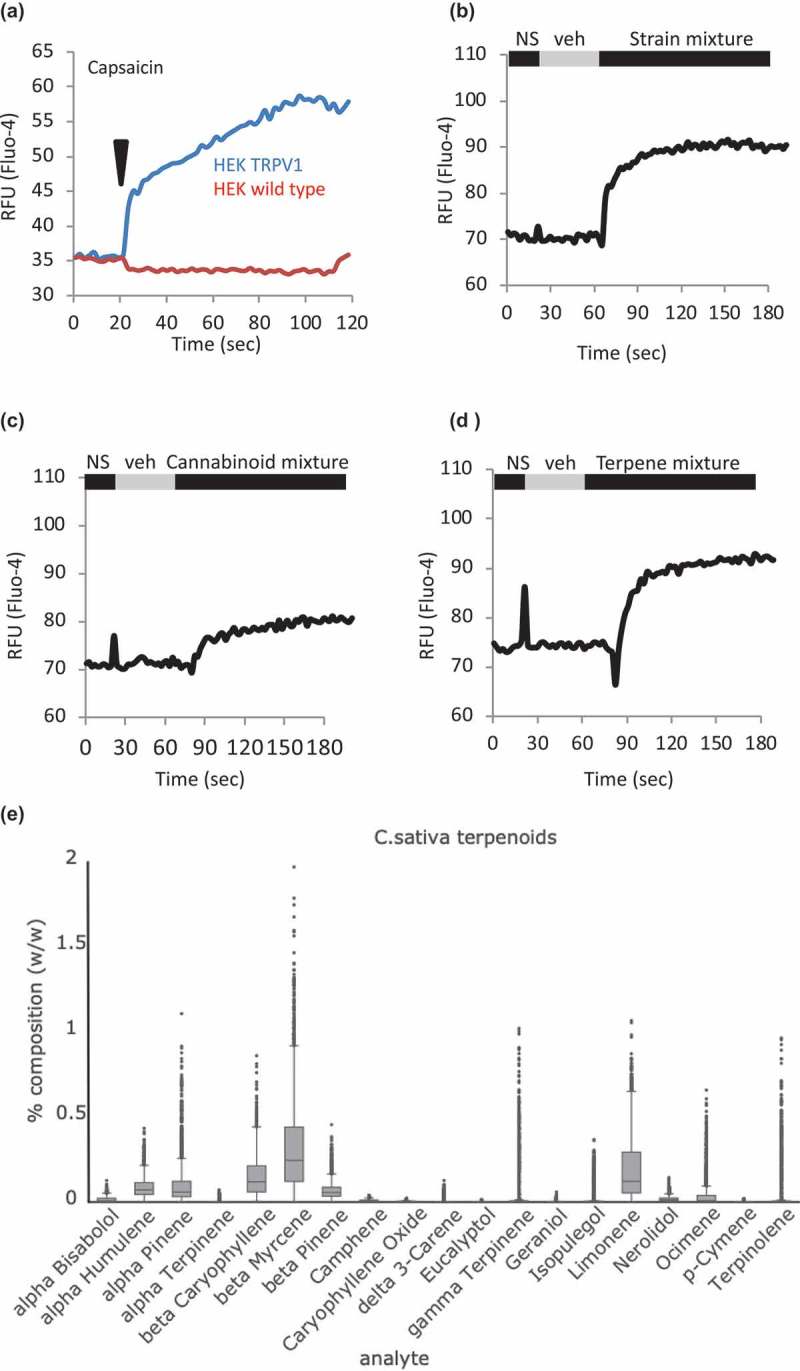
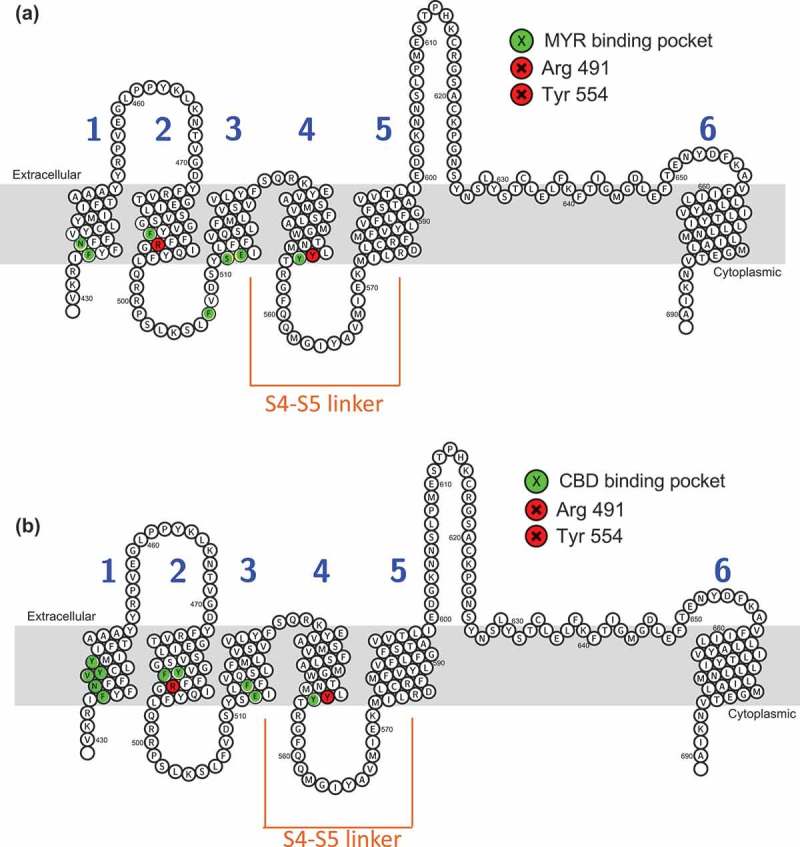
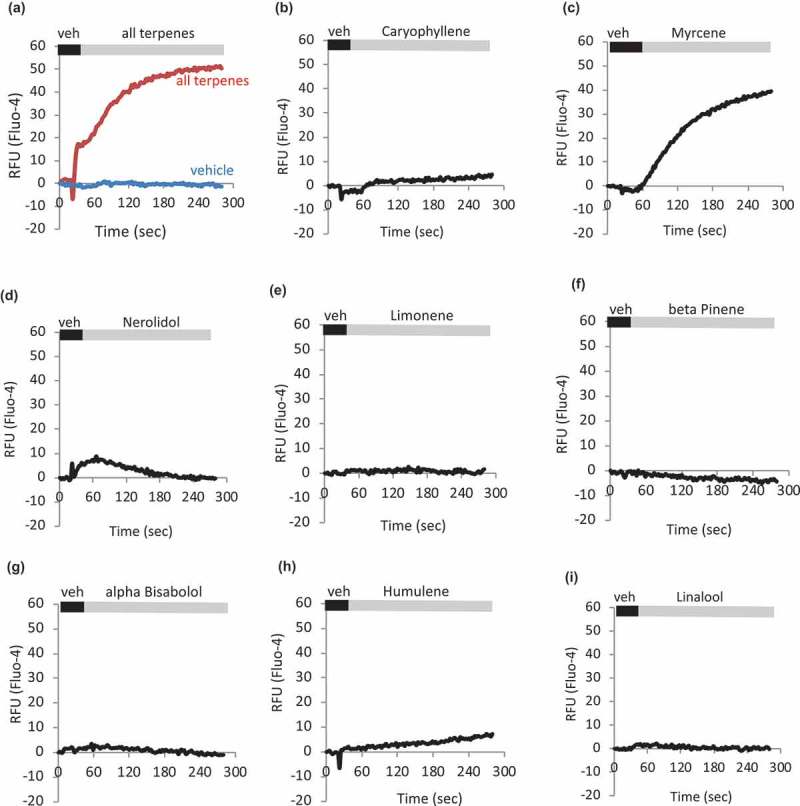
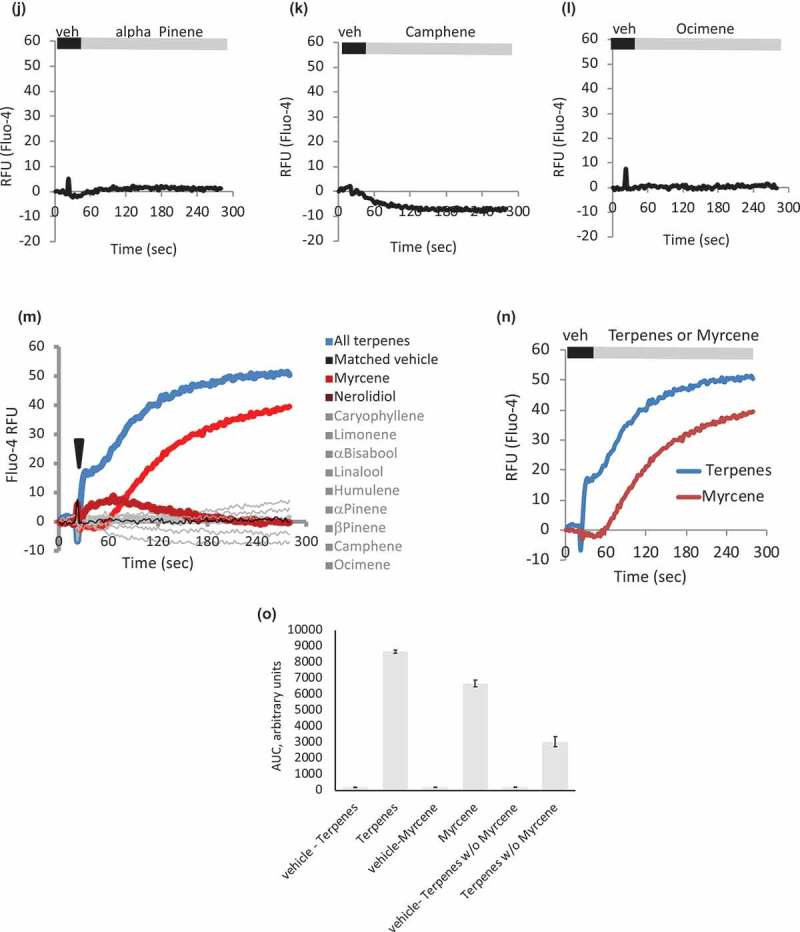
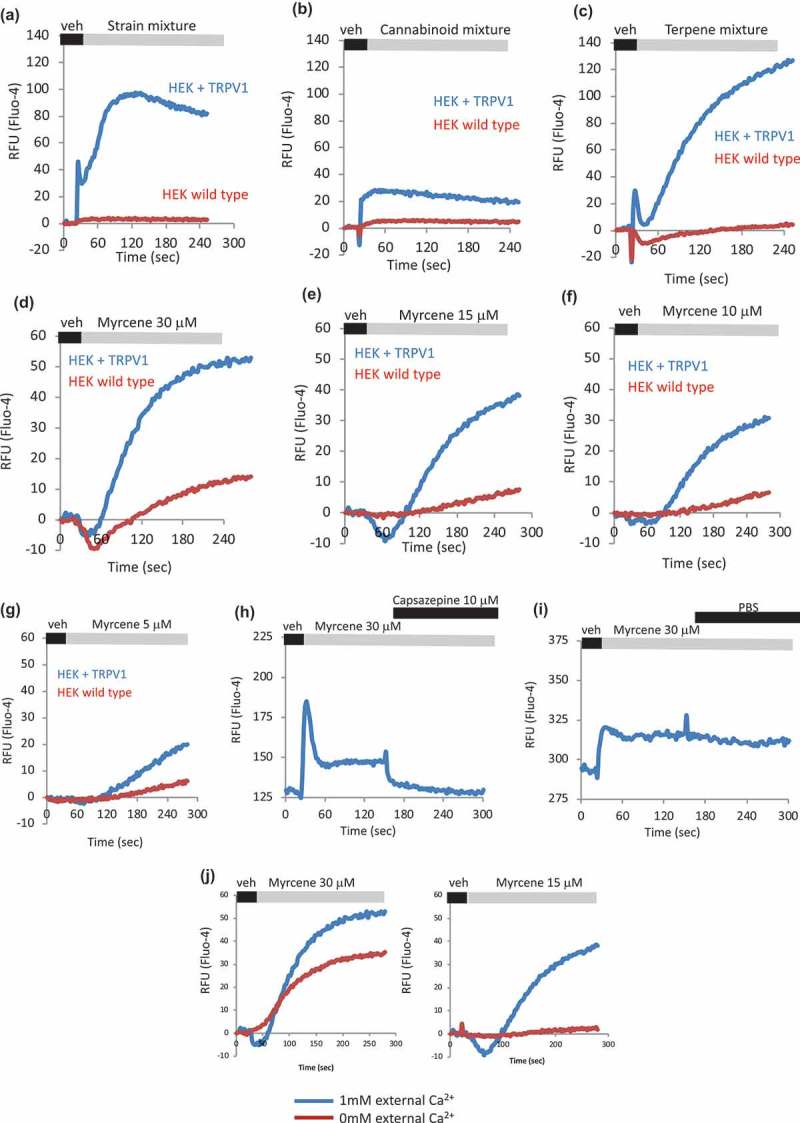
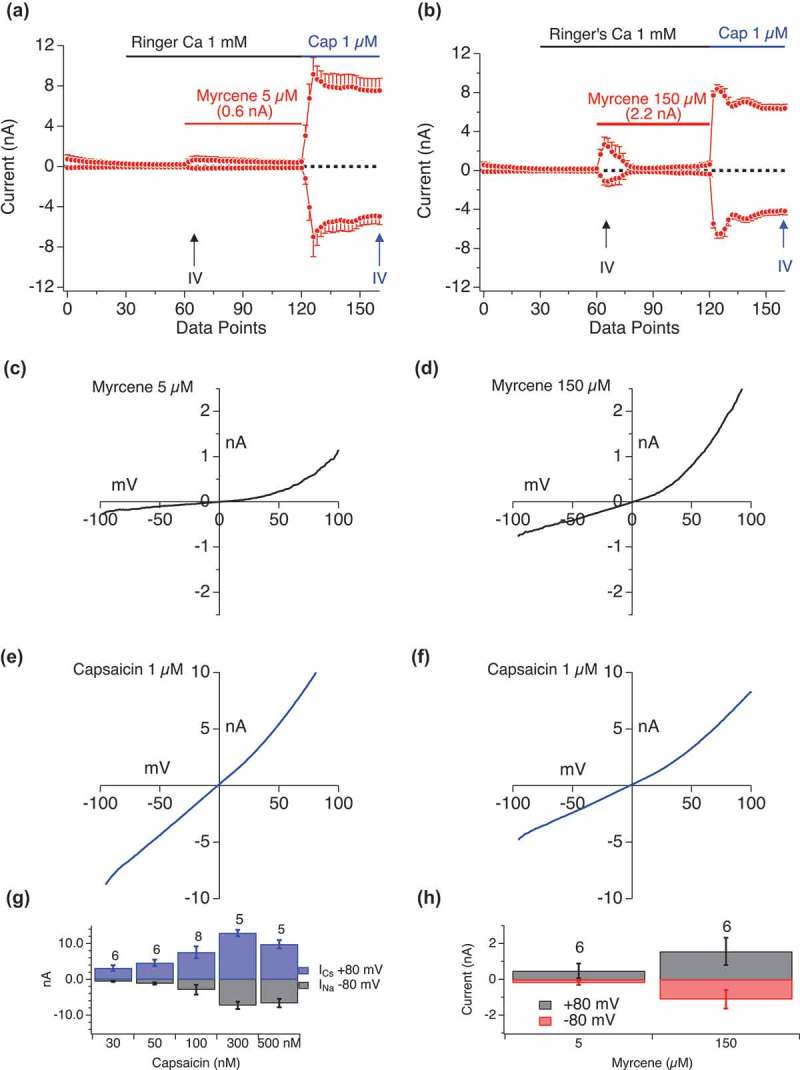
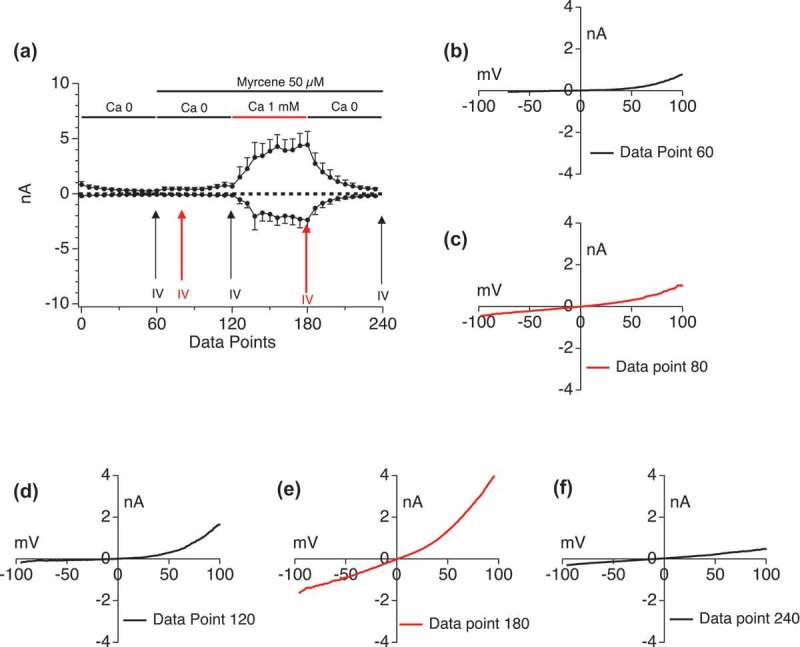
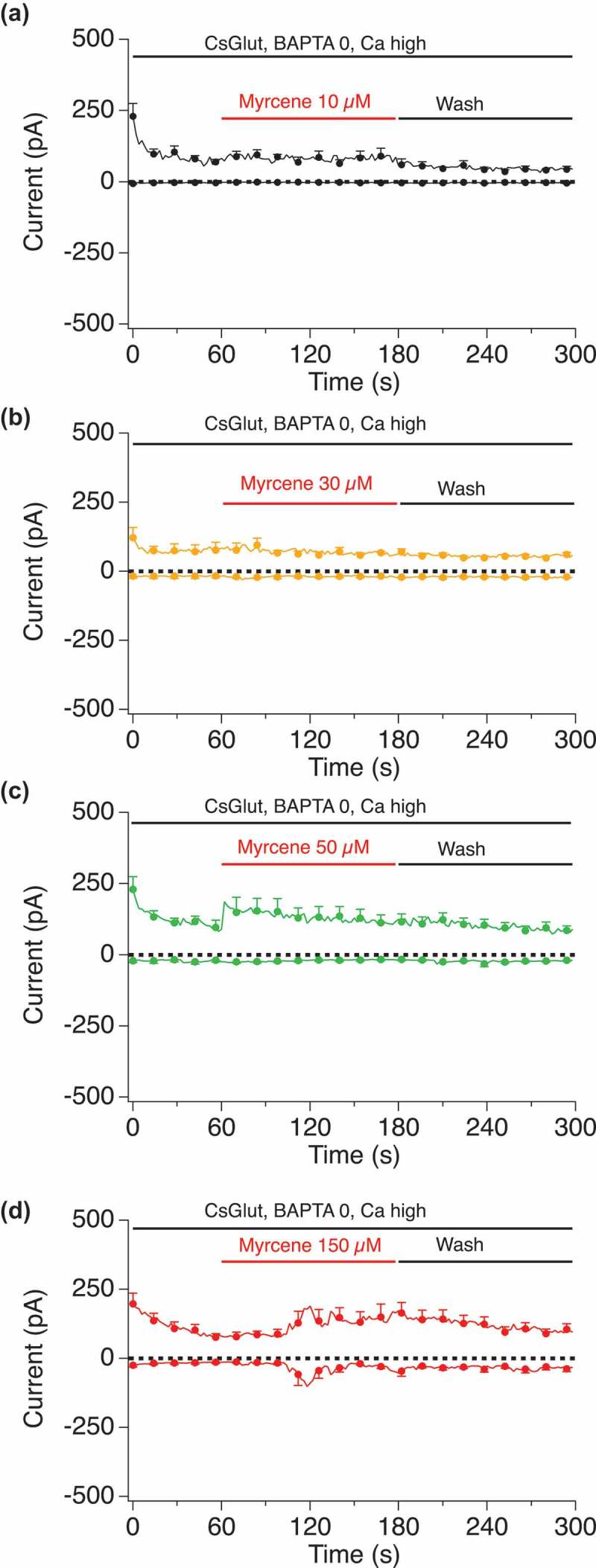
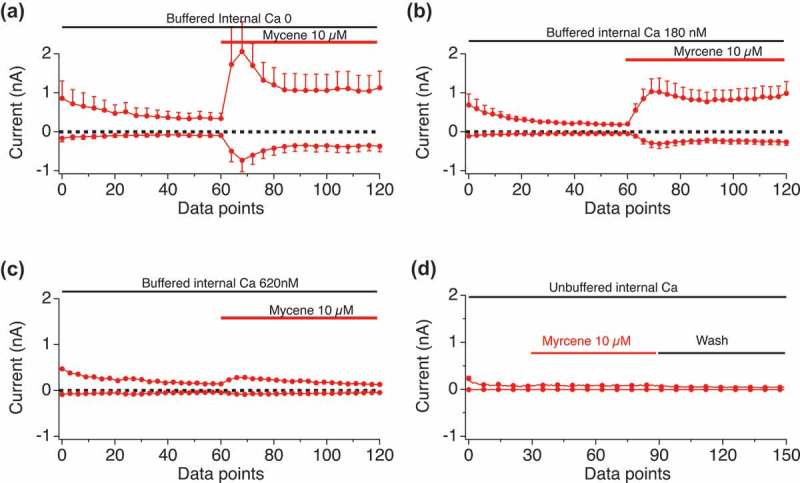
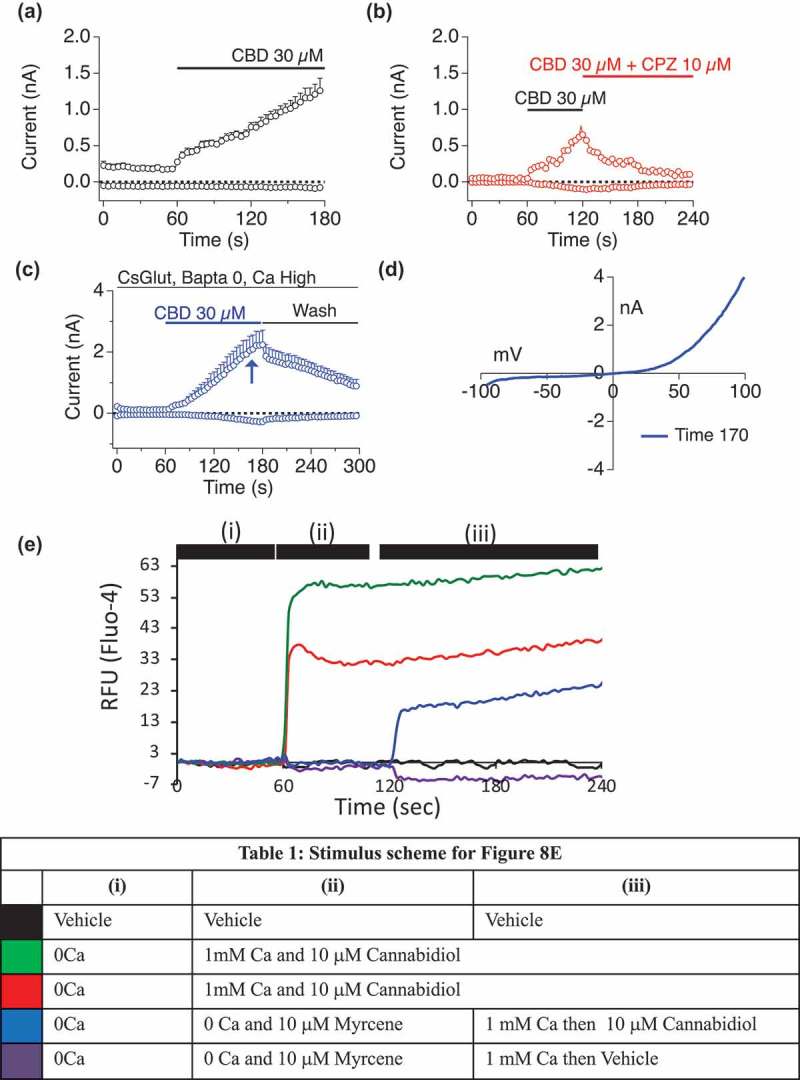
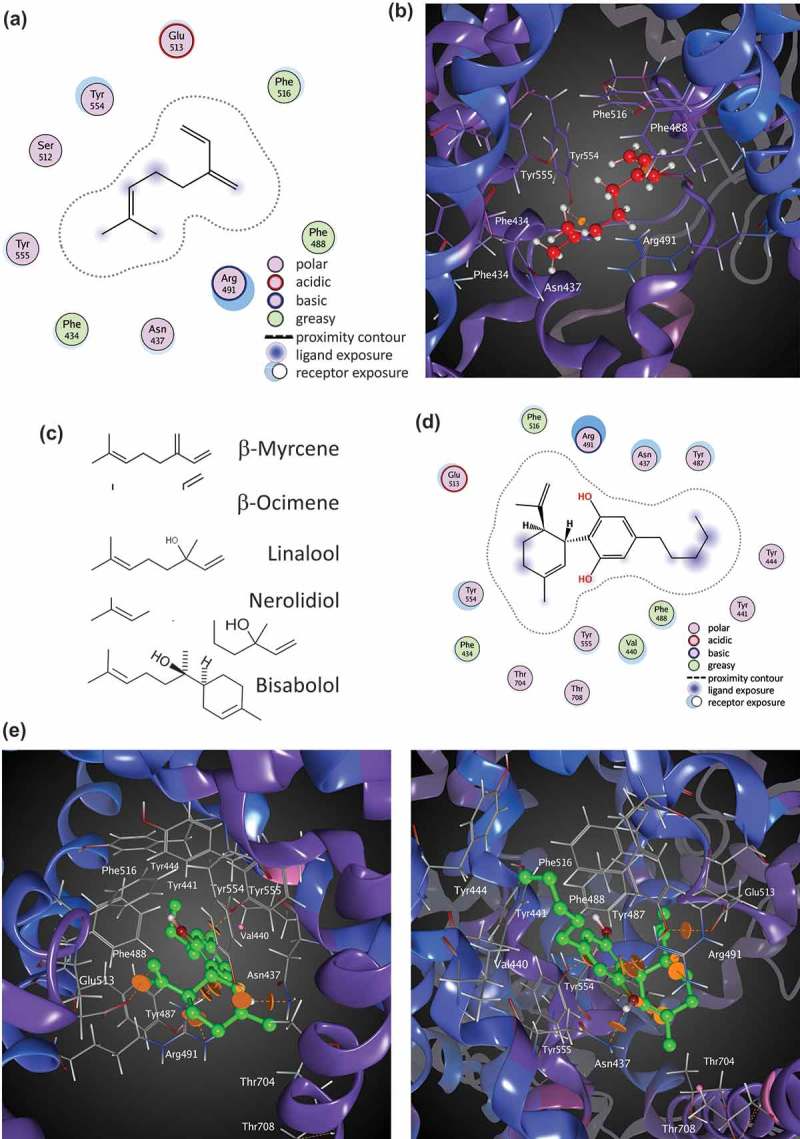
Nociceptive Transient Receptor Potential channels such as TRPV1 are targets for treating pain. Both antagonism and agonism of TRP channels can promote analgesia, through inactivation and chronic desensitization. Since plant-derived mixtures of cannabinoids and the component myrcene have been suggested as pain therapeutics, we screened terpenes found in for activity at TRPV1. We used inducible expression of TRPV1 to examine TRPV1-dependency of terpene-induced calcium flux responses. Terpenes contribute differentially to calcium fluxes via TRPV1 induced by -mimetic cannabinoid/terpenoid mixtures. Myrcene dominates the TRPV1-mediated calcium responses seen with terpenoid mixtures. Myrcene-induced calcium influx is inhibited by the TRPV1 inhibitor capsazepine and Myrcene elicits TRPV1 currents in the whole-cell patch-clamp configuration. TRPV1 currents are highly sensitive to internal calcium. When Myrcene currents are evoked, they are distinct from capsaicin responses on the basis of I and their lack of shift to a pore-dilated state. Myrcene pre-application and residency at TRPV1 appears to negatively impact subsequent responses to TRPV1 ligands such as Cannabidiol, indicating allosteric modulation and possible competition by Myrcene. Molecular docking studies suggest a non-covalent interaction site for Myrcene in TRPV1 and identifies key residues that form partially overlapping Myrcene and Cannabidiol binding sites. We identify several non- plant-derived sources of Myrcene and other compounds targeting nociceptive TRPs using a data mining approach focused on analgesics suggested by non-Western Traditional Medical Systems. These data establish TRPV1 as a target of Myrcene and suggest the therapeutic potential of analgesic formulations containing Myrcene.
伤害性瞬时受体电位通道(如 TRPV1)是治疗疼痛的靶点。TRP 通道的拮抗和激动均可通过失活和慢性脱敏促进镇痛。由于植物源性大麻素混合物和成分月桂烯被认为是疼痛治疗药物,我们筛选了[X]中发现的萜类化合物在 TRPV1 上的活性。我们使用 TRPV1 的诱导表达来检查萜类化合物通过 -模拟大麻素/萜烯混合物诱导的 TRPV1 依赖性钙流反应。萜类化合物通过 TRPV1 对钙通量的贡献不同,而 TRPV1 诱导的钙通量由 -模拟大麻素/萜烯混合物引起。月桂烯主导了与萜烯混合物相关的 TRPV1 介导的钙反应。TRPV1 抑制剂辣椒素可抑制月桂烯诱导的钙内流,月桂烯在全细胞膜片钳构型中引起 TRPV1 电流。TRPV1 电流对细胞内钙高度敏感。当引发月桂烯电流时,它们与辣椒素反应的区别在于 I 和它们缺乏向孔扩张状态的转变。月桂烯在 TRPV1 上的预先应用和驻留似乎对随后对 TRPV1 配体(如大麻二酚)的反应产生负面影响,表明变构调节和月桂烯可能的竞争。分子对接研究表明,TRPV1 中存在月桂烯的非共价相互作用位点,并确定了形成部分重叠月桂烯和大麻二酚结合位点的关键残基。我们使用一种数据挖掘方法,针对非西方传统医学系统提出的镇痛药,确定了几种非植物源性的月桂烯和其他靶向伤害性 TRP 的化合物的来源。这些数据确立了 TRPV1 作为月桂烯的靶点,并表明含有月桂烯的镇痛配方的治疗潜力。