Pang Weifeng, Zhai Mingcui, Wang Yue, Li Zhiqiang
Department of Internal Oncology, The Fourth Affiliated Hospital of Harbin Medical University, Harbin, People's Republic of China.
Department of Burn, Heilongjiang Province Hospital, Harbin, People's Republic of China.
Cancer Manag Res. 2019 Aug 1;11:7263-7277. doi: 10.2147/CMAR.S211856. eCollection 2019.
MicroRNA-628-3p (miR-628) has been reported to play important roles in the progression of multiple human cancer types. Nonetheless, whether the expression profile of miR-628 is altered in gastric cancer remains unclear and whether its aberrant expression plays a crucial part in the aggressiveness of gastric cancer is yet to be determined. Therefore, in this study, we systematically investigated the involvement of miR-628 in gastric cancer progression.
MiR-628 expression in gastric cancer tissues and cell lines were determined via reverse transcription-quantitative polymerase chain reaction (RT-qPCR). A CCK-8 assay, flow-cytometric analysis, Transwell assays, and a xenograft model experiment were performed to evaluate the influence of miR-628 overexpression on gastric cancer cells. Notably, the mechanisms underlying the tumor-suppressive activity of miR-628 in gastric cancer cells were explored by bioinformatics analysis, a luciferase reporter assay, RT-qPCR, and Western blotting.
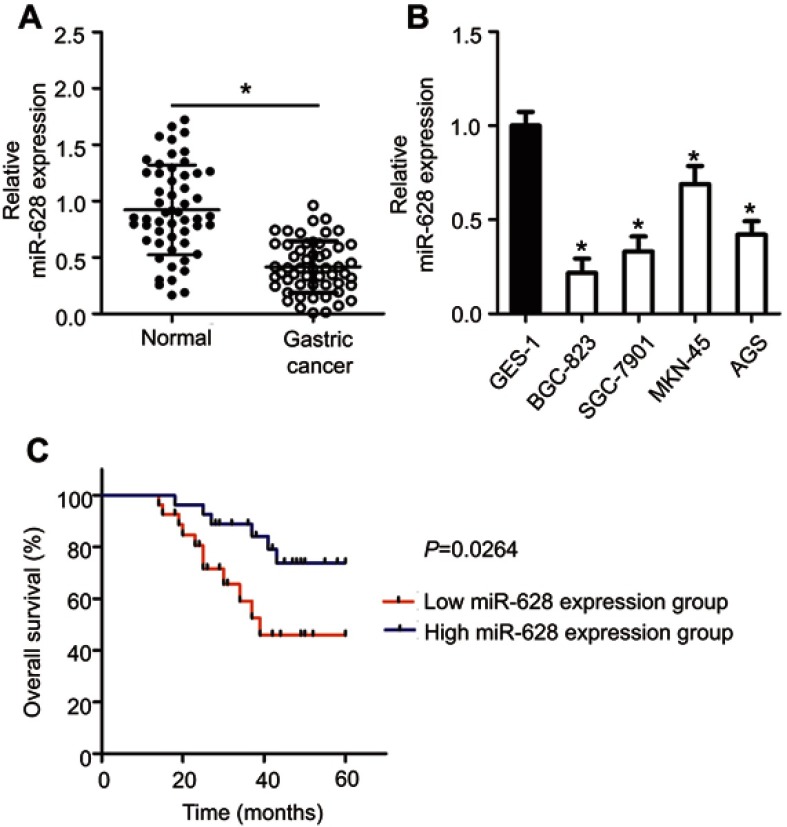
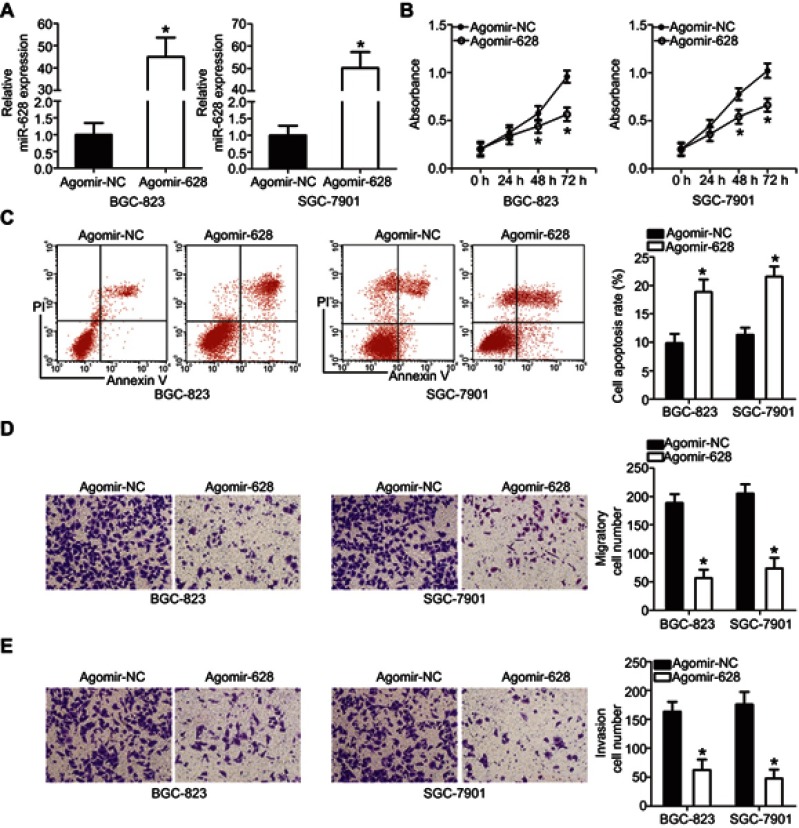
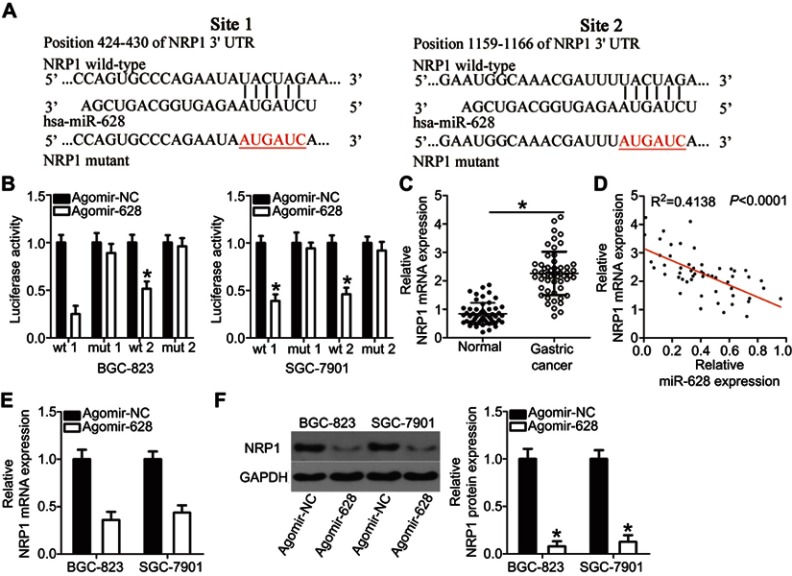
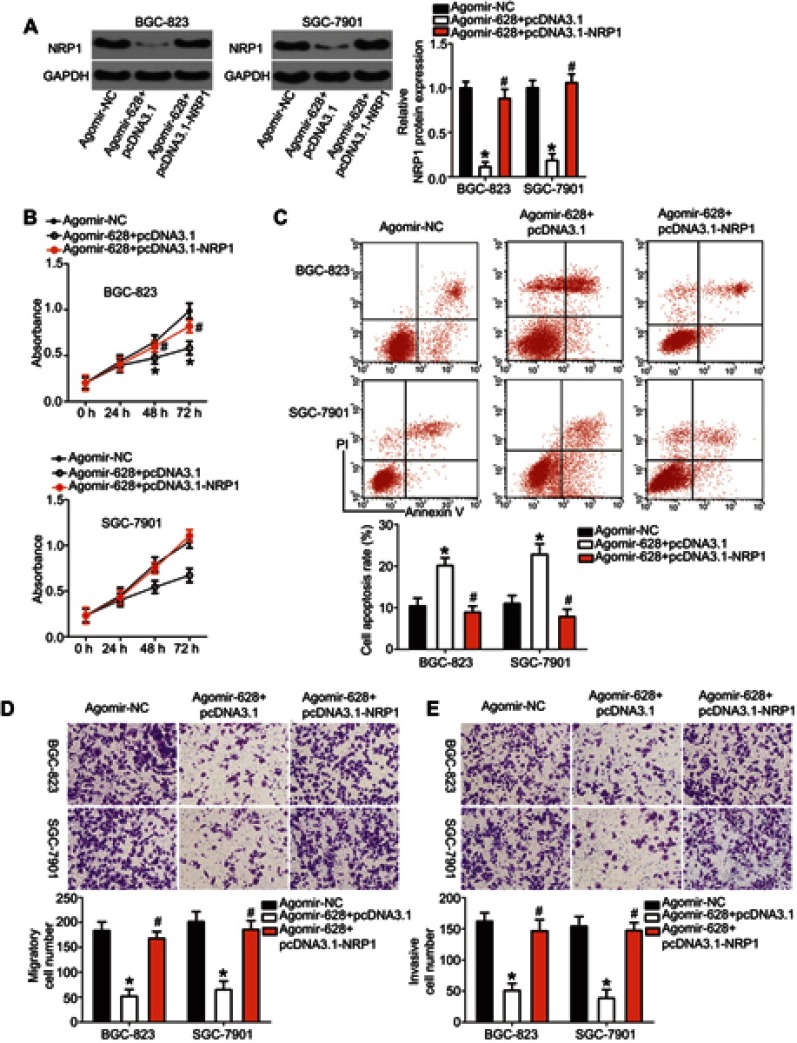
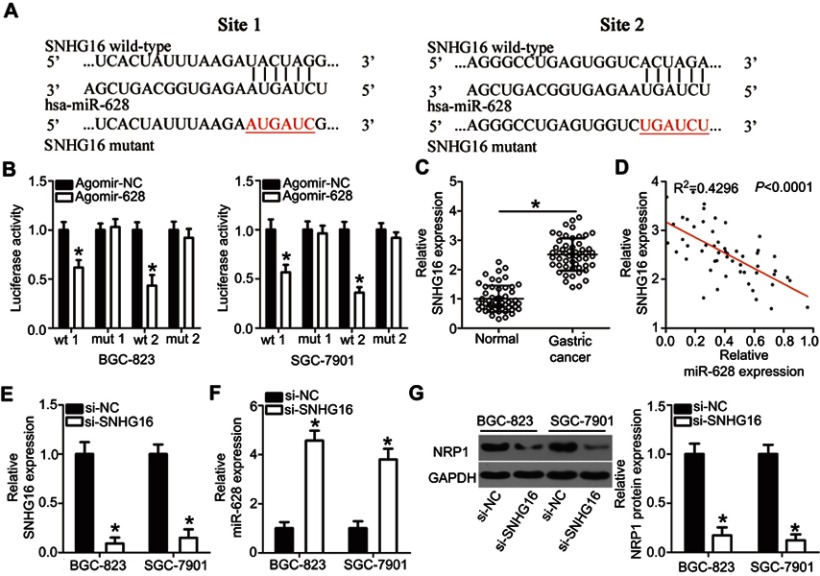
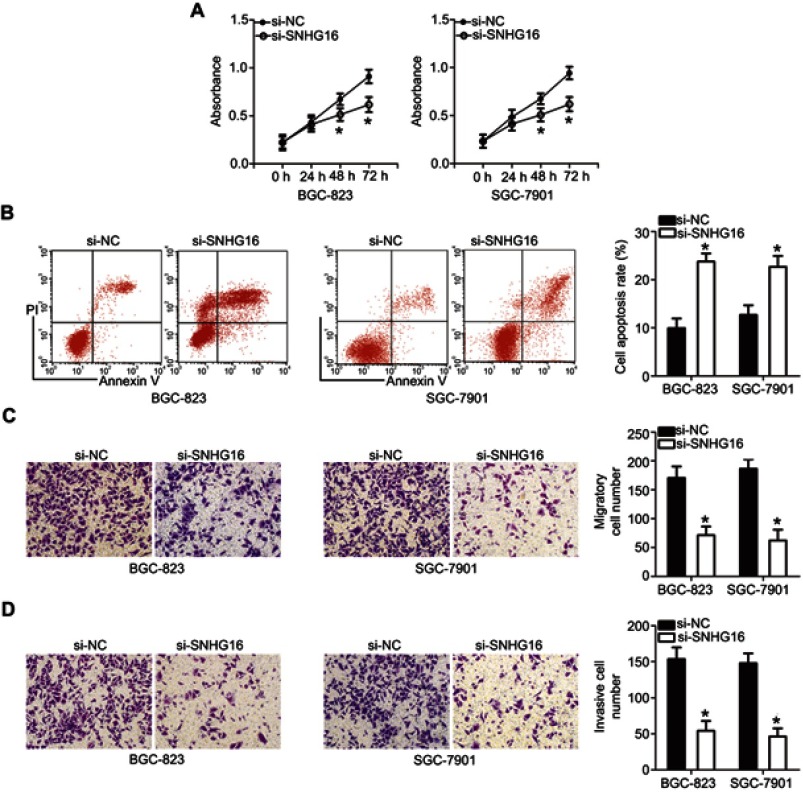
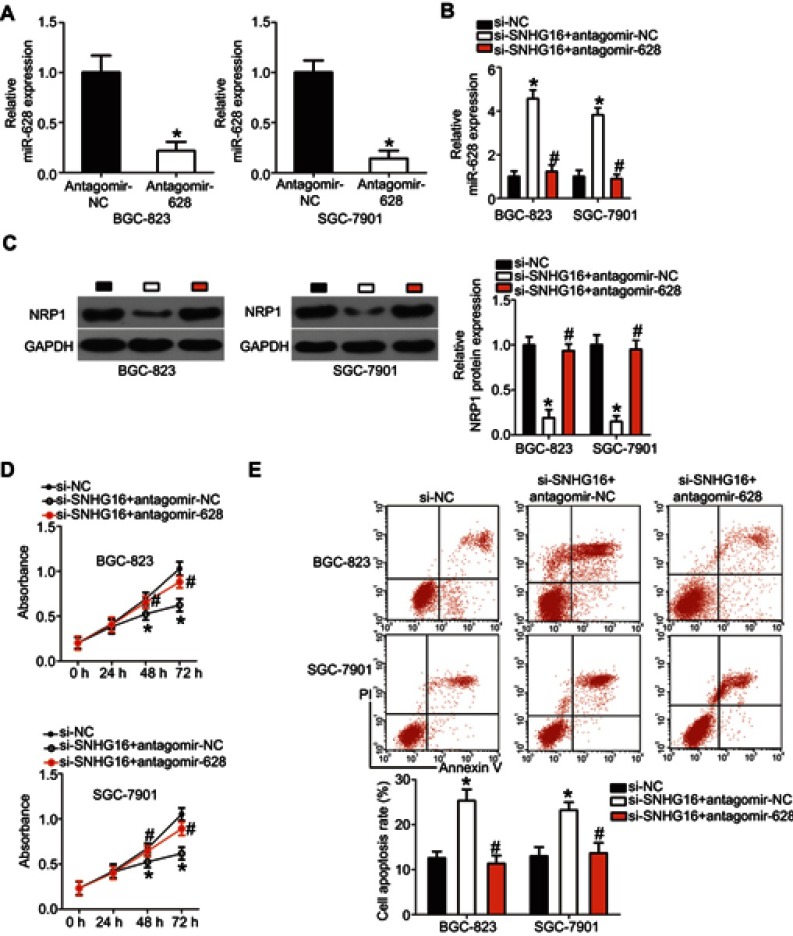
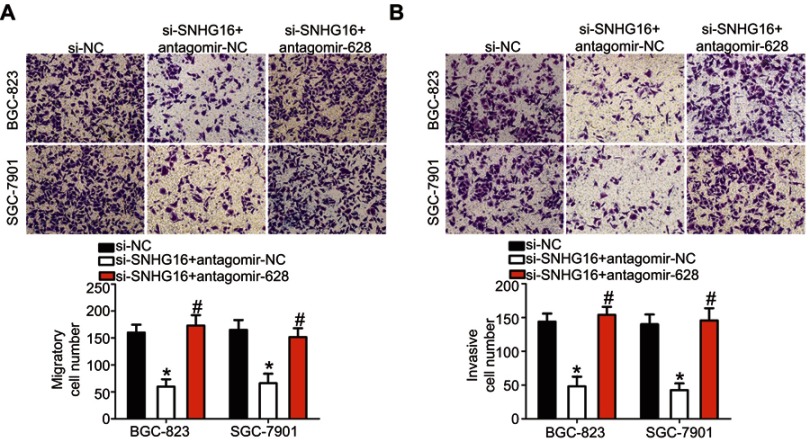
MiR-628 expression was low in gastric cancer tissue samples and cell lines. The low expression of miR-628 was closely associated with the lymph node metastasis, invasive depth and TNM stage among patients with gastric cancer. Further clinical analysis indicated that patients with gastric cancer underexpressing miR-628 had a worse prognosis than did the patients with high miR-628 expression in the tumor. Overexpressed miR-628 restrained proliferation, migration, and invasion; induced apoptosis; and impaired tumor growth of gastric cancer cells. In addition, neuropilin 1 (NRP1) mRNA was validated as the direct target of miR-628 in gastric cancer. Long noncoding RNA small nucleolar RNA host gene 16 (SNHG16) was demonstrated to sponge miR-628 in gastric cancer. Moreover, miR-628 knockdown abrogated the influence of SNHG16 silencing on gastric cancer cells.
Our findings elucidate how the SNHG16-miR-628-NRP1 pathway serves as a regulatory network playing crucial roles in gastric cancer progression, suggesting that this pathway may be a novel target of anticancer therapy.
据报道,微小RNA-628-3p(miR-628)在多种人类癌症类型的进展中发挥重要作用。然而,miR-628在胃癌中的表达谱是否改变仍不清楚,其异常表达是否在胃癌的侵袭性中起关键作用尚待确定。因此,在本研究中,我们系统地研究了miR-628在胃癌进展中的作用。
通过逆转录定量聚合酶链反应(RT-qPCR)检测胃癌组织和细胞系中miR-628的表达。进行CCK-8检测、流式细胞术分析、Transwell检测和异种移植模型实验,以评估miR-628过表达对胃癌细胞的影响。值得注意的是,通过生物信息学分析、荧光素酶报告基因检测、RT-qPCR和蛋白质印迹法探索了miR-628在胃癌细胞中发挥肿瘤抑制活性的机制。
miR-628在胃癌组织样本和细胞系中表达较低。miR-628的低表达与胃癌患者的淋巴结转移、浸润深度和TNM分期密切相关。进一步的临床分析表明,miR-628低表达的胃癌患者的预后比肿瘤中miR-628高表达的患者更差。过表达的miR-628抑制了胃癌细胞的增殖、迁移和侵袭;诱导了细胞凋亡;并抑制了肿瘤生长。此外,神经纤毛蛋白1(NRP1)mRNA被确认为miR-628在胃癌中的直接靶点。长链非编码RNA小核仁RNA宿主基因16(SNHG16)被证明在胃癌中可吸附miR-628。此外,miR-628敲低消除了SNHG16沉默对胃癌细胞的影响。
我们的研究结果阐明了SNHG16-miR-628-NRP1通路如何作为一个调控网络在胃癌进展中发挥关键作用,表明该通路可能是抗癌治疗的新靶点。