Li Zhouxiao, Ding Zhili, Rong Dawei, Tang Weiwei, Cao Hongyong
Department of General Surgery, Nanjing First Hospital, Nanjing Medical University, Nanjing, Jiangsu 210001, P.R. China.
Department of Plastic and Hand Surgery-Campus Innenstadt, University Hospital Munich, D-80336 Munich, Germany.
Oncol Lett. 2019 Sep;18(3):3211-3217. doi: 10.3892/ol.2019.10640. Epub 2019 Jul 22.
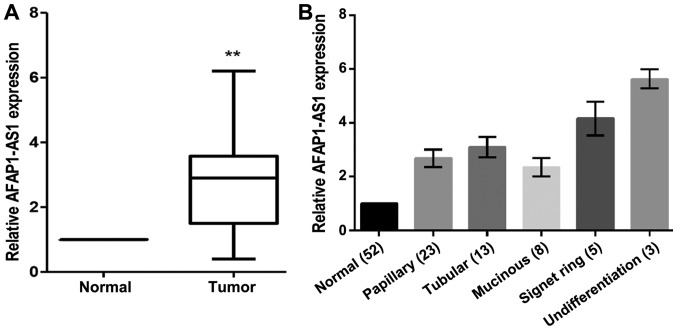
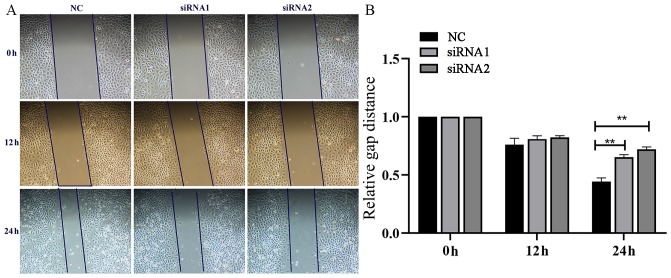
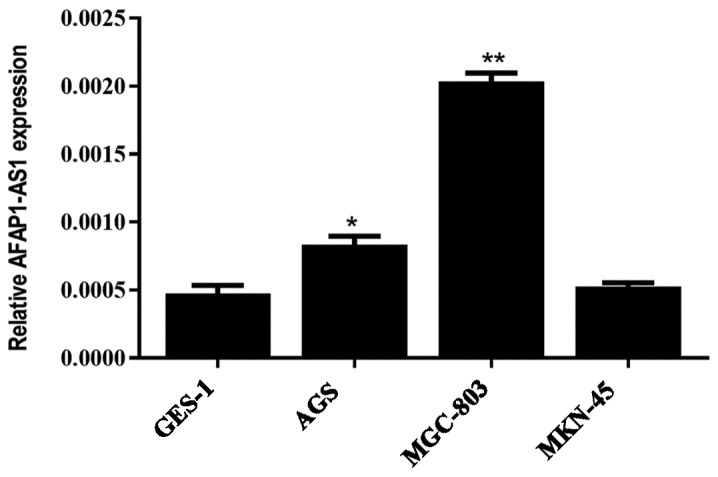
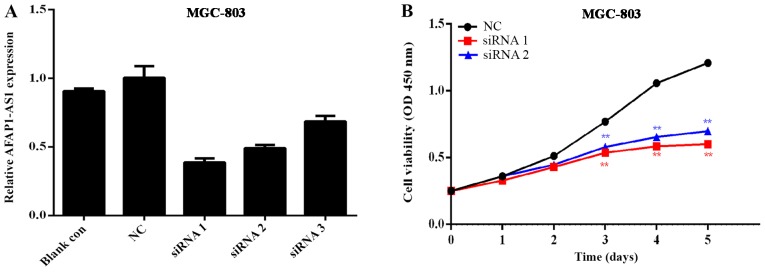
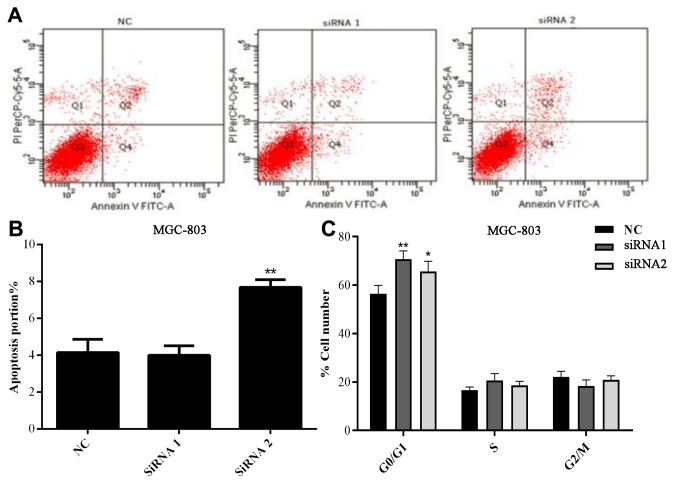
Long non-coding RNA (lncRNA) actin filament-associated protein 1 antisense RNA 1 (AFAP1-AS1) has been revealed to be associated with certain types of cancer. However, whether the lncRNA AFAP1-AS1 is involved in the development and progression of gastric cancer (GC) remains unknown. The present study investigated the clinical significance and biological functions of AFAP1-AS1 in GC. The expression levels of lncRNA AFAP1-AS1 in 52 patients with GC, and in 1 normal gastric mucosal cell line and 3 GC cell lines, were evaluated by reverse transcription quantitative polymerase chain reaction analysis. Small interfering RNAs were used to suppress AFAP1-AS1 expression in GC cell lines. The results indicated that AFAP1-AS1 expression levels were significantly increased in GC tissues and cell lines compared with the corresponding noncancerous tissues and normal gastric cells. In addition, the patients with GC with increased AFAP1-AS1 expression exhibited an advanced clinical stage and an association with the occurrence of lymph node metastasis compared with those with decreased AFAP1-AS1 expression. assays demonstrated that knockdown of AFAP1-AS1 decreased levels of cell proliferation and migration. In addition, the results of flow cytometry demonstrated that knockdown of AFAP1-AS1 caused cell cycle arrest. In conclusion, AFAP1-AS1 is a novel molecule involved in GC progression, which may be a potential prognostic biomarker and target for therapeutic intervention.
长链非编码RNA(lncRNA)肌动蛋白丝相关蛋白1反义RNA1(AFAP1-AS1)已被揭示与某些类型的癌症相关。然而,lncRNA AFAP1-AS1是否参与胃癌(GC)的发生发展仍不清楚。本研究调查了AFAP1-AS1在GC中的临床意义和生物学功能。通过逆转录定量聚合酶链反应分析评估了52例GC患者以及1种正常胃黏膜细胞系和3种GC细胞系中lncRNA AFAP1-AS1的表达水平。使用小干扰RNA抑制GC细胞系中AFAP1-AS1的表达。结果表明,与相应的癌旁组织和正常胃细胞相比,GC组织和细胞系中AFAP1-AS1的表达水平显著升高。此外,与AFAP1-AS1表达降低的患者相比,AFAP1-AS1表达升高的GC患者表现出临床分期较晚且与淋巴结转移的发生有关。实验证明,敲低AFAP1-AS1可降低细胞增殖和迁移水平。此外,流式细胞术结果表明,敲低AFAP1-AS1会导致细胞周期停滞。总之,AFAP1-AS1是一种参与GC进展的新分子,可能是一种潜在的预后生物标志物和治疗干预靶点。