Baxter Danielle A, Shergis Johannah L, Fazalbhoy Azharuddin, Coyle Meaghan E
School of Health and Biomedical Sciences, RMIT University, PO Box 71, Bundoora, VIC 3083 Australia.
Chiropr Man Therap. 2019 Aug 20;27:37. doi: 10.1186/s12998-019-0256-9. eCollection 2019.
Chronic Obstructive Pulmonary Disease (COPD) is an increasingly prevalent respiratory disease that impacts on daily living. In addition to difficulty breathing, many people experience extrapulmonary comorbidities such as musculoskeletal disorders. Pulmonary rehabilitation can improve fitness and strength but may be difficult for patients with musculoskeletal disorders. Recent research indicates promising benefits of adding manual therapy to standard care to improve clinical outcomes.
To evaluate the efficacy and safety of Muscle Energy Technique (MET) for people with COPD.
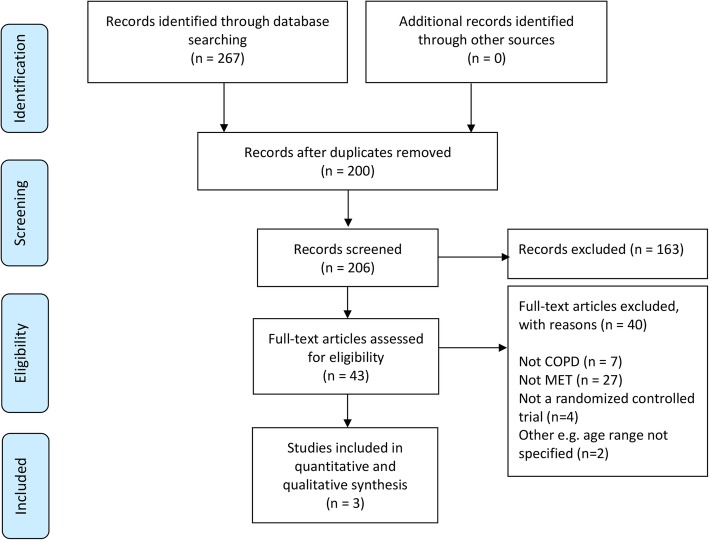
Ten databases were searched from inceptions to May 2018. Eligible studies were randomised controlled trials assessing MET compared to any control for COPD. Outcomes included lung function, exercise capacity, health-related quality of life, and adverse events.
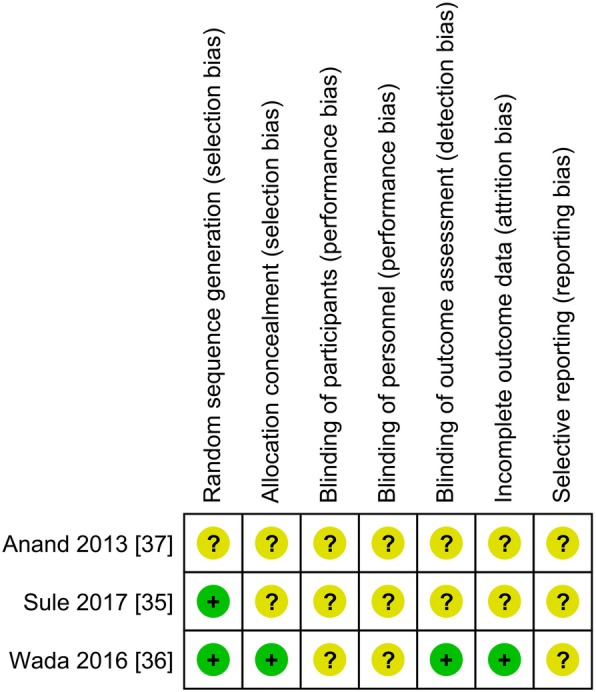
Three randomised controlled trials assessing 90 participants were included. The quality of the research was limited by reporting of outcome measures and results, varying treatment protocols, and small sample sizes. Results from one study showed that pulmonary function was not statistically different between groups at end of treatment (FEV% MD 4.87%; 95% CI - 0.79 to 10.53). Exercise capacity and perceived dyspnoea ratings were improved in single studies. Adverse events were unrelated to the MET intervention.
The use of MET for COPD is an emerging field of research, with few studies evaluating its efficacy and safety. Currently, there is insufficient evidence to support the use of MET in the management of COPD. Rigorously designed studies with larger sample sizes are needed to better understand the role of MET for COPD.
慢性阻塞性肺疾病(COPD)是一种日益普遍的呼吸系统疾病,影响日常生活。除呼吸困难外,许多人还患有肺外合并症,如肌肉骨骼疾病。肺康复可以提高体能和力量,但对于患有肌肉骨骼疾病的患者来说可能具有挑战性。最近的研究表明,在标准护理中增加手法治疗以改善临床结局具有显著益处。
评估肌肉能量技术(MET)对慢性阻塞性肺疾病患者的疗效和安全性。
检索了从数据库建立至2018年5月的10个数据库。纳入的合格研究为随机对照试验,评估了与任何对照相比的肌肉能量技术对慢性阻塞性肺疾病的治疗效果。结局指标包括肺功能、运动能力、健康相关生活质量和不良事件。
纳入了三项评估90名参与者的随机对照试验。研究质量受到结局指标报告、不同治疗方案和样本量较小的限制。一项研究结果显示,治疗结束时两组间肺功能无统计学差异(第1秒用力呼气容积%平均差4.87%;95%可信区间-0.79至10.53)。在单项研究中,运动能力和主观呼吸困难评分有所改善。不良事件与肌肉能量技术干预无关。
肌肉能量技术在慢性阻塞性肺疾病中的应用是一个新兴的研究领域,很少有研究评估其疗效和安全性。目前,没有足够的证据支持在慢性阻塞性肺疾病管理中使用肌肉能量技术。需要进行设计更严谨、样本量更大的研究,以更好地了解肌肉能量技术在慢性阻塞性肺疾病中的作用。