Department of Radiation Oncology, The Affiliated Cancer Hospital of Zhengzhou University, Zhengzhou, China.
The School of Basic Medical Sciences, Zhengzhou University, Zhengzhou, China.
Cancer Sci. 2019 Nov;110(11):3464-3475. doi: 10.1111/cas.14184. Epub 2019 Sep 13.
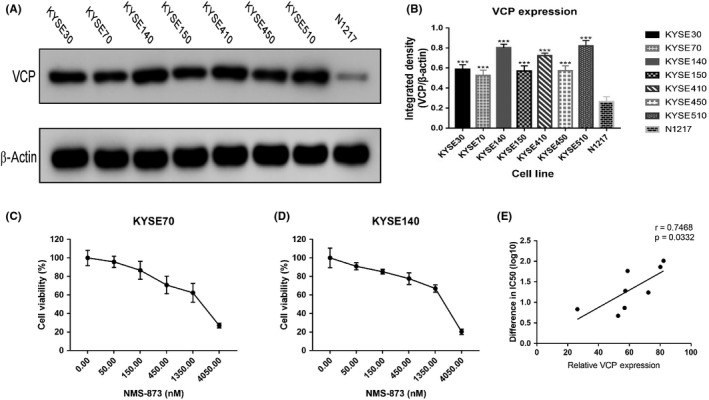
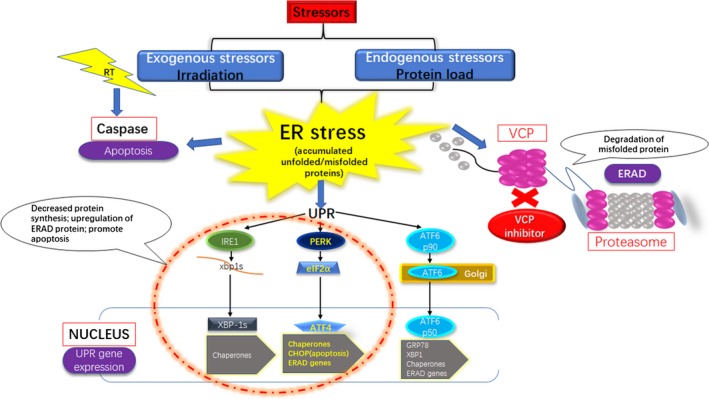
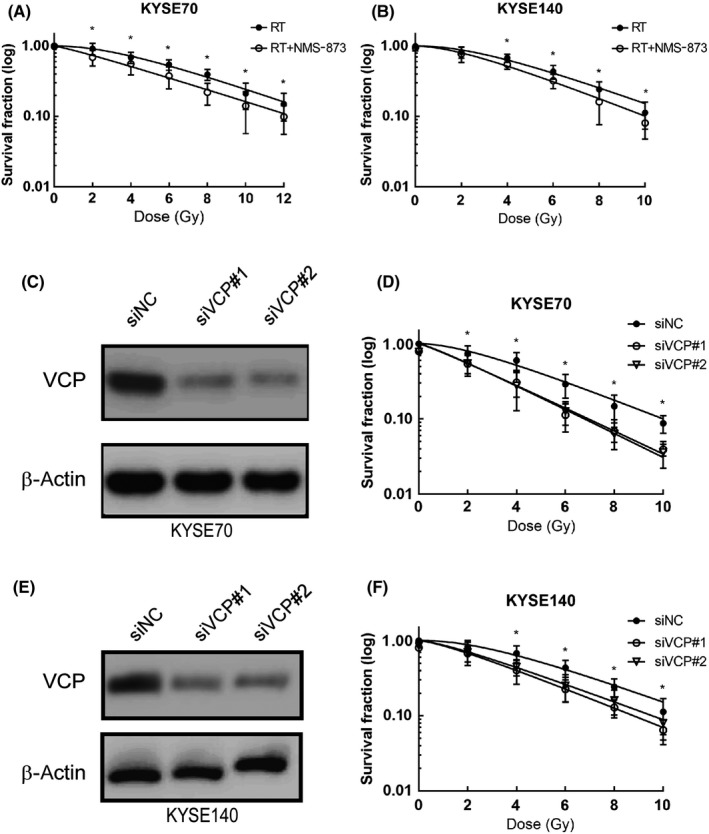
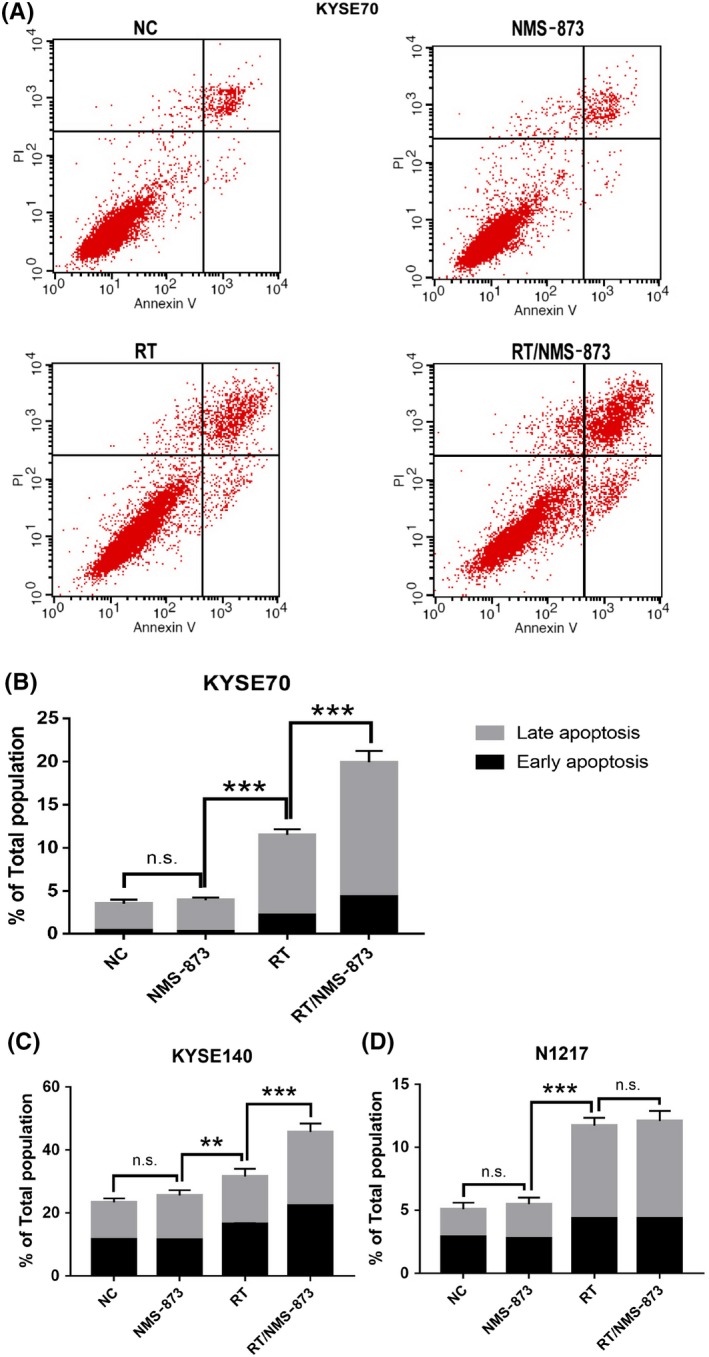
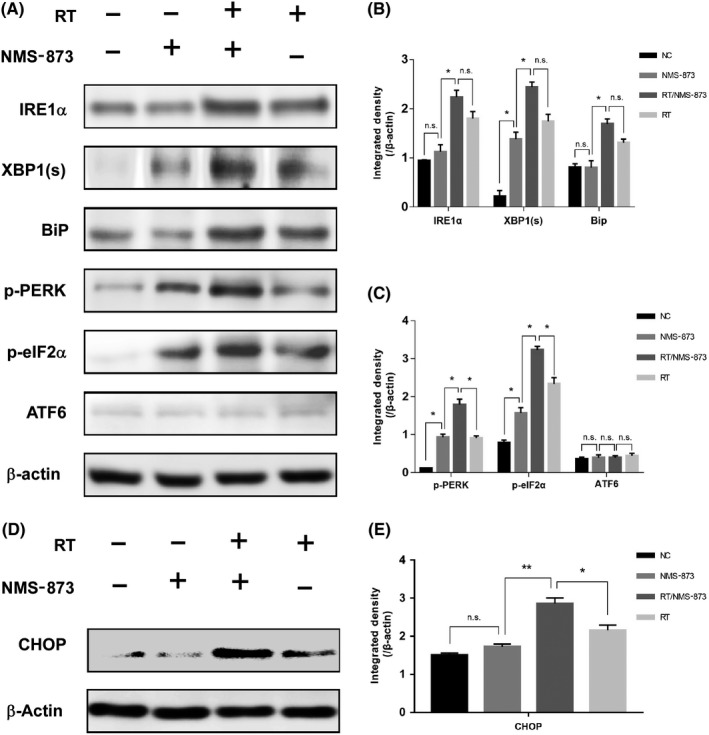
Overcoming resistance to radiation is a great challenge in cancer therapy. Here, we highlight that targeting valosin-containing protein (VCP) improves radiation sensitivity in esophageal squamous cell carcinoma (ESCC) cell lines and show the potential of using VCP as a prognosis marker in locally advanced ESCC treated with radiation therapy. Esophageal squamous cell carcinoma cell lines with high VCP expression were treated with VCP inhibitor combined with radiotherapy. Cell proliferation, colony formation, cell death, and endoplasmic reticulum (ER) stress signaling were evaluated. Moreover, patients with newly diagnosed locally advanced ESCC who were treated with radiotherapy were analyzed. Immunohistochemistry was used to detect the expression of VCP. The correlation between overall survival and VCP was investigated. Esophageal squamous cell carcinoma cells treated with VCP inhibitor and radiotherapy showed attenuated cell proliferation and colony formation and enhanced apoptosis. Further investigation showed this combined strategy activated the ER stress signaling involved in unfolded protein response, and inhibited the ER-associated degradation (ERAD) pathway. Clinical analysis revealed a significant survival benefit in the low VCP expression group. Targeting VCP resulted in antitumor activity and enhanced the efficacy of radiation therapy in ESCC cells in vitro. Valosin-containing protein is a promising and novel target. In patients with locally advanced ESCC who received radiotherapy, VCP can be considered as a useful prognostic indicator of overall survival. Valosin-containing protein inhibitors could be developed for use as effective cancer therapies, in combination with radiation therapy.
克服对辐射的抗性是癌症治疗中的一大挑战。在这里,我们强调靶向包含缬氨酸的蛋白(VCP)可提高食管鳞癌细胞系的放射敏感性,并展示了在接受放射治疗的局部晚期 ESCC 中使用 VCP 作为预后标志物的潜力。用 VCP 抑制剂联合放射疗法处理表达 VCP 较高的食管鳞癌细胞系。评估细胞增殖、集落形成、细胞死亡和内质网(ER)应激信号。此外,分析了接受放射治疗的新诊断为局部晚期 ESCC 的患者。使用免疫组织化学检测 VCP 的表达。研究了总生存与 VCP 之间的相关性。用 VCP 抑制剂和放射疗法处理的食管鳞癌细胞显示出减弱的细胞增殖和集落形成以及增强的细胞凋亡。进一步的研究表明,这种联合策略激活了涉及未折叠蛋白反应的 ER 应激信号,并抑制了 ER 相关降解(ERAD)途径。临床分析显示,VCP 低表达组的生存获益显著。靶向 VCP 可在体外 ESCC 细胞中产生抗肿瘤活性并增强放射疗法的疗效。包含缬氨酸的蛋白是一种有前途的新型靶标。在接受放射治疗的局部晚期 ESCC 患者中,VCP 可被视为总生存的有用预后指标。可以开发包含缬氨酸的蛋白抑制剂与放射疗法联合用于有效的癌症治疗。