David H. Smith Center for Vaccine Biology and Immunology, University of Rochester, Rochester, New York, USA
Department of Microbiology and Immunology, University of Rochester, Rochester, New York, USA.
mBio. 2019 Aug 27;10(4):e01839-19. doi: 10.1128/mBio.01839-19.
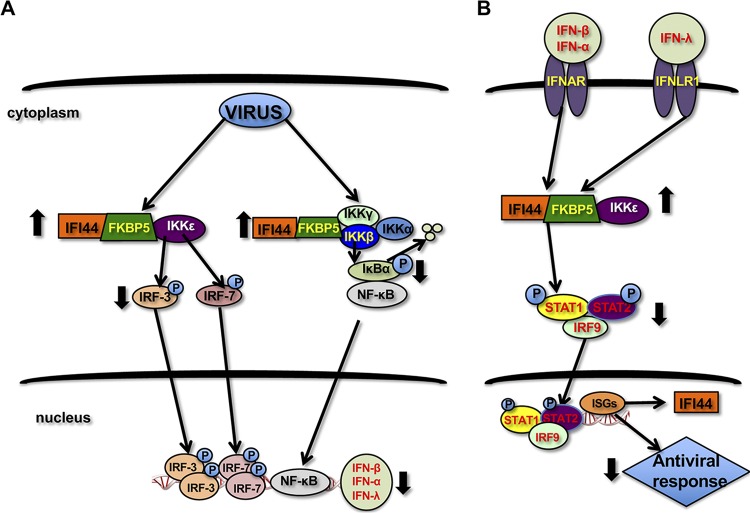
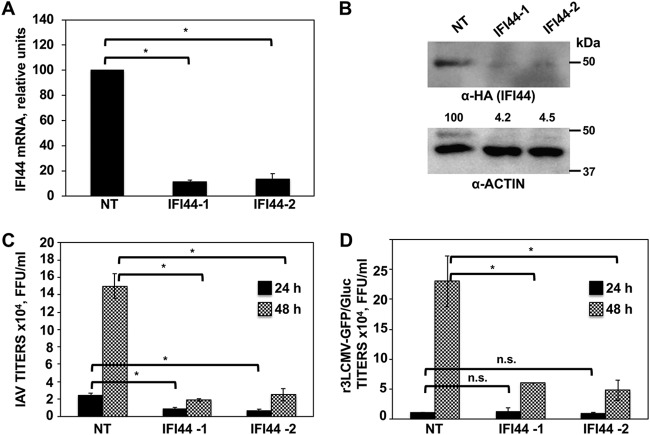
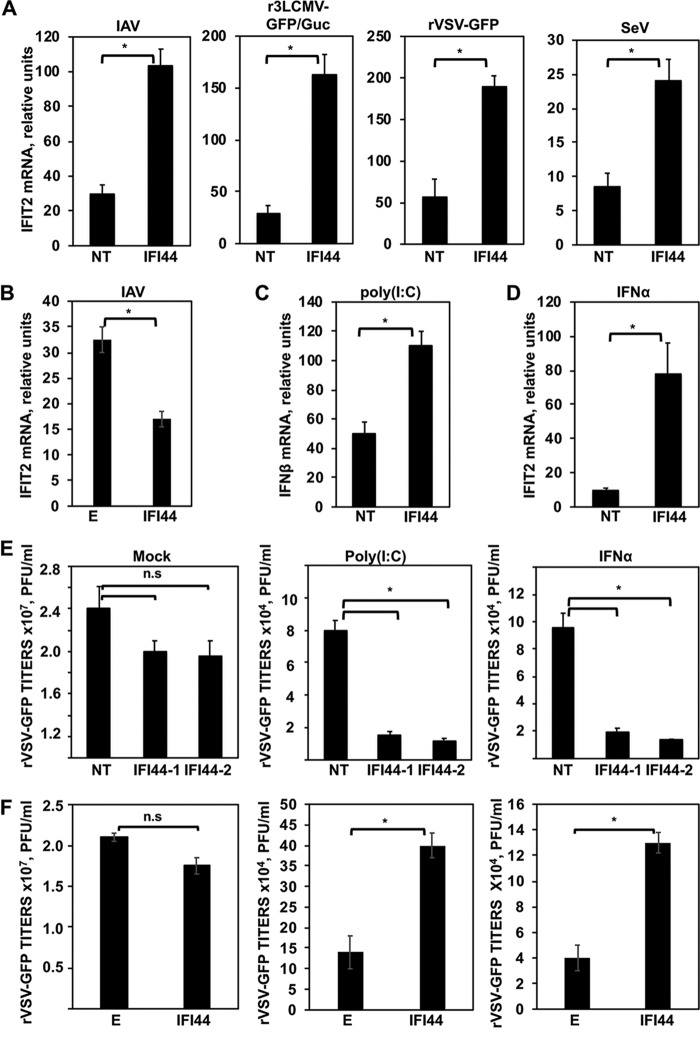
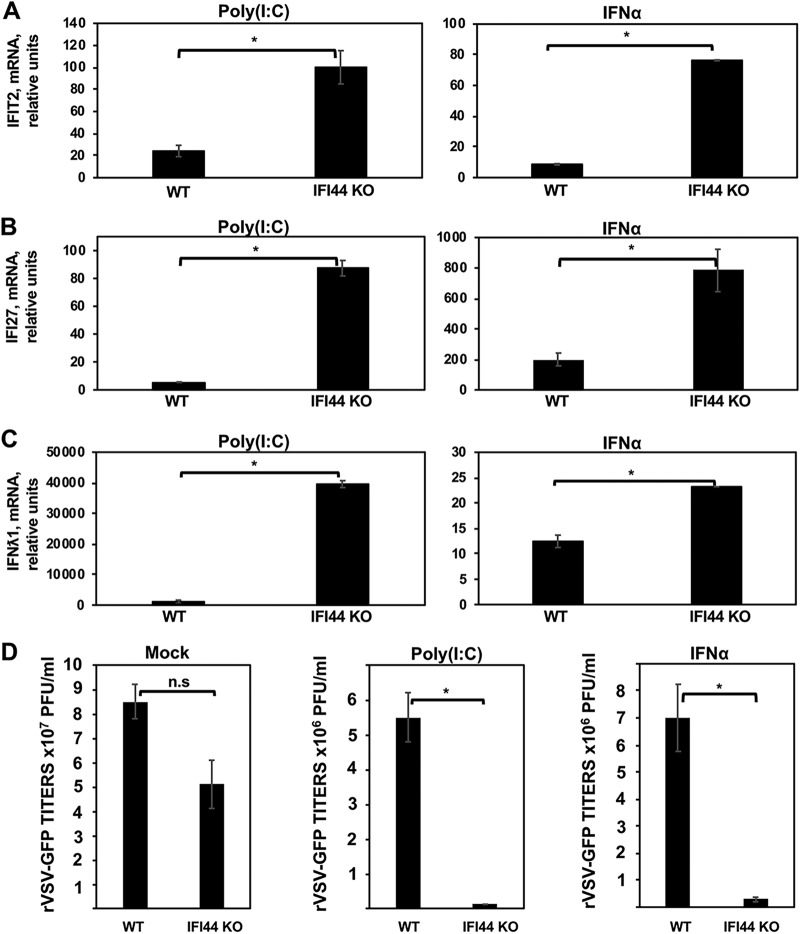
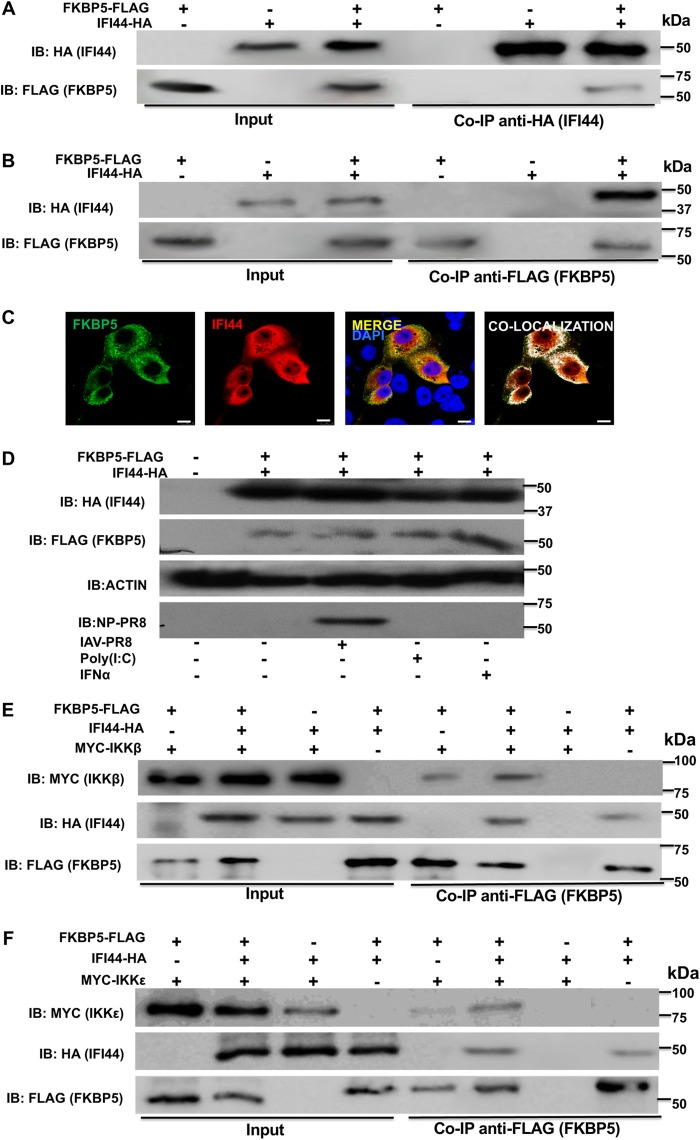
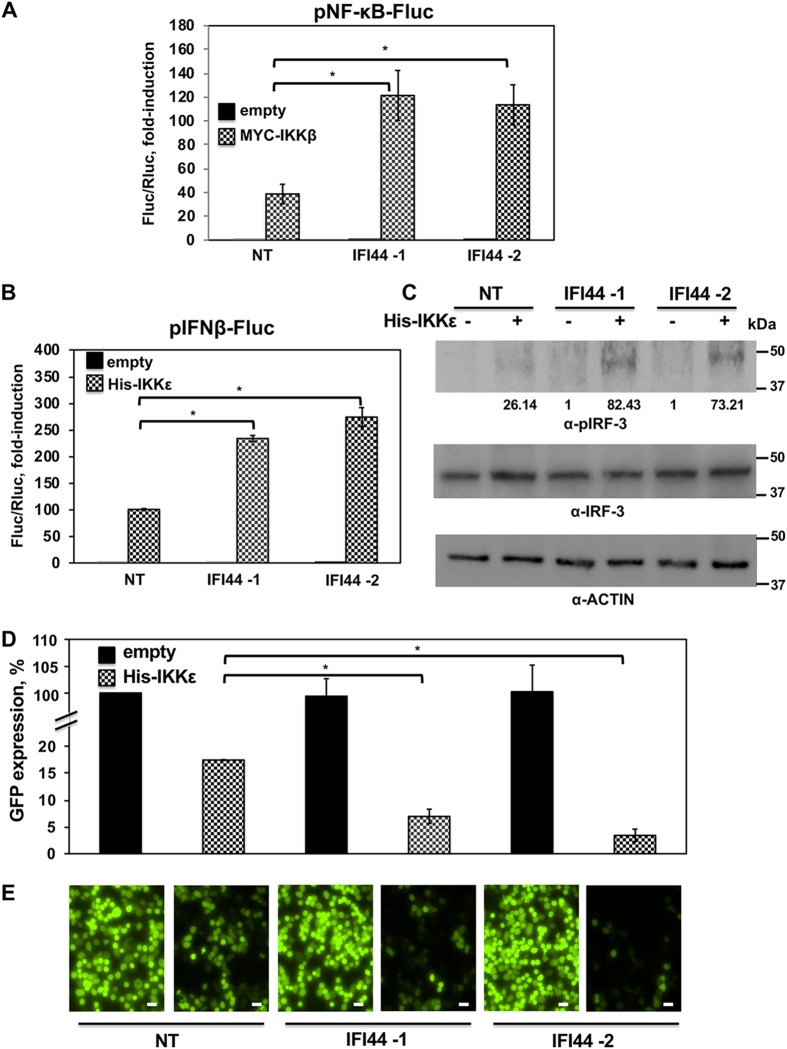
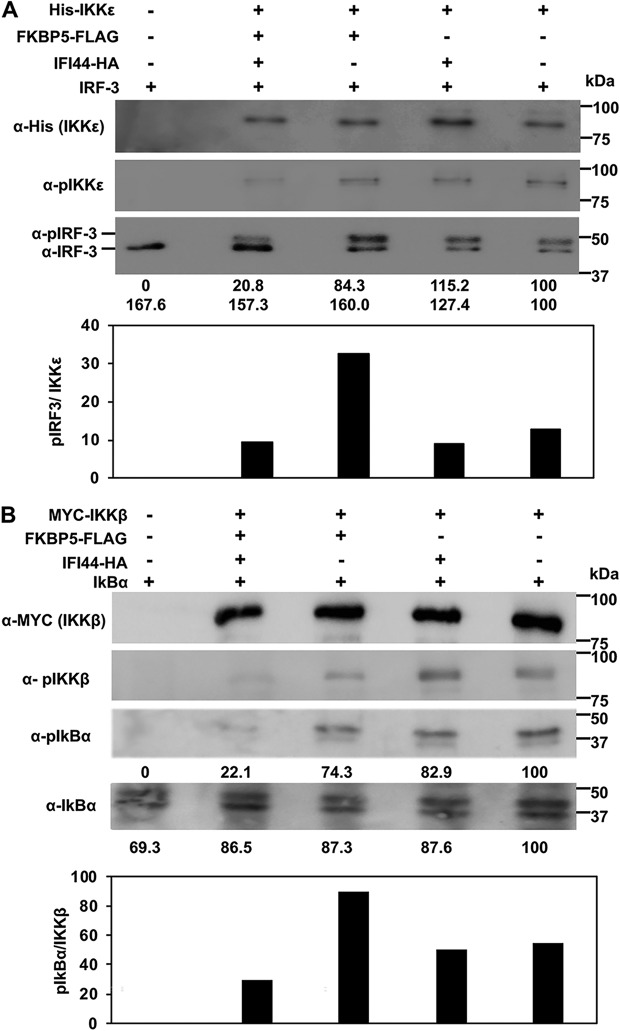
Using multiple viral systems, and performing silencing approaches, overexpression approaches, and experiments in knockout cells, we report, for the first time, that interferon (IFN)-induced protein 44 (IFI44) positively affects virus production and negatively modulates innate immune responses induced after viral infections. Moreover, IFI44 is able to rescue poly(I·C)- and IFN-mediated inhibition of virus growth. Furthermore, we report a novel interaction of IFI44 with the cellular factor FK506-binding protein 5 (FKBP5), which binds to cellular kinases such as the inhibitor of nuclear factor kappa B (IκB) kinases (IKKα, IKKβ, and IKKε). Importantly, in the presence of FKBP5, IFI44 decreases the ability of IKKβ to phosphorylate IκBα and the ability of IKKε to phosphorylate interferon regulatory factor 3 (IRF-3), providing a novel mechanism for the function of IFI44 in negatively modulating IFN responses. Remarkably, these new IFI44 functions may have implications for diseases associated with excessive immune signaling and for controlling virus infections mediated by IFN responses. Innate immune responses mediated by IFN and inflammatory cytokines are critical for controlling virus replication. Nevertheless, exacerbated innate immune responses could be detrimental for the host and feedback mechanisms are needed to maintain the cellular homeostasis. In this work, we describe a completely novel function for IFI44 in negatively modulating the innate immune responses induced after viral infections. We show that decreasing IFI44 expression by using small interfering RNAs (siRNAs) or by generating knockout (KO) cells impairs virus production and increases the levels of IFN responses. Moreover, we report a novel interaction of IFI44 with the cellular protein FKBP5, which in turn interacts with kinases essential for type I and III IFN induction and signaling, such as the inhibitor of nuclear factor kappa B (IκB) kinases IKKα, IKKβ, and IKKε. Our data indicate that binding of IFI44 to FKBP5 decreased the phosphorylation of IRF-3 and IκBα mediated by IKKε and IKKβ, respectively, providing a likely explanation for the function of IFI44 in negatively modulating IFN responses. These results provide new insights into the induction of innate immune responses and suggest that IFI44 is a new potential antiviral target for reducing virus replication.
使用多种病毒系统,并采用沉默、过表达和敲除细胞实验,我们首次报告干扰素(IFN)诱导蛋白 44(IFI44)正向影响病毒产生,并负向调节病毒感染后诱导的固有免疫反应。此外,IFI44 能够挽救 poly(I·C) 和 IFN 介导的病毒生长抑制。此外,我们报告了 IFI44 与细胞因子 FK506 结合蛋白 5(FKBP5)的一种新的相互作用,FKBP5 结合到细胞激酶,如核因子 kappa B(NF-κB)抑制剂激酶(IKKα、IKKβ 和 IKKε)。重要的是,在 FKBP5 存在的情况下,IFI44 降低了 IKKβ 磷酸化 IκBα 的能力和 IKKε 磷酸化干扰素调节因子 3(IRF-3)的能力,为 IFI44 在负向调节 IFN 反应中的功能提供了一种新的机制。值得注意的是,IFI44 的这些新功能可能与与过度免疫信号相关的疾病以及与 IFN 反应介导的病毒感染的控制有关。IFN 和炎症细胞因子介导的固有免疫反应对于控制病毒复制至关重要。然而,过度的固有免疫反应可能对宿主有害,需要反馈机制来维持细胞内稳态。在这项工作中,我们描述了 IFI44 在负向调节病毒感染后诱导的固有免疫反应中的一个全新功能。我们发现,使用小干扰 RNA(siRNA)或生成敲除(KO)细胞降低 IFI44 的表达会损害病毒产生并增加 IFN 反应水平。此外,我们报告了 IFI44 与细胞蛋白 FKBP5 的一种新的相互作用,FKBP5 反过来又与 IκB 激酶 IKKα、IKKβ 和 IKKε 等诱导和信号转导 I 型和 III 型 IFN 的必需细胞蛋白相互作用。我们的数据表明,IFI44 与 FKBP5 的结合降低了由 IKKβ 和 IKKε 介导的 IRF-3 和 IκBα 的磷酸化,这为 IFI44 在负向调节 IFN 反应中的功能提供了一个可能的解释。这些结果为固有免疫反应的诱导提供了新的见解,并表明 IFI44 是一个新的潜在抗病毒靶点,可用于减少病毒复制。