Jiang Hong, Rivera-Molina Yisel, Gomez-Manzano Candelaria, Clise-Dwyer Karen, Bover Laura, Vence Luis M, Yuan Ying, Lang Frederick F, Toniatti Carlo, Hossain Mohammad B, Fueyo Juan
Brain Tumor Center, The University of Texas MD Anderson Cancer Center, Houston, Texas.
Department of Stem Cell Transplantation and Cellular Therapy, The University of Texas MD Anderson Cancer Center, Houston, Texas.
Cancer Res. 2017 Jul 15;77(14):3894-3907. doi: 10.1158/0008-5472.CAN-17-0468. Epub 2017 May 31.
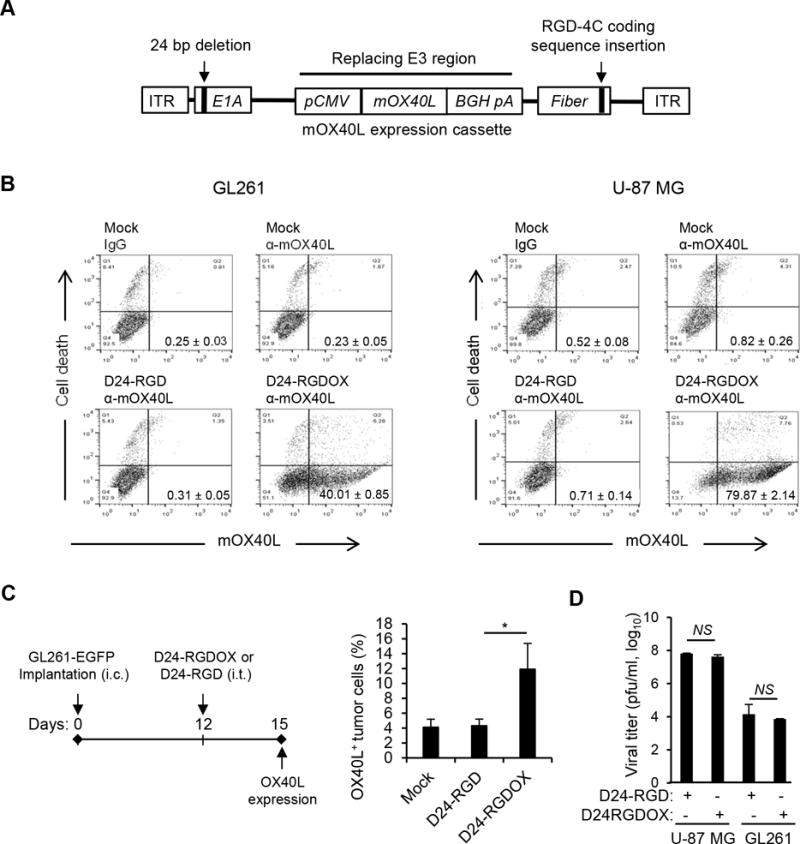
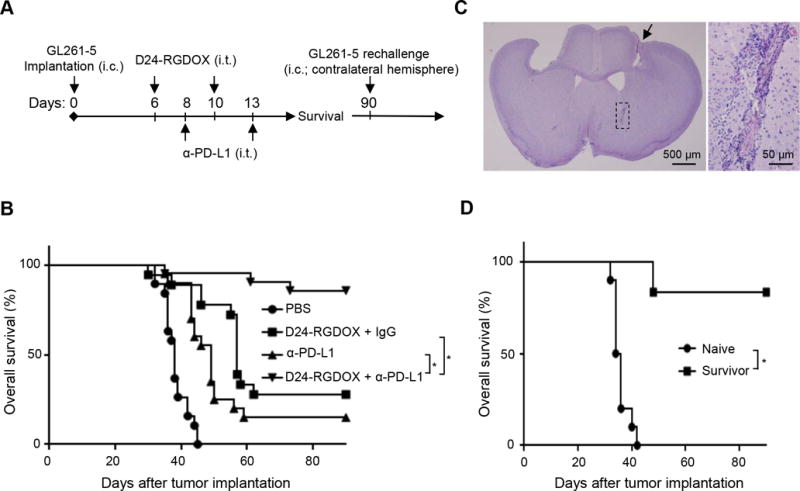
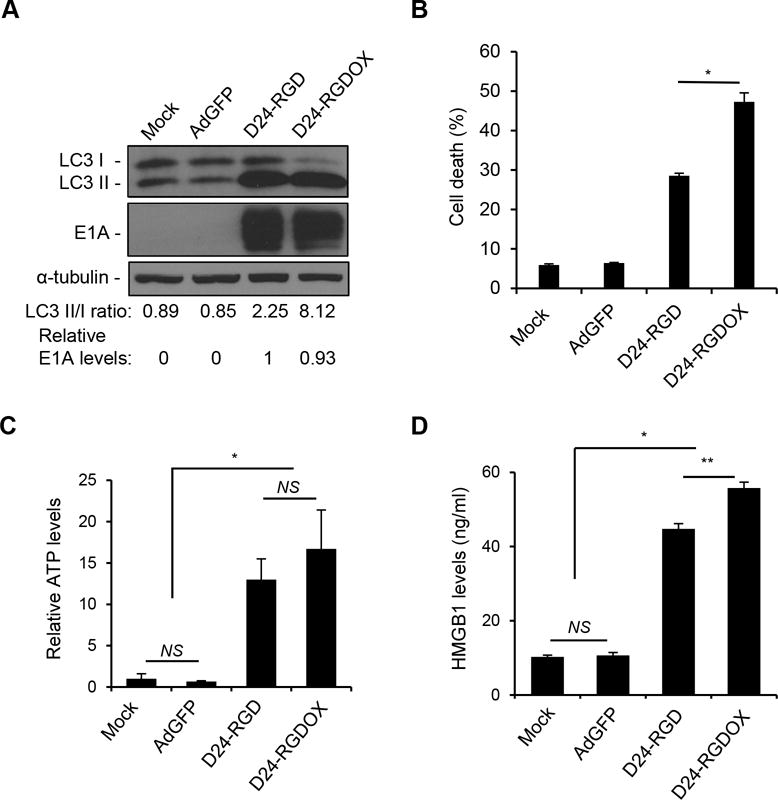
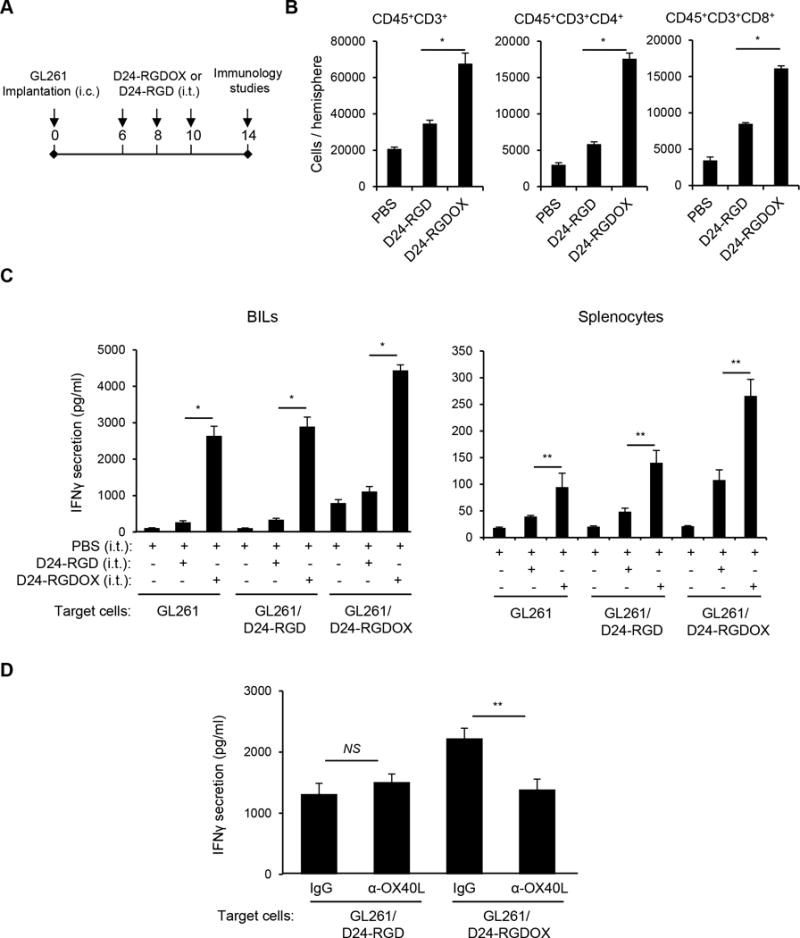
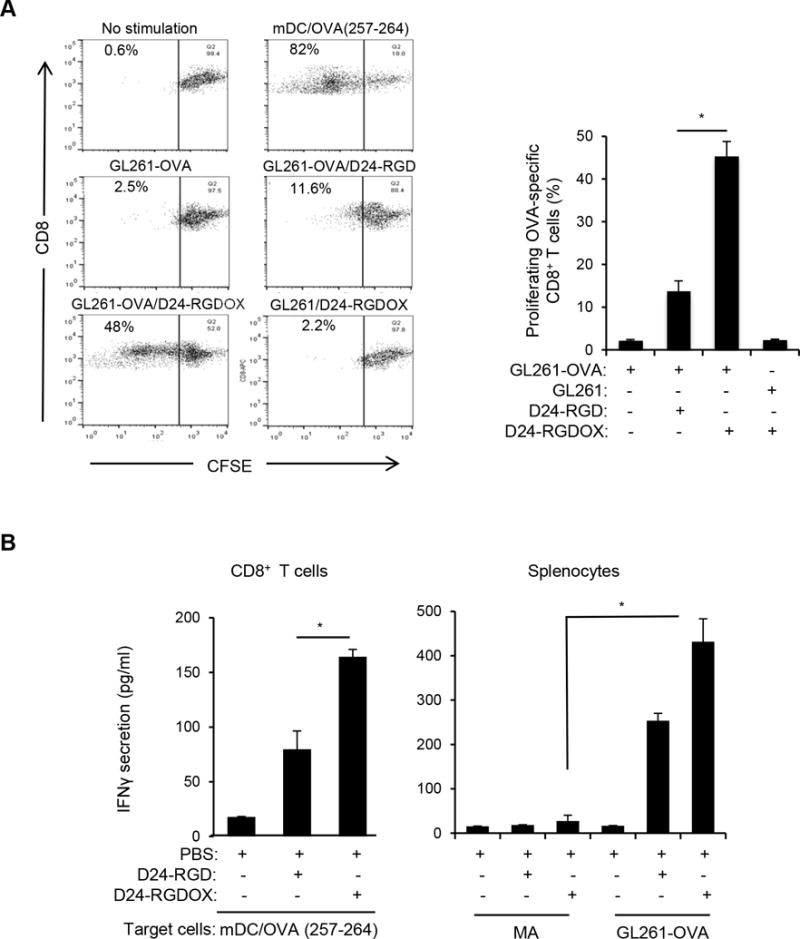
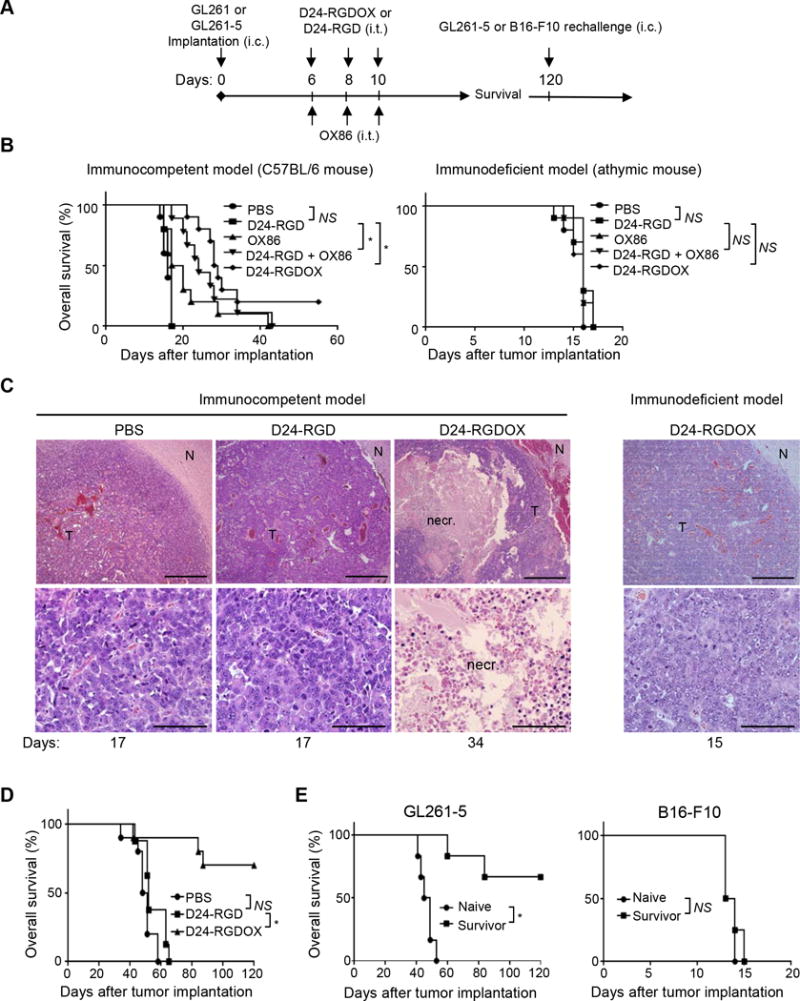
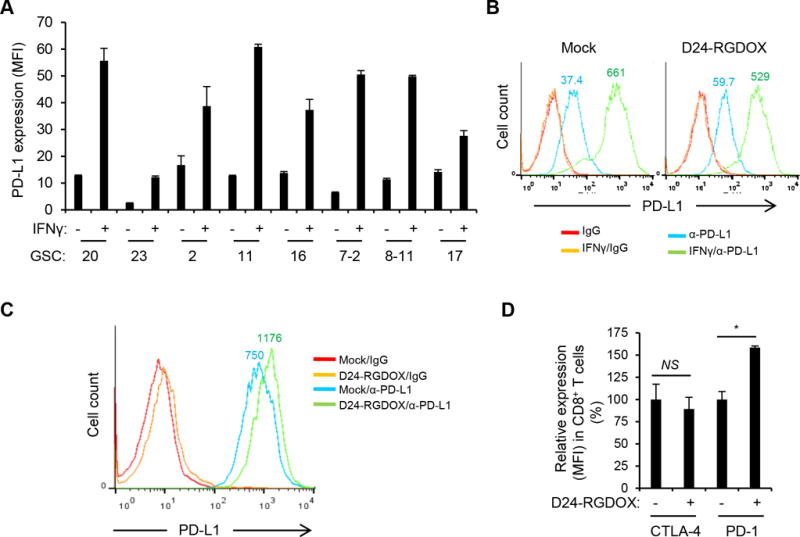
Oncolytic viruses selectively lyse tumor cells, disrupt immunosuppression within the tumor, and reactivate antitumor immunity, but they have yet to live up to their therapeutic potential. Immune checkpoint modulation has been efficacious in a variety of cancer with an immunogenic microenvironment, but is associated with toxicity due to nonspecific T-cell activation. Therefore, combining these two strategies would likely result in both effective and specific cancer therapy. To test the hypothesis, we first constructed oncolytic adenovirus Delta-24-RGDOX expressing the immune costimulator OX40 ligand (OX40L). Like its predecessor Delta-24-RGD, Delta-24-RGDOX induced immunogenic cell death and recruit lymphocytes to the tumor site. Compared with Delta-24-RGD, Delta-24-RGDOX exhibited superior tumor-specific activation of lymphocytes and proliferation of CD8 T cells specific to tumor-associated antigens, resulting in cancer-specific immunity. Delta-24-RGDOX mediated more potent antiglioma activity in immunocompetent C57BL/6 but not immunodeficient athymic mice, leading to specific immune memory against the tumor. To further overcome the immune suppression mediated by programmed death-ligand 1 (PD-L1) expression on cancer cells accompanied with virotherapy, intratumoral injection of Delta-24-RGDOX and an anti-PD-L1 antibody showed synergistic inhibition of gliomas and significantly increased survival in mice. Our data demonstrate that combining an oncolytic virus with tumor-targeting immune checkpoint modulators elicits potent autologous cancer vaccination, resulting in an efficacious, tumor-specific, and long-lasting therapeutic effect. .
溶瘤病毒可选择性地裂解肿瘤细胞,破坏肿瘤内的免疫抑制,并重新激活抗肿瘤免疫,但它们尚未充分发挥其治疗潜力。免疫检查点调节在具有免疫原性微环境的多种癌症中已显示出疗效,但由于非特异性T细胞激活而与毒性相关。因此,将这两种策略结合起来可能会产生有效且特异性的癌症治疗方法。为了验证这一假设,我们首先构建了表达免疫共刺激分子OX40配体(OX40L)的溶瘤腺病毒Delta-24-RGDOX。与它的前身Delta-24-RGD一样,Delta-24-RGDOX诱导免疫原性细胞死亡并将淋巴细胞募集到肿瘤部位。与Delta-24-RGD相比,Delta-24-RGDOX在淋巴细胞的肿瘤特异性激活以及肿瘤相关抗原特异性CD8 T细胞的增殖方面表现出更优的效果,从而产生癌症特异性免疫。Delta-24-RGDOX在具有免疫活性的C57BL/6小鼠而非免疫缺陷的无胸腺小鼠中介导了更强的抗胶质瘤活性,从而产生针对肿瘤的特异性免疫记忆。为了进一步克服病毒疗法伴随的癌细胞程序性死亡配体1(PD-L1)表达介导的免疫抑制,瘤内注射Delta-24-RGDOX和抗PD-L1抗体显示出对胶质瘤的协同抑制作用,并显著提高了小鼠的生存率。我们的数据表明,将溶瘤病毒与靶向肿瘤的免疫检查点调节剂相结合可引发强大的自体癌症疫苗接种,从而产生有效、肿瘤特异性和持久的治疗效果。