Program in Neurogenetics, Department of Neurology, David Geffen School of Medicine, University of California, Los Angeles, Los Angeles, CA, USA.
Department of Neuroscience, Peter O'Donnell Jr. Brain Institute, University of Texas Southwestern Medical Center, Dallas, TX, USA.
Nat Neurosci. 2019 Sep;22(9):1521-1532. doi: 10.1038/s41593-019-0461-9. Epub 2019 Aug 26.
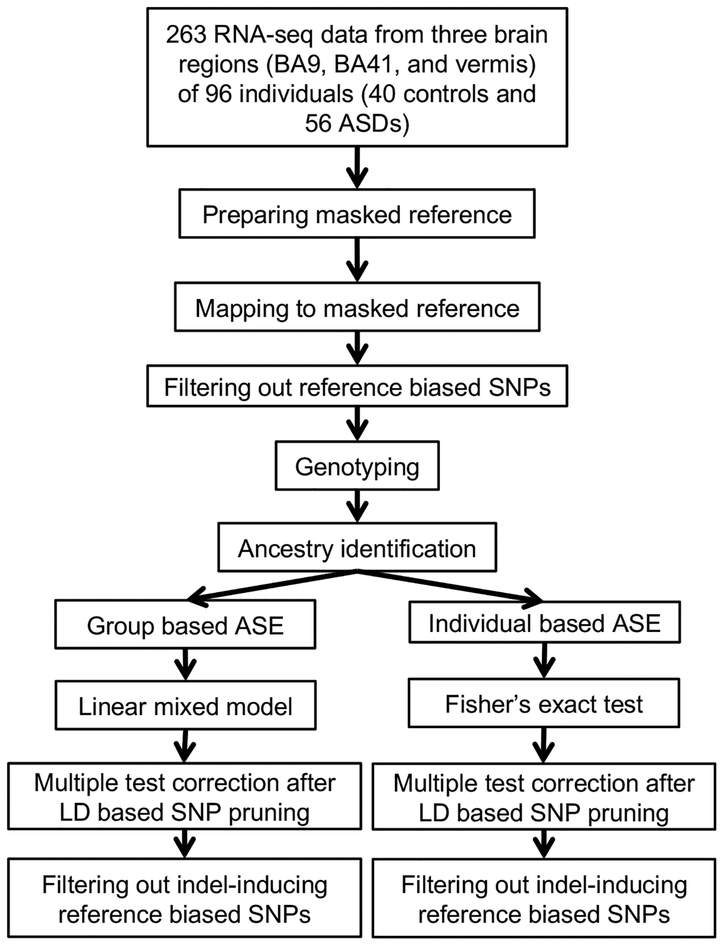
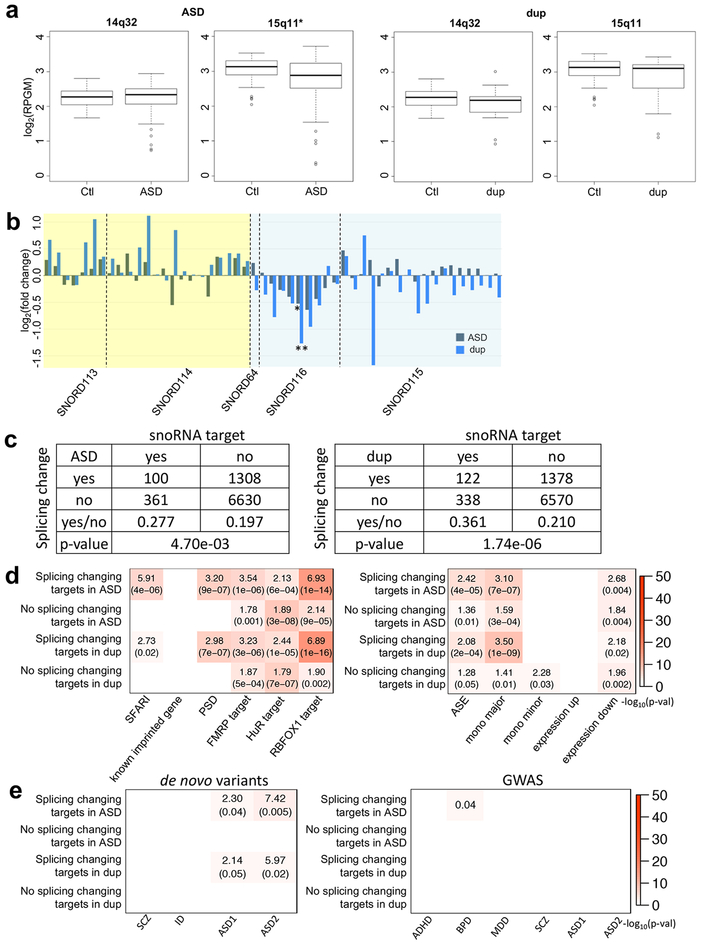
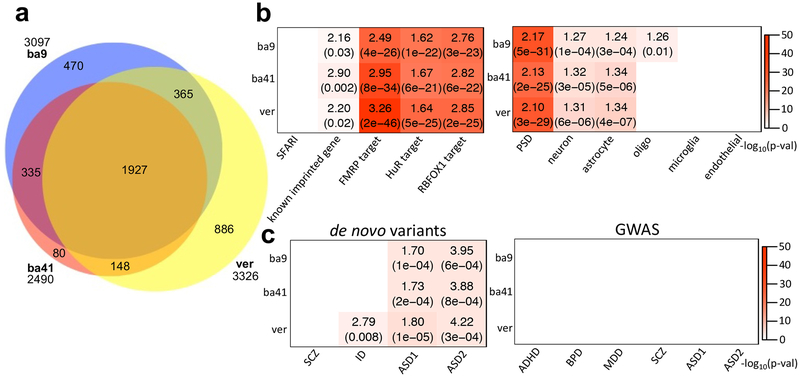
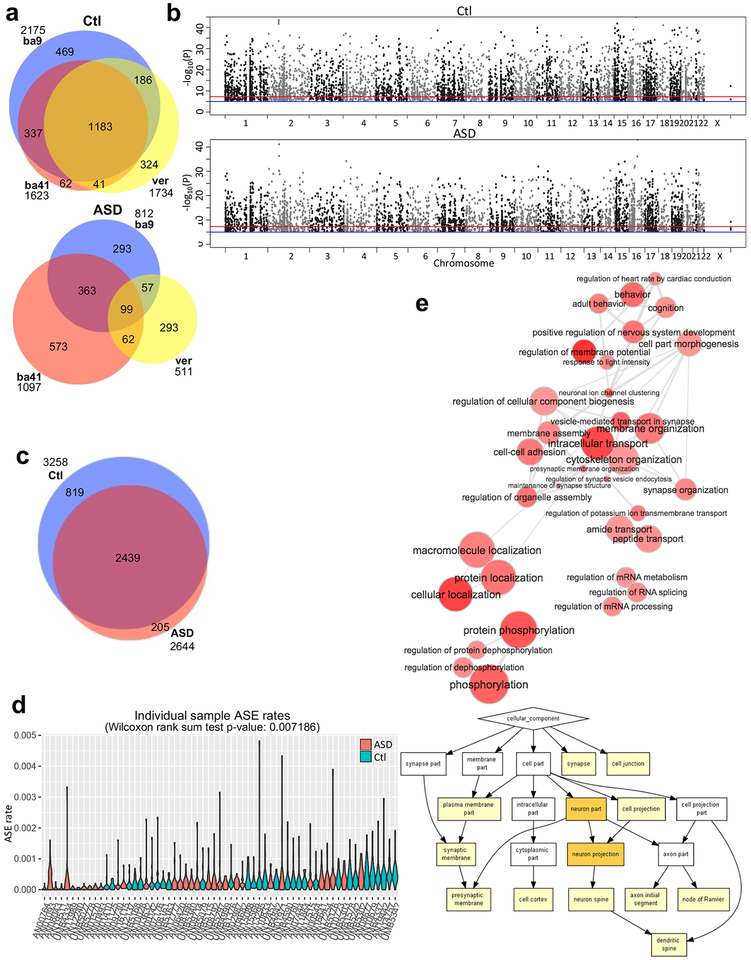
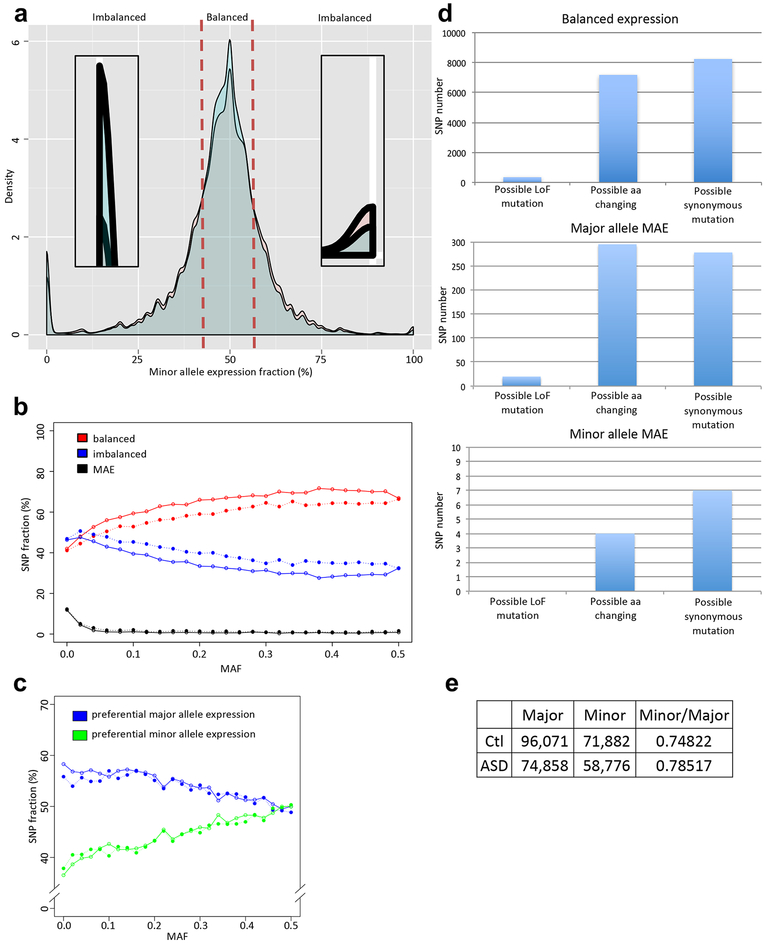
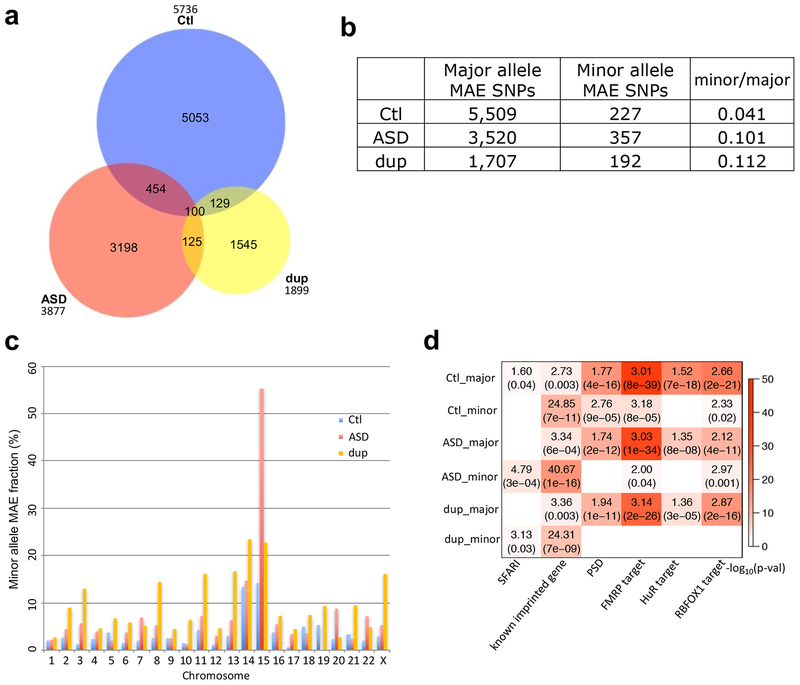
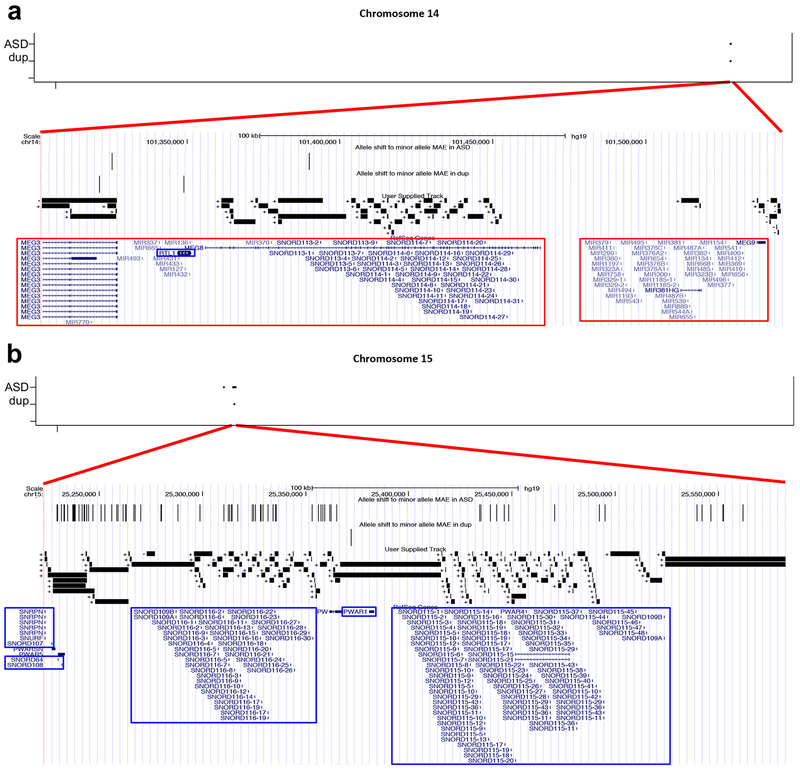
One fundamental but understudied mechanism of gene regulation in disease is allele-specific expression (ASE), the preferential expression of one allele. We leveraged RNA-sequencing data from human brain to assess ASE in autism spectrum disorder (ASD). When ASE is observed in ASD, the allele with lower population frequency (minor allele) is preferentially more highly expressed than the major allele, opposite to the canonical pattern. Importantly, genes showing ASE in ASD are enriched in those downregulated in ASD postmortem brains and in genes harboring de novo mutations in ASD. Two regions, 14q32 and 15q11, containing all known orphan C/D box small nucleolar RNAs (snoRNAs), are particularly enriched in shifts to higher minor allele expression. We demonstrate that this allele shifting enhances snoRNA-targeted splicing changes in ASD-related target genes in idiopathic ASD and 15q11-q13 duplication syndrome. Together, these results implicate allelic imbalance and dysregulation of orphan C/D box snoRNAs in ASD pathogenesis.
疾病中基因调控的一个基本但研究较少的机制是等位基因特异性表达(ASE),即一个等位基因的优先表达。我们利用人类大脑的 RNA 测序数据来评估自闭症谱系障碍(ASD)中的 ASE。当在 ASD 中观察到 ASE 时,具有较低群体频率的等位基因(次要等位基因)比主要等位基因优先表达更高,与典型模式相反。重要的是,在 ASD 死后大脑中下调和在 ASD 中具有新生突变的基因中表现出 ASE 的基因富集。两个区域 14q32 和 15q11 包含所有已知的孤儿 C/D 框小核仁 RNA(snoRNA),特别富集于次要等位基因表达的升高。我们证明,这种等位基因移位增强了 ASD 相关靶基因中 snoRNA 靶向剪接变化在特发性 ASD 和 15q11-q13 重复综合征。总之,这些结果表明,等位基因失衡和孤儿 C/D 框 snoRNA 的失调参与了 ASD 的发病机制。