Lahtinen Elmeri, Turunen Lotta, Hänninen Mikko M, Kolari Kalle, Tuononen Heikki M, Haukka Matti
Department of Chemistry, University of Jyväskylä, P.O. Box 35, FI-40014 Jyväskylä, Finland.
ACS Omega. 2019 Jul 11;4(7):12012-12017. doi: 10.1021/acsomega.9b00711. eCollection 2019 Jul 31.
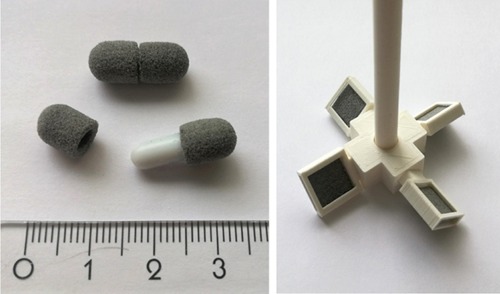
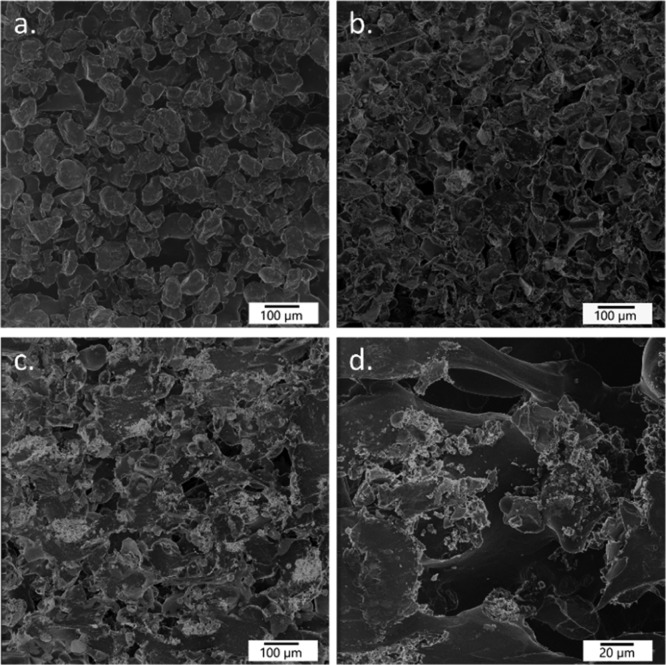
Three-dimensional selective laser sintering printing was utilized to produce porous, solid objects, in which the catalytically active component, Pd/SiO, is attached to an easily printable supporting polypropylene framework. Physical properties of the printed objects, such as porosity, were controlled by varying the printing parameters. Structural characterization of the objects was performed by helium ion microscopy, scanning electron microscopy, and X-ray tomography, and the catalytic performance of the objects was tested in the hydrogenation of styrene, cyclohexene, and phenylacetylene. The results show that the selective laser sintering process provides an alternative and effective way to produce highly active and easily reusable heterogeneous catalysts without significantly reducing the catalytic efficiency of the active Pd/SiO component. The ability to control the size, porosity, mechanical properties, flow properties, physical properties, and chemical properties of the catalyst objects opens up possibilities to optimize devices for different reaction environments including batch reactions and continuous flow systems.
利用三维选择性激光烧结打印来制造多孔固体物体,其中催化活性组分Pd/SiO附着在易于打印的支撑聚丙烯框架上。通过改变打印参数来控制打印物体的物理性质,如孔隙率。通过氦离子显微镜、扫描电子显微镜和X射线断层扫描对物体进行结构表征,并在苯乙烯、环己烯和苯乙炔的氢化反应中测试物体的催化性能。结果表明,选择性激光烧结工艺提供了一种替代且有效的方法来生产高活性且易于重复使用的多相催化剂,而不会显著降低活性Pd/SiO组分的催化效率。控制催化剂物体的尺寸、孔隙率、机械性能、流动性能、物理性能和化学性能的能力为优化适用于不同反应环境(包括间歇反应和连续流动系统)的装置开辟了可能性。